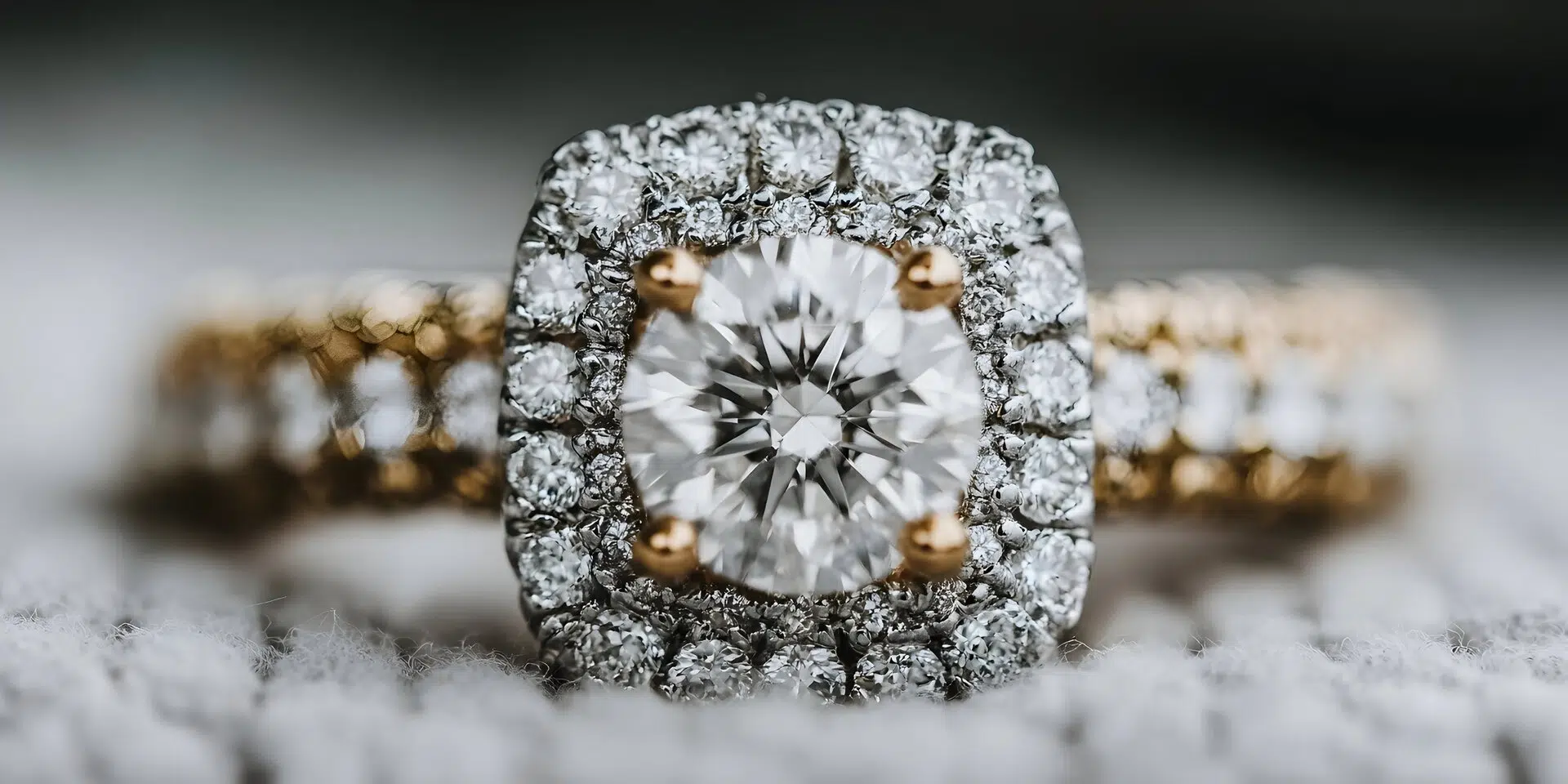
Exploring bold, artistic designs from maisons like Cartier and Van Cleef & Arpels, blending rare gemstones and innovative settings for the ultimate statement of luxury
In the rarefied world of haute joaillerie, 2026 marks a defining moment where tradition and audacity converge. The engagement ring—once a predictable symbol of commitment—has evolved into a canvas for artistic expression, where the world’s most prestigious maisons are rewriting the rules of bridal jewelry. From Place Vendôme’s storied ateliers to New York’s Fifth Avenue, a quiet revolution is unfolding, one that celebrates individuality over convention and craftsmanship over trends.
This is the year when bespoke commissions reach new heights of complexity, when rare colored gemstones rival the dominance of white diamonds, and when architectural settings transform precious stones into wearable sculpture. For discerning collectors who view their engagement ring as both a personal talisman and an investment in artistry, 2026 offers an unprecedented array of possibilities—each more captivating than the last.
The Renaissance of Colored Gemstones: Beyond the White Diamond
The tyranny of the colorless diamond is quietly ending. While D-color flawless stones remain the ultimate expression of classical elegance, 2026’s most sophisticated collectors are increasingly drawn to the narrative depth of colored gemstones. This shift represents more than aesthetic preference—it signals a fundamental change in how luxury is perceived and expressed.
Van Cleef & Arpels’ engagement ring collections now prominently feature Burmese rubies, Kashmir sapphires, and Colombian emeralds, each stone selected according to criteria that transcend conventional gemological metrics. The maison’s stone department—staffed by expert gemologists with over a century of collective experience—applies standards that consider not merely color, clarity, and carat weight, but also the stone’s provenance, its historical significance, and what they call its “emotional resonance.”
Kashmir sapphires, with their velvety blue depths and distinctive milky transparency, have become particularly coveted. These stones, mined from deposits at altitudes exceeding 4,000 meters in the Himalayan region, possess a quality that gemologists describe as “sleepy”—a soft, dreamy appearance created by minute inclusions that scatter light in mesmerizing ways. A Van Cleef engagement ring featuring a 5-carat oval Kashmir sapphire flanked by triangular diamonds represents the pinnacle of this trend: rare, historically significant, and utterly distinctive.
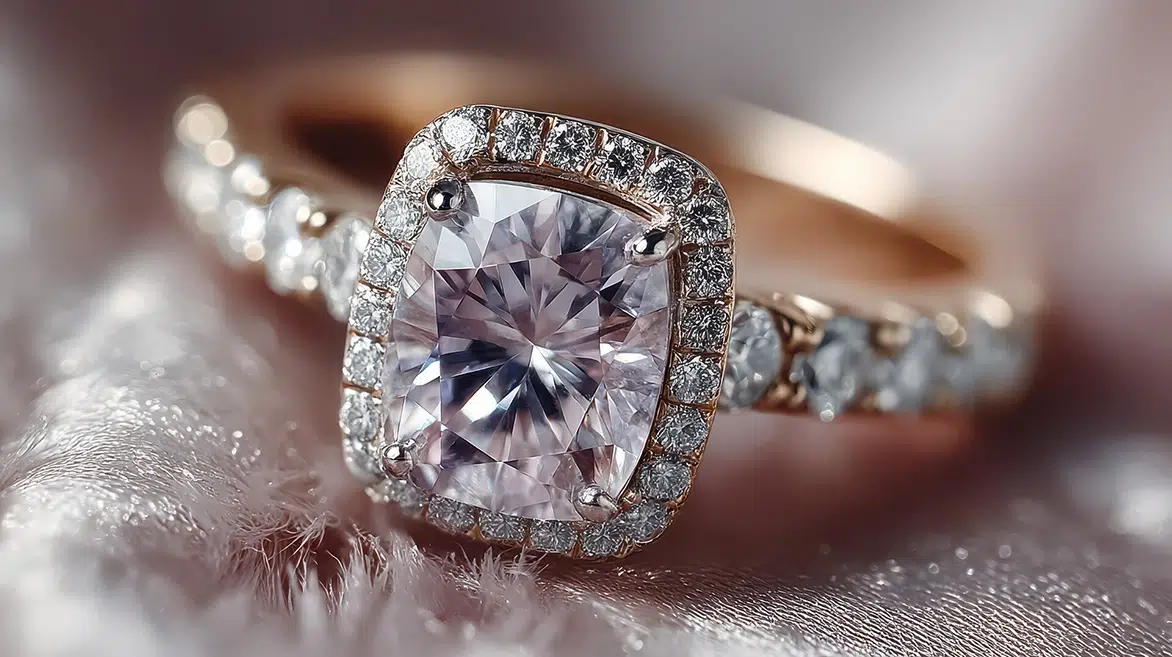
Graff, the house renowned for its exceptional colored diamonds, has witnessed unprecedented demand for fancy colored stones in engagement settings. Their recent collection showcases fancy, intense pink diamonds—stones so rare that they account for less than 0.01% of all diamonds ever mined. When a Graff pink diamond engagement ring appears at auction, it typically generates international attention, not merely for its beauty but for its status as a genuine investment piece. These are stones that appreciate in value while adorning the hand, blending romance with financial acumen in a way that appeals to the modern luxury consumer.
The return to colored gemstones also reflects a broader cultural shift toward personalization. Rather than adhering to prescribed notions of what an engagement ring “should” be, couples are selecting stones that resonate with their personal histories—birthstones, favorite colors, or gems that evoke meaningful places or moments. A Colombian emerald might commemorate a proposal in Cartagena; a Ceylon sapphire could honor a honeymoon planned for Sri Lanka. These are rings that tell stories before they’re even worn.

Architectural Settings: Where Engineering Meets Artistry
The solitaire setting—four or six prongs securing a brilliant-cut diamond—has defined engagement rings for over a century. In 2026, the world’s leading maisons are demonstrating that this need not be the only vocabulary of bridal jewelry. Drawing inspiration from brutalist architecture, Art Deco geometry, and even contemporary sculpture, designers are creating settings that transform the ring into a three-dimensional object of contemplation.
Boucheron’s Quatre collection, while not explicitly bridal, has profoundly influenced engagement ring design with its architectural approach to metalwork. The house’s signature technique—combining different gold textures and finishes within a single piece—has been adapted for engagement settings where grosgrain-textured rose gold contrasts with polished white gold, creating visual interest that extends far beyond the center stone. This approach recognizes that a ring is experienced not just from above but from every angle, and that the band itself deserves as much attention as the diamond it carries.
Harry Winston’s approach to architectural settings emphasizes the diamond itself as the primary architectural element. The house’s signature cluster settings—where multiple diamonds of varying shapes interlock like a three-dimensional puzzle—create the impression that the stones are suspended in air, held by nearly invisible platinum frameworks. This technique, which Winston pioneered in the 1950s and has continuously refined, requires extraordinary precision. Each diamond must be cut to exacting specifications so that it fits seamlessly with its neighbors, and the platinum structure must be engineered to provide absolute security while remaining almost imperceptible.
The result is what Winston’s designers call “maximum light, minimum metal”—rings where diamonds appear to float, catching and refracting light from every possible angle. These are not settings that fade into the background; they’re bold statements that declare the wearer’s appreciation for both exceptional stones and exceptional craftsmanship.
Cartier’s approach to architectural design takes a different path, drawing on the maison’s century-long dialogue with Art Deco aesthetics. Their latest engagement rings feature clean geometric lines, step-cut diamonds, and the precise symmetry that characterized the 1920s and 1930s—but executed with contemporary techniques that allow for larger stones and more complex structures than would have been possible in the original Art Deco era. A Cartier engagement ring might feature an emerald-cut diamond flanked by calibré-cut sapphires, all set within a platinum mounting that references the iconic pillars of the Panthéon in Paris. This is jewelry that engages with architectural history while remaining thoroughly modern in execution.
The Serti Mystérieux: Van Cleef’s Invisible Artistry
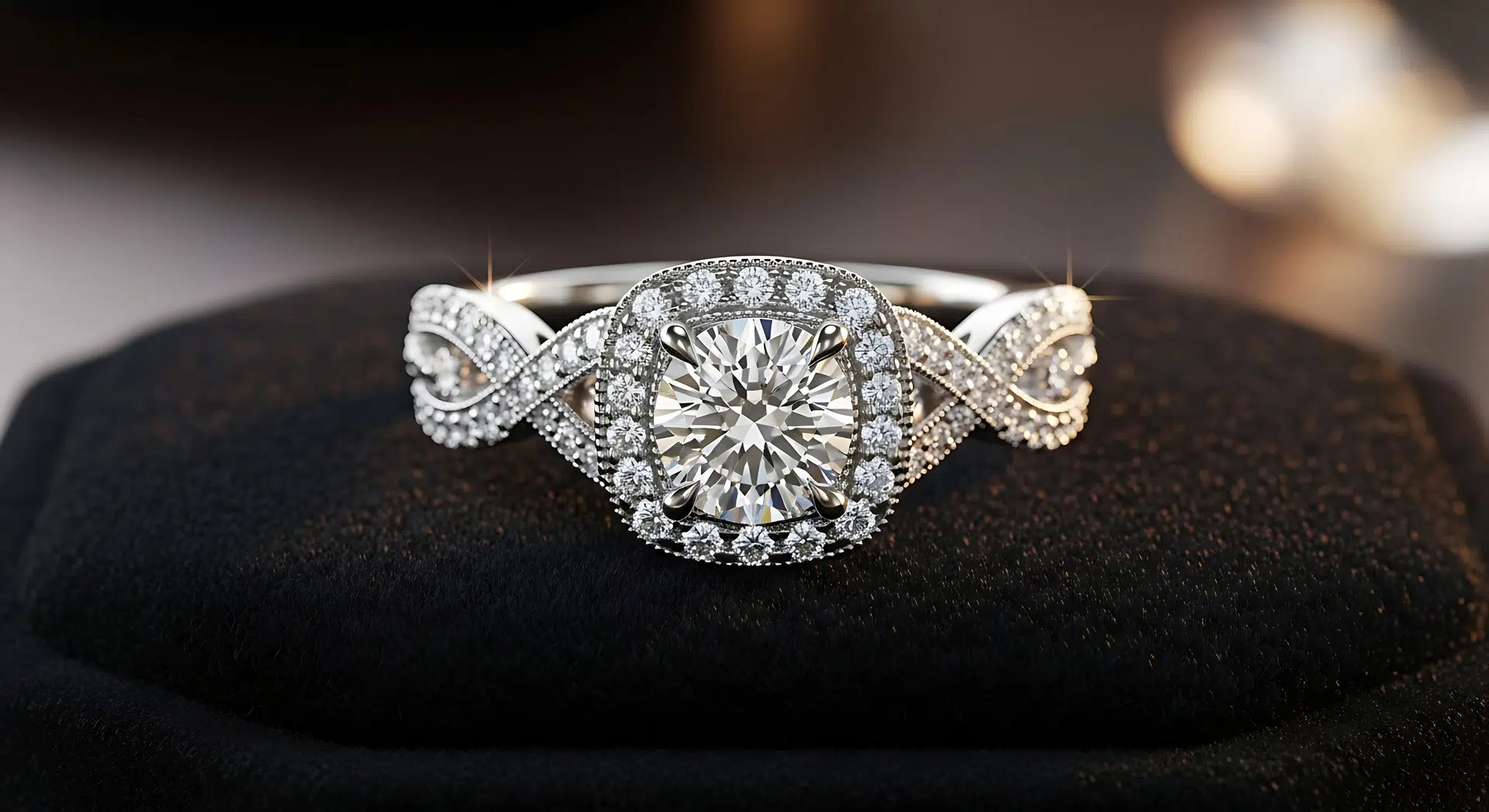
No discussion of haute joaillerie innovation would be complete without addressing Van Cleef & Arpels’ Mystery Setting—or serti mystérieux—a technique so complex that it remains closely guarded even nearly a century after its invention. Patented in 1933, this revolutionary setting method involves creating a lattice of gold rails on the underside of a piece, into which gemstones are slid and secured without any visible metal showing from above. The result appears to defy physics: gems that seem to be held in place by nothing but their neighbors.
For decades, this technique was reserved for Van Cleef’s high jewelry pieces—elaborate brooches, transformable necklaces, and ornamental jewels of museum quality. In recent years, however, the maison has begun to incorporate elements of the Mystery Setting into engagement rings, creating pieces where bands of rubies or sapphires appear as continuous ribbons of color, uninterrupted by prongs or bezels.
The creation of a Mystery Setting engagement ring requires hundreds of hours of work by master setters—artisans who have spent years mastering this technique. Each stone must be precisely calibrated; a deviation of even 0.1 millimeters can compromise the entire structure. The gold rails that support the gems must be engineered to provide absolute security while remaining completely hidden. It’s a level of craftsmanship that places these pieces firmly in the realm of art objects that happen to be worn rather than merely jewelry.
A Van Cleef engagement ring featuring a central diamond surrounded by Mystery Set sapphires represents the absolute pinnacle of technical achievement in jewelry making. It’s a piece that reveals its complexity only upon close examination, rewarding the wearer’s appreciation for subtlety and expertise.
The New Solitaire: Reinventing the Classic
The solitaire engagement ring—a single diamond, simply set—might seem impervious to innovation. It is, after all, the most elemental expression of an engagement ring, stripped of ornament and focused entirely on the stone itself. Yet in 2026, even this seemingly unchangeable form is being reimagined by designers who understand that simplicity and innovation are not mutually exclusive.
The bezel setting, where a band of metal encircles the diamond’s girdle, has emerged as the modern interpretation of the solitaire. This setting offers several advantages: it protects the stone’s edges from impact, creates a sleek contemporary silhouette, and allows for creative expression in how the bezel is shaped and textured. Graff’s bezel-set engagement rings elevate this technique by using incredibly thin bezels—sometimes less than one millimeter—that provide security without obscuring the diamond. The effect is of a stone that floats within a delicate frame of platinum or gold, protected but not constrained.
The east-west orientation—where an elongated stone is set perpendicular to the finger rather than parallel—has become another avenue for reinventing the solitaire. This unconventional placement makes even modest-sized stones appear more substantial while creating a distinctive profile that sets the ring apart from traditional orientations. Cartier’s east-west engagement rings pair this orientation with their signature knife-edge bands—thin, precisely engineered shanks that taper to an almost imperceptible thickness, emphasizing the diamond while creating an impression of architectural precision.
Perhaps the most significant innovation in solitaire design involves what lies beneath the stone. Hidden halos—circles of small diamonds set into the underside of the mounting, invisible from above but creating additional sparkle when light enters from below—have become increasingly sophisticated. Rather than simple circles of uniform stones, 2026’s hidden halos incorporate geometric patterns, graduating sizes, or even colored diamonds that create subtle flashes of unexpected color. These are details that only the wearer knows exist, creating a sense of intimate luxury that appeals to those who view their engagement ring as a personal treasure rather than a public display.
Old Mine Cuts and Antique Aesthetics: The Allure of History
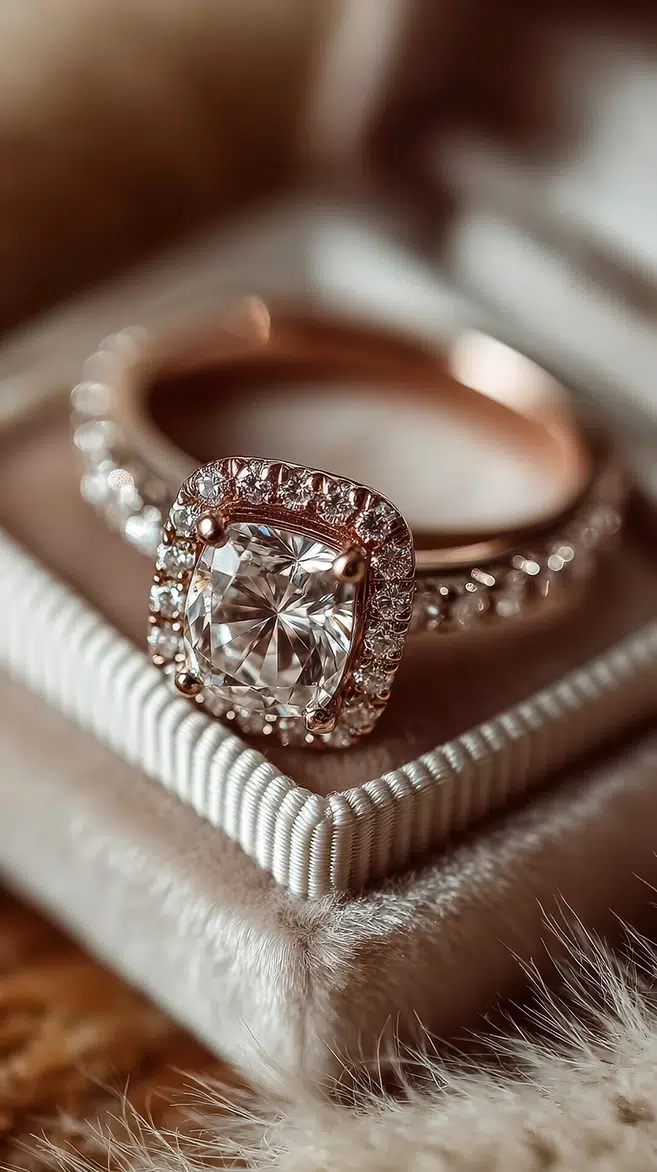
In an age of precision-cut modern brilliants, there’s growing appreciation for the irregular beauty of antique diamond cuts. Old Mine cuts—hand-cut diamonds characterized by their cushion shape, high crown, small table, and large culet—possess a warmth and personality that modern cutting techniques have optimized away in pursuit of maximum brilliance.
These historical stones, typically cut before the advent of electric bruting machines in the early 20th century, interact with light differently than their contemporary counterparts. Rather than the sharp scintillation of a modern brilliant, Old Mine cuts produce broader flashes of color and a softer, more romantic glow—what gemologists sometimes call “candlelight diamonds” because they were designed to perform beautifully in the gaslight and candlelight of their era.
Chaumet, the Parisian maison with archives dating to 1780, has become a destination for collectors seeking engagement rings featuring antique cuts. Their expertise in historical jewelry allows them to source exceptional old stones and create settings that honor the diamond’s period while incorporating contemporary craftsmanship. A Chaumet engagement ring might feature a 3-carat Old Mine cut diamond in a setting inspired by the Napoleonic era—the period when the house supplied jewelry to Empress Joséphine—executed with modern techniques that ensure durability and comfort for everyday wear.
The appeal of antique cuts extends beyond aesthetics. These stones carry history; each has survived generations, and selecting one for an engagement ring creates a tangible connection to the past. There’s also an element of sustainability and ethical consideration—choosing an antique diamond means no new mining, appealing to environmentally conscious collectors who want their engagement ring to reflect their values without compromising on quality or beauty.
Fancy Cuts and Geometric Precision: The Step-Cut Revival
While round brilliant cuts continue to dominate engagement ring sales broadly, haute joaillerie clients are increasingly drawn to the understated elegance of step cuts—diamonds whose facets are arranged in parallel rows that create a “hall of mirrors” effect. Emerald cuts and Asscher cuts, the primary representatives of this family, prioritize transparency and clarity over brilliance, revealing the diamond’s internal structure with unforgiving honesty.
This transparency demands exceptional quality. While a brilliant cut’s multiple facets can disguise inclusions or color tints, step cuts offer no such forgiveness. Every internal characteristic is visible, which means that only stones of the highest clarity grades—typically VVS2 or better—can successfully carry this cut. For this reason, step-cut engagement rings have become signals of not just sophisticated taste but also serious investment.
Harry Winston, whose founder famously said, “Let the diamond speak for itself,” has long championed step cuts in its engagement rings. Their approach emphasizes the stone’s geometric purity, often setting emerald cuts in simple platinum bands with baguette-cut diamond shoulders that echo and amplify the center stone’s linear precision. These are rings of remarkable restraint, allowing the quality of the diamond to carry the entire design.
Boucheron’s interpretation of step cuts incorporates the house’s signature approach to mixed materials and unexpected combinations. Their engagement rings might feature an Asscher cut diamond set in yellow gold—a pairing that creates warmth and vintage appeal—or an emerald cut bordered by calibré-cut sapphires that form a contrasting geometric frame. These designs acknowledge that while step cuts are inherently minimalist, there remains ample room for creative expression in how they’re presented.
The step-cut revival also reflects a broader cultural moment. In an era of increasing visual noise and constant digital stimulation, there’s a growing appreciation for things that reward sustained attention. A step-cut diamond doesn’t shout; it whispers. Its beauty unfolds gradually, revealing new facets and reflections as light and angle change. For collectors who value subtlety and depth over immediate impact, step cuts offer a sophisticated alternative to the ubiquitous round brilliant.
Mixed Metals: The Modern Heritage Technique
The practice of combining different metal colors within a single ring has deep historical roots—Victorian jewelers often set diamonds in silver while using yellow gold for the band, and Edwardian rings frequently combined platinum and gold. In 2026, this technique is experiencing a renaissance as designers recognize its versatility and aesthetic richness.
Van Cleef & Arpels’ Couture engagement rings exemplify this trend’s sophisticated execution. These pieces might feature a platinum setting for the diamond—chosen for its strength and neutral color—paired with a rose gold band that provides warmth and a contemporary edge. The transition between metals is handled with extraordinary precision, often incorporating a subtle textural change or a fine line of pavé diamonds that makes the metal shift feel intentional rather than arbitrary.
The appeal of mixed metals extends beyond aesthetics. From a practical standpoint, platinum’s density and durability make it ideal for securing valuable center stones, while gold’s warmth can complement certain skin tones more flatteringly. For collectors who own jewelry in various metals, a mixed-metal engagement ring offers versatility—it pairs equally well with yellow gold wedding bands, white gold anniversary rings, or rose gold daily jewelry.
Cartier’s Trinity collection, with its iconic interlocking bands of white, yellow, and rose gold, has influenced engagement ring design by demonstrating how multiple metals can coexist harmoniously. Their engagement rings often incorporate subtle Trinity motifs—perhaps a hidden triple band under the center stone, or three different gold colors in the pavé-set shoulders—creating visual interest while maintaining the clean lines that Cartier is known for.
Three-Stone Settings: Past, Present, and Future
The three-stone engagement ring, also known as a trilogy or trinity ring, carries symbolic weight that resonates across cultures. Representing the past, present, and future of a relationship, these designs have been reinterpreted for 2026 with an emphasis on asymmetry and mixed gem combinations that feel both meaningful and contemporary.
Rather than three stones of identical size and shape, modern three-stone designs often feature a dominant center stone flanked by smaller complementary gems that differ in cut or even species. A Graff three-stone ring might showcase a 4-carat oval diamond center flanked by pear-shaped rubies—a combination that provides color, symbolism, and visual drama while maintaining balance and proportion.
Boucheron’s approach to three-stone rings draws on the house’s history with animal motifs and organic forms. Their designs might feature a central diamond with shoulders sculpted to suggest leaves or feathers, or side stones set at slight angles that create movement and dynamism. These are three-stone rings that honor the traditional symbolism while demonstrating that the concept can accommodate considerable creative interpretation.
The three-stone format also offers practical advantages for collectors building a jewelry wardrobe. The side stones provide opportunities to introduce colored gems that can be echoed in earrings, pendants, or bracelets, creating a cohesive aesthetic across a collection. For someone whose birthstone is sapphire, a diamond engagement ring with sapphire side stones becomes not just a bridal jewel but the foundation of an entire suite of complementary pieces.
The Toi et Moi: Romance in Duality
The toi et moi design—French for “you and me”—features two stones of similar size set side by side or angled toward each other. This format has particular historical resonance, as Napoleon Bonaparte famously presented Empress Joséphine with a toi et moi ring featuring a pear-shaped diamond and sapphire in 1796. The symbolism is unmistakable: two distinct entities coming together while maintaining their individual character.
In 2026, the toi et moi format has been revived by maisons seeking to offer couples something that feels both romantic and unconventional. Van Cleef & Arpels’ interpretations often feature two different colored gemstones—perhaps an emerald and a diamond, or a ruby and a sapphire—allowing the ring to tell a more complex story than a single stone could convey.
The design challenges are considerable. Creating a toi et moi ring that sits comfortably on the finger requires precise engineering, as two stones create more bulk than a single center stone. The mounting must distribute weight evenly and ensure that neither stone overpowers its partner. When executed successfully, however, the result is a ring of remarkable presence and personality.
Bulgari’s approach to toi et moi designs incorporates the house’s signature bold use of color and sculptural metal work. Their engagement rings might feature cabochon-cut gemstones—smooth, domed rather than faceted—in combinations that reference the house’s Serpenti collection or their iconic Parentesi motif. These are rings that make clear statements about the wearer’s confidence and willingness to embrace designs that diverge from convention.
Bespoke Commissions: The Ultimate Expression of Haute Joaillerie
For those who view an engagement ring as a once-in-a-lifetime opportunity to commission a work of art, the world’s leading maisons offer private client services that transform the selection process into a creative collaboration. This is where haute joaillerie achieves its highest expression, free from the constraints of collection design and responsive only to the client’s vision and the artisan’s skill.
Cartier’s private client service begins with extensive consultations to understand not just aesthetic preferences but the broader context of the relationship, the wearer’s lifestyle, and how the ring will exist within their existing jewelry collection. From there, Cartier’s designers create multiple concepts—hand-drawn sketches and gouache renderings that explore different approaches to the brief. Once a direction is chosen, the house’s workshops begin the painstaking process of bringing the design to life.
A bespoke Cartier engagement ring might require six months or more to complete, involving dozens of artisans with different specializations. Stone setters, polishers, engravers, and quality control experts each contribute their expertise, overseen by a master jeweler who ensures that every detail meets the house’s exacting standards. The result is not just a ring but a documented piece of Cartier’s history, complete with archive records and certificates that authenticate its place in the maison’s legacy.
Van Cleef & Arpels’ Your Poetic Setting service takes a slightly different approach, allowing clients to select from a range of signature setting styles and then customize elements—the metal color, the proportions, the presence or absence of pavé diamonds—to create something that feels personally tailored while maintaining the design integrity that defines Van Cleef’s aesthetic.
Harry Winston’s bespoke process emphasizes the primacy of the stone itself. Clients work directly with Winston’s gemologists to select a diamond from the house’s extraordinary inventory, which includes stones that rarely appear on the open market. Once the diamond is chosen, Winston’s designers create settings that honor its unique characteristics—its proportions, its light return, its “personality.” This stone-first approach ensures that the design serves the diamond rather than subordinating it to a predetermined aesthetic.
The Investment Perspective: Jewelry as an Asset Class
While engagement rings have always held sentimental value, 2026 has seen increased recognition of haute joaillerie pieces as legitimate investment vehicles. Exceptional stones from prestigious houses appreciate over time, sometimes dramatically, creating a category of luxury goods that combines emotional significance with financial prudence.
Graff engagement rings, featuring the house’s legendary diamonds, have established track records of value appreciation that rival traditional investments. The combination of exceptional stone quality, impeccable provenance, and the Graff signature creates pieces that perform well at auction when they do appear on the secondary market—which is rare, as owners tend to retain these rings.
Colored diamonds, particularly pinks from the now-closed Argyle mine in Australia, have appreciated at rates that exceed most asset classes. A Graff pink diamond engagement ring purchased five years ago might well have doubled in value, providing the owner with an asset that can be enjoyed daily while simultaneously serving as portfolio diversification.
Cartier and Van Cleef pieces carry similar investment potential, particularly vintage or bespoke examples that represent the houses’ highest craftsmanship. These are rings that transcend fashion, maintaining their appeal across generations and cultures. For collectors who think in terms of decades rather than years, a haute joaillerie engagement ring from an established maison represents not just a romantic symbol but a tangible store of value that can be passed down as an heirloom.
Ethical Considerations: The Provenance Revolution
The modern luxury consumer increasingly demands transparency regarding the origins and ethics of their purchases. In response, the world’s leading maisons have implemented rigorous sourcing protocols that ensure every stone can be traced to its mine of origin and that all materials are obtained according to the highest ethical standards.
Van Cleef & Arpels maintains direct relationships with mining companies and cutting centers, allowing the house to verify that its diamonds are conflict-free and that workers throughout the supply chain receive fair compensation. This provenance information is documented and provided to clients, creating a complete history of the ring from mine to maison.
Cartier has similarly invested in blockchain technology to create immutable records of their diamonds’ journeys from rough stone to finished jewelry. Clients can access detailed information about their diamond’s origin, the cutting process, and the artisans who transformed it—a level of transparency that was unimaginable even a decade ago.
For environmentally conscious collectors, some maisons now offer lab-grown diamond options in their engagement ring collections. While these stones lack the geological history and scarcity value of natural diamonds, they offer identical physical properties and beauty while eliminating mining concerns entirely. This remains a minority choice in haute joaillerie, where natural rarity continues to define value, but the option reflects the industry’s responsiveness to evolving client values.
The Future of Bridal Jewelry: Where 2026 Points
As we survey 2026’s landscape of haute joaillerie engagement rings, several themes emerge that will likely define the category’s evolution. There’s a clear movement toward personalization over prescription, with couples rejecting the notion that engagement rings must conform to rigid templates. The creative freedom this affords has energized designers, resulting in pieces that feel both individual and timeless.
The increased appreciation for colored gemstones suggests that the diamond’s century-long dominance may be softening, creating space for rubies, sapphires, and emeralds to claim their rightful place in bridal jewelry. These stones bring narrative richness and cultural resonance that colorless diamonds, for all their beauty, cannot match.
Most significantly, there’s recognition that an engagement ring operates at the intersection of art, investment, and personal expression. For discerning collectors, choosing a ring from houses like Cartier, Van Cleef & Arpels, Graff, Boucheron, or Harry Winston represents not just a romantic gesture but a decision to own something of lasting cultural significance—a piece that embodies centuries of craftsmanship tradition while speaking to contemporary values and aesthetics.
In the end, 2026’s most coveted engagement rings share a common quality: they reward sustained attention. These are not pieces that reveal themselves instantly or rely on immediate impact. They’re objects of depth and complexity, created by artisans at the peak of their craft, using materials of exceptional rarity and beauty. They represent investments of time, skill, and resources that feel increasingly precious in an era of rapid production and disposable goods.
For those fortunate enough to wear them, these rings become daily reminders not just of a relationship’s beginning but of the enduring human capacity to create objects of transcendent beauty—jewelry that functions simultaneously as art, symbol, and heirloom, carrying meaning forward through generations while remaining firmly anchored in the moment of their creation.