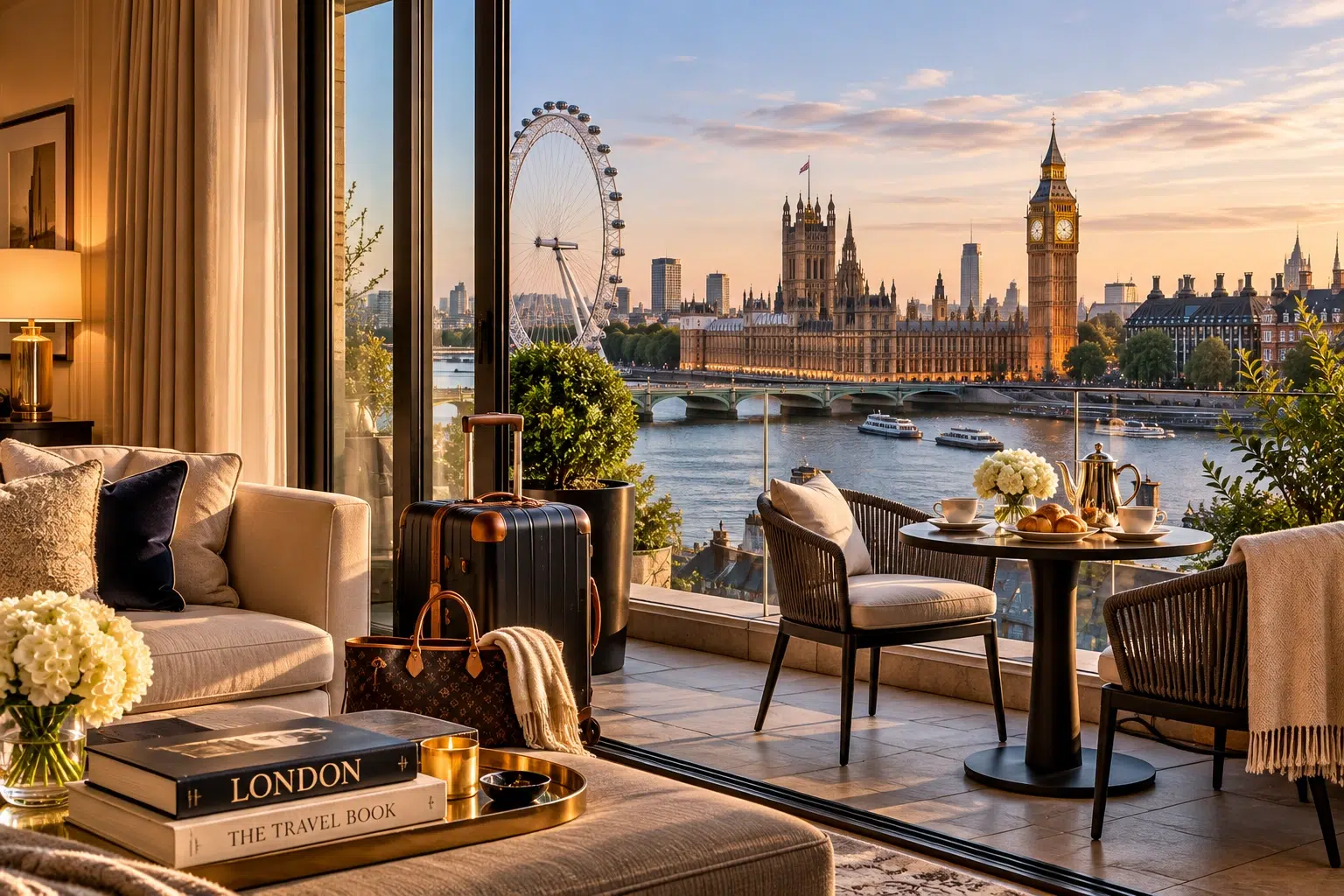
A week in London is a holiday. A month is something else entirely. By the second Monday you have stopped consulting the map, by the third you have a favourite table at a neighbourhood restaurant, and by the end the city has quietly rearranged your habits. For anyone who can spare the time, for work, family or sheer curiosity, the most rewarding way to do it is from a well-chosen luxury serviced apartment in London, where a proper kitchen, a desk and a front door of your own turn a visit into something closer to a life, if only a temporary one.
Hotels are built for short stays, and even the finest begin to feel like a corridor after ten days. A month asks for different things: room to unpack fully, somewhere to cook an easy supper, laundry that does not require a conversation with the concierge, and a street you can come to know. What follows is a guide to doing it properly.
Choose a village, not just a postcode
London is a city of villages, and over a month the one you choose shapes everything. Mayfair suits those who want Bond Street, the galleries around Cork Street and the dining rooms of the grand hotels within a ten-minute walk. Belgravia and Knightsbridge are quieter and more residential, all white stucco and garden squares, with the food halls of Harrods a short stroll away. Marylebone has the feel of a small town, with a High Street of independent shops, a Sunday farmers’ market and the Wallace Collection close by. Notting Hill appeals to those who prefer pastel terraces, Portobello Road on a Saturday and the green calm of Holland Park. Covent Garden is for the theatre-goer who would like to walk home from the opera.
What the apartment should offer
Test any apartment against a single question: how will it feel in the third week? A good long-stay residence has a kitchen that is genuinely equipped, a washer and dryer, generous storage and a bedroom that is truly quiet. If you will be working, ask about a proper desk and dependable broadband. Ask about air-conditioning too, which older London buildings often lack and which you will want in a warm summer. Find out how often housekeeping calls, where the lift is and which way the bedroom faces. These details look minor on a booking page and prove decisive after a fortnight.
The first week
Give yourself a few days to settle before the diary fills. Walk the nearby streets at different hours, find the closest good grocer, bakery and coffee, and learn the route to the nearest Tube or Elizabeth line station. London’s contactless system caps your daily fares automatically, so there is no need for a ticket, and a black cab remains the easiest way home after dinner. Arriving from Heathrow, the Elizabeth line reaches Bond Street and Paddington without a change, which is a considerable kindness after a long flight.
Eating well, at home and out
The great pleasure of a month is the chance to become a regular. By the third week the staff at a favourite local restaurant will know your name and your preferred table, which is a more satisfying luxury than any tasting menu. Save the grand occasions for the places that deserve them, such as Scott’s in Mayfair, Wiltons in St James’s, which has been serving since 1742, or Core by Clare Smyth in Notting Hill, and keep simpler, quieter tables close to home for the evenings in between.
At home, London’s food shops are a delight in their own right. La Fromagerie in Marylebone is the place for cheese, Partridges by Sloane Square for a well-stocked pantry, and the food halls at Fortnum & Mason and Harrods for almost anything else. A private chef for an evening, arranged through a concierge, can turn the apartment into the best table in the city and spares you the journey home.
Culture across the weeks
A month allows you to see London’s galleries properly, which a long weekend never does. Take the Royal Academy on Piccadilly, the Wallace Collection, the National Gallery, Tate Modern and the V&A one at a time, and return to the ones that catch you. The commercial galleries of Mayfair are free to enter and give a fine sense of the contemporary market, while the Serpentine Galleries in Kensington Gardens reward a slower walk. In the evenings, choose between the Royal Opera House, a chamber concert at Wigmore Hall and the West End, and book the plays that matter to you a few weeks ahead. Mornings belong to the parks. Hyde Park, Green Park and Regent’s Park each have their own character, and a daily walk through one of them does more for a long stay than any spa.
Leaving town
London is also an ideal base for escape. Paddington reaches Oxford in about an hour and Bath in a little under an hour and a half; Waterloo serves Windsor, and the Eurostar from St Pancras reaches Paris in around two and a half hours. A weekend away, with a familiar apartment to return to, is a far easier proposition than moving from one hotel to the next.
Practical matters
Check entry requirements before you book. Most visitors can stay in the United Kingdom for up to six months, but many nationalities now need an Electronic Travel Authorisation, and the rules vary by passport, so confirm them on the official government website. Arrange travel and health insurance, and ask your host about parcel deliveries, guest policies and the arrangements for housekeeping. If you wish to begin a bespoke commission on Savile Row, a month is a workable window for the first fittings, though most houses prefer several appointments over a longer period.
The measure of a month
A month in London is a different proposition from a holiday. You learn which pavement catches the afternoon sun, which florist stays open late and which bartender remembers your order. Choose the neighbourhood with care, insist on an apartment that works as a home, and leave a few days in the diary empty. That, rather than any reservation, is what a long stay offers.