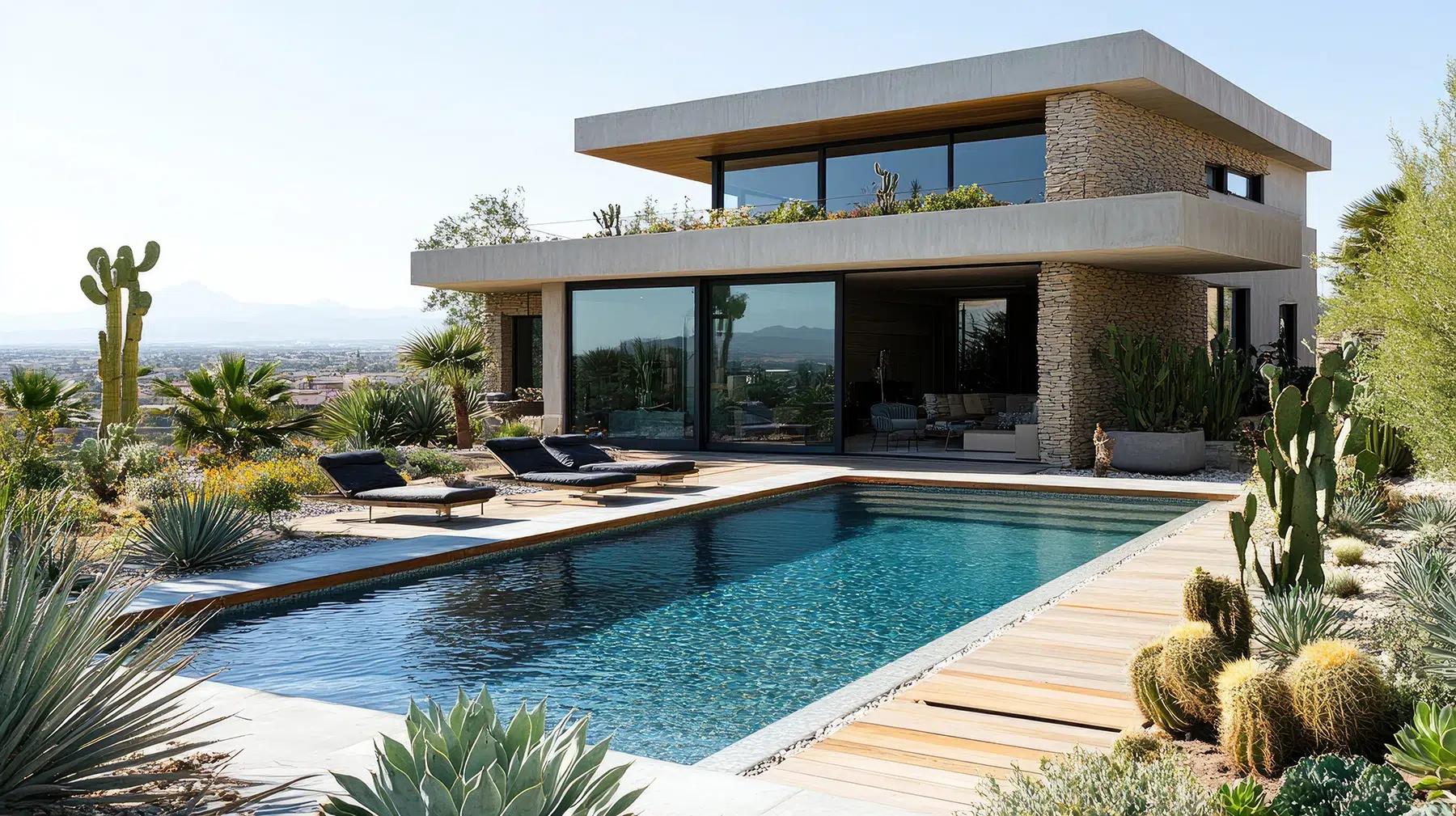
Passive Design Is the Backbone. Ignore it, and you’re stuffed
I don’t care how fancy your finishes are. If the home faces the wrong way, you’ve already lost.
Passive design is step one. Always. Orientation, window placement, shading, airflow. Get those right and everything else becomes easier.
In most parts of Australia, you want living areas facing north. That gives you winter sun without cooking the place in summer. Then you control it with eaves or external shading. Not internal blinds. Too late by then.
Cross-ventilation matters more than people think. Windows on opposite sides. Clear airflow paths. I’ve seen homes drop internal temperatures by 4 to 6 degrees just by getting airflow right. No air con. No tricks.
Mess this up, and you’ll spend the next 30 years trying to fix it with appliances.
Airtightness and Insulation Do the Heavy Lifting
Here’s where most builds fall apart.
You can’t see insulation once the plaster goes on, so people cut corners. Big mistake. Airtightness gets ignored completely half the time.
A properly sealed home stops uncontrolled air leaks. That means you’re not constantly losing cooled or heated air. Pair that with solid insulation, and you get stable indoor temperatures.
Real numbers? I worked on a project in Melbourne where we tightened the building envelope and upgraded insulation. Heating demand dropped by roughly 55 percent compared to neighbouring homes of similar size.
Same weather. Same street. Different outcome.
You don’t get that from fancy tapware.
High-Performance Windows Are Non-Negotiable
Standard windows are weak points. Heat comes in. Heat escapes. You feel it every afternoon.
Double glazing is the baseline now. In colder areas, triple glazing makes sense. But it’s not just the glass. Frames matter. Seals matter. Installation matters.
I’ve seen expensive windows installed poorly and perform like cheap ones.
Low-E coatings help control heat transfer. Proper seals stop drafts. And orientation still matters. A massive west-facing window is a liability no matter how “high performance” it claims to be.
Spend here or pay for it every single day.
Thermal Mass Works. If You Use It Properly
Concrete slabs, brick, stone. They can stabilise indoor temperatures by absorbing heat during the day and releasing it slowly.
But people get this wrong all the time.
Thermal mass only works when it’s paired with the right design. You need sunlight to hit it in winter. You need shading in summer. Otherwise, it just stores heat when you don’t want it.
I’ve seen homes with polished concrete floors that turn into heat traps because there’s no shading. Looks great. Feels terrible.
Used properly, though, thermal mass can reduce temperature swings significantly. Less reliance on mechanical heating and cooling. More comfort.
Controlled Ventilation Beats Guesswork
Airtight homes need controlled ventilation. Otherwise, you trap stale air inside.
Mechanical ventilation systems with heat recovery solve this. Fresh air comes in. Stale air goes out. Heat transfer happens between the two so you don’t lose energy.
It sounds technical. It’s not complicated to live with.
Set it and forget it. Consistent air quality. No condensation issues. No random drafts.
I’ve had clients who didn’t realise how bad their old indoor air was until they moved into a properly ventilated home. It’s one of those upgrades you don’t notice until you experience it.
Off-Site Construction Improves Consistency
Building on-site sounds romantic. It’s also messy and inconsistent.
Weather delays. Material exposure. Different trades work at different standards.
Modular housing solves a lot of that. Controlled factory conditions. Repeatable processes. Tighter quality control.
I visited a facility in Victoria where wall sections were built with millimetre precision. No rain damage. No rushed work before a storm hits. The result was a tighter building envelope and fewer defects.
And yes, it’s faster. But speed isn’t the main benefit. Consistency is.
You get what was designed. Not a compromised version of it.
Rebuilding Lets You Fix Structural Problems at the Source
Some existing homes are energy disasters. Poor orientation. No insulation. Bad layout. You can patch them, but you’re working against the structure.
That’s where knock down rebuild packages make sense. You remove the problem entirely.
Start again with proper orientation, insulation, and layout. Design the home around performance from day one instead of trying to retrofit it later.
I’ve seen renovation budgets blow out trying to fix basic structural flaws. In a lot of cases, rebuilding would have been cheaper and far more effective.
Not always the popular choice. Often the right one.
Renewable Systems Only Work After the Basics
Everyone jumps straight to solar panels. It’s the shiny upgrade.
But if the house leaks energy, you’re just covering bad design with tech.
Fix the envelope first. Airtightness. Insulation. Windows. Passive design. Then add solar.
A well-designed home can cut energy demand so much that your solar system works harder for you. Smaller system, bigger impact.
I’ve seen homes where a modest solar setup covers most of their usage because the building itself is efficient. That’s the goal.
Water Efficiency Isn’t Optional Anymore
Sustainability isn’t just energy.
Rainwater tanks, efficient fixtures, and smart landscaping reduce water use significantly. In drought-prone parts of Australia, this isn’t a bonus feature. It’s basic planning.
Greywater systems can reuse water for gardens. Low-flow fixtures cut usage without killing pressure if installed properly.
Again, it’s about systems working together. Not one-off upgrades.
The Premium Part Comes From How It All Works Together
Here’s the truth.
None of these methods is impressive on its own. No one walks into a house and says, “Nice airtightness.”
But they feel it. Stable temperature. Clean air. Low bills. Quiet comfort.
That’s what premium actually is.
You don’t get it from one feature. You get it from getting the fundamentals right, stacking them properly, and not cutting corners where it counts.
Most people chase finishes.
The ones who know what they’re doing build performance first.