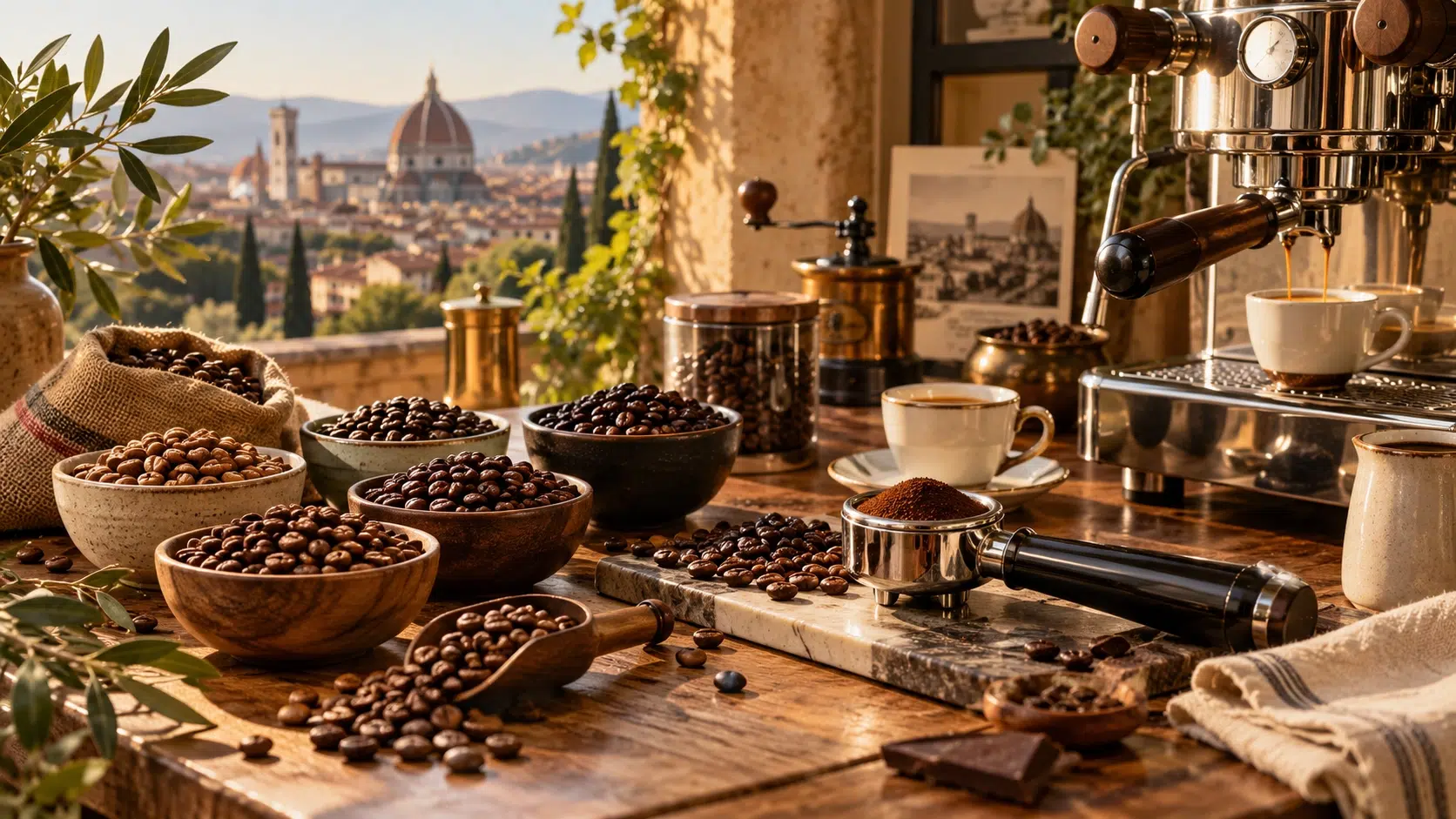
The espresso machine is the easy part. Walk into any serious kitchen in Milan or Bologna and the machine on the counter is often modest, sometimes decades old. What is never modest is the attention paid to what goes into it. Italians buy espresso the way the French buy wine: by blend, by roaster, by what it does in the cup, and with a mild suspicion of anything that needs a long explanation. For anyone building a home espresso bar in North America, that instinct is worth borrowing, because the bean decides more of the result than any machine upgrade will.
Here is how to choose, in the order an Italian would.
Start with the blend, not the origin
Specialty coffee culture has taught a generation to read labels for a single farm and a single variety. That is a wonderful way to buy a pour-over. It is not how espresso is made in Italy. Espresso there is almost always a blend, built to deliver three things at once: a thick, persistent crema, a body that coats the palate, and a sweetness that holds up under milk. No single origin does all three reliably, which is why Italian roasters spend years adjusting proportions of Brazilian, Central American, African, and often Indian or Indonesian beans until the shot behaves.
A good roaster will tell you the character of each blend in plain terms. A blend described as round and chocolatey with low acidity is built for daily drinking and for cappuccino. A blend described as more aromatic, with a brighter finish, is built for a straight shot after dinner. Buy the one that matches the drink you actually make most mornings, not the one with the most impressive story.
Arabica and Robusta, without the snobbery
Much of what is sold as premium in North America is one hundred percent Arabica, and Arabica is indeed the more refined bean. But a small share of Robusta is a deliberate choice in many of Italy’s best espresso blends, not a cost-cutting trick. Robusta brings a denser crema, more body, and a pleasant bitterness that balances milk. The classic Neapolitan bar shot would be thinner without it.
The honest rule: all-Arabica blends taste cleaner and sweeter; blends with ten to twenty percent Robusta taste fuller and stand up better in a latte. Neither is wrong. What matters is that the roaster states the proportion and roasts for it. Mystery blends with no information on the bag are the ones to avoid.
Roast level is a style, and Italy has more than one
The stereotype of Italian espresso is an oily, near-black bean. That is the southern style, and it is real: Naples and Sicily drink darker. Northern roasters, in Milan, Turin and the Veneto, tend toward a medium to medium-dark roast that keeps more of the sweetness and aroma of the green coffee. Neither is the “correct” Italian roast.
For a home machine, the medium-dark northern style is the safer buy. It forgives small errors in grind and temperature, pulls a stable shot, and does not turn ashy if the water runs a little hot. Very dark roasts reward a skilled hand and punish an inattentive one.
Freshness, measured correctly
Espresso beans are not a wine; they do not improve with age. But the common advice to use coffee within two weeks of roasting comes from the filter-coffee world and does not quite apply. Freshly roasted beans release carbon dioxide for days, and that gas makes espresso extraction erratic. Italian roasters typically rest their espresso blends for one to three weeks before they are at their best, and a properly sealed, nitrogen-flushed one-kilo bag holds that peak for a long time unopened.
So the rule for the home bar is: buy in sealed one-kilo bags rather than small retail bags, check that the bag has a one-way valve, open one bag at a time, and finish it within three to four weeks of opening. A kilo sounds like a lot until you count: a double shot uses about eighteen grams, so a kilo is roughly fifty-five doubles, less than a month for a household of two.
Where the bean was roasted matters more than where it was grown
A surprising number of “Italian” coffees sold in North American supermarkets are roasted in North America under an Italian name, or roasted from green coffee that never passed through Italy at all. There is nothing illegal about it, but it is not the same product. The blending and roasting are the craft; the origin is only the raw material.
The simple check is the label. “Roasted in Italy” or “Prodotto in Italia” with a named town is what to look for. If the packaging is vague about where the roasting happened, assume it did not happen in Italy. For a home bar that aims at the real thing, this is the one line on the bag worth insisting on.
A note on buying in Canada and the United States
Importing Italian coffee into North America is less mysterious than it looks, which is partly why a small importer can offer the same bags that sit on bar counters in Bologna. Roasted coffee crosses into Canada without duty, so the price difference between a kilo in Italy and a kilo in Vancouver or Seattle is mostly freight and the exchange rate, not tax. Buying from a specialist importer rather than a marketplace reseller usually means fresher stock and a known roast date, and a kilo bought direct is nearly always cheaper per cup than four 250-gram bags.
For readers who want a starting point, the Italian espresso beans curated by Lusso Scelta are all roasted in Italy, sold in sealed one-kilo bags, and described blend by blend in exactly the terms above: body, crema, sweetness, and what each one is for.
The short version
Buy a blend, not a single origin. Accept a little Robusta if you drink milk coffee. Choose a medium-dark northern roast unless you already know you want darker. Buy a sealed kilo with a valve and finish it within a month of opening. Insist on “roasted in Italy.” Do those five things and a mid-range home machine will produce a shot that most cafés in North America cannot match, because the hard part was decided before the water ever touched the coffee.
Maysam Tehrani is the founder of Lusso Scelta, a Vancouver-based curator and importer of Italian coffee and tableware serving Canada and the United States. More of his writing on trade and brand building is at maysamtehrani.com.