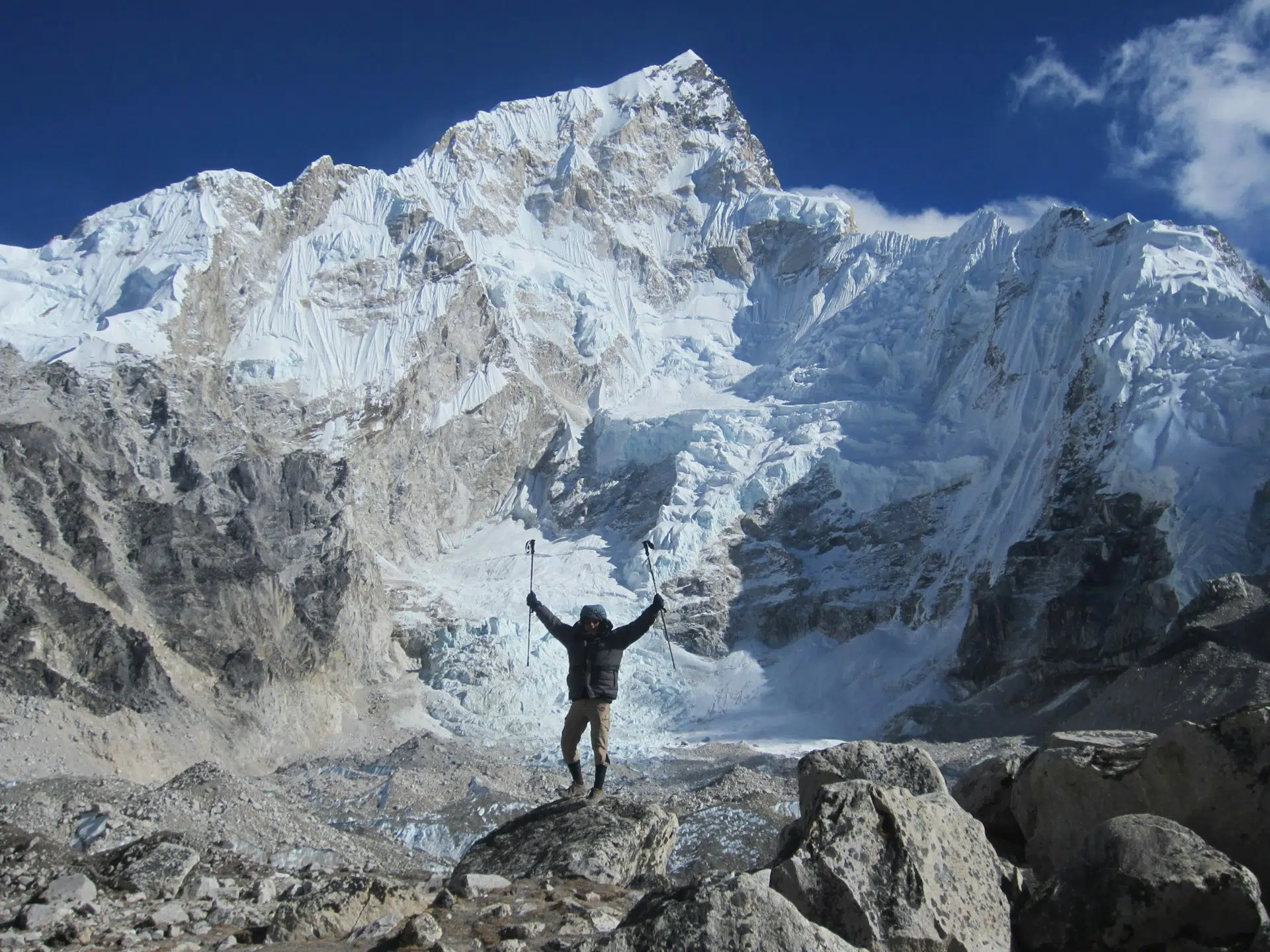
Confused about choosing Everest treks or climbing a peak? Why not combine them and complete both in one trip? You start the journey with high-altitude trekking routes, like the 12 days Everest Base Camp Trek. And then continue with Island peak climbing or Lobuche East peak climbing, or Mera peak climbing.
First, you get to explore Sherpa villages, monasteries, and diverse landscapes, immersing yourself in the local culture and tradition. After you reach the base camp, your guides or climbing leader will teach you basic climbing skills like walking with crampons on, using an ice axe, and using fixed ropes. Thereafter, you climb the peak and witness a wide-angle view of the Everest region.
Moreover, you do not need prior climbing skills to summit these peaks. Anyone with good physical fitness can complete it with professional assistance. Combining climbing and mountaineering in the Everest region is the best option for someone seeking a rewarding challenge without the extreme demands of high-altitude mountain expeditions.
Everest Trek With Mera Peak Or Island Peak Climbing
Island peak climbing and Mera peak climbing are one of the most sought-after “trekking peaks” of the Everest region. They both fall under the 6,500-meter mark and do not demand advanced mountaineering skills, making them perfect for starting your expedition journey. Here is a more detailed overview of both of them.
Island Peak Climbing (6,189 meters)
This is one of the most popular trekking peaks in Nepal. Standard Island peak climbing follows the trail of the classic 12 days Everest Base Camp trek up to Dingboche and then diverts to Chukkung. Alternatively, you could also complete the classic Everest Base Camp trek and then follow the summit route.
The journey starts with beautiful Sherpa villages and passes through mountain valleys, rhododendron and pine forests, and high-alpine meadows. From Chukung, you head to the Island base camp and stay in a tent overnight. If the weather is favorable the next day, we aim for the summit. From the top, you can witness panoramic views of majestic mountains. Such as Mount Everest, Ama Dablam, Nuptse, and Lhotse.
While the 12 days Everest Base Camp trek focuses on walking through established trails and exploring the himalayan lifestyle, Island peak climbing takes it to another level by introducing high-altitude mountaineering.
Mera Peak Climbing (6,476 meters)
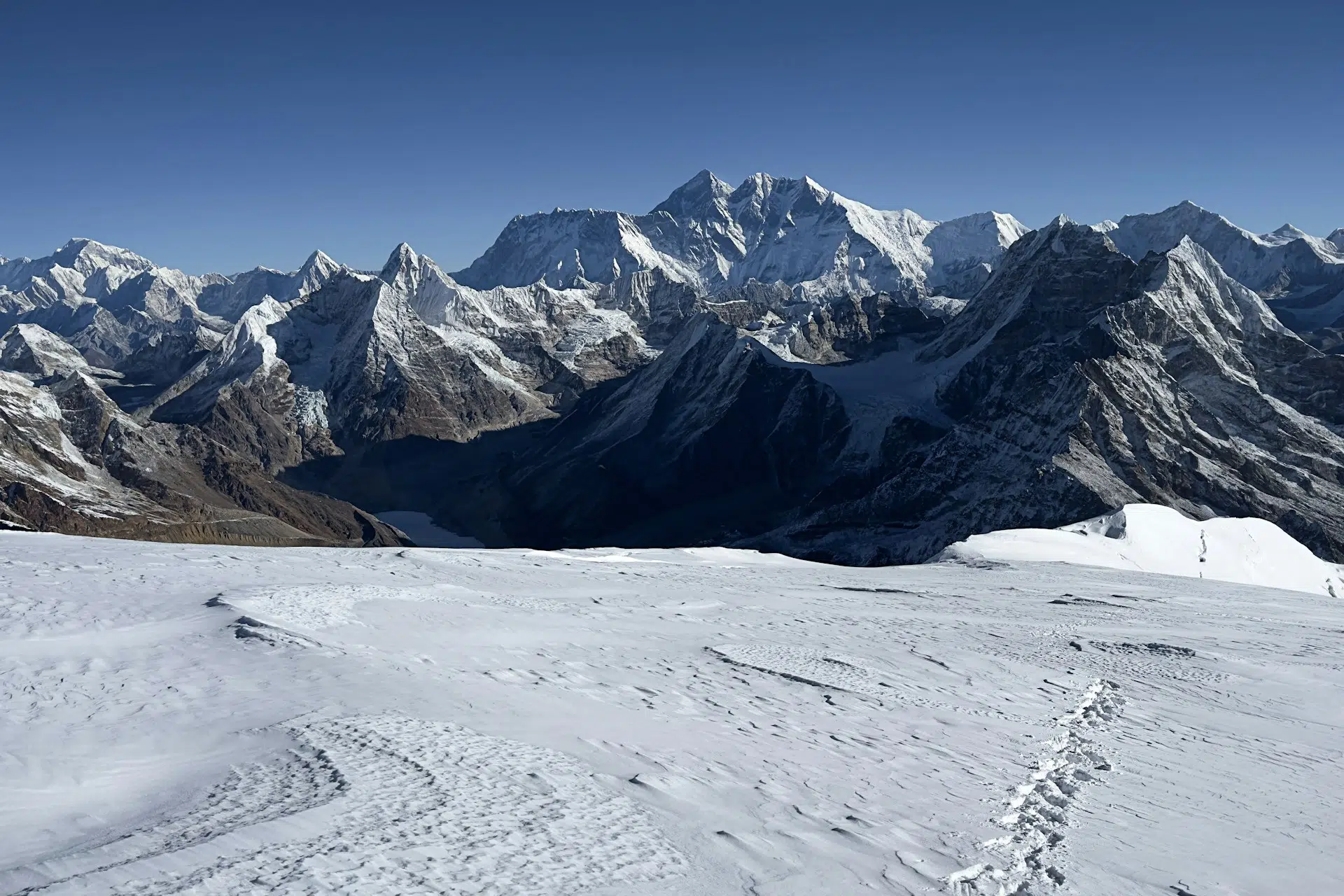
It is the highest trekking peak of Nepal. However, it is less technical and physically less demanding than Island peak. So, it is an ideal choice for first-time summiters. While Mera peak climbing lies in the Everest region, it doesn’t follow the 12 days Everest Base Camp trek’s route. Instead, it takes you through the remote trails, high mountain passes, and valleys.
Mera peak climbing journey starts with rhododendron and pine forest as you trek from Lukla to Chutenga. Then the trail stretches to Zatre La Pass via dense jungles and pasturelands. In the following days, you walk through Chatrabu, Kothe, Thagnak camp, and Khare camp, and then finally to the base camp of Mera Peak. After climbing for about 8 to 9 hours, you arrive at the summit and behold the views of Kanchenjunga, Nuptse, Ama Dablam, Cho Oyu, Lhotse, Makalu, Baruntse, Chamlang, etc.
See Everest Without Trekking
The classic treks of the Everest region, like the 12 days Everest Base Camp trek or the Everest three high passes trek, require a long duration and good physical fitness. Likewise, Mera peak climbing and Island peak climbing demand high endurance and basic mountaineering skills. However, not everyone hasthe time or physical ability to trek for about two weeks and then go through a day of expedition. So, the Everest Helicopter tour is the perfect alternative to experience the majestic Everest without any physical strain. There are two Everest Helicopter tour visitors can pick from. The first is the Everest Base Camp helicopter tour, and the second is the Everest Base Camp flyover.
In the Everest helicopter tour, you get to land at the Kala Patthar viewpoint for about 30 minutes. On the other hand, in the Everest helicopter flyover, you will just fly above the himalayas with no ground experience. Therefore, the Everest Helicopter tour with landing is more suitable for photographers and travelers who want a closer Everest experience.
Best Time to Trek, Climb Peaks, and Take an Everest Helicopter Tour
The spring and autumn seasons are the most suitable times to explore the majestic Everest region. Be it by trekking, climbing peaks, or taking an Everest helicopter tour. These months offer clear skies and stable weather patterns. Furthermore, they have excellent long-distance visibility, and the mountain views are at their best.
Therefore, these two seasons are perfect for classic treks like the 12 days Everest base camp trek. Similarly, they are the best times for Mera peak climbing, Island Peak climbing, and other mountain expeditions. During this time likelihood of strong winds and turbulence is lower, making the Everest helicopter tour safer and more reliable.
Flights operate year-round, and pilots are trained to deal with harsh mountain weather. So, the monsoon and winter are doable and equally rewarding for the Everest helicopter tour. However, it is better to avoid them for treks, as trails are less stable. This risks accidents and minor injuries. But if you are well prepared and have a licensed guide, it is manageable.
Peak climbing is technically possible during the winter and monsoon seasons, but it poses more risk and weather challenges. So, have an experienced expedition leader guide you to the summit.