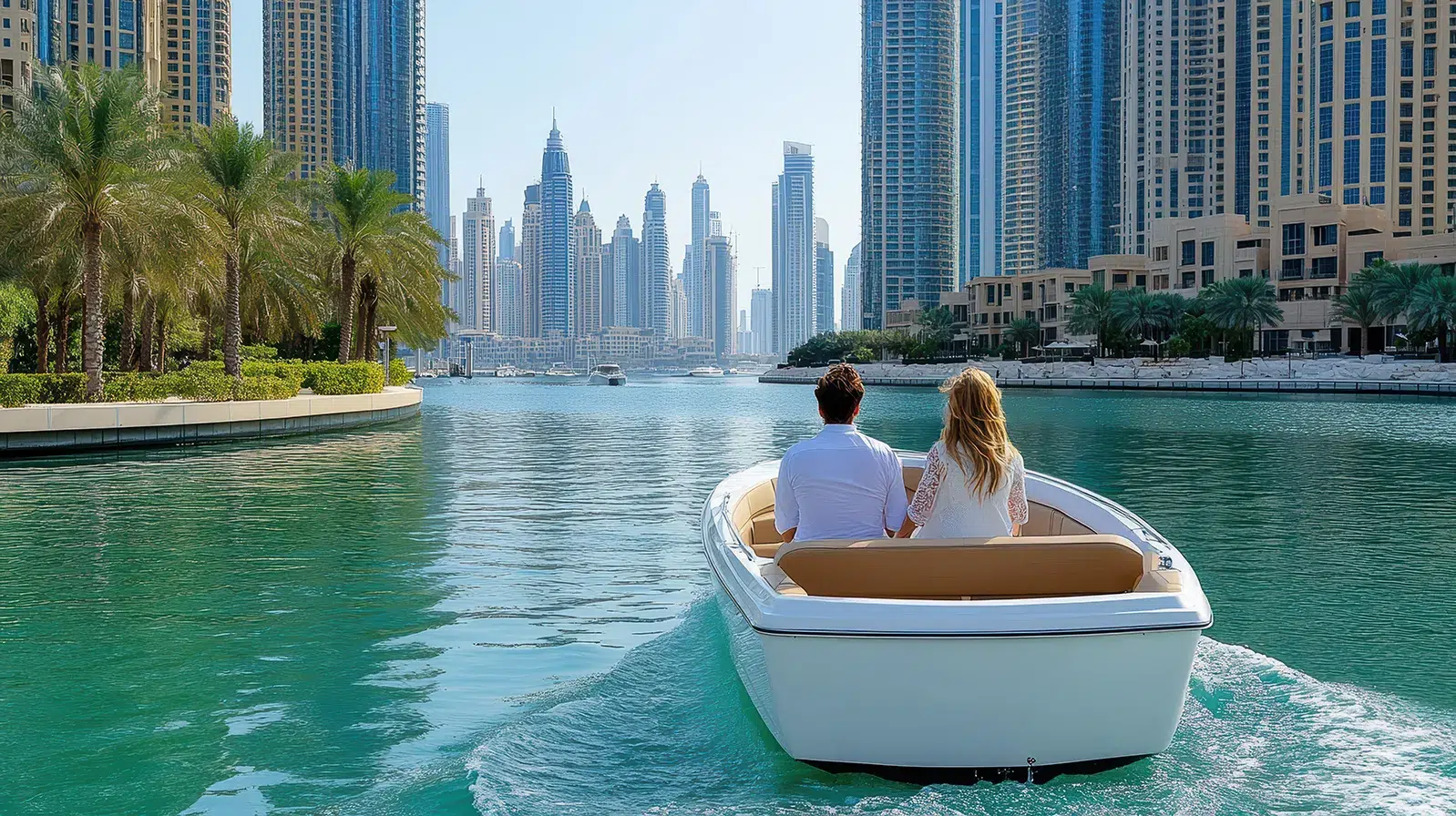
Dubai has never been shy about ambition. This is the city that turned desert into skyline, shopping into theatre, and airport transfers into a global economic strategy. So when the United Arab Emirates began moving into regulated commercial gaming, the decision was never going to be about a few roulette tables tucked quietly behind a hotel lobby. It was always going to be bigger than that: integrated resorts, luxury hospitality, high-net-worth tourism, international operators, advanced payments, and a carefully controlled regulatory framework designed to bring gaming into the country without making it feel like a free-for-all.
The most important point is that Dubai itself has not yet opened a casino. The UAE’s first confirmed licensed casino resort is Wynn Al Marjan Island in Ras Al Khaimah, around 50 minutes from Dubai International Airport. Wynn says the resort is due to open in spring 2027 on a 60-hectare island in the Arabian Gulf, with hotel rooms, restaurants, entertainment, retail, beach clubs, and a gaming area all forming part of the wider resort. In October 2024, Wynn Resorts confirmed it had received a commercial gaming operator licence from the UAE’s General Commercial Gaming Regulatory Authority, which was a major milestone for the region.
That regulator is the real signal. The General Commercial Gaming Regulatory Authority, known as the GCGRA, has been created to regulate, license, and supervise commercial gaming activities in the UAE. This tells us the country is not rushing blindly into gambling. It is building the framework first, then allowing selected operators to function within a controlled, licensed environment. That matters because gambling remains culturally sensitive in the Gulf, and the UAE will want to manage the sector with the same polished discipline it applies to aviation, tourism, finance, and property.
Dubai’s own position is more subtle, but it is clearly part of the wider story. MGM Resorts has been linked to a major Dubai hospitality project on Jumeirah Beach, involving brands such as MGM, Bellagio, and Aria. The resort has been discussed as a luxury development rather than a confirmed casino, and casino approval has not yet been publicly granted. Even so, the presence of these brands shows that Dubai is preparing for a future where integrated resorts may become part of the region’s premium tourism mix.
The economic logic is easy to understand. Dubai already has the infrastructure that luxury gaming tourism needs: international air links, five-star hotels, private banking, high-end restaurants, supercar culture, luxury shopping, marinas, beach clubs, and an affluent visitor base. Dubai welcomed 18.72 million international overnight visitors in 2024, up 9% from 17.15 million in 2023, according to Dubai’s Department of Economy and Tourism. In 2025, the city reached another record with 19.59 million international visitors. That is a powerful base for any integrated resort operator looking for wealthy international guests.
Dubai International Airport strengthens the case further. In 2024, DXB handled 92.3 million passengers, its busiest year on record. In 2025, the airport reportedly handled 95.2 million passengers, maintaining its position as the world’s busiest airport for international travel. For casino and resort operators, that level of connectivity is extremely valuable. High-net-worth travellers do not want difficult access. They want direct flights, fast-track arrivals, private transfers, luxury suites, and a reason to stay longer. Dubai already has most of that machinery in place.
What makes Dubai especially interesting is how tech-savvy the city already is. This is not a destination where visitors expect paper forms, slow queues, and clunky service. Dubai has spent years building a reputation for smart government services, digital payments, app-based transport, luxury e-commerce, biometric airport systems, and mobile-first convenience. If casino gaming becomes part of the wider tourism economy, it is very likely to be wrapped in the same smooth technology that already defines much of the Dubai experience.
That means mobile phones could play a central role in how visitors use future gaming resorts. Guests may be able to use their phones and have access to pay-by-phone casino apps to book rooms, reserve restaurants, enter exclusive areas, pay for drinks, buy event tickets, manage loyalty rewards, and access casino-related services where legally permitted. Instead of carrying cash around a resort, a visitor could rely on mobile wallets, contactless payments, QR codes, digital room keys, and integrated resort apps. For wealthy travellers used to Apple Pay, Google Pay, digital banking, and private concierge apps, this would feel completely natural.
This matters because the future of luxury gaming is not just about the casino floor. It is about the entire customer journey. A high-net-worth visitor might land at Dubai International Airport, use biometric passport control, take a private transfer to a resort, check in through an app, unlock a suite with a phone, book a table at a restaurant, pay for champagne by mobile wallet, enter a members-only lounge through digital verification, and receive personalised offers through a loyalty platform. If gaming is part of that journey, the payment and access systems will need to feel just as seamless.
Mobile payments would also help align gaming resorts with Dubai’s broader digital economy. The UAE has been pushing strongly towards cashless transactions, fintech adoption, and smart-city infrastructure. In that context, it would be surprising if future casino-linked resorts relied heavily on old-fashioned payment systems. The more likely model is a controlled digital environment where payments, spending limits, identity checks, and loyalty benefits are connected through secure technology. That would appeal to both regulators and guests.
For operators, this technology creates commercial advantages. Digital payments reduce friction, increase convenience, and generate useful data about customer behaviour. Resort apps can show which restaurants guests prefer, what events they attend, how often they visit, how they spend, and what offers might bring them back. Used responsibly, this can create a much more personalised luxury experience. A returning guest might receive tailored restaurant recommendations, suite upgrades, event invitations, or premium gaming offers based on previous stays.
For regulators, digital systems could also make the industry easier to supervise. A modern gaming resort can use technology for age verification, identity checks, anti-money laundering controls, responsible gaming limits, and transaction monitoring. That is especially important in a market like the UAE, where reputation and regulatory control matter enormously. If the country wants to allow commercial gaming while avoiding the image of uncontrolled gambling, technology will be one of the main tools that makes that possible.
The high-net-worth angle is particularly important. Casino resorts at the top end are not chasing only mass-market tourists. They want affluent visitors who spend heavily across the entire property: suites, restaurants, spas, shopping, entertainment, private lounges, beach clubs, and VIP experiences. That is where Dubai and the wider UAE have a natural advantage. The city has spent decades positioning itself as a global luxury hub. Commercial gaming, if handled carefully, could add another layer to that offer and help keep wealthy visitors in the region for longer.
The regional competition also matters. Saudi Arabia is investing heavily in tourism, entertainment, and mega-projects as part of Vision 2030. Qatar has built a major hospitality capacity. Abu Dhabi is expanding its cultural and leisure attractions. Dubai cannot afford to stand still. Regulated gaming gives the UAE a new card to play in the battle for premium tourism, especially if it can offer casino-style entertainment while maintaining the polished, controlled image that has made Dubai attractive to investors, families, and luxury travellers.
For Ras Al Khaimah, the effect could be even more dramatic. Wynn Al Marjan Island is not just another hotel. Wynn announced a $2.4 billion construction facility in February 2025 to finance the development, underlining the scale of confidence behind the project. The resort is expected to bring global attention to an emirate that has traditionally sat in Dubai’s shadow. If it succeeds, it could turn Ras Al Khaimah into a serious luxury tourism destination in its own right while still benefiting from Dubai’s airport, infrastructure, and international brand power.
There is also a jobs and supply-chain story. Integrated resorts require far more than dealers and gaming tables. They need hotel staff, chefs, security teams, compliance specialists, payment providers, technology suppliers, designers, events professionals, finance teams, entertainers, private transport operators, and maintenance firms. A properly regulated gaming sector could create skilled employment and attract international expertise. It could also support local businesses that serve the luxury hospitality ecosystem.
The tax and government revenue potential is another reason the sector is being watched closely. The UAE has not built its brand around heavy taxation, but regulated commercial gaming creates opportunities for licence fees, corporate tax receipts, tourism levies, employment growth, and indirect spending. Even if gaming itself forms only one part of the revenue model, the wider resort economy can be substantial. Hotel stays, fine dining, shopping, entertainment, and premium experiences all generate economic activity well beyond the casino floor.
The UAE is likely to proceed carefully. Gambling remains sensitive, and the country will want to avoid the social problems associated with poorly regulated markets. That is why the language is so controlled. Officials and operators tend to speak about “commercial gaming” and “integrated resorts” rather than promoting gambling in a loud Las Vegas style. The model seems closer to Singapore: limited licences, high regulation, luxury positioning, and a strong emphasis on tourism value.
This is probably the smartest route. Dubai and the UAE do not need to become Las Vegas. Trying to copy Las Vegas too closely would be a mistake. The opportunity is to create something more selective: luxury resorts with gaming as one part of a wider hospitality, technology, and entertainment experience. That suits the market, protects the brand, and appeals to wealthy visitors who are already comfortable with Dubai’s polished version of excess.
For now, the UAE’s casino story is still in its early chapters. Wynn Al Marjan Island is the confirmed milestone, Dubai’s MGM-linked project remains one to watch, and the GCGRA has created the regulatory foundation. What is already clear is that this is not a gimmick. It is part of a broader economic strategy to deepen tourism, attract wealthy visitors, diversify entertainment, and keep the UAE competitive in a region spending billions to win the future of luxury travel.
Dubai built its modern reputation by spotting where global money wanted to go next and then building the runway, hotel suite, shopping mall, and mobile app before everyone else arrived. Regulated gaming may be the next version of that instinct. Done badly, it would jar with the city’s carefully managed image. Done well, with strong regulation and smart technology, it could become another powerful engine for tourism, investment, and high-end spending across the UAE.