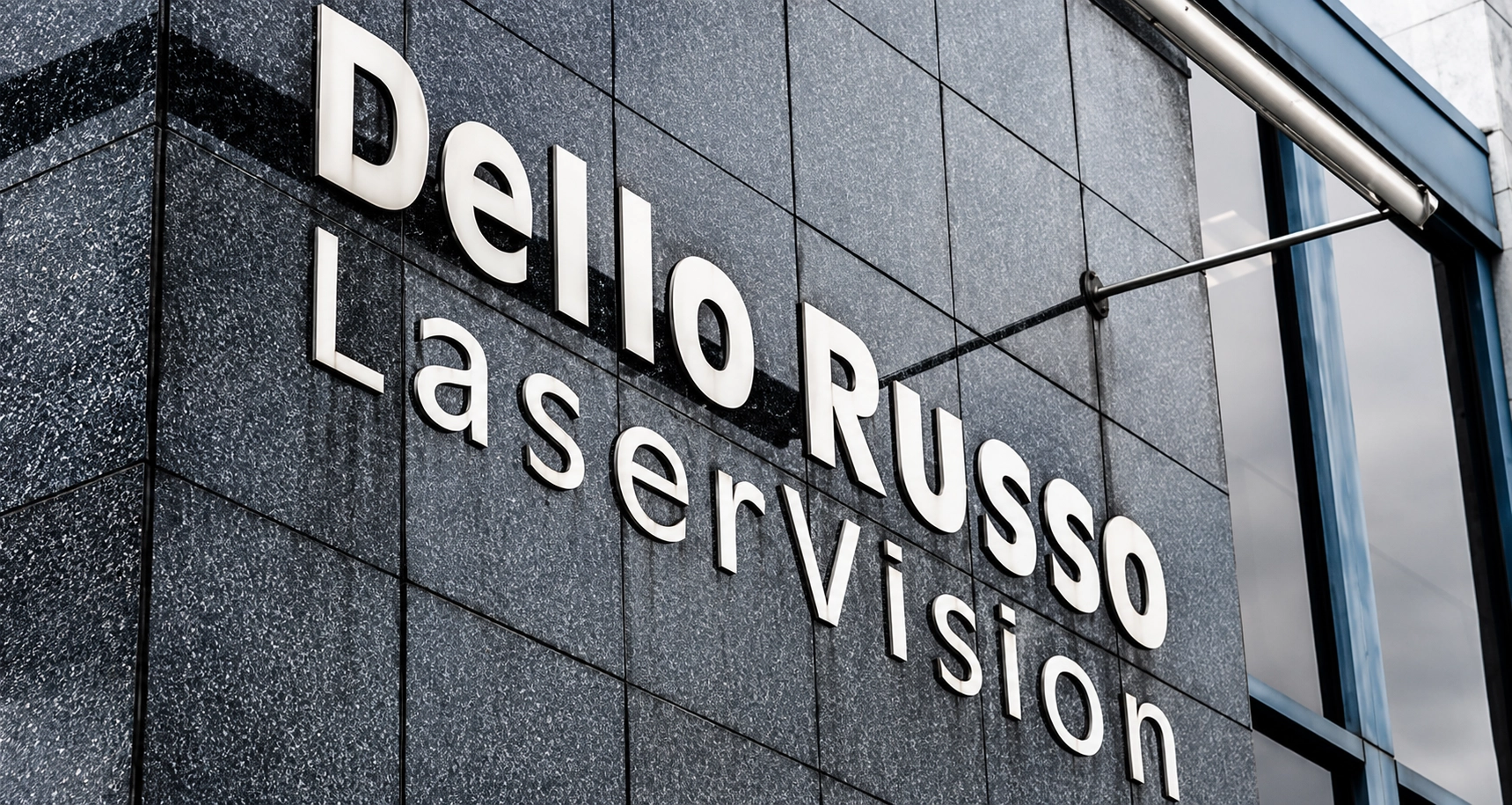
Photo Courtesy of Dello Russo Laser Vision
The market for laser vision correction in the United States looks different today than it did when the procedure first received FDA approval in the mid-1990s. A category once dominated by independent ophthalmologists and small surgical groups has, over the past decade, been steadily rolled up by private equity firms and corporate chains. Most of the largest LASIK brands a consumer encounters today are owned by investment groups, not by the surgeons who run the operating rooms.
Dello Russo Laser Vision, a tri-state practice with locations across New York, New Jersey, and Connecticut, sits outside that pattern. The practice has remained family-owned for more than 3 decades, has performed more than 200,000 eye surgeries, and, according to its website, has trained more than 100 eye surgeons worldwide. Its independence is not incidental to the second number. It is what makes it possible.
Independence in a Consolidating Field
The structural pressure to sell to private capital has been significant in elective surgery generally and refractive surgery specifically. Volume-based revenue, predictable cash flow, and a steady stream of self-pay patients have made LASIK clinics attractive acquisition targets. Across the country, large chains and PE-backed platforms have absorbed independent practices, often retaining the original branding while replacing the underlying ownership structure.
Dello Russo Laser Vision was founded by Dr. Joseph Dello Russo, one of 10 principal FDA investigators whose work contributed to the U.S. approval of laser vision correction. He opened what the practice describes as the first private laser vision center in 1996. Dr. Jeffrey Dello Russo, the next generation, now serves as Medical Director.
A Practice With a Teaching Arm
Most laser vision clinics function as service businesses. Patients arrive, the procedure is performed, and the relationship ends within months of follow-up. The Dello Russo team has operated differently. The Dello Russo team has trained more than 100 eye surgeons worldwide during the practice’s operation. That is an unusual figure for a clinical operation of any size.
A teaching mandate inside a private practice is structurally easier when the practice is not answering to outside investors. Training other surgeons takes time, slows procedural throughput in the operating room, and rarely produces direct revenue for the host clinic. In a PE-owned environment, those tradeoffs are difficult to defend during a quarterly review. In a family-owned practice operating across a 30-year horizon, they are something closer to the point of the operation.
Dr. Joseph Dello Russo’s surgical career predates LASIK itself. He advanced cataract surgery to a small-incision, foldable-lens, ambulatory procedure first in the Northeast in 1979, fifteen years before laser vision correction reached the FDA approval process. By the time the Dello Russo practice opened a private laser vision center in 1996, the family had been performing refractive ophthalmology for nearly two decades.
What Family Ownership Means in 2026
Independence by itself is not a virtue in elective medicine. Plenty of independent practices have underinvested in technology, fallen behind on training, and struggled to attract the next generation of surgeons. The more interesting question is what an independent practice does with its independence.
In the Dello Russo case, the answer has included continued early adoption of newer refractive platforms. The practice was among the first in the Northeast to introduce the Alcon WaveLight Plus, an AI-assisted LASIK system that uses ray tracing to build a treatment plan based on each patient’s eye anatomy. The refractive portfolio also extends beyond LASIK to include PRK, Custom LASIK with wavefront-guided mapping, and EVO ICL, a removable implantable lens for patients whose corneas or prescriptions place them outside LASIK eligibility.
That combination, continued technology adoption alongside a sustained teaching role, is harder to deliver inside a chain. It becomes more valuable as more of the category consolidates. As patient choices in laser vision narrow to a handful of PE-owned brands, an independent practice with a 30-year track record, a teaching arm, and a current technology stack becomes more of a category outlier.
For prospective patients, that distinction is increasingly the most useful filter in a confusing market. For the rest of the LASIK industry, it is a reminder that consolidation is not the only viable structure for a successful refractive practice.