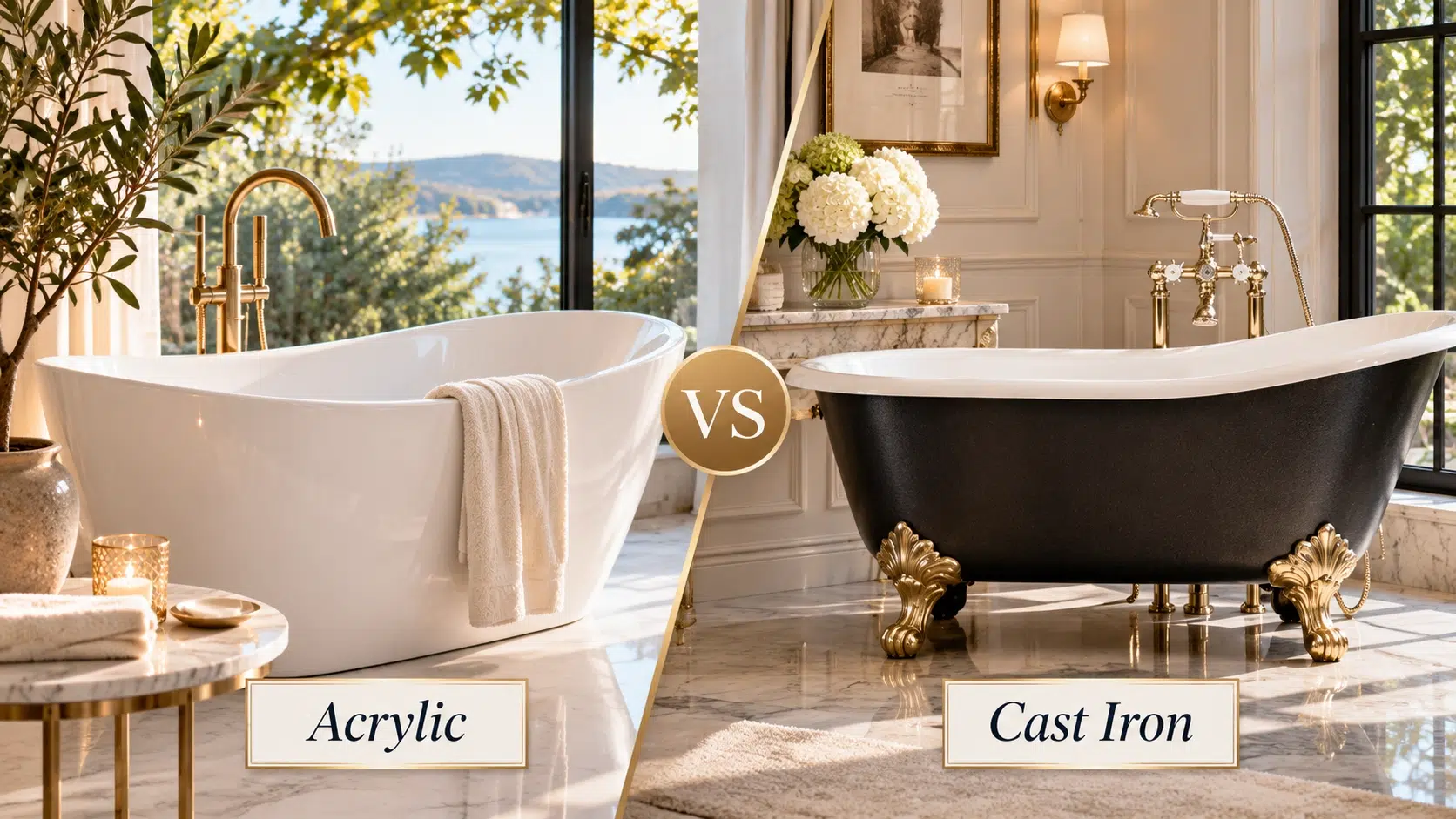
A 327-pound cast iron tub and an 85-pound acrylic tub can sit side by side in a showroom looking nearly identical. The difference becomes obvious the moment someone tries to move one, or the moment a contractor looks at the floor joists and starts asking questions. For homeowners weighing acrylic bath tubs against cast iron, the decision usually comes down to a handful of concrete factors: what the floor can support, how long the water needs to stay hot, who is doing the installation, and how long the bathroom will go before the next remodel.
The Weight Difference Is Not a Minor Detail
The weight gap between these materials is the first thing that affects real-world installation decisions.
A standard 60-inch cast iron tub from Kohler’s Bellwether line weighs 327 pounds before a single gallon of water is added. A comparable acrylic soaking tub weighs 110 pounds. Some cast iron freestanding models push higher: Cheviot’s Regal 61-inch tub weighs 280 pounds, and the Sandringham 70-inch model reaches 395 pounds. Acrylic drop-in tubs can weigh as little as 64 pounds.
That difference matters most in upstairs bathrooms. A filled cast iron tub plus a bather can exceed 600 pounds sitting on a small footprint. Floor joists in older homes were not always designed for that point load, and reinforcement may be required. Acrylic tubs rarely trigger that conversation.
Source: Perigold product specifications for Kohler Bellwether, Cheviot Regal, and Cheviot Sandringham cast iron tubs; Neptune Velona acrylic tub specifications.
Heat Retention: The Real-World Tradeoff Nobody Mentions
Cast iron’s reputation for heat retention is well established.
But the thermodynamic reality is messier. Cast iron has high thermal mass, which means it absorbs heat from the water until the tub walls reach equilibrium with the bath temperature. That initial heat transfer is significant. On a home improvement forum, one user pointed out the practical consequence: “The tub will then absorb whatever heat it needs to get up to the new equilibrium temp of around 105 degrees. It takes some energy to do this, and you have to be prepared to replace that energy, or you end up taking a lot of short baths”.
Acrylic is a poorer heat conductor. It does not pull as much warmth out of the water at the start, but it also does not radiate heat back into the air above the waterline the way cast iron can. The practical difference: cast iron tubs feel cold to the touch until they warm up, then hold temperature longer. Acrylic tubs feel neutral from the start but lose heat steadily.
A well-insulated acrylic tub can hold heat for 30 minutes or more, which covers most soaking sessions. For bathers who regularly soak for 45 minutes or longer, cast iron’s thermal mass provides a genuine advantage.
Cost and Installation Reality
Acrylic tubs generally run $700 to $1,000 for standard models, though freestanding acrylic tubs can be found from $538 to $1,750. Cast iron starts around $1,239 for a drop-in model and climbs from there; freestanding cast iron tubs range from $1,582 to $1,681 in current listings.
Installation cost is where the gap widens. A cast iron tub almost always requires professional installation because of the weight and the risk of chipping the enamel during handling. The average bathtub replacement cost runs $1,500 to $3,000 for labor and materials, with complex installations pushing higher. Acrylic tubs are often suitable for DIY installation by homeowners comfortable with basic plumbing.
Floor reinforcement, when needed for cast iron, adds another expense that rarely appears in the sticker price.
Source: This Old House bathtub cost guide; Angi acrylic tub pricing; Modernize bathtub replacement cost data for Saratoga Springs, NY.
Durability and Repair
Cast iron baths can endure for over 50 years if maintained properly. However, if their enamel chips, the exposed iron may rust, and one will have to get it repaired professionally.
Acrylic tubs typically last 10 to 15 years, though quality varies significantly. A dropped wrench or a pet’s claws can leave scratches. The upside is that those scratches are often fixable with wet sanding or a repair kit. Stains from hard water or hair dye respond well to non-abrasive cleaners.
What Actually Drives the Decision
For upstairs bathrooms, acrylic is usually the practical choice. The weight difference alone eliminates cast iron from consideration in many second-floor remodels unless the homeowner is willing to reinforce the floor.
When it comes to bathrooms on the ground floor and solid joists, cast iron becomes an option. People who value soaking in routine baths and appreciate the solid feel of an iron tub frequently feel it is worth the additional expense. Enamel coating is effective as well, since it withstands well in kids’ bathrooms with active use and frequent cleaning.
In rental homes and homes that will undergo renovations within 10 to 15 years, acrylic is the preferred option financially. It is impossible to justify the expense of a 50-year lifespan tub when the tub will be removed in ten years anyway.
Neither material is universally better. The deciding factors are floor support, soaking habits, installation logistics, and how long the bathroom will stay as-is before the next renovation.
Making the Call
Cast iron suits homeowners who take long soaks, have ground-floor bathrooms with adequate floor support, plan to stay in the home for decades, and value the solid feel and classic appearance of enameled iron.
Acrylic suits those renovating upstairs bathrooms, working within a tighter budget, wanting design flexibility, expecting another remodel within a decade, or preferring to handle installation themselves.
The mistake is assuming cast iron is always the premium choice. For plenty of American bathrooms, a well-made acrylic tub is the smarter decision: lighter on the floor, lighter on the wallet, and perfectly capable of delivering a comfortable soak for years of everyday use.