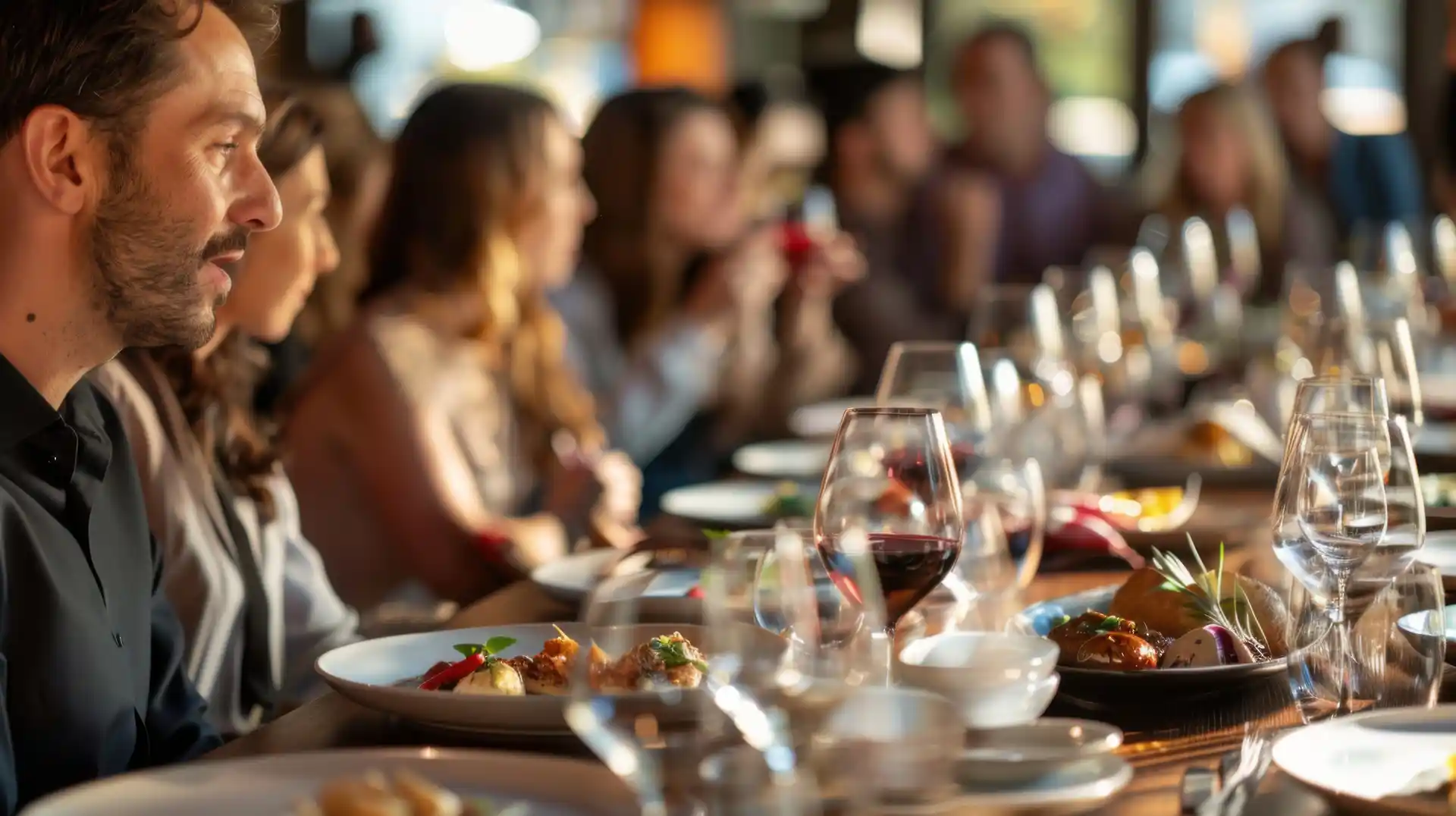
Cities have always been places where people gather.
The market stall, the corner café, the restaurant table that fits six if everyone pulls their chairs in close. These are the physical spaces where urban social life has always played out.
What has changed in recent years is the intentionality behind it all.
People are no longer simply meeting to eat. They are building rituals around food, treating shared meals as a deliberate act of connection rather than a practical necessity squeezed between other commitments.
In London and cities like it, that shift is visible everywhere from weekend brunch queues stretching around the block to small birthday gatherings where the cake matters more than the venue.
Why Food Has Become the Anchor of Urban Social Life
There is a reason the phrase “let’s get food” has become the default opening move in most social arrangements.
Food removes the pressure of an unstructured gathering. It gives a meeting a natural rhythm, a beginning, a middle, and an end. It provides something to discuss, something to share, and something to photograph, which in the social media era is not entirely irrelevant.
Urban living also creates a particular kind of social hunger.
Long working hours, commutes, and the relative anonymity of city life mean that deliberate social time carries more emotional weight than it might in smaller communities where interaction is woven into the daily fabric. When people finally make space to see each other, they want the experience to feel worthwhile.
Food delivers that. A thoughtfully chosen restaurant or a well-assembled brunch table communicates care in a way that a quick drink at a crowded bar rarely does.
The hospitality industry has both responded to and amplified this shift. The number of brunch-specific venues, supper clubs, and food-centred social concepts in London has increased steadily over the past decade, reflecting a genuine change in how people want to spend their leisure time.
The Rise of Brunch Culture and Weekend Gatherings
Brunch occupies a specific and important place in the urban social calendar.
It is accessible enough to feel casual but considered enough to feel like an occasion. It suits the rhythms of a city week, where the working days leave little room for lengthy meals and the weekend becomes the space where time is finally available.
The format itself has evolved considerably from its origins as a simple late-morning meal.
Today’s brunch culture in London encompasses everything from elaborate restaurant spreads to carefully assembled home tables where the food is as much a part of the experience as the conversation. The aesthetics matter, the sourcing matters, and increasingly, the recipes behind the food matter too.
For those hosting at home, the growing accessibility of quality brunch recipes has made it easier to assemble a spread that feels genuinely impressive without professional training or an exhausting amount of preparation time.
Home brunch gatherings have particular appeal in cities where restaurant costs accumulate quickly.
Hosting at home allows for a more relaxed pace, more flexible timing, and the kind of genuinely comfortable conversation that a busy restaurant environment does not always encourage. The trade-off is effort, but when the food is good and the company is right, that effort is rarely begrudged.
Brunch has also become a reliable vehicle for marking minor milestones without the formality of a dinner or the expense of a larger event. A promotion, a birthday weekend, a friend visiting from abroad. The brunch frame fits all of these comfortably.
Celebrating Special Moments in Simple Ways
The birthday celebration has undergone a quiet transformation in city life.
The large venue, the guest list of acquaintances, and the generic supermarket cake are giving way to something more considered. Smaller gatherings, better food, and a genuine sense that the occasion has been thought about rather than simply organised.
This shift reflects broader changes in how urban adults approach their social lives.
After years of attending events that felt more like obligations than celebrations, people are increasingly selective about how they mark milestones. The question being asked is not how many people can we fit, but what will actually make this feel like a good day.
Food remains central to the answer.
A beautifully made cake signals that someone paid attention. It communicates that the occasion warranted more than convenience, that the person being celebrated deserved something made with care rather than pulled from a supermarket shelf.
The range and quality of birthday cakes available from specialist bakeries have expanded significantly in recent years, making it straightforward to find something that fits a specific flavour preference, dietary requirement, or aesthetic without requiring hours of home baking.
Dietary inclusivity has also become a meaningful consideration at birthday gatherings.
Vegan, gluten-free, and dairy-free options that actually taste exceptional are now widely available in most urban areas, removing the awkward moment where one guest quietly avoids the table while everyone else eats.
The celebration itself has also contracted in scope for many city dwellers.
A long lunch with five close friends, a Saturday afternoon at home with wine and good food, a morning walk followed by brunch at a favourite spot. These are the celebrations that people are choosing over elaborate productions, and the memories they tend to actually hold onto.
Why Food Experiences Define How Cities Feel
The food culture of a city is one of the most reliable indicators of how its residents live.
Cities where people eat well, gather deliberately, and treat shared meals as genuinely important tend to produce social environments with more warmth and depth. London has always had this quality; its best London restaurants are a testament to that, and it is becoming more pronounced rather than less.
For those tracking how city culture continues to evolve, the food-centred social gathering is one of the clearest expressions of where urban priorities currently sit.
People want experiences over transactions, connection over convenience, and occasions that feel like they were actually meant to happen.
Food, consistently and reliably, delivers all three.
Conclusion
The relationship between food and social life in cities is not new.
What is new is the deliberateness with which people are approaching it. The chosen restaurant, the assembled brunch table, the birthday cake ordered with care rather than grabbed in passing. These are small decisions that accumulate into a social life that feels genuinely nourishing rather than simply busy.
In a city that rarely slows down, that quality is worth protecting.