
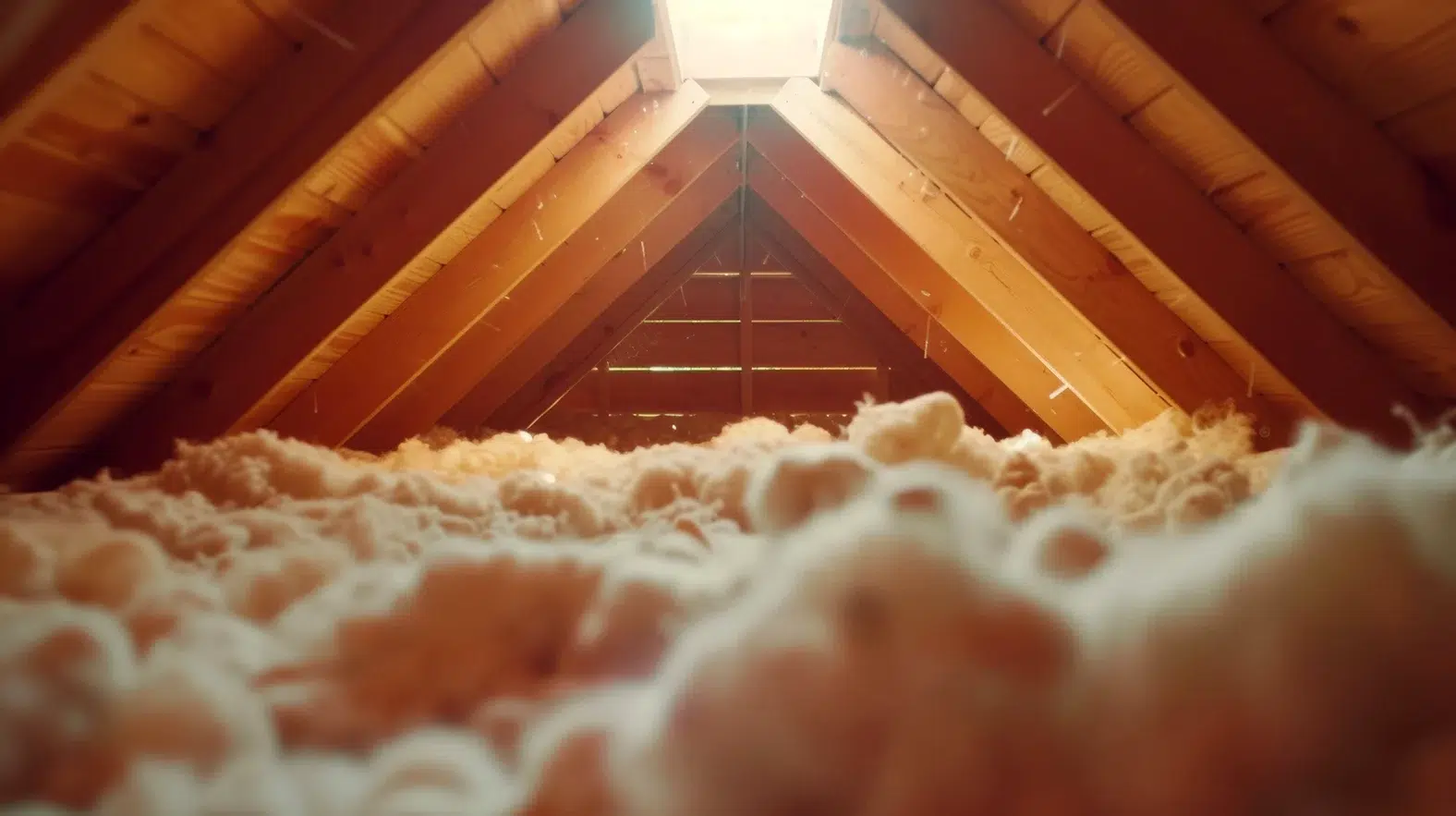
Mold in the attic can affect how well your insulation works and how comfortable your home feels. Many homeowners realize something is wrong when they notice a musty odor, dark staining on attic wood, or an unexpected rise in heating and cooling costs.
Attics are often out of sight, so moisture problems can go unnoticed for a long time. When mold appears, it usually indicates excessive moisture, poor ventilation, or air leakage that needs attention.
Why Mold Forms In Attics
Mold needs moisture to grow. In attics, that moisture often comes from warm indoor air leaking upward and meeting colder roof surfaces. When this happens, condensation can form on wood, insulation, or other attic materials.
Common causes include:
- Poor attic ventilation
- Roof leaks
- Bathroom or kitchen exhaust fans venting into the attic
- Gaps around light fixtures, plumbing, or wiring
- Ice damming during colder months
Even small moisture issues can grow if ignored. Once insulation becomes damp, it may not dry properly, especially in areas with limited airflow.
How Mold Affects Insulation
Insulation works best when it stays dry and is installed evenly. Moisture changes that. Wet or mold-contaminated insulation can become compressed, heavy, or uneven, which reduces its ability to slow heat transfer.
In winter, damaged insulation may allow more heat to escape from the living space. In summer, it may let more outdoor heat enter the home. This can make rooms harder to keep comfortable and may cause your heating and cooling systems to work longer than they should.
Mold can also spread across nearby attic surfaces if the moisture source is not fixed. In some cases, homeowners may need professional mold removal before replacing or improving insulation.
Signs Your Attic Insulation May Be Affected
Not every attic mold issue is easy to spot from inside the home. However, there are a few signs that may point to a problem.
You may notice:
- Musty smells near upper floors or closets
- Dark staining on attic wood or insulation
- Damp or matted insulation
- Uneven indoor temperatures
- Higher energy bills without a clear reason
- Frost or condensation inside the attic during cold weather
If these signs appear, it is best to have the attic checked before adding new insulation. Covering damaged insulation without solving the moisture problem will not fix the issue.
Why Moisture Control Matters First
Replacing insulation too soon can lead to repeated problems. If air leaks, roof leaks, or poor ventilation persist, new insulation may become damp again.
A proper attic inspection should examine both the insulation and the source of moisture. This may include checking vents, soffits, exhaust ducts, roof areas, and air sealing gaps. Once the attic is dry and the mold issue is addressed, new or upgraded attic insulation can perform much better.
When To Call A Professional
Attic mold and insulation problems are not always safe or simple to handle on your own. Disturbing moldy materials can spread particles through the air, and walking in an attic can be risky without the right equipment.
A qualified professional can identify the source of moisture, recommend safe cleanup, and decide whether insulation should be removed, replaced, or improved. This helps protect the home from repeated damage and supports better comfort throughout the year.


