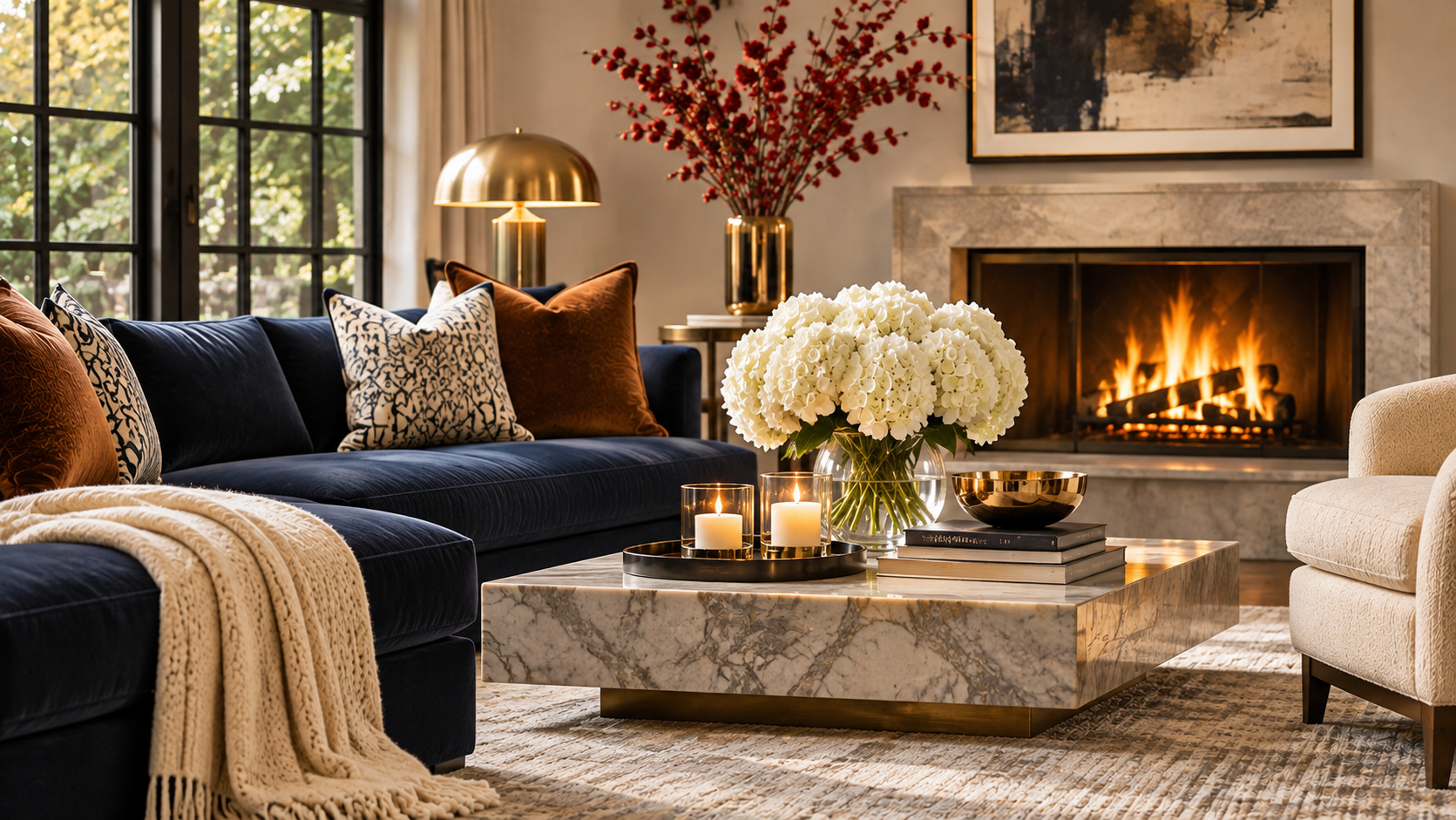
A cozy living room rarely happens because of one great purchase or a fleeting trend—it’s built up over time through layout choices, material decisions, and small sensory details that hold their appeal long after the newness wears off. Layering soft furnishings like throws, cushions, curtains, and rugs gives a room tactile warmth and helps anchor a seating area visually, so it feels grounded instead of sparse. But warmth isn’t just about textiles—it also comes from how furniture is arranged, how light moves across a space, and how much of the room actually reflects the people living in it. A cozy living room balances comfort, connection, and visual warmth. This guide walks through practical, adaptable principles—covering layout, color, light, texture, and personalization—that work regardless of home style or budget, along with functional comfort like ease of movement and conversation, which matters just as much as how a room looks.
Understanding What Makes a Room Feel Cozy
Cozy spaces tend to share four qualities:
- Proximity: seating arranged so people can talk comfortably without raising their voices.
- Texture: a mix of soft surfaces within reach and sight.
- Layered lighting: several warm light sources rather than one overhead fixture.
- Personal story: books, art, and keepsakes that reflect the household.
It’s worth drawing a line between cozy and cluttered. Cozy spaces come from intentional choices, while cluttered ones often result from things simply piling up without ever being edited down. Designers often point to multiple light sources and warm tones as reliable, near-instant ways to soften a room, though every home will need its own version of these ideas.
Key Takeaway: Cozy rooms prioritize how people feel and interact, not just how the space looks.
Planning the Layout for Comfort and Connection
Seating Arrangements that Encourage Interaction
Arranging seating in a U-shape or loose semicircle keeps people within comfortable conversational distance. Walking paths should stay clear, but not so wide that the room starts to feel disconnected. Picking one focal point—a fireplace, window, or media wall—also helps, since it keeps furniture pieces from visually competing with each other.
Grounding the Space with a Strong Visual Foundation
Furniture can end up feeling like it’s “floating” if there’s nothing to unify it. A substantial coffee table, an area rug, or a generously sized ottoman usually does the trick. Picture a room where a sofa and chairs sit pushed against the walls, disconnected from one another, compared to one where those same pieces are pulled inward and grounded by a shared textile beneath them—the second almost always reads as warmer. This becomes especially important in open-plan homes, where defining a distinct seating zone helps the space feel intentional rather than incidental.
A few layout checkpoints worth considering:
- Identify one clear focal point for the room.
- Angle main seats toward each other rather than lining them along the walls.
- Leave consistent, comfortable spacing between seating and tables.
Choose one clear focal point and keep main seats facing or angled toward each other to support both function and comfort.
Using Color, Light, and Texture to Create Warmth
Choosing a Warm, Timeless Color Palette
Cozy palettes often draw from nature—cream, warm browns, terracotta, muted greens, soft blues. Keeping a cohesive palette across walls, furniture, and textiles helps the room avoid feeling fragmented, though bold accent colors can still be worked in carefully.
Layered Lighting for a Gentle Atmosphere
Layered lighting combines ambient, task, and accent sources. Warm color temperatures—generally in the warm-to-soft-white range—tend to feel more inviting than cooler, harsher light. Pairing overhead lighting with floor lamps, table lamps, or wall sconces keeps the room from falling flat, which tends to happen when a single light source is doing all the work.
Texture and Textile Layering
Layering textiles of different weights—heavy, medium, light—adds richness without needing bold patterns:
- Heavy: wool throws, dense floor coverings
- Medium: cotton cushions, structured curtains
- Light: linen accents, sheer window treatments
Mixing materials like linen, wool, and velvet within a cohesive color palette and layered textures keeps the overall look feeling intentional rather than random. It’s also worth factoring in durability and ease of cleaning when choosing textiles for rooms that see daily use.
Tip: Start with one or two base colors, then add texture before adding pattern.
Personalizing the Space Without Creating Clutter
Building a Sense of Story
Meaningful objects—books, art, photos, travel finds—are what make a room feel genuinely lived-in. Curating rather than displaying everything, and rotating items now and then, keeps a sense of visual calm intact. Repeating a material or tone, like a particular wood finish, can also tie otherwise unrelated pieces together.
Balancing Function and Decor
Practical surfaces near each seat, like side tables, support everyday use. Baskets or closed storage keep blankets and games within reach but out of sight when they’re not needed. A family living room might evolve naturally over time—toys tucked into baskets, throws folded but visible—without ever needing to look perfectly staged. Cozy does not mean cluttered.
Key Takeaway: Personal items add warmth when they are edited and intentionally displayed.
Simple, Evergreen Steps to Refresh Your Living Room
This evergreen checklist can help without requiring new furniture:
- Reevaluate seating placement and focal point.
- Add or rearrange light sources for layered lighting.
- Re-layer textiles, including floor coverings, for texture and warmth.
- Remove a few items to reduce visual noise.
Small shifts—like moving a chair or adjusting a lamp—often go further than expected toward a cozier feel, even if the results vary somewhat from space to space.
Creating a Living Room You’ll Love Year-Round
Cozy design rests on a handful of consistent pillars: intentional layout, warm color and layered lighting, thoughtful texture, and personal but edited decor. These principles adapt easily across seasons and life changes without losing their relevance. Rather than trying to tackle everything at once, starting with a single focus area—lighting or textile layering, for instance—tends to feel far more manageable. In the end, a room that supports everyday comfort, conversation, and rest matters more than one designed solely to look good. A cozy living room is less about trends and more about how the space supports comfort and connection over time.