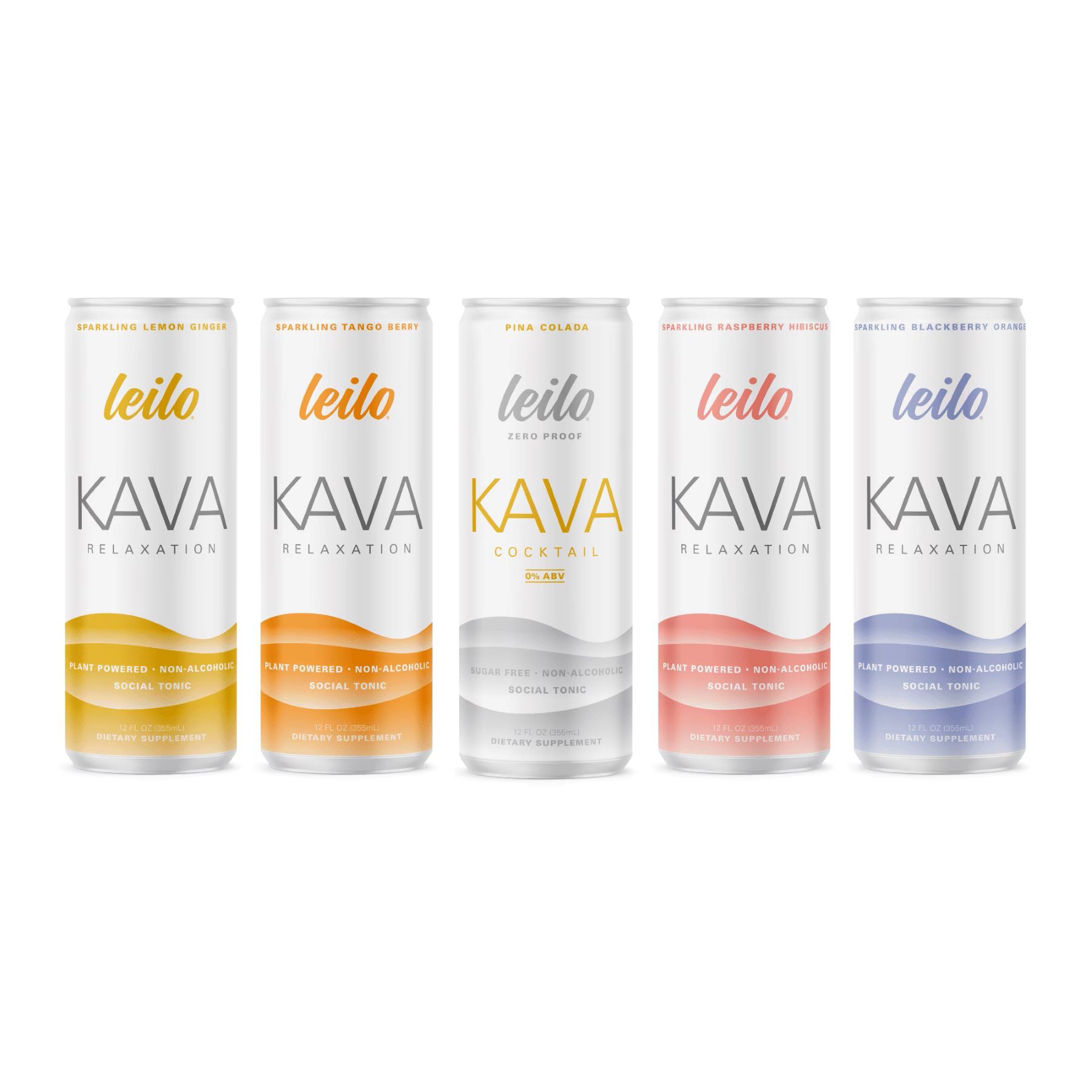
Kava has been used for centuries in Pacific Island cultures as a traditional water-based beverage made from the plant’s root.
Today, it is no longer limited to traditional preparation. It is being reformulated into modern formats such as ready-to-drink functional beverages, wellness shots, powdered drink mixes, and packaged botanical products.
This shift introduces a major challenge for manufacturers of kava beverages.
Traditional preparation works in small, immediate-use settings. Commercial beverage production does not. At scale, products must meet stability, consistent quality, uniform dispersion, water compatibility, and long shelf life requirements.
To address these challenges, modern systems such as water-soluble kava extract are being used to improve dispersion and stability in liquid formulations.
Kava is no longer just a botanical ingredient. It is a system that must perform reliably in industrial beverage environments.
Let’s understand how this works in more detail.
Why does kava create formulation challenges in beverage systems?
Kava contains active compounds known as kavalactones, which are naturally oil-soluble.
This creates a fundamental incompatibility with water-based beverage systems.
Oil and water naturally resist mixing due to molecular differences, leading to separation, poor dispersion, reduced clarity, and inconsistent dosing.
At the core, the issue is interfacial tension. Without sufficient energy input and stabilization, the system separates into distinct phases.
This is why many botanical beverages fail at scale. The limitation is not the ingredient itself, but how it behaves in liquid systems over time.
Similar challenges are seen in kratom formulation challenges, where oil-soluble compounds struggle to remain stable in water-based environments.
Why is water compatibility critical for commercial beverage success?
In traditional preparation, kava is consumed immediately, so separation is not a major issue.
In commercial production, beverages must remain stable through manufacturing, transport, retail storage, and consumer use.
Poor water compatibility leads to separation, sedimentation, uneven dosing, and visual inconsistency. Over time, this impacts both product quality and consumer trust.
Modern formulation approaches focus on improving how oil-soluble compounds behave in water so they remain evenly distributed throughout the product lifecycle.
Technologies such as water-soluble kava extract systems help improve dispersion stability and reduce phase separation in beverage applications.
How does droplet size influence beverage stability and performance?
Droplet size is one of the most important factors in beverage formulation.
Large droplets have lower surface area, leading to faster separation and unstable systems.
Smaller, uniform droplets increase surface area, improve dispersion, and slow down separation, creating more stable formulations.
This directly affects how a beverage behaves during storage and use, not just its appearance.
At scale, droplet size is influenced by mixing energy, emulsification method, shear force, and formulation design. Small changes in processing conditions can significantly affect stability.
This is a key reason why moving from lab-scale to commercial production is often difficult.
Why does scale-up change beverage formulation behavior?
A formulation that works in the lab may behave differently in production.
This happens because mixing conditions, energy distribution, and fluid dynamics change at larger volumes. These shifts affect how ingredients disperse and remain stable.
As a result, inconsistencies often appear during production scale-up, even when formulations are unchanged.
These issues are also common in kratom formulation challenges, where maintaining uniformity becomes harder as batch size increases.
Even small variations in processing can impact stability, appearance, and product consistency.
Why is stability a process control challenge rather than just a formulation outcome?
Stability is not only about formulation design. It is the result of how well a process is controlled.
Instability often comes from uneven mixing, inconsistent energy input, poor dispersion, or variation in particle size distribution.
When these factors are not controlled, products may show phase separation, viscosity changes, layering, and reduced shelf life.
These issues directly affect commercial reliability and consumer trust.
In modern manufacturing, stability depends on precise control of processing conditions, not just ingredient selection.
How are botanical beverages driving formulation innovation?
The rise of botanical beverages is forcing manufacturers to rethink traditional formulation methods.
Consumers now expect consistent performance, stable appearance, and convenient delivery formats. This has shifted the focus toward advanced formulation science and scalable processing systems.
As a result, the industry is adopting improved emulsification techniques, nano-dispersion systems, and better extraction technologies to maintain stability at scale.
Kava beverage development reflects this shift clearly. It shows how traditional botanicals are being re-engineered for modern manufacturing environments.
The same principles apply to other botanical systems, including kratom formulation challenges, where dispersion and stability remain major technical barriers.
Closing Thoughts
Kava beverage formulation highlights a larger shift in the functional beverage industry.
The challenge is no longer ingredient availability, but system behavior under real manufacturing conditions.
Success depends on controlling dispersion stability, water compatibility, droplet uniformity, and scale-up consistency.
As the functional beverage market grows, formulation engineering will become a key factor in product success.
The future of botanical beverages will depend on how effectively traditional ingredients are transformed into stable, scalable, and commercially reliable systems.