The most significant shift in luxury living over the past decade has not been in the acquisition of more.
It has been in the deliberate pursuit of less: fewer itineraries, fewer distractions, and fewer experiences that demand performance rather than presence.
The traveller who once measured the success of a journey by the number of destinations visited now measures it by the quality of stillness encountered.
This recalibration has given rise to a form of refined living that places equal weight on physical and psychological restoration. It asks that the environment be immersive rather than impressive and that the pace allow for genuine disengagement from the relentlessness of modern professional life.
Water, in its many forms, has emerged as the most consistent setting for this kind of recovery.
The Rise of Slow and Experiential Travel
Slow travel is not a budget proposition.
At its highest expression, it is among the most sophisticated of travel philosophies: the deliberate reduction of velocity in exchange for depth of encounter.
The traveller who moves through fewer places with greater attention returns not with a collection of check-ins but with the particular quality of memory that only sustained immersion produces.
Australia’s inland waterways offer one of the most compelling settings for this approach.
The Murray River, threading its ancient course through New South Wales, Victoria, and South Australia, carries a quality of time that exists nowhere else on the continent.
Its banks are lined with river red gums that have stood for centuries. Its surface, in the early morning, holds a stillness that is not emptiness but presence.
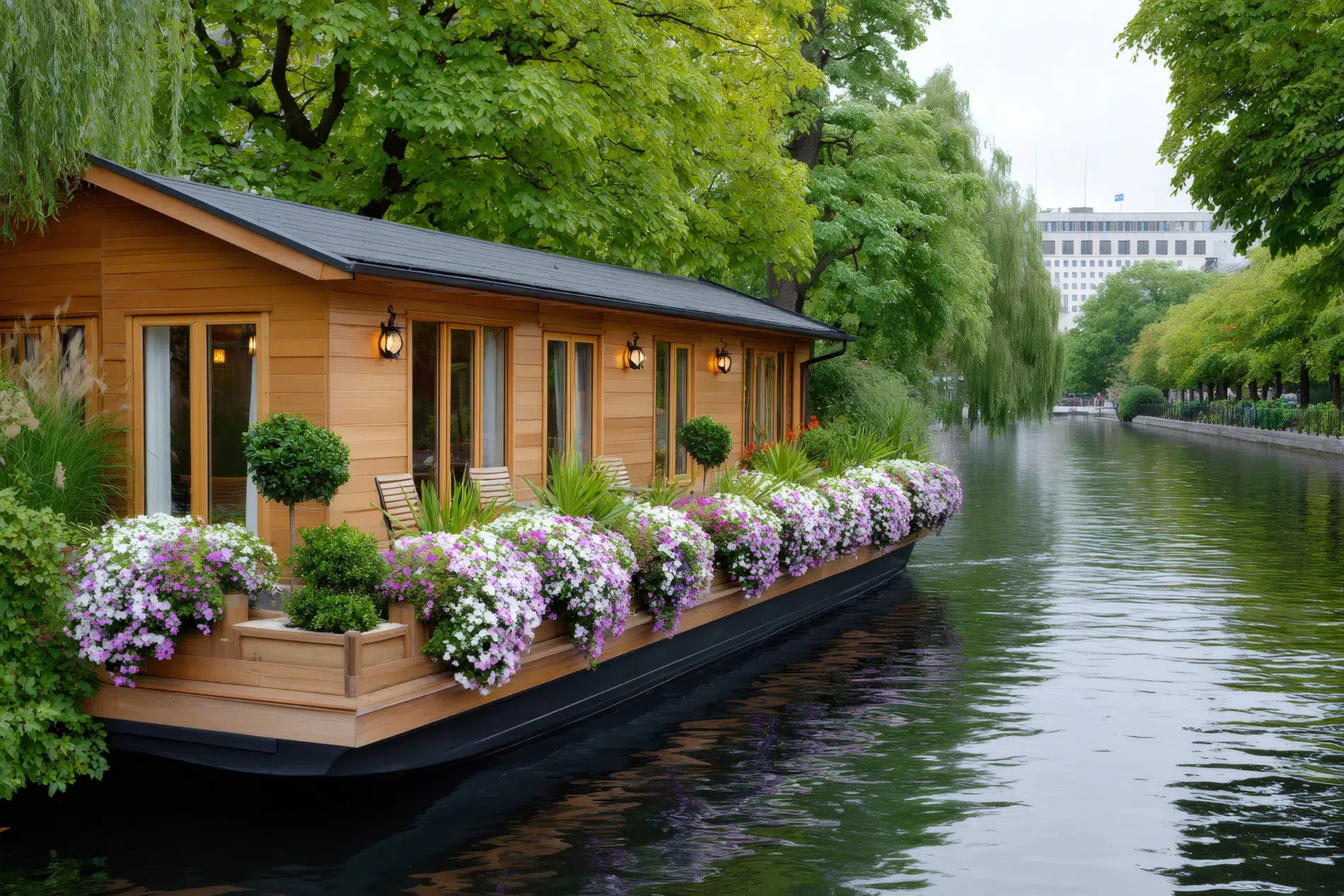
To travel this waterway by private houseboat is to engage with it on its own terms.
There is no departure schedule imposed by a carrier. The day unfolds at the pace of the current and the preferences of the traveller.
Those who choose to discover Murray houseboahouse ts for your holiday enter a form of travel that has no equivalent in the conventional luxury accommodation market.
The vessel becomes a private world: moving slowly, mooring where the light is right, and allowing the landscape to accumulate in the memory rather than flashing past in a blur of managed sightseeing.
This is luxury as it is most rarely and most meaningfully experienced. Not in spite of its simplicity, but because of it.
For those seeking a broader perspective on how wellness travel has evolved into one of the defining expressions of the modern luxury lifestyle, the range of destinations and approaches now available reflects how profoundly the conversation has shifted.
Wellness and Water-Based Leisure Activities
Water has always occupied a privileged place in the vocabulary of restoration.
The Romans built their thermal baths at the centre of civic life. The Japanese elevated the onsen to a form of ritual. The European spa tradition developed around the restorative properties of mineral springs.
What unites these traditions across cultures and centuries is the understanding that immersion in water produces a particular quality of physical and psychological relief that no other environment replicates.
Contemporary wellness culture has returned to this understanding with renewed conviction.
Swimming, in particular, has been rehabilitated from a competitive discipline into a considered daily practice. Open-water swimming, lap swimming and aquatic therapy are now integral components of the most sophisticated personal wellness programmes.
For many practitioners, the challenge is not motivation but access.
Those with visual impairment or corrective prescriptions have historically found aquatic activity compromised by the absence of clear vision in the water.
The ability to find prescription water goggles online through a specialist optical provider addresses this directly, offering precisely calibrated corrective lenses in a water-rated format that removes one of the most common barriers to comfortable and confident aquatic leisure.
This kind of considered accessibility reflects a broader maturation in the wellness conversation.
The most genuinely inclusive approach to luxury wellbeing is one in which the experiences on offer are designed to be fully inhabited by the people who seek them.
Personalised Luxury Experiences
The defining characteristic of the most compelling luxury experiences of this era is not scale but specificity.
A great hotel impresses with its standards. A truly exceptional experience impresses with how precisely it appears to have been designed for the individual inhabiting it.
This quality of personalisation is achieved not through excess but through attention.
It is the result of someone having asked the right questions in advance and having acted on the answers with sufficient care to make the outcome feel effortless.
In travel, this manifests in the difference between an itinerary that ticks expected boxes and one that reflects a genuine understanding of what a particular traveller finds restorative, stimulating, and meaningful.
In wellness, it manifests in the difference between a spa menu and a programme designed around an individual’s specific physical needs, movement preferences, and recovery objectives.
The luxury market that has matured into this understanding is producing experiences that are quieter, more considered, and more durably satisfying than those built around spectacle and volume.
The traveller who has experienced this level of personalisation rarely returns willingly to the alternative.
The Future of Refined Living
The direction of luxury living is moving consistently toward integration: the folding of travel, wellness, and daily experience into a coherent and personally meaningful way of inhabiting the world.
The distinction between a wellness retreat and a travel experience is dissolving.
The most celebrated properties of the coming decade will be those that address the full spectrum of the guest’s wellbeing, physical, cognitive, and relational, without requiring the traveller to choose between the beauty of the setting and the depth of restoration.
Water will continue to anchor many of the most compelling expressions of this integrated vision.
Whether in the form of a slow river journey through ancient Australian landscape, a precisely calibrated aquatic wellness programme, or the particular quality of light that only waterside environments produce, the elemental connection between water and restoration is not a trend.
It is a permanent feature of how human beings recover their sense of self.
Conclusion
The finest luxury experiences do not announce themselves loudly.
They reveal themselves gradually, through the accumulation of details that collectively produce an effect no single element could achieve alone.
A houseboat at dusk on a river that has been flowing for millennia. A clear-eyed lap through still water at first light. A morning spent doing nothing more than watching the world move at its own pace rather than yours.
These are not modest ambitions. They are, for those who have learned to recognise them, among the most sophisticated expressions of what it means to live well.