Poor workplace acoustics rarely show up on a profit and loss statement, but they absolutely show up in how much work actually gets done. Noise is one of those problems that everyone notices and almost no one fixes, partly because the damage is slow and partly because it’s easy to chalk up to “that’s just office life.”
The costs stack up across productivity, employee health, collaboration quality, and the bottom line. This article breaks down where those costs come from and what actually drives them.
Why Background Noise Is Quietly Draining Your Business
Most people think of a noisy office as an annoyance, not a financial problem. The truth is that sustained exposure to background noise puts real cognitive pressure on workers throughout the day, even when they stop consciously registering it. The brain keeps working to filter out irrelevant sound, and that filtering process consumes mental energy that would otherwise go toward actual work. Studies consistently show that employees in acoustically poor environments report lower concentration and higher fatigue, even on days they’d describe as manageable.
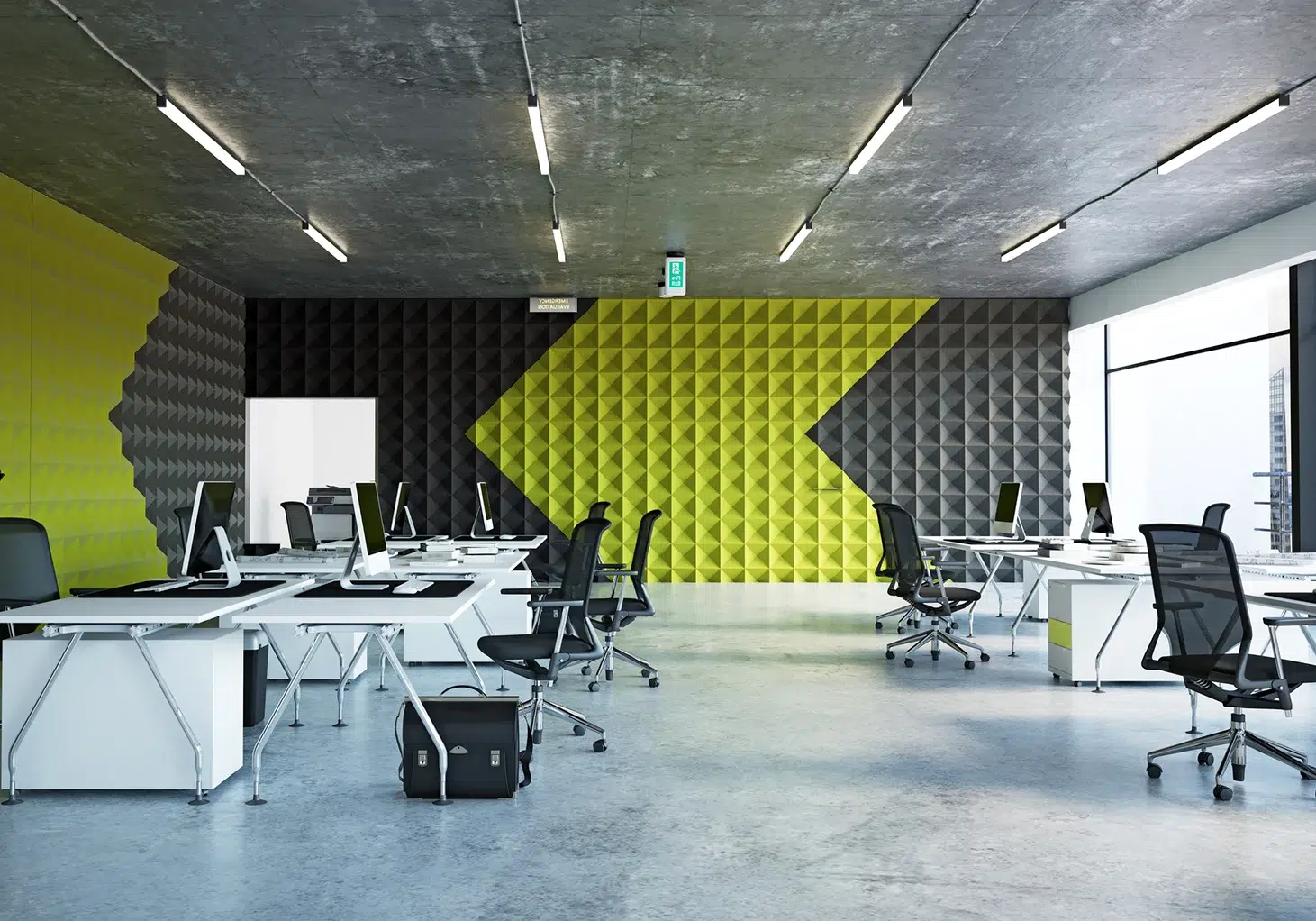
Open-plan offices are where this shows up most clearly. You see, the original pitch for open offices was built around transparency and communication, but in practice, they generate constant low-level noise that chips away at focus across the entire floor. Treatments like wood wool acoustic panels address this by absorbing sound across a wide frequency range rather than simply bouncing it around, which is why more fitout designers are specifying them at the planning stage rather than bolting something onto the wall after complaints start rolling in.
Employee disengagement is also worth putting in this category, because it tends to follow acoustic stress rather than precede it. Workers who spend months struggling to concentrate in a loud environment start protecting themselves by checking out. They stop going the extra mile, start doing the minimum, and begin looking for quieter places to work, which usually means somewhere else entirely. That’s not a motivation problem; it’s an environment problem wearing a motivation problem’s clothing.
The financial case for doing something about it is already there if you look at the data. Estimates from workplace research regularly put productivity losses from poor acoustics at somewhere between 15 and 30 percent for knowledge workers, which is a staggering number when you apply it to a full salary. A single mid-level employee losing two hours a day to noise-related distractions represents tens of thousands of dollars in lost output annually.
The Concentration Tax Nobody Talks About
Interruptions are bad, but most people underestimate how long recovery actually takes. Cognitive research on deep work suggests that after a meaningful disruption, it takes somewhere between 15 and 23 minutes on average to return to the same level of focus. In a noisy office, those interruptions don’t happen once or twice a day; they happen dozens of times. The math on that is brutal when you add it up across a team over a month.
Flow state is the mental gear where serious output actually happens, and noise spikes are particularly effective at knocking people out of it. The spike doesn’t have to be loud to do the damage. A sudden burst of laughter across the room, a phone ringing, a conversation that starts nearby and gets louder, all of that is enough to break concentration at the moment it matters most. You see, the problem isn’t volume so much as unpredictability, because the brain can’t stop monitoring for the next one.
There’s also a meaningful difference between how noise affects complex tasks versus routine ones. Someone processing invoices or handling a checklist can tolerate a louder environment reasonably well because the cognitive demand is lower. Someone writing a brief, writing code, or working through a financial model is in a completely different situation. For that kind of work, background noise doesn’t just slow things down; it produces errors, forces rework, and extends timelines in ways that cost real money.
Cumulative distraction across a workday compounds all of this. A single loud event is recoverable. Twelve of them across eight hours aren’t, because by mid-afternoon, the mental reserves needed for high-quality work are already depleted. Employees in noisy offices often describe feeling exhausted without feeling like they accomplished much, which is an accurate description of a brain that spent its energy on filtering rather than producing.
Stress, Fatigue, and the Body Keeping Score
Noise-induced stress is physiological before it’s psychological. Sustained exposure to workplace noise, even at moderate levels, triggers cortisol release as the body responds to what it perceives as a stressor. Over time, chronically elevated cortisol does real damage: it disrupts sleep quality, weakens immune response, and contributes to cardiovascular issues that have nothing to do with lifestyle choices and everything to do with the working environment. Most employees never connect the dots between a noisy office and the headaches they take home.
The fatigue that comes from acoustic stress is also distinct from ordinary tiredness at the end of a productive day. Workload fatigue has a kind of satisfaction attached to it; you’re tired because you did things. Noise fatigue feels empty, like running hard on a treadmill that isn’t going anywhere. Workers describe it as draining without a clear cause, making it harder to address because there’s no obvious point at which they can say, “this is the thing that wore me out.”
Long-term effects in particularly loud work environments extend to hearing health, opening up a different category of costs entirely. Occupational hearing loss is a legitimate liability issue, and workplaces that ignore acoustic conditions over extended periods can face compensation claims, regulatory scrutiny, and staff turnover among employees who develop persistent symptoms. Most of this is avoidable with proper acoustic planning, but it requires treating sound as an environmental variable rather than an inevitability.
Also worth noting is how noise stress affects sleep even after the workday ends. Workers who spend eight hours in a high-noise environment frequently report difficulty switching off in the evening, with elevated alertness and trouble falling asleep. The body, you see, stays in a mild stress state longer than most people realize. Across weeks and months, that sleep disruption feeds back into daytime performance, creating a cycle that a good night’s rest alone won’t fix.
Wrap Up
Poor workplace acoustics are a slow-moving problem that tends to stay invisible right up until the costs become too obvious to explain away. By that point, productivity losses have been running for months, health effects have accumulated, and good people have started making decisions about whether they want to keep working there.
The good news is that acoustic problems are solvable, and the investment required is almost always smaller than the cost of doing nothing. The companies that treat sound as a design consideration rather than an afterthought tend to see a return that shows up in output, retention, and the overall quality of work life in ways that matter.