
Body confidence has never been a fixed destination. It is an ongoing relationship between a woman and her physical self, shaped by how she moves, how she looks after herself, and the choices she makes about the treatments and adjustments that feel right for her at any given stage of life.
What has changed is the quality, range, and accessibility of the options available. Training methodologies have advanced. Aesthetic medicine has grown more precise and more transparent. Dental care has become more discreet and more sophisticated. And the culture around personal investment in one’s appearance has shifted from something quietly pursued to something openly discussed, planned, and celebrated.
This guide covers the areas where intentional investment produces the most meaningful returns, from functional fitness to refined aesthetic procedures, approached with the honesty and clarity that a truly discerning reader expects.
Functional Training: Building a Body That Performs as Well as It Looks
The most significant shift in women’s fitness over the past decade has been the move away from training purely for aesthetics and toward training for performance, strength, and longevity. The result is a body that not only looks composed and capable but genuinely is.
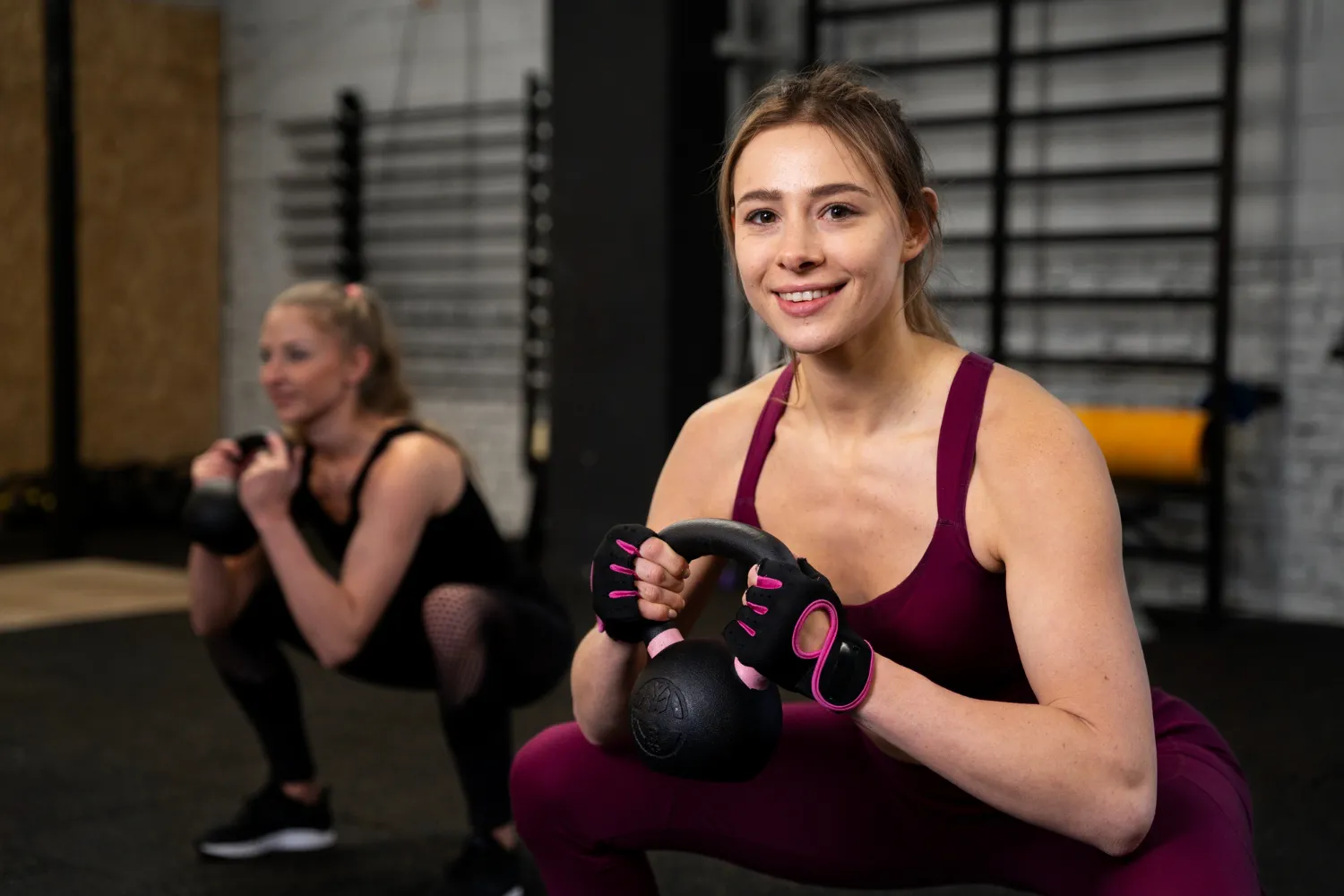
Functional training sits at the heart of this evolution. Unlike isolated exercises that target specific muscle groups in controlled movements, functional training develops strength, coordination, and power across patterns of movement that translate directly into how the body operates in daily life and under physical demand.
Slam balls are one of the most effective tools in a functional training programme and among the most underutilised by women who have not yet been introduced to them.
A weighted ball that absorbs impact rather than bouncing, used for overhead slams, rotational throws, and ground-to-overhead lifts, develops explosive full-body power, core stability, and cardiovascular conditioning simultaneously. Those wanting to build this kind of training into their routine can explore our range of slam balls across a range of weights suited to different training levels and programme goals.
The broader principle of functional training is to train movements rather than muscles. Squats, hinges, presses, pulls, carries, and rotational patterns form the structural foundation. Accessories like slam balls, kettlebells, and medicine balls add power development and metabolic conditioning to a programme that builds real, visible, and lasting physical change.
For women training at home, a compact functional setup covering a set of kettlebells or dumbbells, a slam ball, and adequate floor space for movement produces results that match or exceed what most gym programmes deliver, particularly when the programme is consistent and progressive over months rather than intense and sporadic.
Recovery: The Part of Fitness That Changes Everything
Training is a stimulus. Recovery is where the adaptation happens. The women who see the most consistent physical progress are not necessarily those who train the hardest. They are those who manage recovery with the same intentionality they bring to their sessions.
Sleep is the highest-leverage recovery tool available and the most consistently undervalued. Seven to nine hours of quality sleep per night is when human growth hormone is predominantly released, when muscle tissue is repaired, and when the nervous system restores itself after the demands of training and daily life.
Protecting sleep, through consistent sleep and wake times, a cool and dark sleep environment, and reduced screen exposure in the final hour before bed, is a genuine performance and aesthetic investment.
Active recovery, meaning gentle movement on non-training days, is more effective than complete rest for most women training regularly. Walking, yoga, and swimming maintain circulation, reduce delayed onset muscle soreness, and support the metabolic activity that continues even when no formal session takes place.
Nutrition plays its recovery role predominantly through protein and micronutrients. Adequate protein, distributed across meals rather than concentrated at dinner, provides the amino acids needed for muscle repair. Magnesium, zinc, and B vitamins support energy metabolism and sleep quality in ways that are often addressed more effectively through food than supplementation.
Aesthetic Procedures: Approaching Them With Clarity
The conversation around aesthetic procedures has matured considerably. Where it was once dominated by either uncritical enthusiasm or reflexive dismissal, it has settled into something more nuanced: a recognition that procedures, approached with clear motivation and qualified practitioners, can be a legitimate and personal choice that enhances rather than replaces one’s sense of self.
Breast lift surgery is among the most commonly sought body contouring procedures for women, particularly after significant weight change, pregnancy, or the natural effects of ageing on breast tissue. The procedure addresses ptosis, the clinical term for breast drooping or loss of projection, by reshaping and repositioning the existing tissue rather than necessarily adding implant volume.
The decision to explore this option deserves the same research and clarity brought to any significant personal investment. Understanding the procedure, the recovery, the realistic outcomes, and the credentials of the practitioner are the minimum requirements before a consultation.
Women considering the procedure can learn about surgical boob lift procedures in detail, including what the surgery involves, what recovery looks like across the weeks following, and what outcomes are realistic for different presentations, before deciding whether a consultation is the appropriate next step.
What is worth stating clearly is that the most satisfied patients are those who approach aesthetic procedures from a position of considered self-investment rather than external pressure. The motivation, the timing, and the clarity of expectation all influence the experience and outcome as much as the technical skill of the surgeon.
Dental Aesthetics: The Refinement That Alters Every Interaction
Of all the aspects of personal appearance, the smile may be the one that most directly shapes how others experience us and how we experience ourselves. A confident smile changes how a woman presents in professional settings, how she photographs, and how freely she engages in social situations without the self-consciousness that dental concerns can create.
For women considering orthodontic treatment, clear aligner technology has removed the aesthetic barrier that previously made the prospect of adult braces unappealing. Invisalign, the most widely used clear aligner system globally, uses a series of custom-fabricated transparent trays to progressively move teeth into alignment without the visibility of metal brackets or wires.
One of the most common questions at the outset of an Invisalign journey is cost. The investment varies by case complexity, the experience and location of the treating orthodontist, and the duration of treatment required. For women weighing the decision, understanding the cost of Invisalign Melbourne before booking a consultation provides a realistic framework for assessing whether the treatment fits within a broader personal investment plan.
Clear aligner treatment requires commitment. The trays are worn for 20 to 22 hours per day, removed only for eating and cleaning, and changed on the schedule prescribed by the treating orthodontist.
Compliance is the primary variable that determines whether outcomes match the digital treatment plan produced at the outset. For women who manage this well, the results are consistently reported as one of the most confidence-transforming investments they have made.
Maintaining dental health around orthodontic treatment requires slightly more attention than usual. Brushing after every meal before replacing aligners, flossing daily, and staying on schedule with professional cleans during treatment ensures the teeth arriving at the end of the process are healthy as well as aligned.
Skincare: The Daily Practice That Compounds Over Decades
A sophisticated approach to skincare understands that the choices made daily across five to ten years produce more visible results than any single treatment or product launch. The foundations of that daily practice are straightforward, even if the market works hard to convince otherwise.
SPF remains the most powerful anti-ageing intervention available. UV radiation is the primary driver of collagen degradation, pigmentation, and the textural changes that define premature skin ageing. A broad-spectrum SPF 50 worn every morning, regardless of season or planned sun exposure, is the simplest and most evidence-backed decision a woman can make for her skin’s long-term health and appearance.
Retinoids, the vitamin A derivatives that stimulate collagen production and accelerate cell turnover, are the second most validated category of active ingredients in skincare. Introduced gradually and used consistently, they produce visible improvements in texture, tone, and fine lines over three to six months of use that accumulate further over the years.
Hydration of the skin barrier, through moisturisers containing ceramides, hyaluronic acid, or peptides, is the supporting layer that makes active ingredients work more effectively and reduces the sensitivity that can develop with consistent retinoid use.
Beyond these three foundations, additional actives, serums, and treatments can be layered based on specific concerns. But the compounding return on a simple, consistent, evidence-based routine consistently outperforms the rotating adoption of trending products that characterise most people’s approach to skincare.
The Principle Underneath It All
Body confidence is not produced by any single area covered in this guide. It emerges from the cumulative effect of caring for yourself consistently, across movement, nutrition, aesthetics, and daily practice, in ways that feel aligned with your own values and goals rather than with an external standard.
The women who carry themselves with the most genuine confidence tend to share this in common: they have made deliberate, informed choices about how they invest in themselves and feel settled in those choices. They are not chasing an ideal. They are building a version of their life that reflects who they actually are and what they actually want.
That kind of confidence is not given. It is built, one intentional decision at a time.