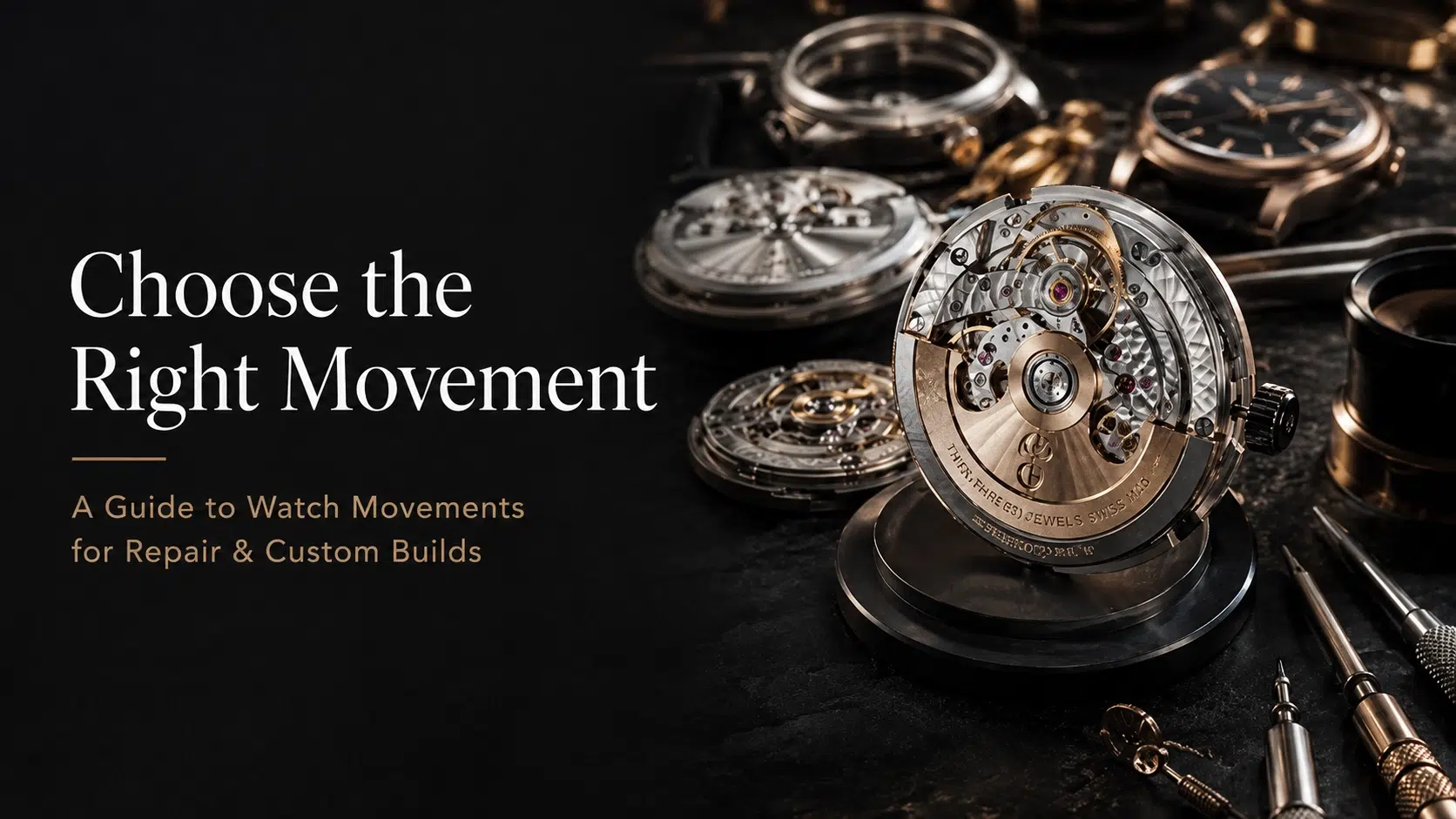
Choosing the right movement is one of the most important decisions when repairing, restoring, or building a watch. The movement is the mechanism that keeps the watch running, controls its functions, and determines how the timepiece operates. For collectors and watch enthusiasts searching for watch movements for sale, the options can seem overwhelming at first. There are mechanical, automatic, quartz, and other movement types, each with different features, dimensions, and compatibility requirements.
A beautiful dial or premium case cannot make up for the wrong movement. The movement must fit the case, work with the hands and dial, and provide the performance you expect from the finished watch. Whether you are replacing a damaged mechanism, restoring a vintage timepiece, or creating a custom build from individual components, understanding the basics will help you make a smarter choice.
What Is a Watch Movement?
A watch movement is the internal mechanism responsible for keeping time and operating the watch’s functions.
Depending on the type, a movement may contain:
- Gears
- Springs
- Jewels
- Escapement components
- Electronic circuits
- Quartz crystals
- Rotors in automatic designs
Mechanical movements use carefully arranged components to transfer energy and regulate timekeeping. Quartz movements use electronic technology and a battery to provide accurate timekeeping. Automatic movements are mechanically powered but use the wearer’s movement to wind the mainspring.
Each type offers a different experience, so the first step is deciding what kind of watch you want to create or repair.
Mechanical Movements for Traditional Craftsmanship
Mechanical movements are popular among collectors who appreciate traditional watchmaking.
These movements use a mainspring as their power source. When wound, the spring stores energy and gradually releases it through the gear train. The escapement regulates this energy, allowing the watch to keep time.
Mechanical movements are valued for their:
- Traditional craftsmanship
- Intricate construction
- Smooth mechanical operation
- Collectability
- Long-term serviceability
They are often chosen for luxury, vintage, and enthusiast-focused watch projects.
However, mechanical movements require regular servicing and can be more sensitive to shocks and magnetism than quartz alternatives.
Automatic Movements for Everyday Wear
Automatic movements are another type of mechanical movement. The key difference is how they are wound.
An automatic movement uses a rotating rotor that moves as the wearer moves their wrist. This motion helps wind the mainspring, reducing the need for manual winding.
Automatic movements are popular because they combine traditional mechanical engineering with everyday convenience.
They are a good choice for:
- Daily-wear watches
- Custom builds
- Modern mechanical timepieces
- Enthusiast collections
If you plan to wear the watch regularly, an automatic movement can be a practical and enjoyable option.
Quartz Movements for Accuracy and Convenience
Quartz movements operate differently from mechanical mechanisms.
They use a battery and quartz crystal to regulate timekeeping. This technology is known for its excellent accuracy and low maintenance requirements.
Quartz movements are often suitable for people who want:
- Reliable timekeeping
- Low maintenance
- Affordable operation
- Long battery life
- Everyday convenience
For certain repair or custom watch projects, quartz can be the ideal choice, particularly when precise timekeeping is the main priority.
Check Movement Compatibility First
One of the biggest mistakes when buying a replacement movement is choosing based only on appearance or price.
Compatibility should always come first.
Before selecting a movement, check:
- Movement dimensions
- Case diameter
- Movement thickness
- Dial opening
- Hand hole sizes
- Stem height
- Crown position
- Date window placement
Even a high-quality movement may not work correctly if it does not match the rest of the watch.
Taking accurate measurements before ordering can save time, money, and frustration.
Consider the Watch Case
The case plays an important role in movement selection.
A movement must physically fit inside the case without excessive pressure or unwanted movement. Its height is also important because a thicker movement may require a deeper case.
You should also consider how the movement aligns with:
- The crown
- The stem
- The dial
- The case back
- Any complications
A proper fit creates a cleaner and more reliable finished watch.
Match the Movement to the Dial and Hands
The movement, dial, and hands need to work together as a complete system.
The dial must have the correct opening and mounting points for the selected movement. Meanwhile, the hands need to match the movement’s hand-post dimensions.
This is especially important when building a custom watch from separate components.
Before purchasing, verify that the movement supports the specific dial and hand set you plan to use.
Think About the Features You Need
Not every watch requires the same functions.
A simple three-hand movement may be ideal for a minimalist design, while another project may require additional features.
Depending on the movement, you may want:
- Date display
- Day and date display
- Chronograph functions
- Small seconds
- Power reserve indicators
- GMT functionality
Additional functions can make a watch more useful, but they also increase complexity. Choose only the features that genuinely suit your project.
New Movement or Replacement Movement?
Your goal will also influence your choice.
If you’re repairing a damaged watch, replacing the existing movement with the same or compatible model may be the easiest solution. This can help preserve the original design and ensure that existing components continue to fit.
For a custom build, you have more freedom. You can choose the movement first and then select the case, dial, hands, and other components around it.
The best approach depends on whether you’re restoring an existing timepiece or creating something completely new.
Soflypart — A Practical Source for Watch Movements and Components
For collectors, repair professionals, and custom watch builders, Soflypart provides a broad selection of watchmaking products and components for different repair and assembly projects.
Its catalogue includes watch movements alongside other essential components, making it easier to source parts for maintenance, restoration, and custom builds. Depending on your project, you can explore movement options as well as watch parts such as dials, crowns, hands, mainsprings, bezels, cases, crystals, and other accessories.
Having access to a range of components can be particularly useful when building a watch from the ground up or looking for compatible replacement parts for an existing timepiece.
Quality Matters When Choosing a Movement
The movement is the engine of your watch, so quality should never be overlooked.
A dependable movement can offer:
- Consistent performance
- Reliable timekeeping
- Better long-term durability
- Easier servicing
- Improved overall user experience
For a valuable restoration or custom project, choosing a reliable movement can make a significant difference to the finished timepiece.
It’s also important to purchase from a reputable source and verify specifications before installation.
Take Your Time Before Buying
Choosing a movement should never be rushed.
Start by identifying the purpose of your project. Are you repairing a vintage watch? Building a custom timepiece? Replacing a failed movement? Once you know the goal, you can narrow down the options based on movement type, dimensions, functions, and compatibility.
A little research at the beginning can prevent expensive mistakes later.
Final Thoughts
Finding the right movement is essential for any successful watch repair, restoration, or custom build. Whether you prefer the craftsmanship of mechanical movements, the convenience of automatic winding, or the accuracy of quartz technology, the best choice depends on your project and personal preferences.
Before purchasing watch movements for sale, always check compatibility with the case, dial, hands, crown, and other components. Consider the functions you need, the maintenance involved, and the long-term reliability of the movement.
With careful planning and quality components from a reliable source such as Soflypart, collectors, repair professionals, and watch enthusiasts can create or restore timepieces that deliver dependable performance and lasting enjoyment.