
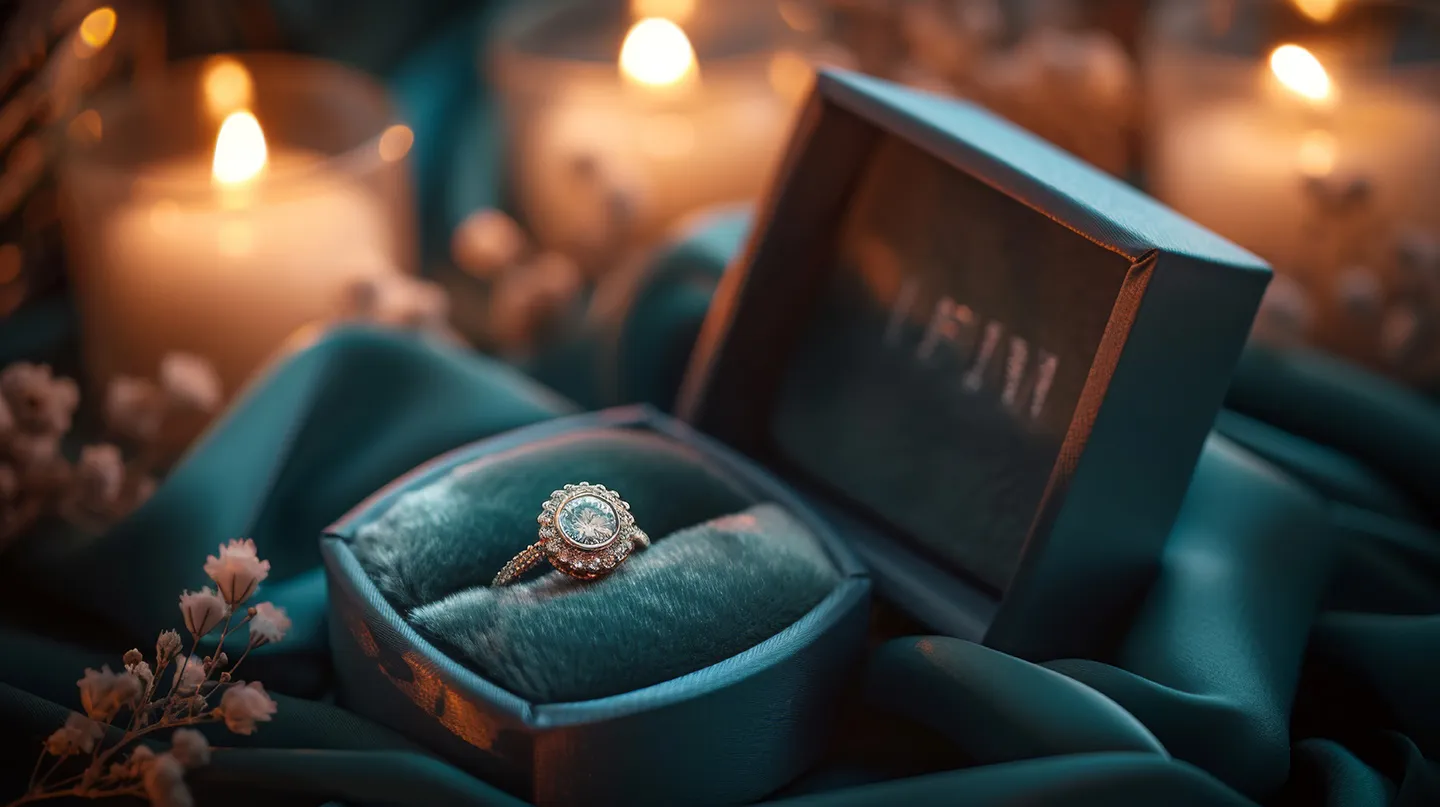
Custom engagement rings are worth that extra money when you want a stone, setting, or design that just can’t be purchased in a stock line, and when the price premium of the desirable feature is worth paying as long as you’re going to do something better in value with it instead of simply paying a premium for a tag. Usually, it often costs the same or just a small amount more than a comparably styled retail ring, generally by around ten to twenty percent, because you’re not paying for other people’s showroom buying groups, and you’re paying what you want rather than what someone else has done for you. The fair caveat is that ‘custom’ spans everything from semi-custom (pick a stone, drop it into a pre-existing setting style) to fully bespoke (a design conceived from nothing around your idea).
The value proposition is most powerful at the bespoke end of the spectrum for those who have a very specific vision, and weakest if you would be just as happy with a gorgeous, ready-made ring you saw in a display case. The first step is working out which category you fit into.
What actually goes into a custom ring, and how long does it take?
It’s much more organized than most people realize, and that is where much of the value is. It can begin with a consultation about budget, taste, and style, and move into a design phase with a jeweler producing sketches or CAD rendering for approval before rushing to sell you a finished product. Today, all custom work should cost a 3D CAD model to give a realistic image, and in some cases, a printed resin prototype, before investment in metal and stone.
Production times will be longer than off-the-shelf, so allow plenty of lead time. Basic custom-design jewelry typically takes four to eight weeks from design approval to delivery, but more elaborate designs with specialty stones or more detailed metal work could take ten or twelve. For an engagement ring, allow for a minimum of two to three months lead time in case revisions are needed, stones need to be sourced, and time for the final sizing.
Does a custom ring hold its value better than a retail ring?
The biggest misconception is in regard to resale value. Almost no piece, custom or retail, is a good investment moneywise when it comes to resale because the aftermarket for rings (used the way we use them) is cutthroat and very few sell for more than 40-50% of what they were purchased for. Custom isn’t an answer to that — in fact, in some situations, it can be a detriment because a maximally personalized design can be that much more difficult to resell.
Custom can be valuable in terms of materials and craftsmanship, not on the design. If you have paid your money for a quality center stone with precious metal rather than a design, that intrinsic value is present, whatever the jewel’s origin. You will not pay so much for a one-carat stone, be it a half or three-quarters-carat a bride-to-be could wear without having produced a piece of jewelry herself, than if you paid for a mass-produced branded ring where you’re paying partly for the name.
How do you choose materials that justify the cost?
Material choices are where a custom budget either works hard for you or quietly leaks money. Putting the bulk of the budget into the center stone is the conventional move, but the cut quality matters more than raw carat weight, because a well-cut smaller stone outshines a larger poorly-cut one. A custom process lets you prioritize, cut, and choose exactly the stone that fits your eye and your budget, rather than whatever the retailer happened to stock.
This is also where custom opens up options you’d struggle to find ready-made. You can build a ring around a colored center stone, an unusual cut, or a heirloom gem pulled from a family piece, and you can choose recycled metal or a specific gold alloy without paying a boutique surcharge. If you want a less conventional center stone, working with a specialist who focuses on a particular gem can be the smarter route, the way a jeweler known for aquamarine jewelry will source better-quality stones in that specialty than a generalist counter ever could. Matching the maker to the material is an underrated part of getting your money’s worth.
Who gets the most value from going custom?
Most obvious winners: those who have a very particular idea that shopping can’t satisfy. If they’ve been collecting inspirational images and they can’t find anything in shops that resembles what they’re imagining, custom turns that dream into reality; instead of a compromise, they’ll carry around with them every day that feels just a little bit more ‘them’. For those individuals, the emotional payoff is palpable and lasts a lifetime, and that ratio far exceeds most spreadsheet calculations. Custom is also valuable for those planning to buy or resell a family heirloom or other unique gemstone.
Reworking a grandmother’s diamond so it can fit into a new ring, or framing a sentimental stone from another era, is something a custom process excels at, and there’s value to that for many buyers. Custom work is something prospective couples who plan to make designing a ring a shared activity may also want to consider.
The worst off consumers from custom are the consumers who would love nothing more than to have a stunning, ready-made ring yesterday. If you don’t care what it looks like, the time and hassling involved may seem more like a hassle to you than a bonus, and a good retail or semi-custom shop will do the same job for less pain.


