The most coveted pieces today rarely announce themselves. The logo-heavy handbag and the instantly recognizable watch still have their fans, but more discerning buyers now want pieces that say something about them and not just the brand that made them. In fine jewelry, that change shows up in one clear trend: more people are commissioning custom work instead of buying off the showroom tray.
A custom ring, pendant, or bracelet is still precious metal and stone. What sets it apart is that it belongs to one story. Here is why bespoke jewelry has become the signature of understated luxury, and how to approach a commission with confidence.
Ownership over branding
Mass-produced luxury jewelry is beautiful, but it is designed to be recognized. A custom piece is designed to be personal. The setting might echo the architecture of a family home, the stone might be the birthstone of a child, and the engraving might mark a date only two people understand.
That personal quality is why bespoke work tends to be worn more often. A piece designed around your hands, your wardrobe and your daily routine fits your life in a way that a catalog design rarely does.
The stone comes first
Every strong commission starts with the stone. Diamonds are still the classic choice, but colored gemstones like sapphire, tourmaline, spinel, and aquamarine have become favorites for clients who want something less expected. Each has its own hardness, color range, and care needs, and the GIA Gem Encyclopedia is a reliable place to learn the basics before you shop.
A few questions are worth answering early:
– How will you wear it? An everyday ring needs a durable stone and a protective setting. An evening pendant can be more delicate.
– What color story do you want? Cool blues and greens read calm and coastal. Warm golds and pinks feel vintage and romantic.
– Do you have heirloom stones? Resetting a grandmother’s diamond into a modern design is one of the most meaningful commissions a jeweler can take on.
Working with a designer
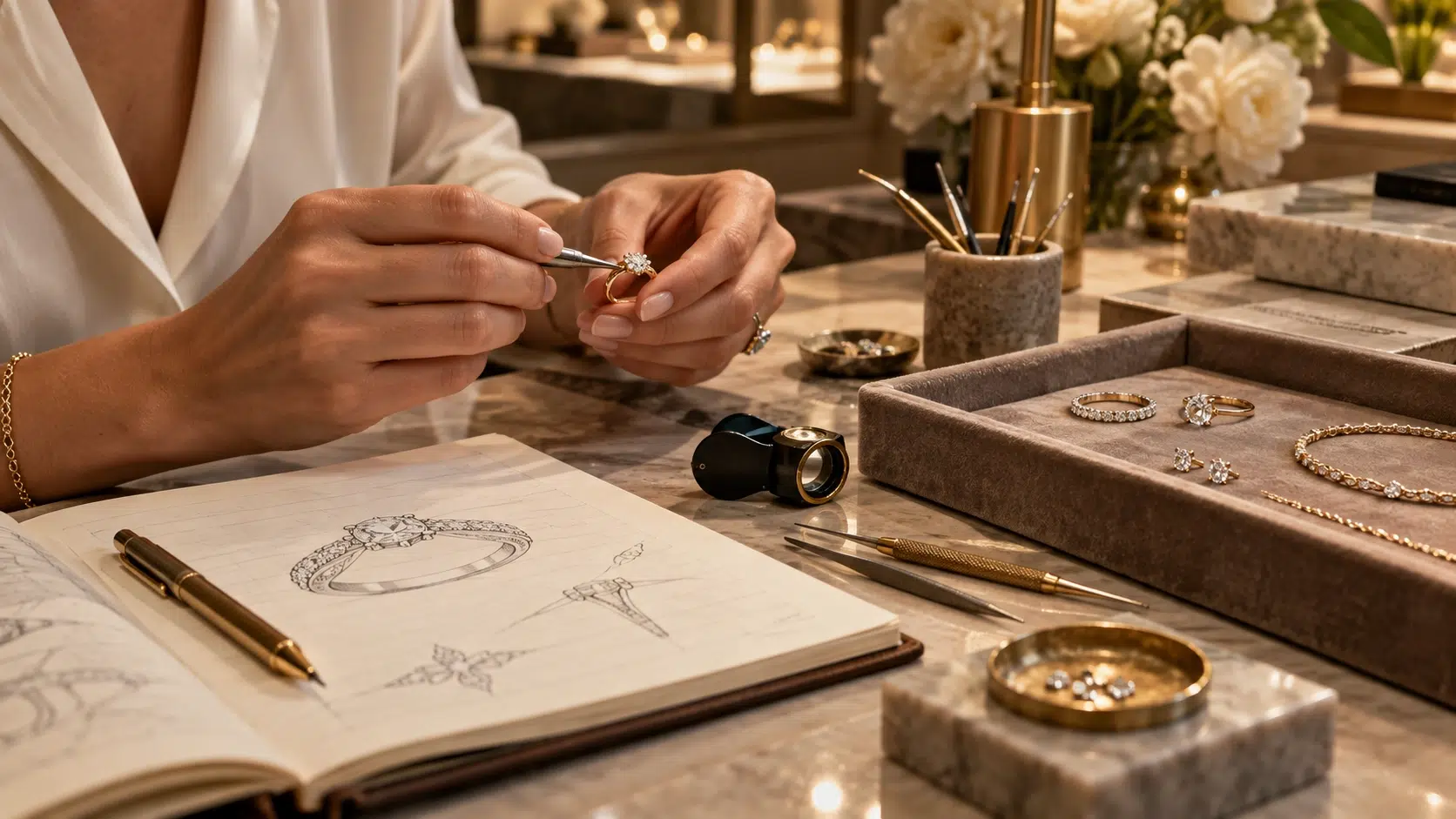
The best custom experiences feel collaborative. Expect an initial consultation about your style and budget, followed by sketches or CAD renderings, and often a wax or resin model so you can see proportions before any metal is cast. Many clients start by browsing a jeweler’s past commissions to find a designer whose taste matches their own. For example, the online gallery of Forever Rox, a custom jewelry studio in Incline Village, shows how one-of-a-kind rings and pendants move from sketch to finished piece, often built around stones sourced for a specific client.
Look for a jeweler who explains trade-offs honestly. A thin band may look elegant in a rendering but wear poorly over decades, and a good designer will tell you so.
Credentials and trust
Because custom jewelry is a significant investment, it pays to work with professionals who hold recognized credentials and follow clear ethical standards. Ask for independent grading reports, such as those from GIA, for any significant stone, and look to organizations like the American Gem Society to learn what ethical practice looks like. Get a written description of metals and stone weights, and a clear timeline, before you pay a deposit.
Budget without compromise
Custom does not have to mean extravagant. Choosing a slightly smaller center stone with excellent color, using 14k gold instead of platinum, or reusing metal from old jewelry can all bring a commission within reach. Many designers can also source stones through trade networks at prices below retail, which leaves more of your budget for craftsmanship.
Caring for a piece meant to last
A bespoke piece is meant to be passed down, so plan for maintenance. Have prongs checked once or twice a year, store pieces separately so harder stones don’t scratch softer ones, and get professional cleaning when the sparkle starts to fade. Ask your designer about insurance appraisals, which should be updated every few years as metal and gem prices change.
The quiet statement
In a world of fast fashion and faster trends, custom jewelry offers something rare: a luxury that grows more meaningful with time. It doesn’t need a logo to be recognized. The people who matter will know exactly what it means.