For many family campers, the biggest challenge during outdoor trips is not temperature — it is unpredictable weather.
Especially during spring and summer camping seasons, conditions can change very quickly. A clear afternoon may suddenly become a rainy evening.
If a tent cannot handle wet conditions properly, sleeping bags, clothing, and electronic devices may quickly become damp. Once moisture enters the shelter, the entire camping experience becomes uncomfortable.
For families, this issue becomes even more serious because multiple people spend long periods inside the tent together.
This is why more campers are beginning to pay close attention to waterproof performance rather than focusing only on size or appearance.
Waterproofing Means More Than Rain Protection
Many consumers assume waterproofing simply means “keeping rain outside.”
In reality, true weather protection involves much more than that.
Moisture inside a tent does not come only from rainfall. Humidity, wet ground conditions, and condensation caused by breathing can all increase interior dampness over time.
Without proper waterproofing and ventilation, the inside of the tent may still feel wet and uncomfortable even if rain never directly enters the shelter.
Because of this, modern family camping tents must balance waterproofing, drainage, and airflow together.
This becomes especially important for larger tents designed for long family stays.
Understanding PU5000mm Waterproof Ratings
Many campers see terms like “PU3000mm” or “PU5000mm” when shopping for tents, but do not fully understand what these numbers represent.
PU ratings measure the waterproof resistance of the tent fabric.
In simple terms, higher numbers indicate stronger resistance against water penetration.
PU2000mm is generally suitable for light rain conditions, while PU3000mm performs better during continuous rainfall.
PU5000mm provides stronger protection during extended rainy weather and more demanding outdoor conditions.
For family camping, this level of waterproof performance becomes extremely valuable because families usually stay outdoors longer and carry more gear inside the tent.
Keeping the interior dry directly improves comfort and protects important camping equipment.
Waterproofing Is About Structure Too
Many consumers believe thicker fabric automatically means better waterproof performance.
However, effective waterproofing depends on multiple design elements working together.
The outer fabric is important.
High-quality tents often use durable Oxford fabric or polyester materials combined with PU waterproof coatings to reduce water penetration.
Seam construction also matters greatly.
Many leaks occur around stitching and connection points rather than through the main fabric itself. Proper seam sealing is essential for maintaining reliable waterproof performance.
Roof design is another important factor.
If rainwater cannot drain efficiently, standing water may increase pressure on the tent surface and eventually create leakage risks.
A truly reliable waterproof tent combines strong materials, good structure, and careful manufacturing details.
Inflatable Structures Improve Rain Performance
Traditional pole tents sometimes develop uneven pressure areas during heavy rain, which can lead to water pooling on the roof.
Inflatable structures distribute pressure more evenly across the tent surface.
This helps maintain a stable roof shape that allows rainwater to slide away more efficiently, reducing the risk of standing water accumulation.
Today, more outdoor users are paying attention to the real-world performance of inflatable tents because these structures often remain more stable during continuous rainy conditions.
Modern inflatable tents also commonly use integrated outer-shell designs that help reduce the chance of rain entering the interior space.
Of course, proper campsite setup still matters. Ground drainage, rope tension, and campsite selection all remain important for maintaining dry conditions.
Coastal Camping and Long Stays Demand Better Protection
Many people assume beach camping mainly requires strong wind resistance.
In reality, humid coastal environments also create major waterproofing challenges.
Sea air contains high moisture levels and salt particles that may accelerate material wear over time. Without strong waterproofing and proper airflow, interior humidity can quickly become uncomfortable.
Because of this, many users searching for an inflatable beach tent are now paying closer attention to weather protection instead of focusing only on shade or appearance.
For long-term family camping, a large tent must balance waterproofing, ventilation, and interior comfort together.
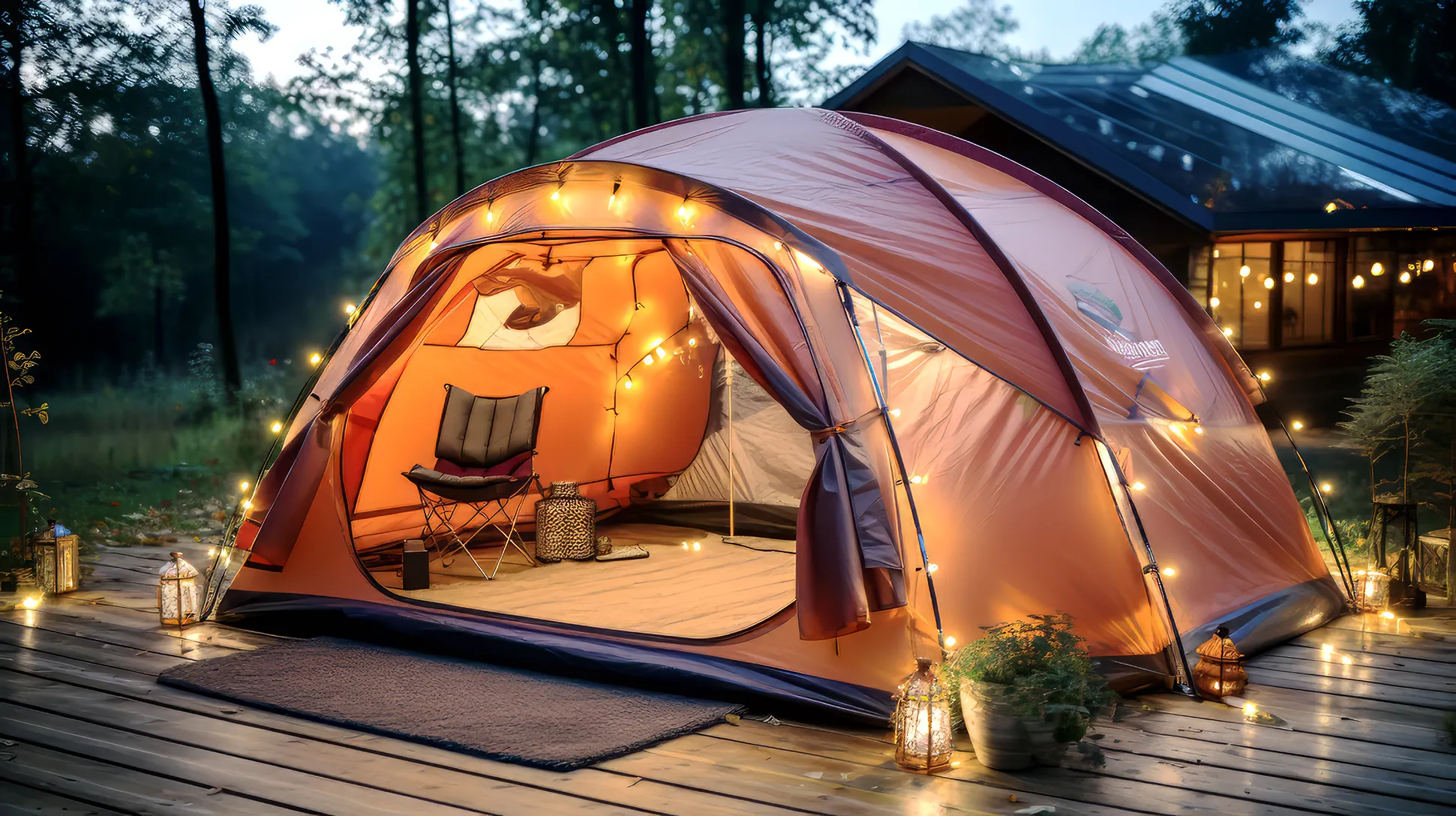
Vega’s 12㎡ layout focuses not only on spaciousness but also on maintaining stable weather performance. Its PU5000mm waterproof rating helps the interior remain dry during extended rainfall, while the multi-window ventilation system improves airflow and reduces humidity buildup caused by multiple people staying inside the tent.
For family campers, this combination of dryness and comfort becomes far more important than simple tent size alone.
Ventilation Is Just As Important
Many campers overlook one important fact: interior moisture does not always come from outside rain.
Human breathing, humidity, and temperature differences can all create condensation inside the tent.
Because of this, a truly effective family camping tent must combine strong waterproofing with efficient airflow systems.
Modern inflatable tents often include upper ventilation openings, large windows, and mesh airflow systems that improve air circulation throughout the shelter.
During warm-weather camping, proper ventilation significantly reduces humidity and interior discomfort.
Families Now Care More About Real Weather Performance
In the past, many consumers focused mainly on tent size or appearance.
Today, family campers are paying much closer attention to how tents perform in real outdoor weather conditions.
For larger groups, a reliable tent must balance waterproofing, ventilation, structural stability, and long-term comfort together.
Outdoor brands such as Zonkoo are increasingly focusing on weather-adaptive family camping solutions by improving material quality and structural design.
This reflects the growing demand for more dependable outdoor living experiences.
Waterproof Performance Is Becoming Essential
As camping continues to become a mainstream family activity, expectations for outdoor equipment are evolving.
People no longer care only about whether a tent is large enough. They also want products that remain comfortable and reliable during changing weather conditions.
For modern family campers, a spacious inflatable tent with PU5000mm waterproof protection offers much more than simple shelter — it creates a safer and more dependable outdoor living space.
Because of these advantages, more families are choosing Vega-style inflatable tents as a reliable solution for comfortable camping in unpredictable weather.