In a city that has spent centuries perfecting the art of the table, Four Seasons George V Paris gastronomy stands apart as something truly singular. Just steps from the Champs-Élysées, behind a discreet Haussmannian façade, the hotel holds what may be the most concentrated assembly of culinary talent in Europe—an address where dining becomes not mere indulgence, but a form of cultural authorship.
Today, with six Michelin stars across three restaurants, the George V no longer reads as a hotel with fine dining. Instead, it stands as a gastronomic institution, one that has quietly reshaped what a luxury hotel kitchen can be.

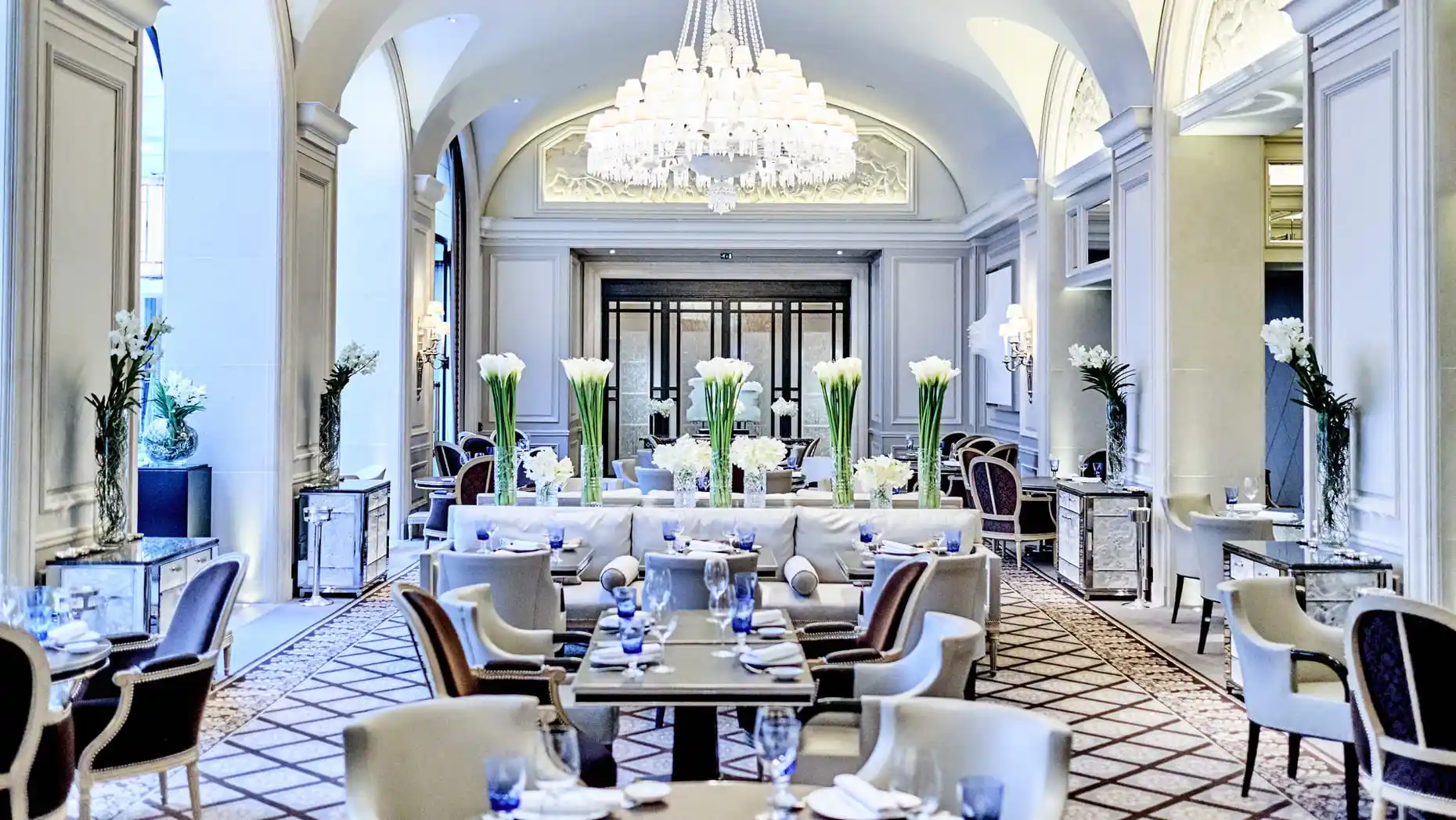
At the pinnacle sits Le Cinq, the hotel’s three-Michelin-star flagship and one of the most revered dining rooms in France. Here, Chef Christian Le Squer distills modern French cuisine into something both lucid and deeply sensual. Rather than rely on excess, he builds flavor through clarity, balance, and control.
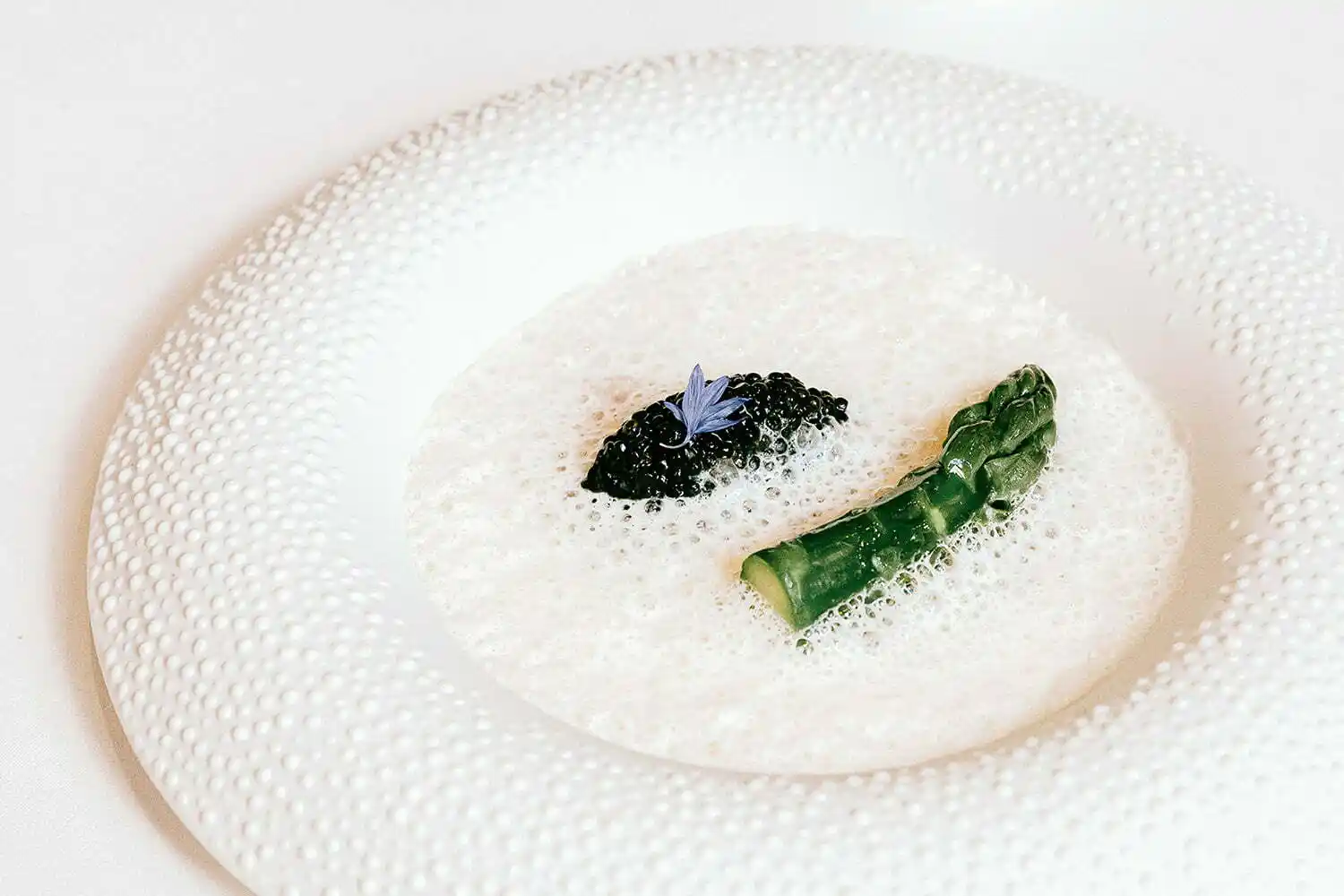
As a result, sauces feel weightless yet deep, vegetables receive the same respect as caviar, and classic French forms take on near-architectural precision. Meanwhile, the room itself—flooded with light and framed by Versailles-inspired gilding and monumental floral arrangements—feels less like a restaurant than a ceremonial space devoted to taste.
Here, luxury becomes restraint elevated to art.
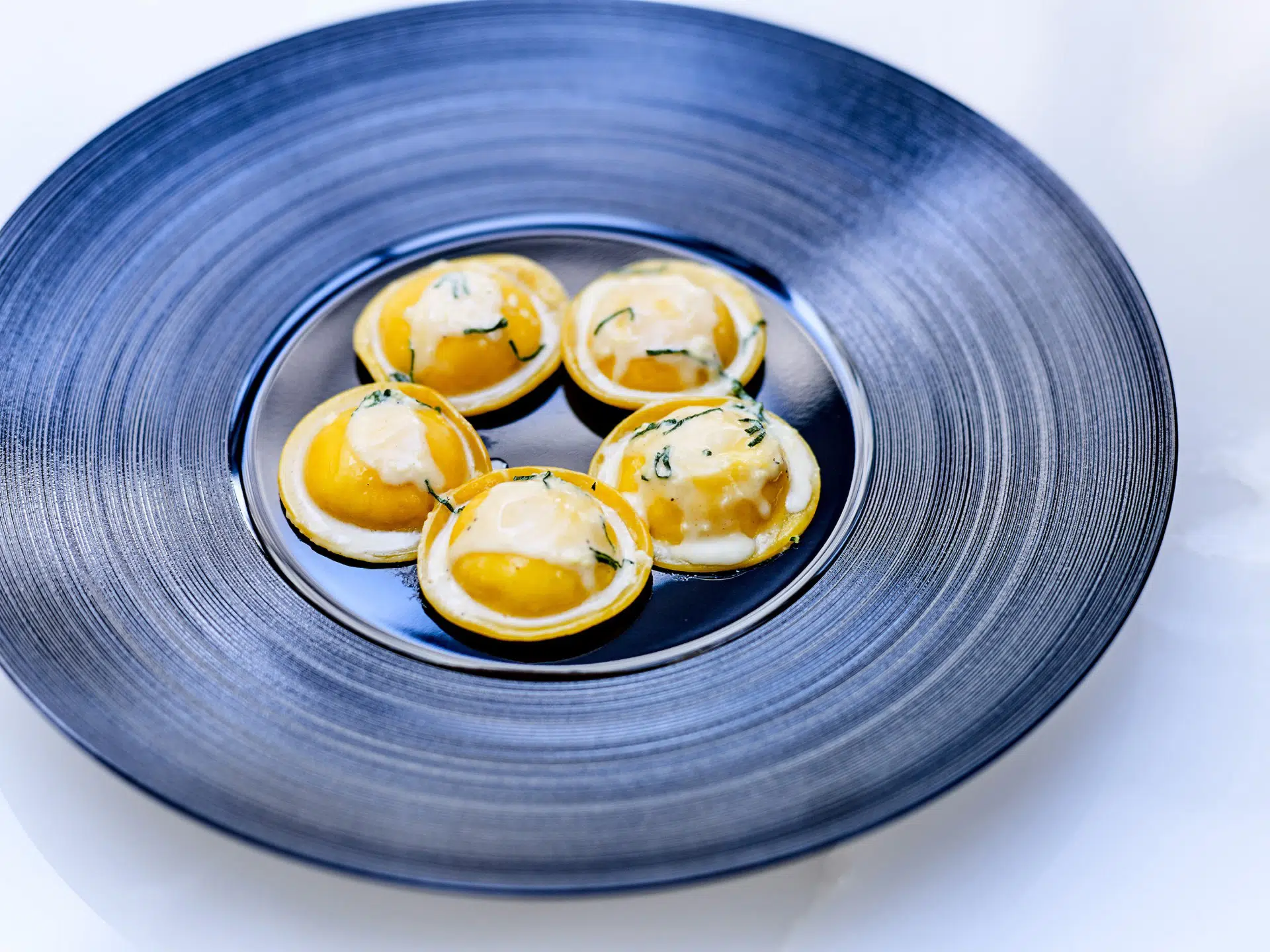
In contrast, Le George offers a more relaxed, sun-washed expression of refinement. Its two Michelin stars recognize a Mediterranean-leaning cuisine that draws on the flavors of Provence, Italy, and the Riviera, while still preserving unmistakable Parisian finesse.
Dishes lean toward brightness and balance: citrus-cut crudos, olive-oil-glossed vegetables, and impeccably grilled seafood. Moreover, the restaurant feels equally suited to a languid lunch or a discreet dinner after the opera.
Ultimately, Le George’s genius lies in its ability to appear effortless while operating at a level most kitchens never reach.
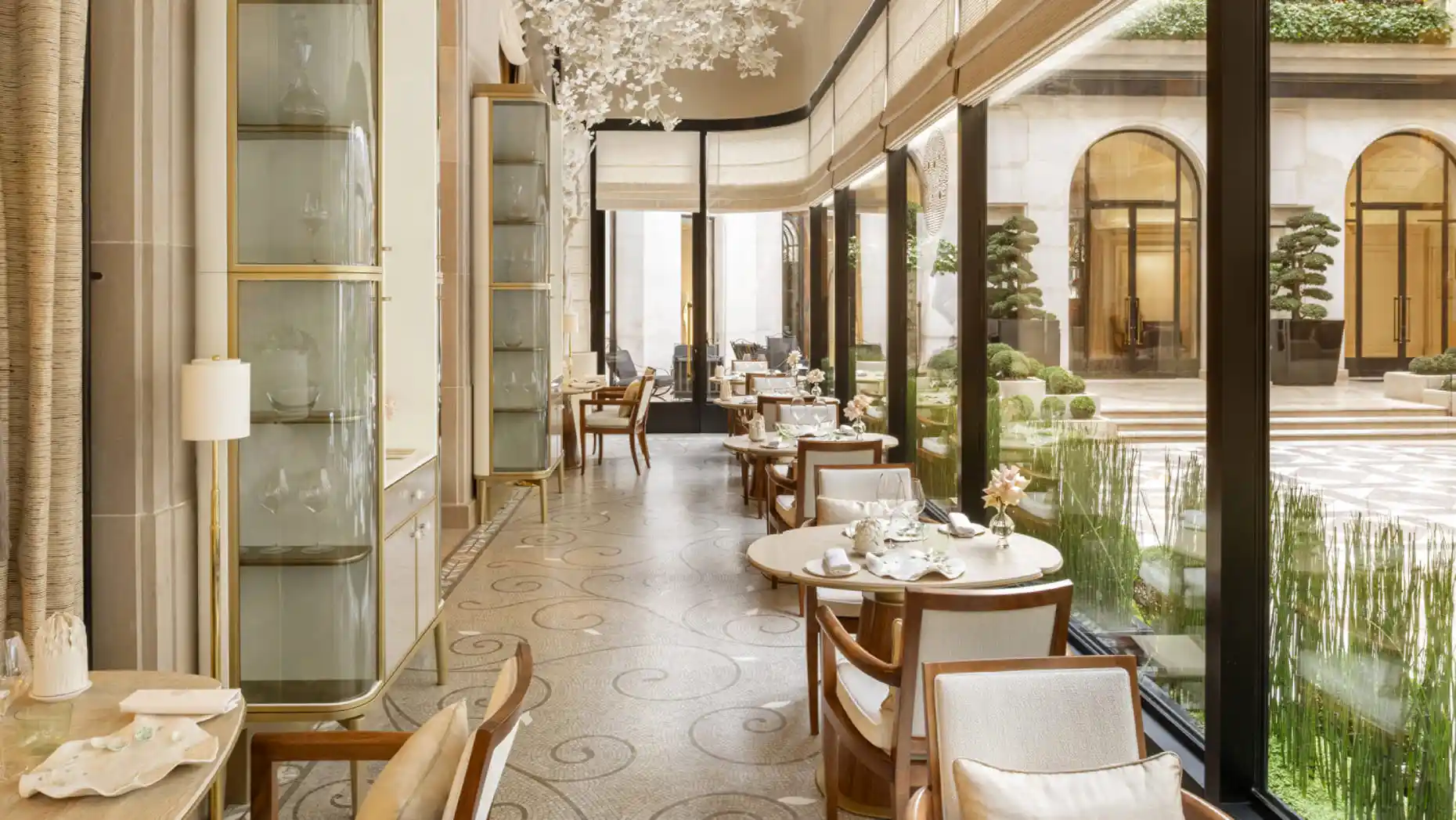
Meanwhile, the hotel’s most quietly radical restaurant remains L’Orangerie. Awarded two Michelin stars, it devotes itself to a near-philosophical dialogue between seafood and vegetables. Here, animal proteins move into supporting roles. Instead, texture, minerality, salinity, and seasonal nuance take center stage.
The cooking feels modern in the purest sense—light, lucid, and deeply thoughtful—yet never cold. At the same time, the dining room, wrapped in pale wood, soft curves, and diffused light, mirrors the cuisine’s calm precision.
L’Orangerie does not chase spectacle. Rather, it invites contemplation.
Together, Le Cinq, Le George, and L’Orangerie form the foundation of Four Seasons George V Paris gastronomy, a six-Michelin-star universe that few dining destinations anywhere can rival. For those interested in exploring some of the world’s most fabulous gastronomic creations, consider our curated guide here.
Beyond the plates, part of what makes dining at the George V so singular is its visual atmosphere. The hotel has earned global renown for its monumental floral displays, curated by artistic director Jeff Leatham. Each day, towering arrangements of orchids, tulips, or seasonal blooms transform corridors and dining rooms into living installations.
In doing so, the hotel turns even a walk to dinner into a sensory prelude.
What ultimately distinguishes the George V from even the most celebrated standalone restaurants is not merely its stars. Instead, it is the unbroken consistency of excellence across breakfast, lunch, tea, cocktails, and midnight room service.
The same discipline that governs a three-star tasting menu shapes a simple omelet or club sandwich. As a result, luxury here feels systemic rather than performative.
In an era when fine dining increasingly courts spectacle, trend, and social-media theater, the Four Seasons Hotel George V stands for something rarer: authority. It does not chase relevance. Rather, it defines it.
For gourmands, collectors of experiences, and travelers who measure a city through its tables rather than its monuments, the George V remains a pilgrimage address—one where Paris’s culinary legacy does not sit preserved in amber, but continues to evolve each night.
Here, gastronomy is not a department.
It is the house’s deepest form of self-expression.