From flaming Christmas puddings and Victorian traditions to panettone, stollen, and the enduring pleasures of Fortnum & Mason, the festive season offers a delicious lesson in history.
There is only one true star at Christmas. And it is not necessarily the one perched precariously on top of the tree.
Charles Dickens knew precisely what it was. In A Christmas Carol, published in 1843, he described a Christmas pudding arriving in a blaze of glory. Crowned with holly and surrounded by the intoxicating aroma of ignited brandy, it was a spectacle worthy of the occasion. Nearly two centuries later, the tradition has lost none of its charm.
Few things evoke a traditional British Christmas quite like a plum pudding, particularly one from Fortnum & Mason. The venerable London institution has elevated festive indulgence to something approaching a national art form. Curiously, the pudding contains no plums in the modern sense. For centuries, the word plum commonly referred to dried fruit, particularly raisins. An entirely sensible explanation for an otherwise rather misleading name.
The Christmas pudding has travelled a considerable distance from its medieval beginnings. Its ancestors included plum porridge and pottage, substantial concoctions of dried fruit, suet, breadcrumbs, spices, and fortified wine. These early dishes were often more savory than sweet. Diners ate them with sops, pieces of bread that soaked up the rich broth.
Over time, the dish grew sweeter, richer, and considerably more ceremonial. By the Victorian era, it had secured its place at the center of the Christmas table. Brandy flames, sprigs of holly, and an impressive collection of superstitions completed the spectacle.
Tradition once called for 13 ingredients, representing Christ and his 12 apostles. Every member of the household took a turn stirring the mixture from east to west, symbolizing the journey of the Magi. Families embraced the ritual on Stir-up Sunday, the final Sunday before Advent. It offered the perfect opportunity to prepare their puddings well before Christmas Day.
There were rewards for the fortunate, and occasionally the unfortunate. A silver coin hidden inside the pudding promised wealth, a wishbone brought good luck, and a thimble represented thrift. An anchor symbolized safe harbor. One can only imagine the consequences of discovering these treasures with rather more enthusiasm than caution.
Traditionally, families brought the pudding to the table, poured brandy or rum over it, and set it alight. Few desserts have ever made such an entrance. The flames provided a suitably theatrical finale to a meal already rich in ritual and anticipation.
There was also a time when Christmas pudding carried the weight of an empire. Ingredients from across British territories transformed the dish into an edible representation of imperial reach. Royal chef Henry Cédard, who cooked for King George V and Queen Mary, was associated with a particularly international recipe. It called for brandy from Cyprus, nutmeg from the West Indies, Australian currants, South African raisins, Canadian apples, Jamaican rum, and English beer.
It was, quite literally, a Christmas pudding with a passport. Today, its imperial symbolism has largely faded, although its ingredients still tell a story of trade, travel, and cultural exchange.
What survives is the pleasure of a dessert that demands patience, preparation, and a generous helping of ceremony. Christmas pudding remains one of those rare culinary traditions in which the anticipation matters almost as much as the eating.
Christmas cake has an equally colorful past. Before the familiar iced fruitcake became a seasonal fixture, families celebrated Epiphany with Twelfth Night cakes. Bakers concealed a bean and, in some traditions, a pea inside the cake. Whoever discovered the bean became King for the evening, while the pea determined the Queen. For one night, the household surrendered to the cheerful disorder of the Lord and Lady of Misrule.
Samuel Pepys recorded the pleasures of Twelfth Night celebrations in his diary, including the magnificent cakes that accompanied them. Clearly, the British have never required much encouragement to turn a dessert into an occasion.
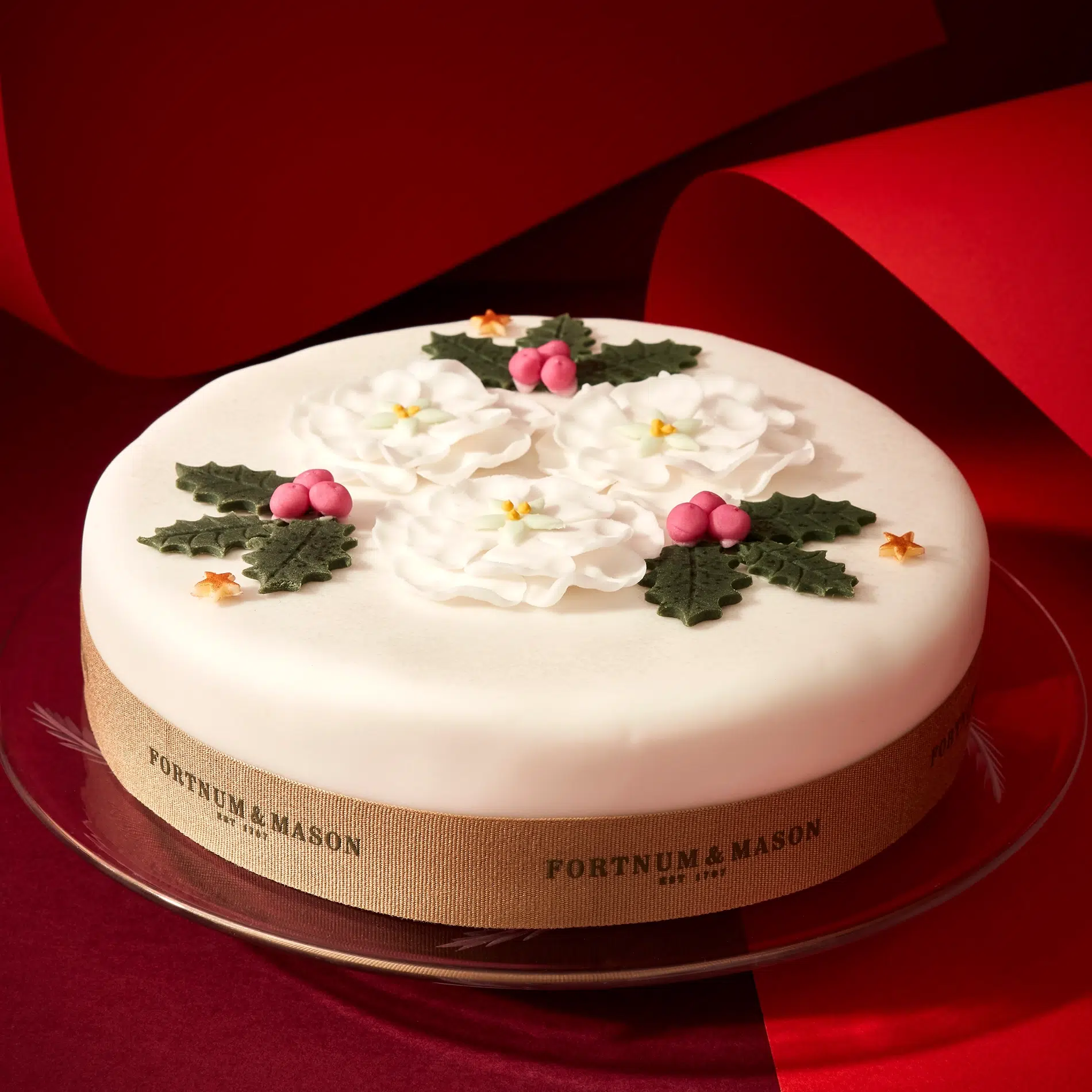
The traditional English Christmas cake eventually assumed its familiar form. Currants, sultanas, and raisins, often steeped in spirits, give the rich fruitcake its distinctive flavor. A layer of marzipan and pristine white icing completes the creation. It is a cake that rewards patience and, depending on the generosity of the baker, a respectable quantity of alcohol.
Scotland offers its own interpretation with Dundee cake and the richly fruited black bun. In Yorkshire, Christmas fruitcake traditionally appears alongside Wensleydale cheese. The combination may surprise the uninitiated, but the contrast is rather wonderful. Sweet fruit meets crumbly, slightly tangy cheese in a pairing that has delighted generations.
Across Europe, festive cakes reveal an equally fascinating collection of regional traditions. Each tells a story of local ingredients, family customs, and the universal pleasure of celebrating around a table.
Germany has its beloved Christstollen, the fruit-studded Christmas bread associated particularly with Dresden. Dried fruit, candied citrus peel, and a generous dusting of powdered sugar give it a distinctive character. Dresden’s annual Stollenfest takes the tradition to extraordinary proportions. An enormous ceremonial stollen becomes the centerpiece of the celebrations, complete with an equally impressive knife for cutting it.
Subtlety, it seems, has never been a requirement of festive baking. The Germans understand that Christmas occasionally calls for a little theatrical excess.
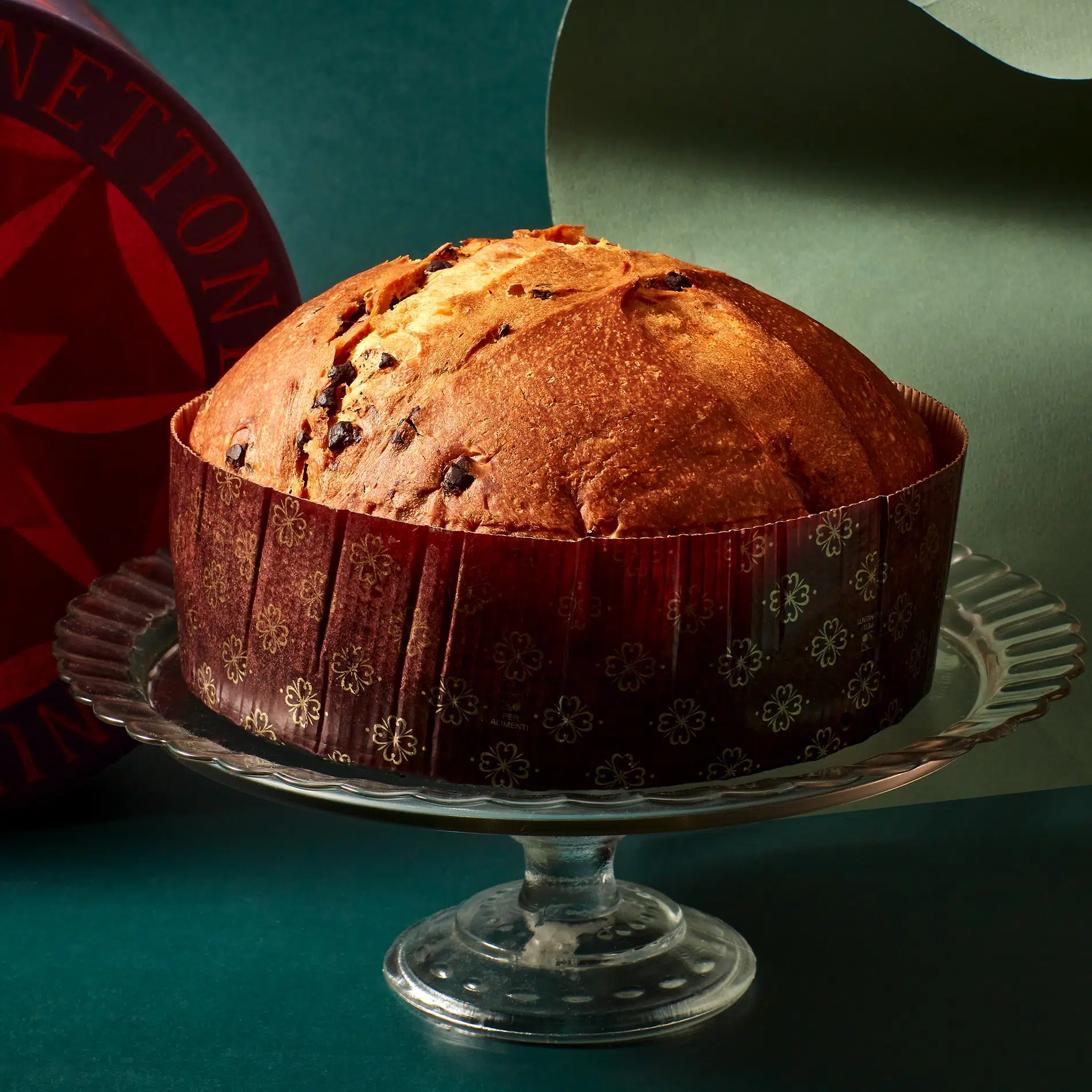
Italy contributes two of Europe’s most recognizable Christmas specialties. Milan’s panettone rises into a magnificent dome, its golden interior studded with raisins and candied fruit. Careful fermentation and patient preparation produce its wonderfully airy texture. A fine panettone is as much a triumph of technique as it is a seasonal indulgence.
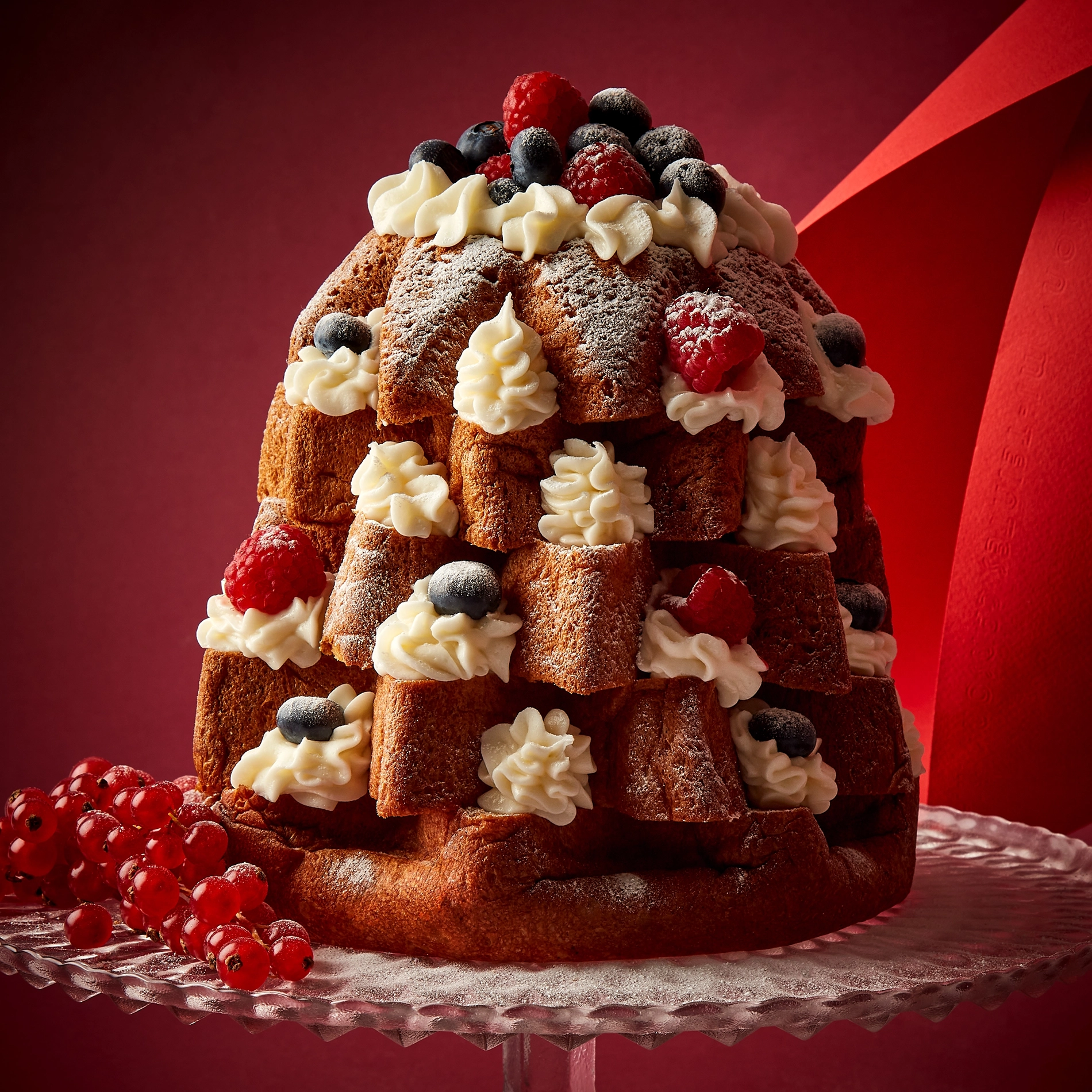
Verona offers pandoro, the star-shaped cake whose generous coating of powdered sugar recalls the snow-covered peaks of the Alps. Its delicate, buttery character makes it a particularly elegant alternative to fruit-filled panettone. Both are even more enjoyable with a glass of something sparkling.
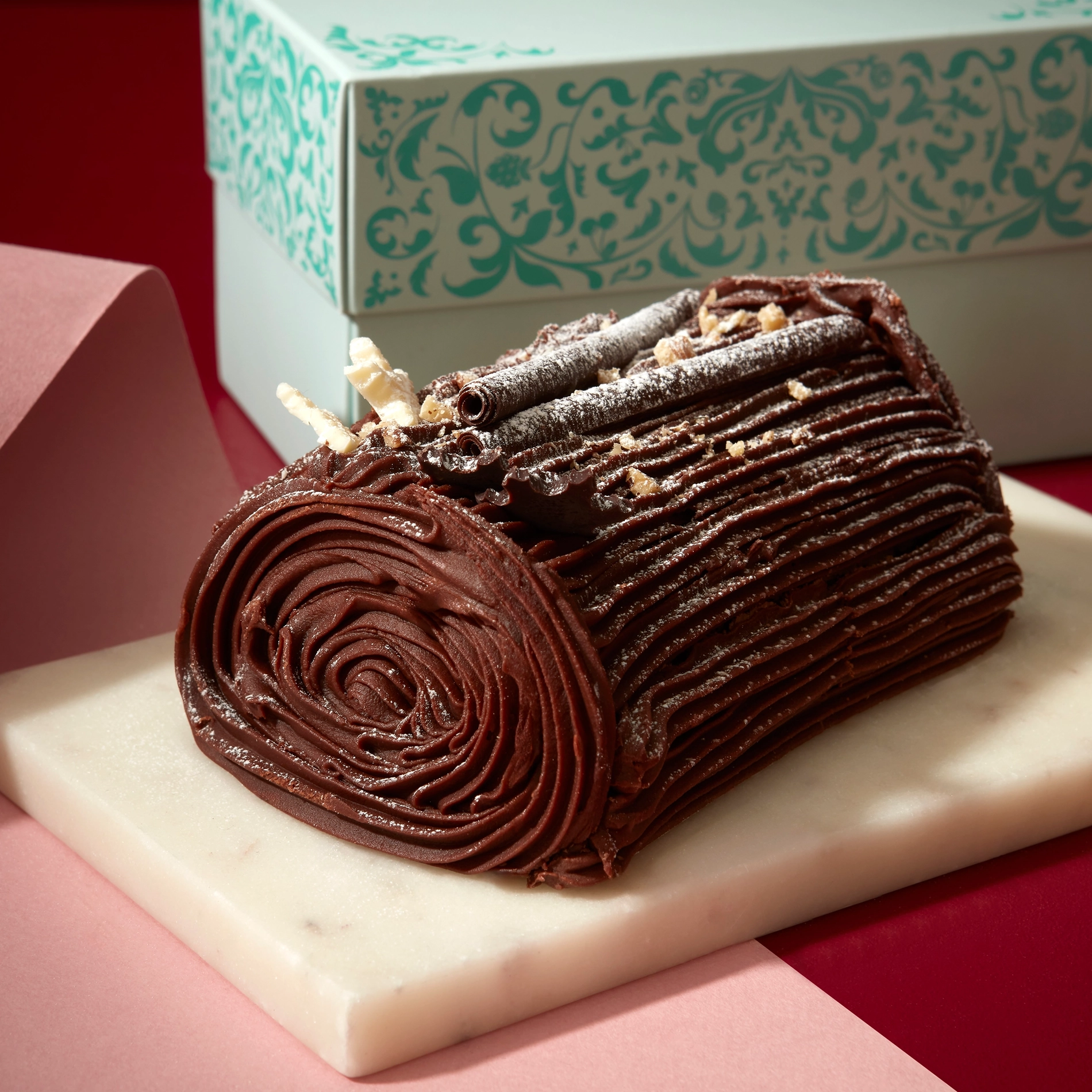
In France, Belgium, Switzerland, and other countries with French culinary traditions, Christmas brings the bûche de Noël. This traditional Yule log transforms sponge cake and buttercream into an edible woodland scene. Chocolate, coffee, or liqueur often enriches the filling, while decorative touches evoke a snow-dusted log.
The custom traces its roots to the large wooden logs that families once burned in European hearths during Christmas. The flames symbolized warmth, protection, and good fortune. Today, pastry chefs reinterpret the tradition through elaborate chocolate creations. Some resemble miniature works of art, almost too beautiful to cut.
Portugal and Brazil celebrate with bolo-rei, or King’s Cake. This crown-shaped confection features candied fruits and nuts, reflecting the festive traditions surrounding Epiphany. Elsewhere in Europe, celebratory breads mark different religious occasions. Russia’s kulich and Ukraine’s paska, for example, belong primarily to Easter rather than Christmas. They nevertheless illustrate the enduring relationship between baking, faith, and family celebrations.
And then there is Fortnum & Mason.
William Fortnum and Hugh Mason established the celebrated British institution in 1707. More than three centuries later, its flagship store at 181 Piccadilly remains one of London’s great culinary landmarks. It is far more than a department store. Fortnum’s occupies a singular place in the British imagination, appealing to anyone who believes good taste should extend from the drawing room to the dining table.
The company’s history is rich with culinary associations. Its longstanding connection with the Scotch egg, celebrated teas, and meticulously presented hampers has helped shape its reputation. Fortnum’s created its Royal Blend tea for King Edward VII in 1902. The blend remains part of a heritage built on ceremony, refinement, and the distinctly British conviction that almost any occasion improves with a proper cup of tea.
At Christmas, however, Fortnum & Mason truly comes into its own. Its famous hampers, traditional puddings, fruitcakes, biscuits, and chocolates offer far more than seasonal extravagance. They celebrate the pleasures of giving, sharing, and indulging in something exceptional.
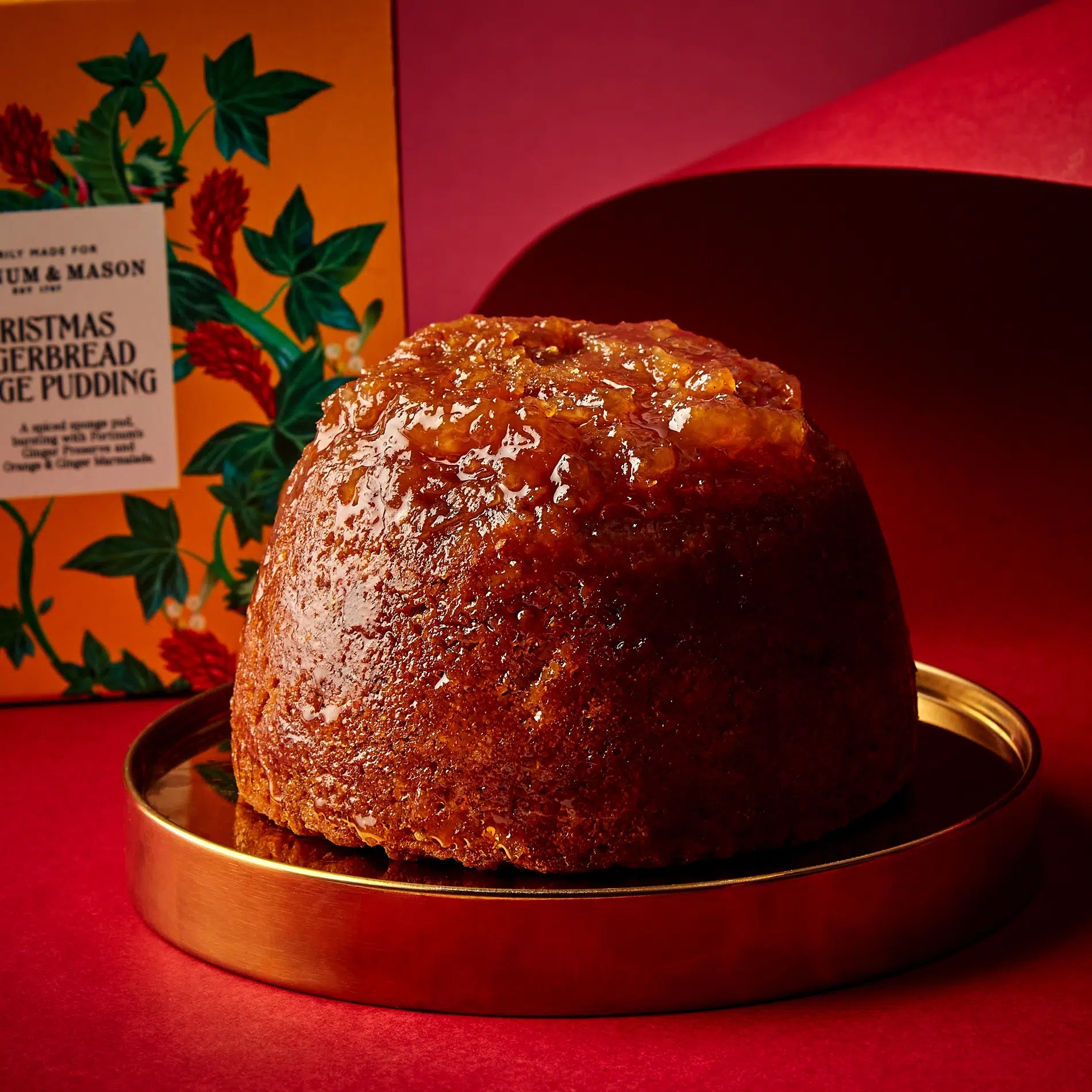
The beautifully arranged wicker hampers evoke a world in which gift-giving remains an art. Presentation matters, anticipation is part of the pleasure, and the contents of a carefully packed basket can inspire almost as much excitement as Christmas morning itself.
There is something reassuring about these traditions in an age when Christmas often feels increasingly hurried. The anticipation of opening a hamper, the fragrance of spices and dried fruit, and the ritual of lighting a pudding all invite us to slow down. Sharing a carefully prepared dessert becomes an occasion in itself.
Fortnum & Mason understands this better than most. Its festive offerings celebrate memory and anticipation as much as exquisite ingredients. They carry forward the customs of generations while making room for a little contemporary indulgence.
After all, Christmas has never been solely about the presents beneath the tree or the extravagance of the table. It is about celebration, generosity, and the small rituals that make the season memorable. A beautifully prepared pudding, a slice of Christmas cake, and the pleasure of good company can still capture the spirit of the occasion.
And, of course, hoping that your new sweater will fit.