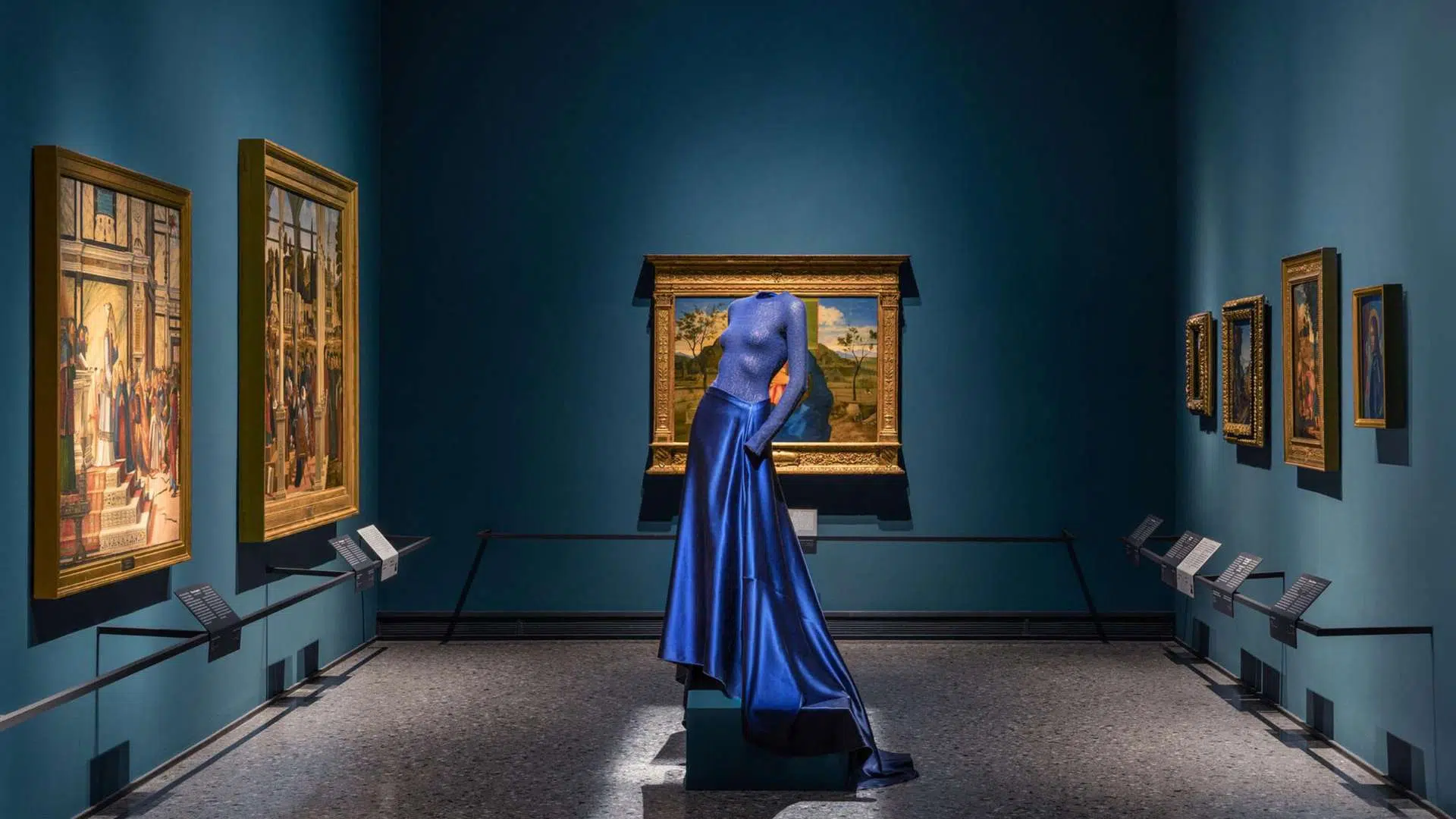
Where fashion and art meet in Milan’s most poetic museum.
In Milan, fashion has always been more than an industry. It is culture, character, and cadence. With Giorgio Armani: Milano, per amore, the city’s most discreet master returns that sentiment in kind—placing his work not on a runway or within a white-walled gallery, but inside the historic halls of the Pinacoteca di Brera. The result is not a retrospective in the traditional sense, but a meditation on belonging, memory, and the quiet authority of style.
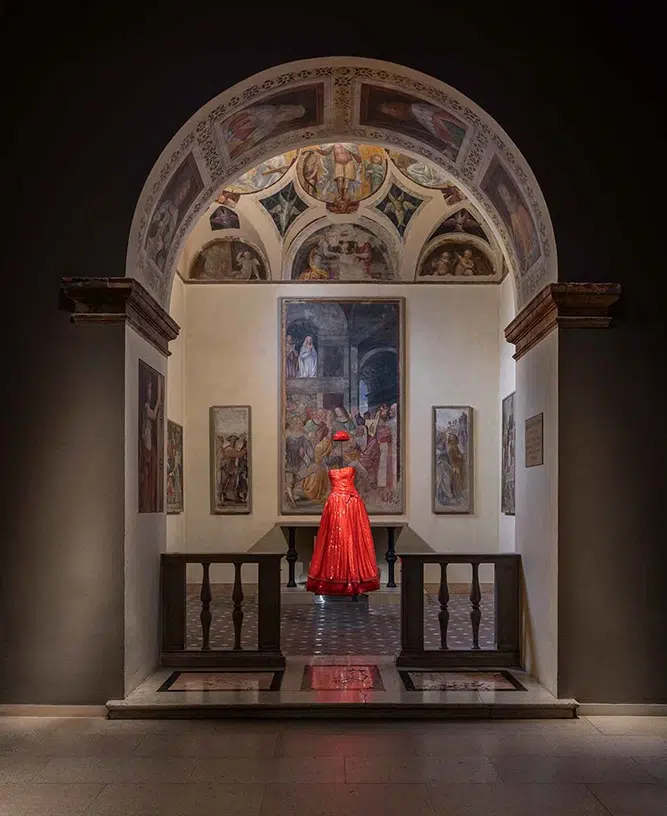
Rather than isolating fashion from its surroundings, the exhibition integrates it directly into Brera’s permanent collection. Armani’s garments appear alongside Italian masterpieces spanning centuries, entering into a dialogue that feels natural, almost inevitable. Here, clothing does not compete with art; it converses with it.
Clothing as a Cultural Language
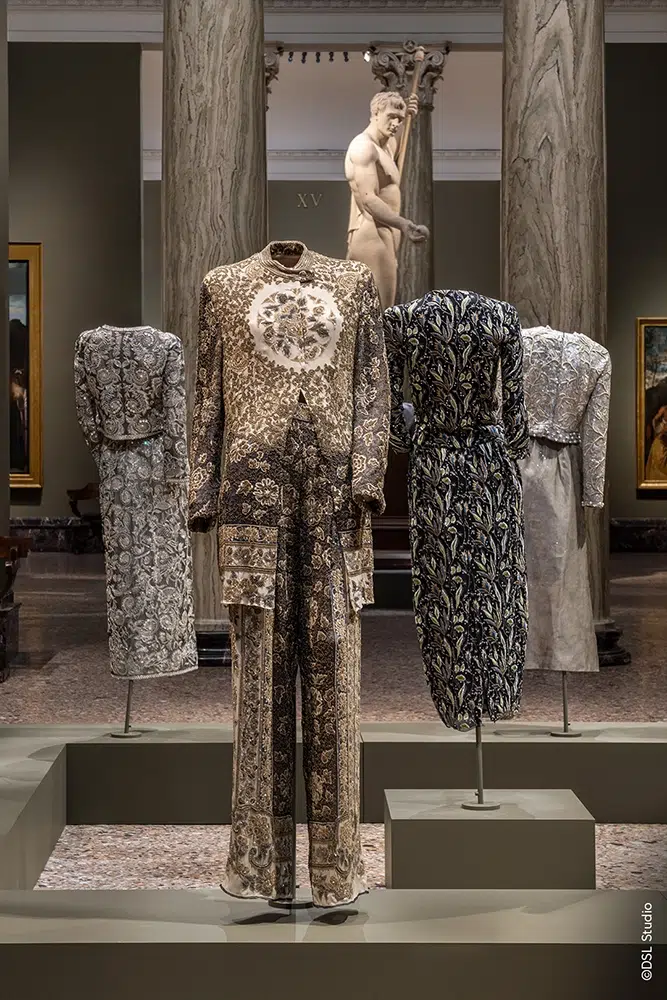
More than 120 archival pieces from the Giorgio Armani archive are dispersed throughout the museum, their placement deliberate and unforced. Jackets echo the geometry of painted architecture. Eveningwear mirrors the softness of Renaissance flesh tones. Armani’s signature palette—greige, sand, ink, midnight—feels entirely at home against Brera’s aged walls.
What emerges is a reminder of Armani’s defining principle: that true elegance does not announce itself. His clothes have always favored proportion over ornament, movement over rigidity. Seen in this context, they read less as fashion statements and more as visual philosophy—objects designed to endure rather than impress.
Brera, Milan, and the Making of a Vision
The choice of Brera is deeply personal. Long before Armani became a global name, this neighborhood shaped his sensibility. Its balance of intellectual rigor and lived-in beauty mirrors the designer’s own approach—refined, but never remote. Milano, per amore, is as much about place as it is about product: a portrait of a city that values discretion, discipline, and continuity.
By situating his work within Milan’s artistic lineage, Armani underscores a truth often overlooked in contemporary fashion discourse—that modernity is not defined by rupture, but by coherence. His designs do not reject the past; they refine it.
An Exhibition Without Spectacle
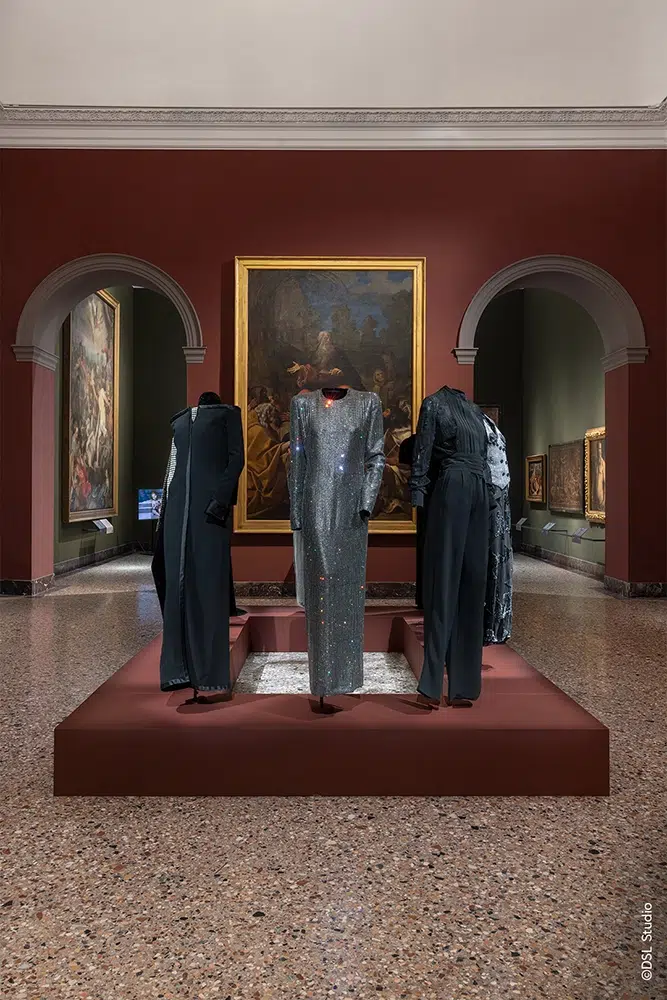
There is no theatrical staging here, no dramatic lighting or exaggerated narrative arc. The garments are presented with the same calm confidence that defines Armani himself. This restraint is the exhibition’s strength. It asks visitors to slow down, to look closely, and to consider fashion not as a trend, but as a form.
In doing so, Milano, per amore, reframes Armani’s legacy. It positions his work not at the edge of fashion history, but firmly within Italy’s broader cultural continuum—alongside painting, sculpture, and architecture.
The Lasting Impression
In an era defined by speed and spectacle, Giorgio Armani: Milano, per amore feels almost radical in its composure. It reminds us that the most enduring expressions of luxury are not loud, but considered. That style, when grounded in place and principle, becomes timeless.
For Milan, it is a homecoming.
For Armani, it is a statement made without emphasis.
And for the viewer, it is a rare opportunity to see fashion exactly as it was always meant to be seen—not as a moment, but as a memory.