There are few automotive marques for which color carries quite as much emotional weight as Aston Martin. A particular shade can summon an entire chapter of British motoring history: country lanes in Hampshire, hand-painted grand tourers outside Newport Pagnell, the polished glamour of a Bond-era DB5, or the restrained confidence of a 1970s V8 Vantage.
Now, five of those evocative colors have returned.
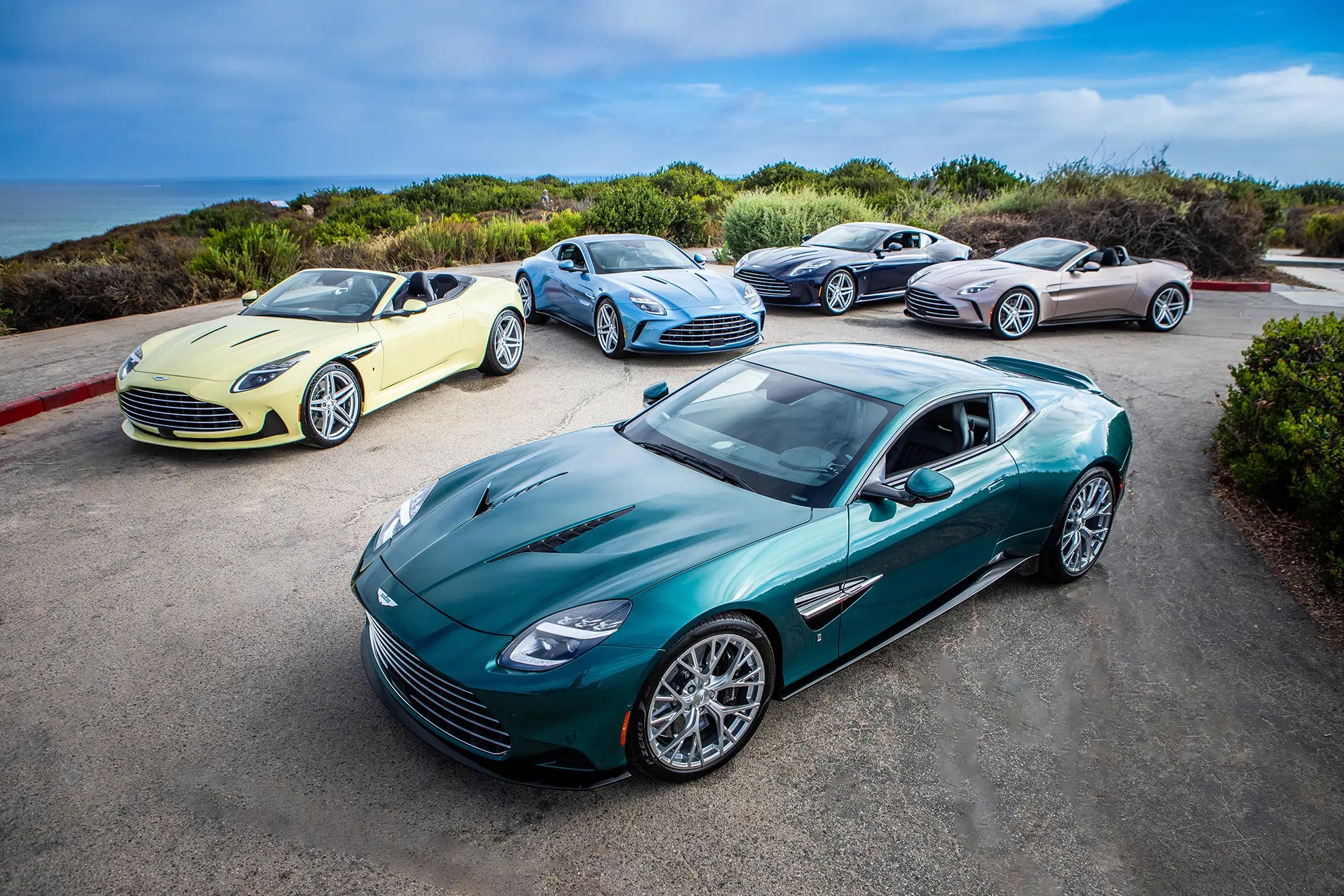
Created by Q by Aston Martin in collaboration with Aston Martin Newport Beach, the new Aston Martin Heritage Edition collection brings a carefully chosen palette from the 1960s and 1970s to the marque’s current sports-car range. The result is a group of five one-of-one commissions that feel less like retrospective exercises and more like a conversation between two distinct eras of Aston Martin design.
Each 2027 model-year car is finished in a revived historic paint color, remastered using contemporary paint technology and paired with a bespoke interior developed by Q by Aston Martin, the marque’s personalization division. The collection encompasses a DB12 coupe, DB12 Volante, Vanquish coupe, Vantage coupe, and Vantage Roadster, with each car available exclusively through Aston Martin Newport Beach.
More importantly, these are not colors that can simply be selected from a conventional configurator. According to the marque, these five cars are the only current Aston Martin models in the world to wear their respective Heritage Edition finishes.
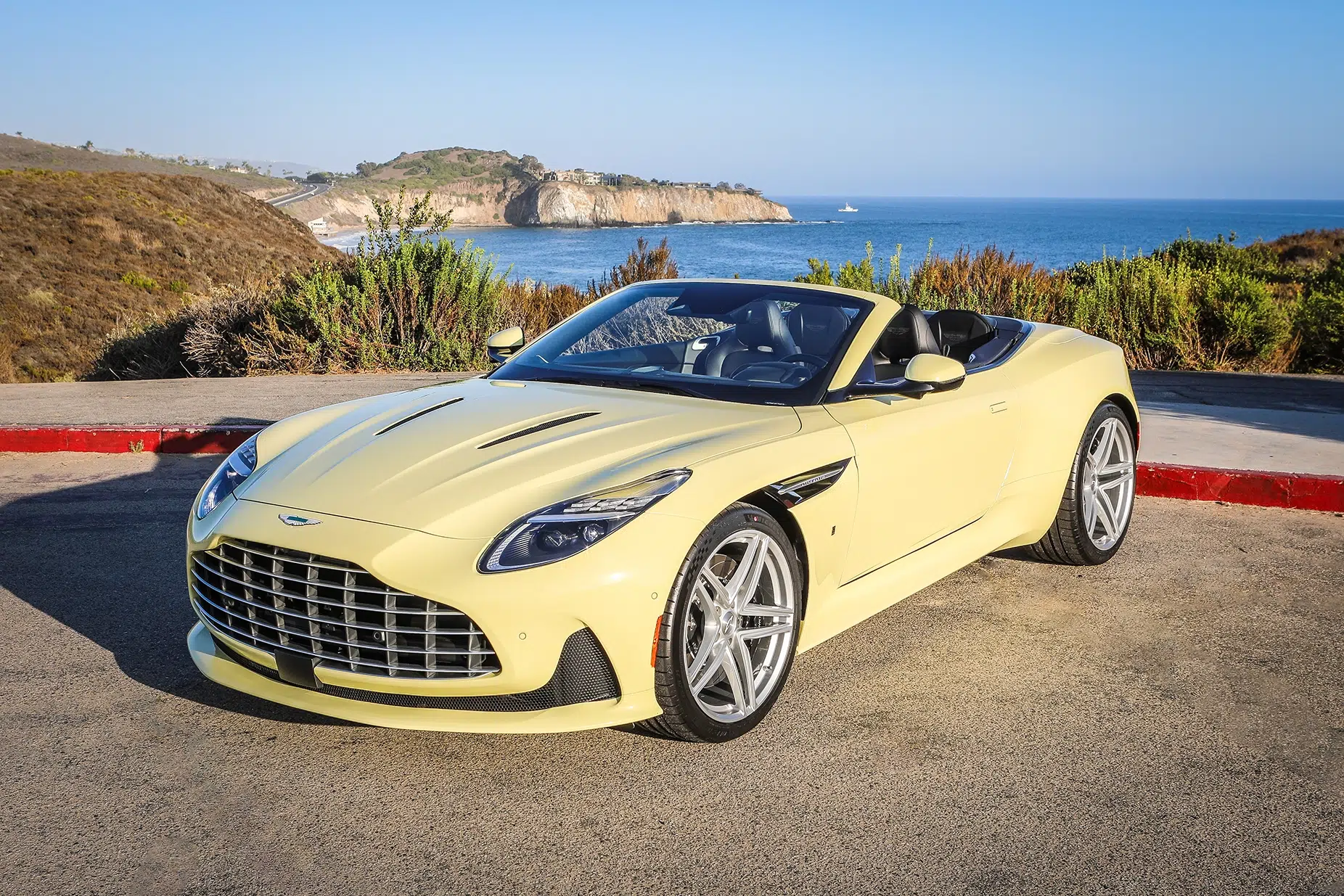
The collection begins with the DB12 Volante in Pale Primrose, one of Aston Martin’s most recognizable historic colors. The soft yellow shade appeared on the cover of the 1958 DB4 sales brochure and later gained broader cultural currency when Corgi selected it for one of its Aston Martin models. That miniature car would go on to influence the celebrated James Bond DB5 toy of the mid-1960s, giving Pale Primrose a place not only in Aston Martin history, but in the childhood imagination of generations of enthusiasts.
On the DB12 Volante, the color takes on a more sculptural quality. Its warmth softens the car’s assertive proportions while emphasizing the elegance of the open bodywork. Beneath the surface lies a hand-built 4.0-liter twin-turbocharged V8 producing 671 horsepower, lending the world’s first Super Tourer convertible the kind of effortless speed that Aston Martin has long associated with continental travel.
The DB12 coupe is finished in Pacific Blue, a color originally offered on the DB4 and later seen on the DB5 and DB6. To recreate it accurately, the Q by Aston Martin design team studied an original Pacific Blue sample from a historic DB6 color brochure. The revived shade has a cool, measured depth that suits the DB12 particularly well, highlighting its long hood, low stance, and muscular rear quarters without drawing undue attention to itself.
That restraint feels quintessentially Aston Martin. The DB12 has never been intended as a grand tourer in the traditional sense alone; the company describes it as a Super Tourer, combining 671 horsepower with sharper chassis responses and greater precision than the DB models that preceded it. Pacific Blue gives that modern performance a quietly patrician exterior.
The collection’s most imposing car is the Vanquish coupe in Tudor Green. Closely associated with Aston Martins of the 1970s, the metallic finish possesses a visual richness that changes noticeably with the light. At a distance, it appears dignified and almost formal. Up close, it reveals a more complex metallic character, one that complements the Vanquish’s broad shoulders and dramatic proportions.
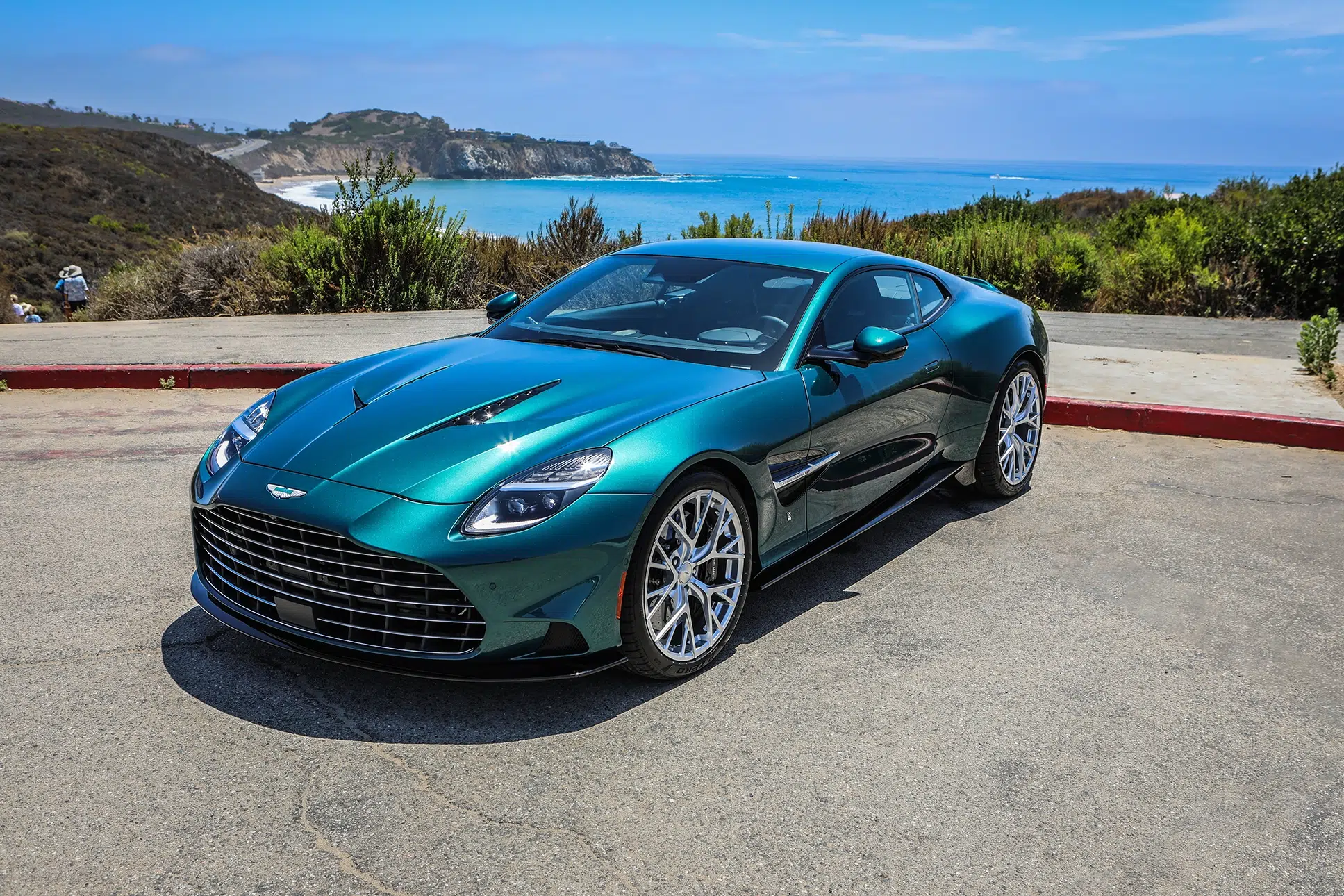
The name itself evokes a distinctly British sense of history, but there is nothing nostalgic about the machinery beneath the hood. The Vanquish is powered by a 5.2-liter twin-turbocharged V12 producing 824 horsepower, making it the most powerful front-engine production car in Aston Martin’s history. Its top speed of 214 mph places it firmly in modern supercar territory, even as its configuration and visual language remain rooted in the grandest traditions of the marque.
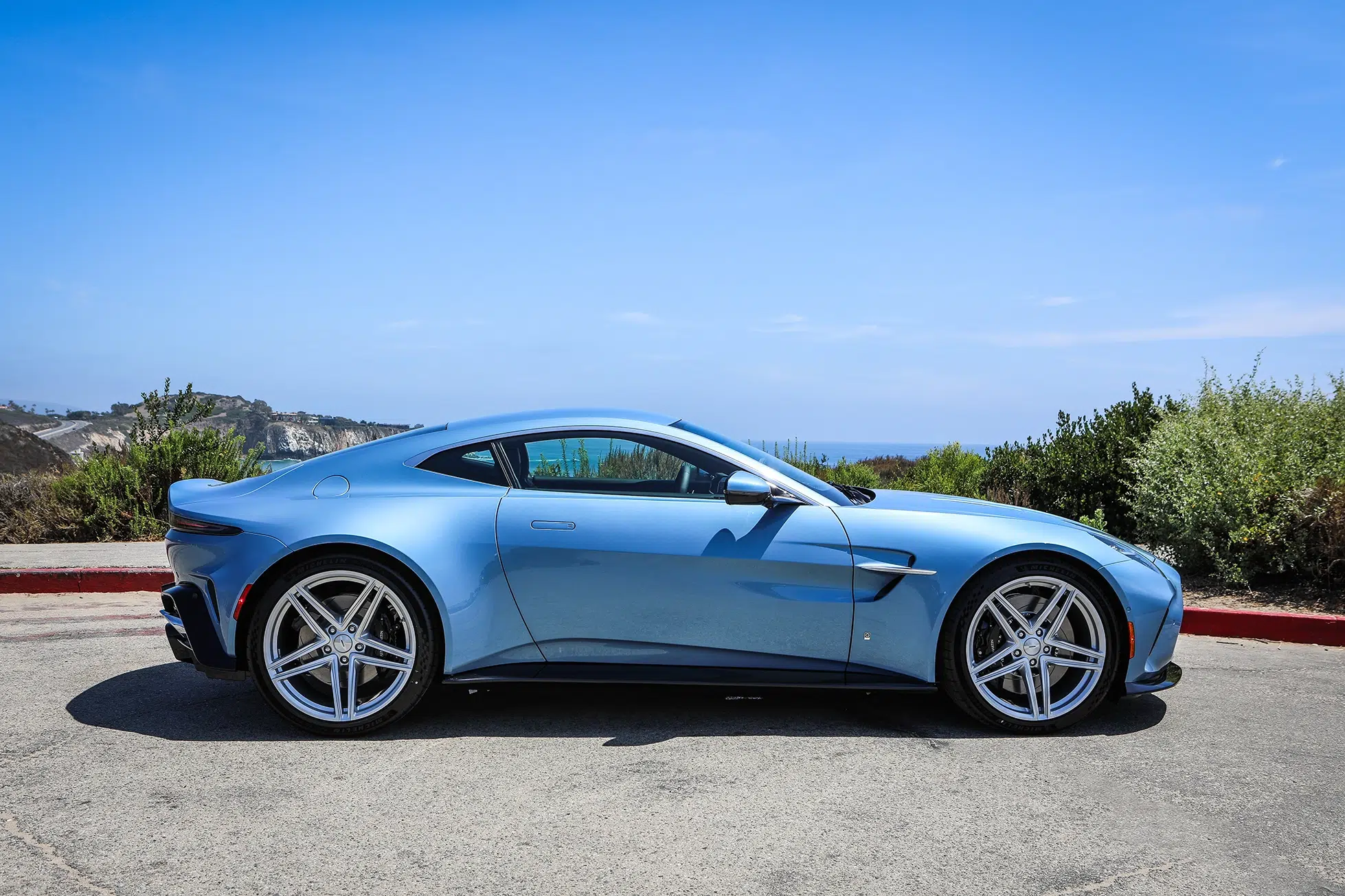
For the Vantage coupe, Aston Martin selected Winchester Blue, a color named after the cathedral city in Hampshire. During the 1970s, Aston Martin offered several paints inspired by British towns and regions, and Winchester Blue became particularly well known on the original V8 Vantage.
Its return on the latest Vantage feels especially appropriate. With 656 horsepower from a twin-turbocharged 4.0-liter V8, the current car is the most focused and athletic member of the front-engine range. Winchester Blue tempers some of that aggression, lending the coupe a more collected visual character while preserving the tautness of its design.
The fifth and final car is the Vantage Roadster in Mink Silver. Inspired by the pale metallic finishes popular on DB6 models during the 1960s, the color recalls an era when silver was valued less for its technical connotations and more for its ability to reveal shape. More than 100 examples of the DB6 were finished in Mink, a notable figure for a low-volume marque and evidence of the color’s enduring appeal.
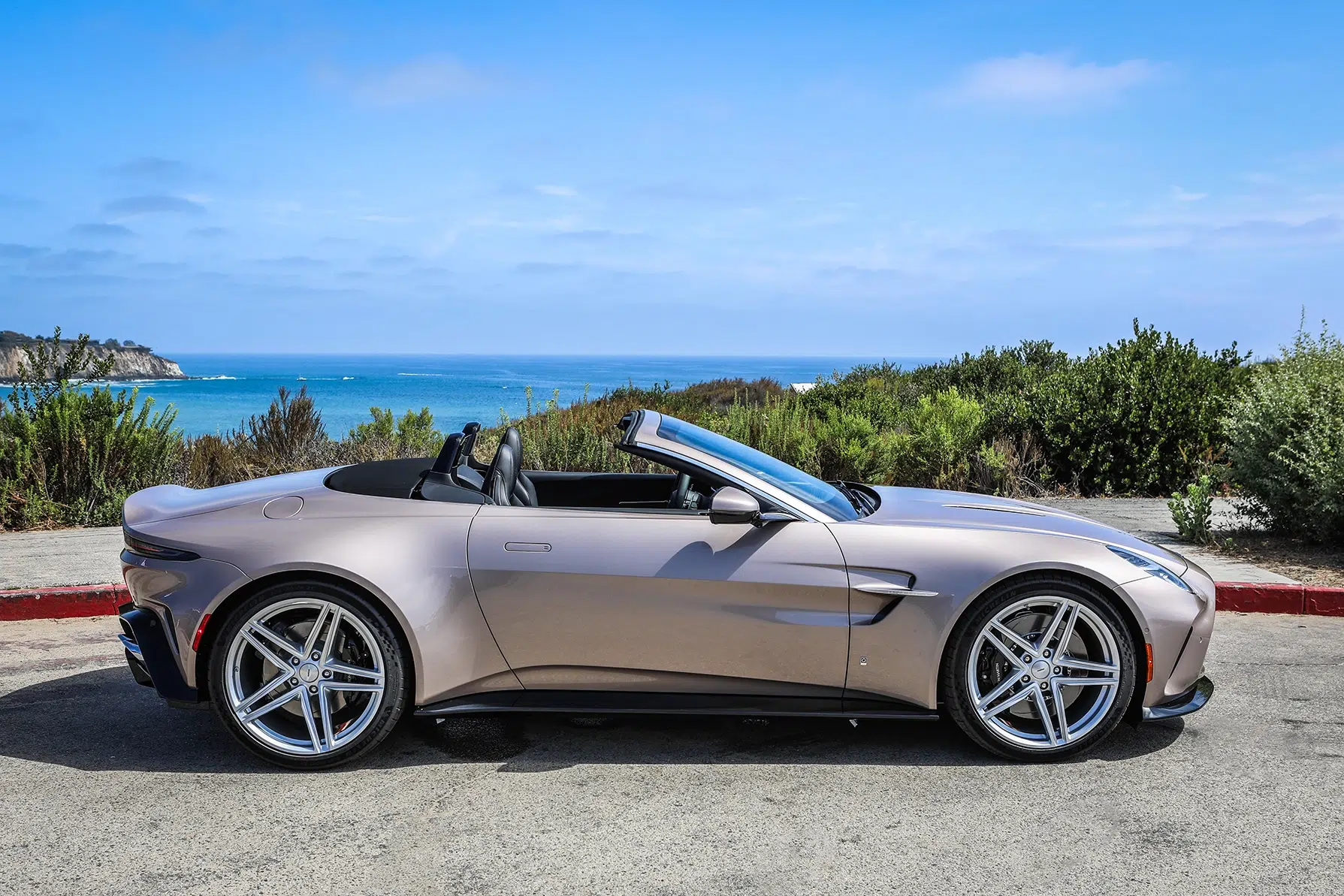
On the Vantage Roadster, Mink Silver accentuates the surface transitions along the body, from the pronounced front fenders to the compact rear deck. The electrically folding roof adds another dimension to the car’s character, allowing its 656-horsepower V8 to be experienced with little between the driver and the sound of the exhaust.
Although the exterior colors provide the most immediate connection to Aston Martin’s past, the cabins are equally considered. Each car receives Q perforated fluted seats, appearing for the first time in the new Vantage and Vanquish, along with Heritage Aston Martin logo embroidery on the center armrest and unique Heritage Edition sill plaques. The DB12 coupe, DB12 Volante, and Vanquish also feature Dark Walnut Open Pore wood inlays, introducing a warmer, more traditional material to otherwise contemporary interiors.
The effect is not an exercise in period recreation. There are no faux-vintage gauges, theatrical references, or attempts to disguise the cars’ modernity. Instead, the collection treats heritage as a design material: something to be studied, refined, and reinterpreted rather than simply reproduced.
“Every Aston Martin tells a story, and these Heritage Edition commissions celebrate some of the colors that helped define the marque during one of its most celebrated eras,” said Jeff West, general manager of Aston Martin Newport Beach. “Working alongside Q by Aston Martin allowed us to honor these historic finishes while pairing them with today’s most advanced sports cars.”
That balance is what makes the collection compelling. Luxury manufacturers often speak of heritage, but heritage can easily become decorative shorthand. Here, it functions with more precision. Each color is rooted in an actual car, brochure, or era, and each has been chosen to complement a modern Aston Martin whose performance would have seemed unimaginable when the original finish was first mixed.
The Aston Martin Heritage Edition collection is therefore not simply about reviving old colors. It is about proving that great design can survive transformation. Pale Primrose, Pacific Blue, Tudor Green, Winchester Blue, and Mink Silver may belong to Aston Martin’s past, but on these five one-of-one commissions, they feel entirely at home in its future.