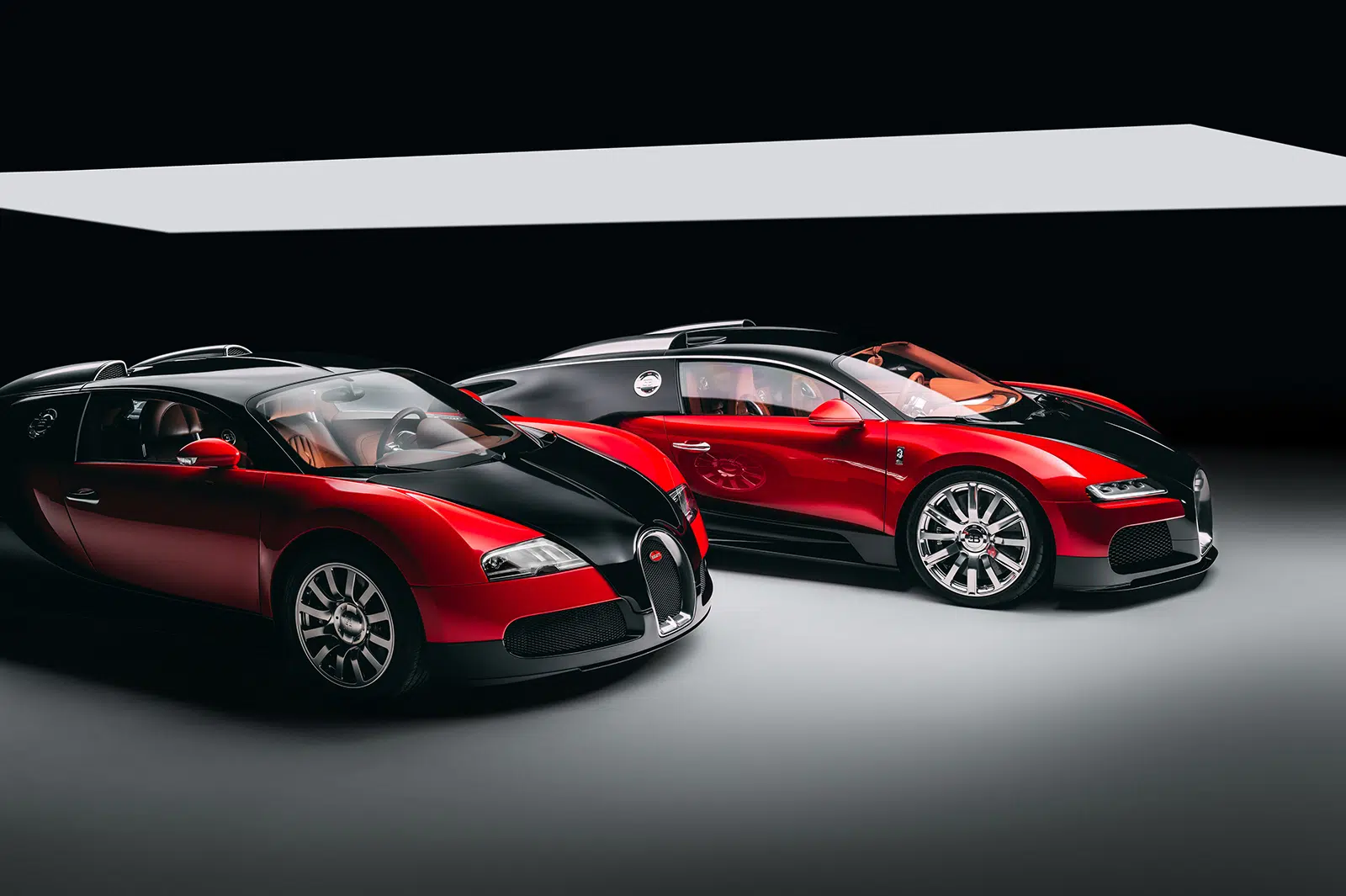
Twenty years ago, the Bugatti Veyron did more than break speed records. It reshaped what a performance car could be—civilized, composed, and exquisitely engineered. With 1,001 horsepower and a top speed beyond 400 km/h, it did not simply launch a new model. It created a new category: the hyper-GT.
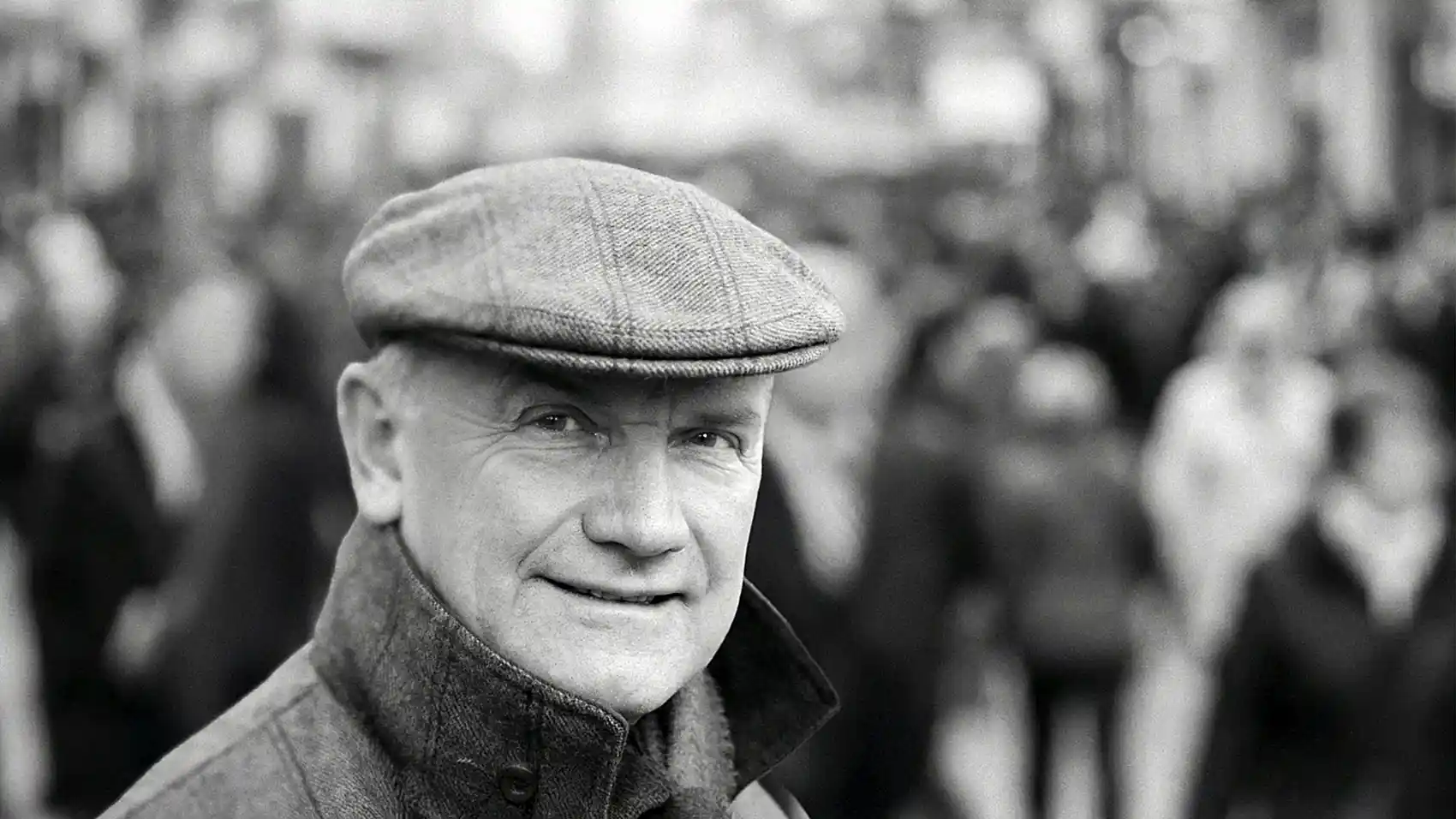
Now, two decades later, Bugatti returns to that moment of disruption with a singular creation. The F.K.P. Hommage, the second commission from Programme Solitaire, stands as both a technical tour de force and a personal tribute. It honors the Veyron’s spirit and the visionary engineer behind it: Prof. Dr. Ferdinand Karl Piëch.
The story of modern Bugatti does not begin in Molsheim. It begins on a bullet train in Japan. There, Piëch sketched a compact W-engine layout that would shape Bugatti’s future. At the time, he had already transformed engine design through the VR6, W8, and W12. Yet his boldest idea would become the quad-turbocharged W16—an engine so unconventional it seemed implausible.
Its brilliance lay not only in power, but in packaging. By staggering the cylinders in a short, wide layout, engineers compressed what would normally be a meter-long engine into just 645 millimeters. This feat enabled the Veyron’s compact 2,700mm wheelbase. It also made possible a balance that no hypercar had achieved before. The car was devastating in speed, yet calm in behavior.
When the Veyron debuted at the 1999 Tokyo Motor Show, it looked as radical as it was. Designed by a young Jozef Kabaň under Hartmut Warkuß’s direction, it rejected the sharp wedge shapes of its era. Instead, it reclined. Noble. Self-assured. Its Bauhaus-inspired lines favored restraint over spectacle. Two decades later, the design still feels modern.
The F.K.P. Hommage carries that philosophy into the present.
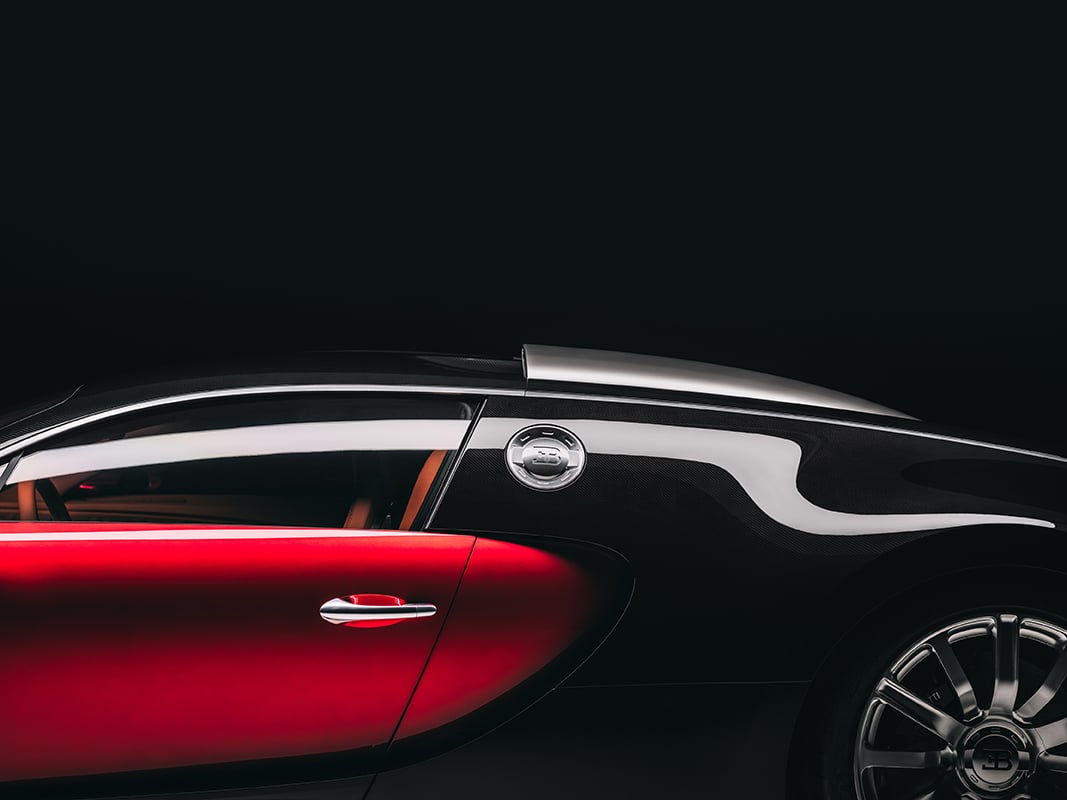
Built on the most advanced evolution of Bugatti’s W16 platform, it features the 1,600-horsepower engine first seen in the Chiron Super Sport. That car fulfilled Piëch’s dream by exceeding 300 mph. This is the W16 at its peak. Larger turbochargers, better intercoolers, upgraded cooling, and a reinforced gearbox support the added torque.
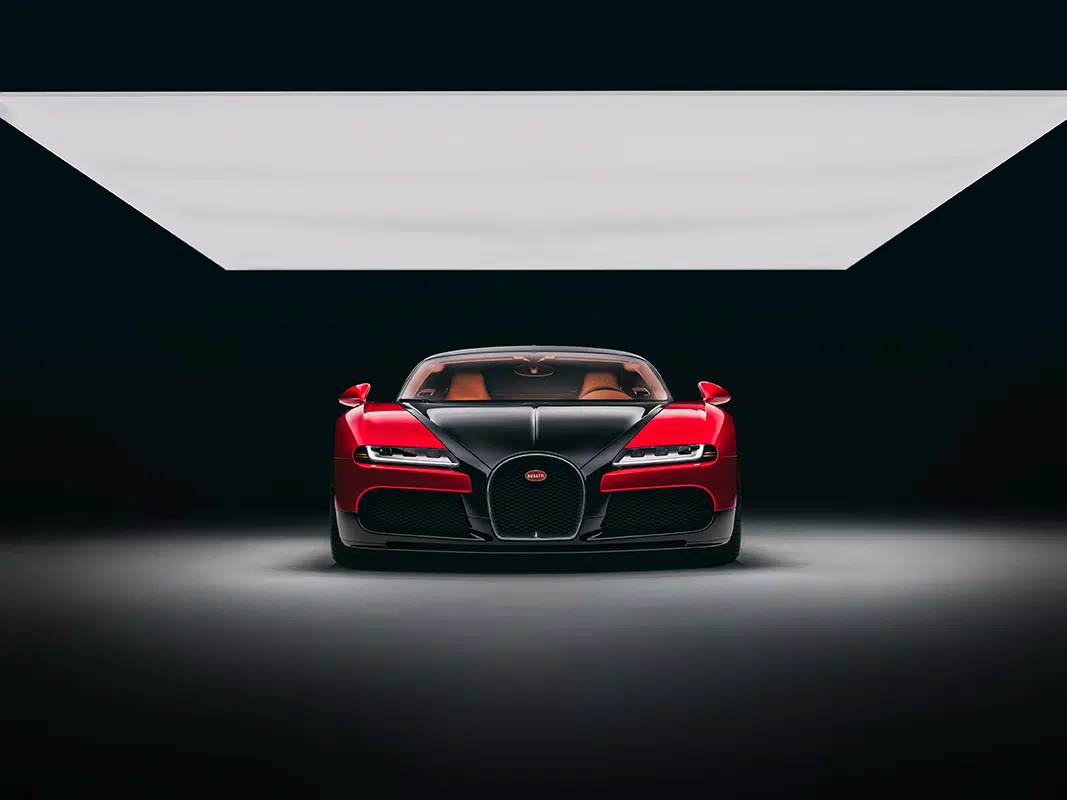
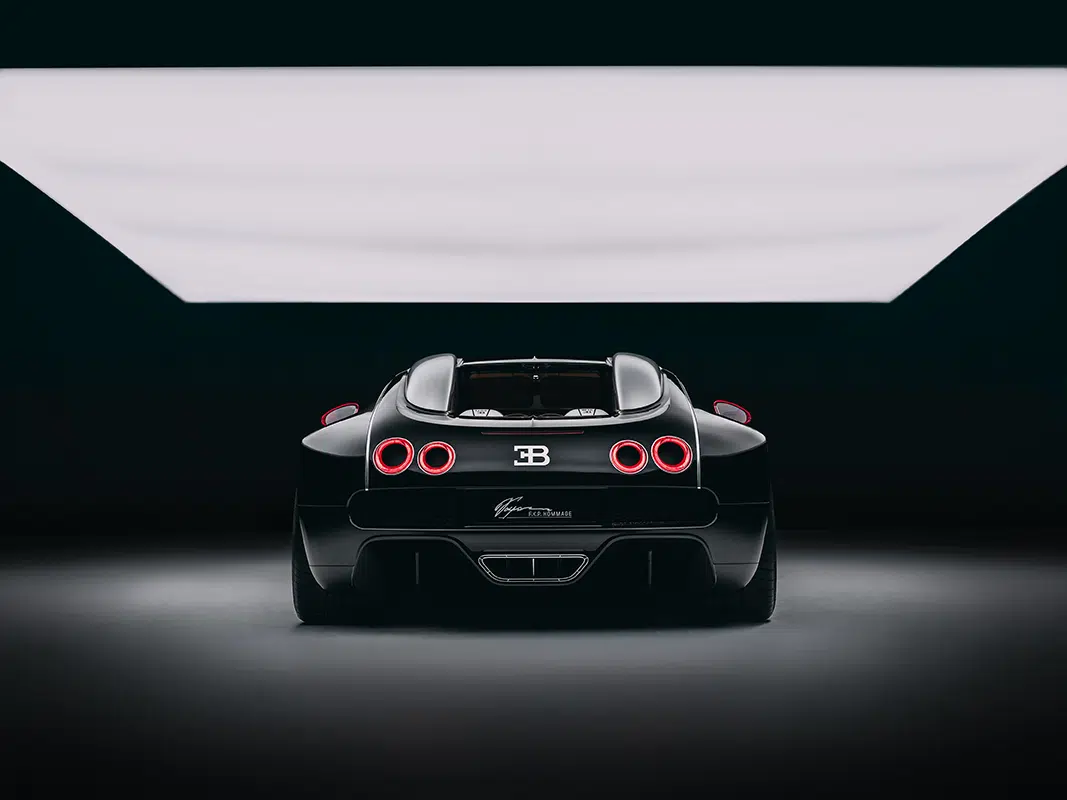
Visually, the Hommage refines rather than reinvents. The signature leaning stance remains. The dropping beltline endures. Yet every surface now feels cleaner and more precise. The iconic horseshoe grille, machined from a single block of aluminum, flows into the bodywork. The color split aligns with the new panel lines. Enlarged air intakes feed the uprated engine. The signature side ducts still breathe behind the occupants’ heads. New 20-inch front and 21-inch rear wheels house the latest Michelin tires, sharpening both grip and balance.
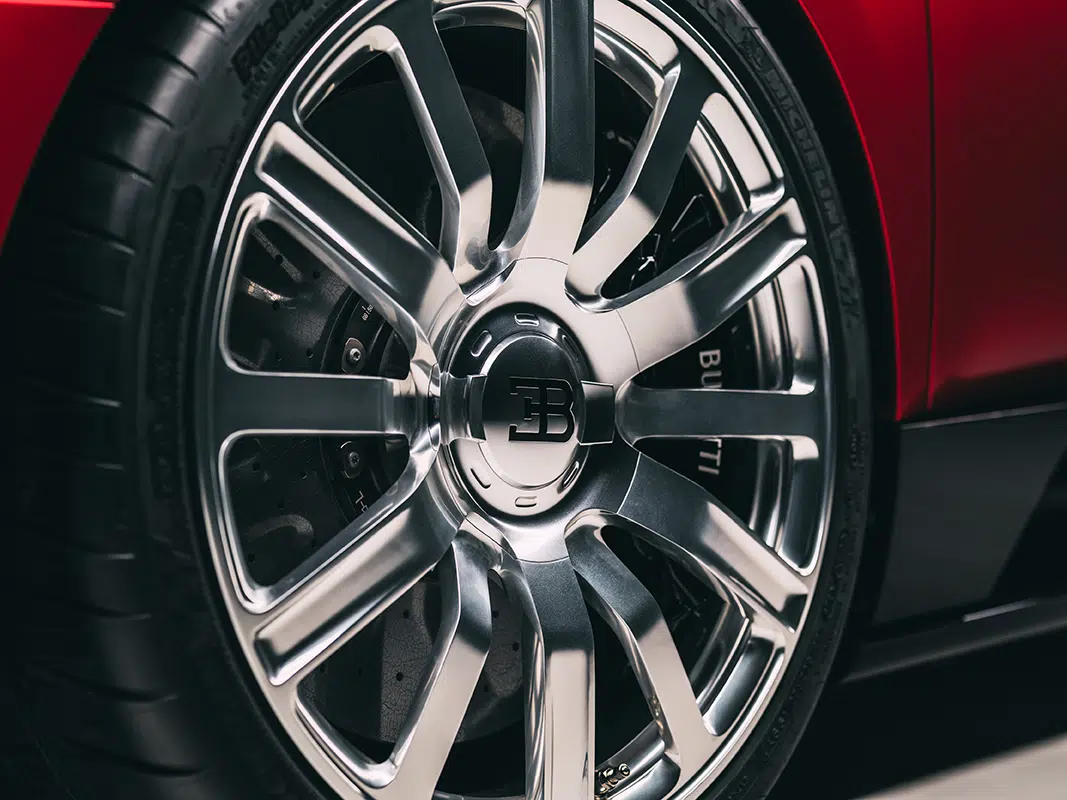
Paint technology has advanced since the Veyron’s debut, and the Hommage wears those gains with quiet confidence. Its red finish uses layered coatings: a silver aluminum base beneath a red-tinted clear coat. The result is depth that shifts with light and motion. Black-tinted exposed carbon fiber replaces standard black paint. A subtle pigment in the clear coat adds tactile richness up close.
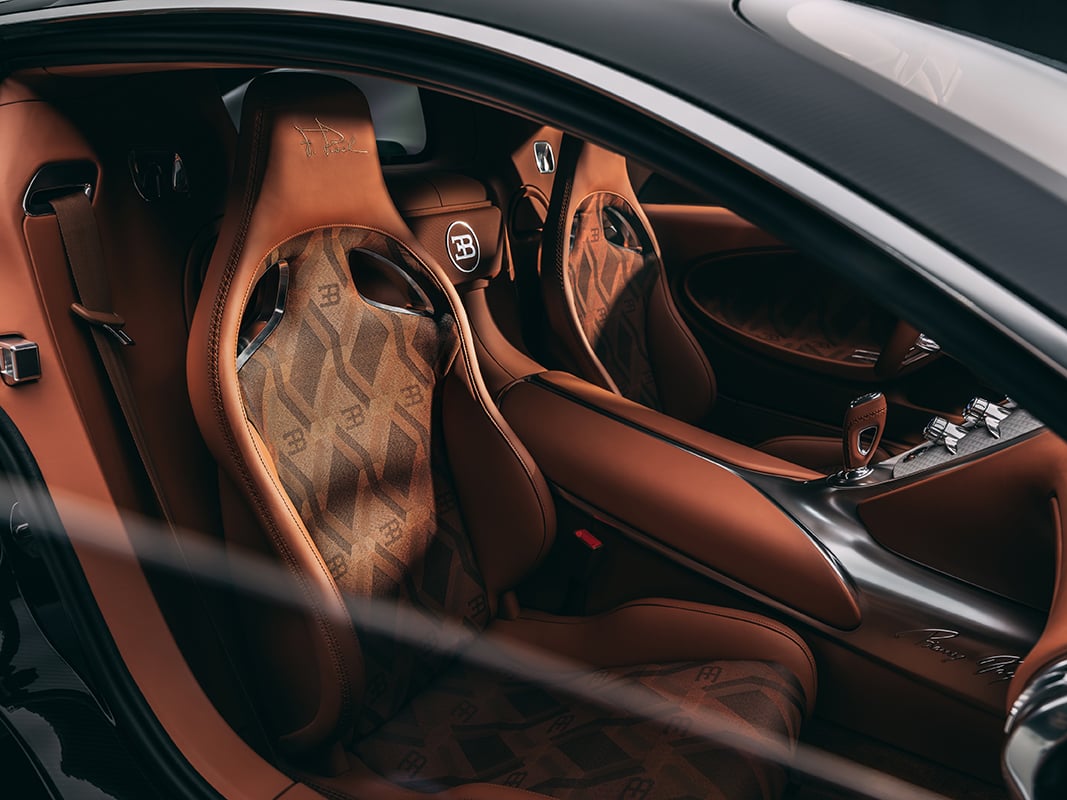
Inside, the transformation grows even more profound.
The cabin represents a near-total rethinking of any previous W16 model. A circular steering wheel echoes the Bauhaus spirit of the original Veyron. A bespoke center console and tunnel cover have been machined from solid aluminum blocks. Custom Car Couture fabrics, woven in Paris, mark Bugatti’s latest step in interior personalization. The look moves beyond the leather-only tradition of earlier models.
At the center of the dashboard sits a work of mechanical art: a 41mm Audemars Piguet Royal Oak Tourbillon. The future owner requested its integration. The octagonal watch rests within an island finished in engine-turned polish. The technique recalls the straight-eight engines of Ettore Bugatti’s early cars.

Its mechanism borders on poetic. The watch winds itself mechanically, not electrically. A gondola rotates on a diagonal axis several times per hour. The motion draws power from the car itself. It exists as both sculpture and machine—an emblem of Bugatti’s willingness to fulfill deeply personal visions through Programme Solitaire.
The F.K.P. Hommage joins Brouillard as the second creation in this rare initiative. The program produces no more than two bespoke masterpieces each year. Each project reimagines bodywork, interior design, and materials from the ground up. Every detail draws from Bugatti’s heritage while embracing total personalization.
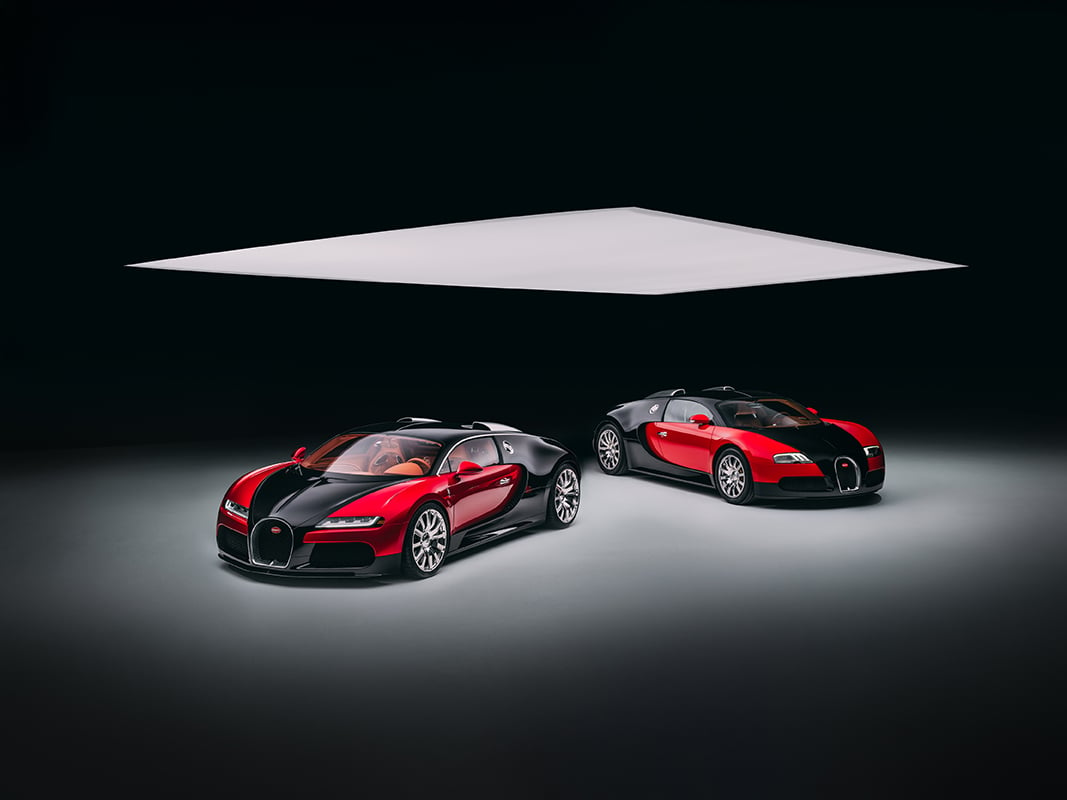
More than a tribute, the F.K.P. Hommage feels like a bridge. It links the audacity of the Veyron to the maturity of modern Bugatti. It celebrates a mind that compressed impossibility into engineering reality. And it reminds us that true luxury is not about repetition. It is about reverence, reinvention, and restraint.
The Bugatti F.K.P. Hommage will be unveiled at Ultimate Supercar Garage during Rétromobile Paris, from January 29 to February 1, 2026.