
In a private Milan studio, light moves slowly across surfaces of carbon fiber and lacquered metal. The room is quiet, almost reverential, as if preparing for the unveiling of a sculpture rather than an automobile. At its center sits the Lamborghini Fenomeno—dramatic, angular, and unmistakably Italian. It feels less like a machine and more like an object of desire, a work designed to be contemplated as much as driven.
With Sculpting the Soul, Lamborghini makes this distinction explicit. The initiative, developed in collaboration with Milan-based designer Elena Salmistraro, positions the Fenomeno not simply as a hypercar but as a cultural statement—an exploration of how contemporary design, art, and engineering converge in modern luxury.

Salmistraro, known for her expressive, multidisciplinary approach to interiors, collectible design, and installation, approaches the Fenomeno with instinct rather than technical analysis. In the short film documenting the project, she studies its form, tracing the tension of each line and the rhythm of each surface. The brand’s signature hexagonal geometry, Y-shaped lighting signatures, and architectural precision become a visual language she translates into her own creative work.
For Lamborghini, this dialogue between disciplines is strategic. The Fenomeno celebrates 20 years of the brand’s Centro Stile design studio, marking a new chapter in its evolution and continuing the tradition of ultra-exclusive hypercars such as the Veneno. Only 29 examples will be produced, all spoken for before public unveiling, reinforcing the marque’s reputation for creating automotive pieces that exist as much in private collections as on the road.
The car itself reflects this ambition. It combines the emotional purity of Lamborghini’s naturally aspirated V12 with hybrid technology, producing more than 1,000 horsepower while signaling the future direction of the brand. Electrification, here, is not presented as a compromise but as a progression, an effort to preserve drama, sound, and sensation while embracing new possibilities.
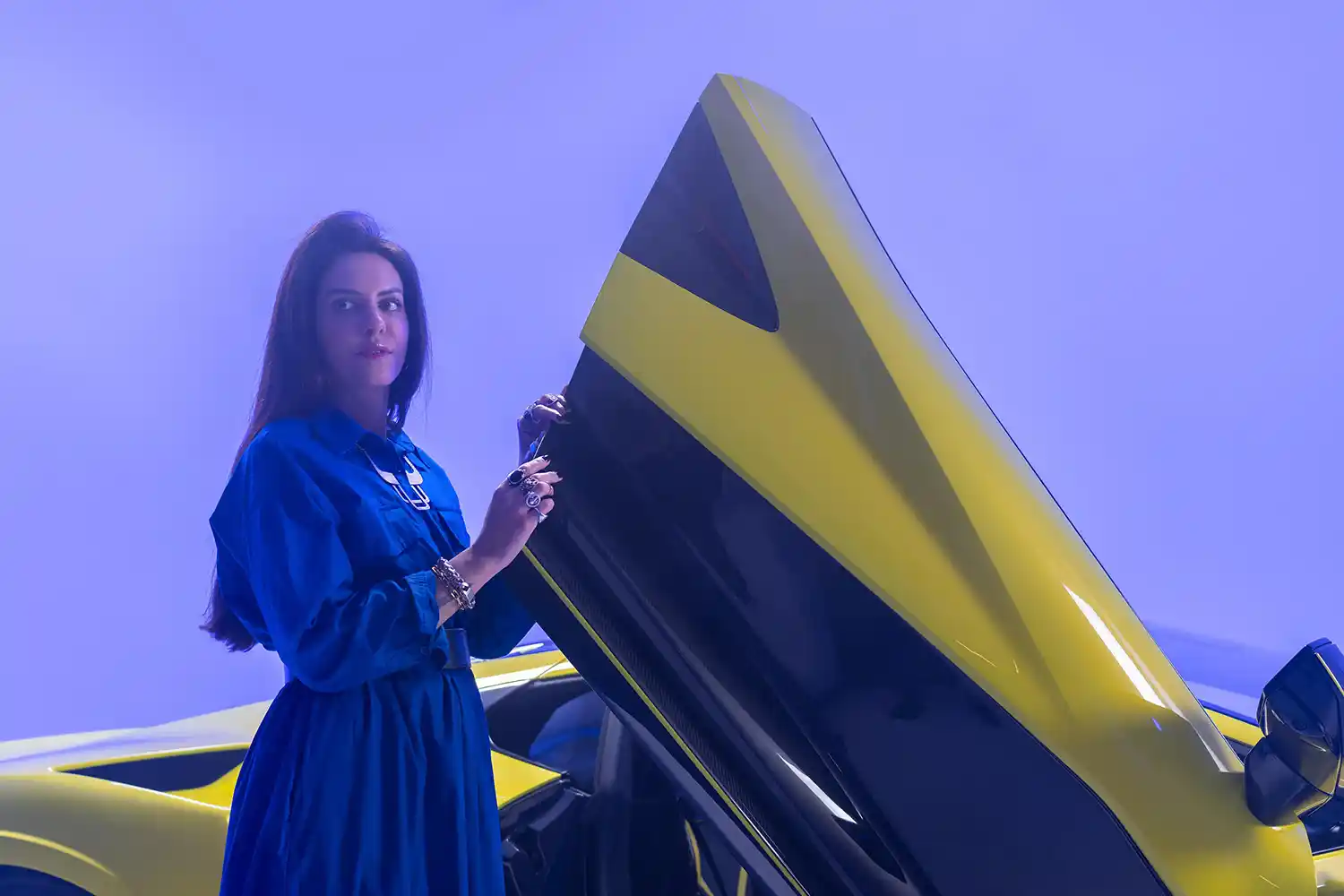
Yet performance is only one layer. Lamborghini describes the Fenomeno as a design manifesto, a study in proportion, tension, and movement. The longtail silhouette appears in constant motion, even when still. Carbon-fiber structures and aerodynamics derived from motorsport are refined into a sculptural presence, creating a vehicle that seems equally at home on a concours lawn, in a private gallery, or on a coastal road.

Salmistraro’s interpretation reinforces this vision. Rather than reimagining the car, she interacts with it as a living form. Texture becomes tactile, color becomes emotion, and light becomes narrative. Her work reflects a broader shift within luxury culture, where objects are valued for their emotional resonance as much as their functionality.
This evolution is visible across the luxury landscape. Fashion houses collaborate with artists. Architects design automobiles. Collectors seek pieces that transcend categories—objects that speak to design, craftsmanship, and identity. The modern buyer is as likely to commission architecture or acquire collectible design as to purchase a performance vehicle.
Lamborghini understands this mindset. Its clientele increasingly values rarity, authenticity, and experience over specification alone. The Fenomeno answers that desire, offering not just speed but cultural significance, not just innovation but narrative.

The collaboration also reinforces the brand’s Italian heritage. Both Lamborghini and Salmistraro draw from mythology, urban culture, and the creative energy of Milan, a city where design and fashion shape global conversations. The project’s debut during the international design calendar underscores this connection, positioning the car within the same ecosystem as contemporary art and architecture.
Ultimately, Sculpting the Soul reflects a deeper transformation in luxury itself. Ownership is no longer defined by possession alone, but by meaning and emotional connection. In this context, the Fenomeno becomes more than a hypercar. It is a conversation—between speed and sculpture, engineering and art, innovation and human expression.
For those fortunate enough to encounter it, the experience is not simply about driving. It is about presence, sensation, and the rare ability of design to move the soul long before the engine ever starts.