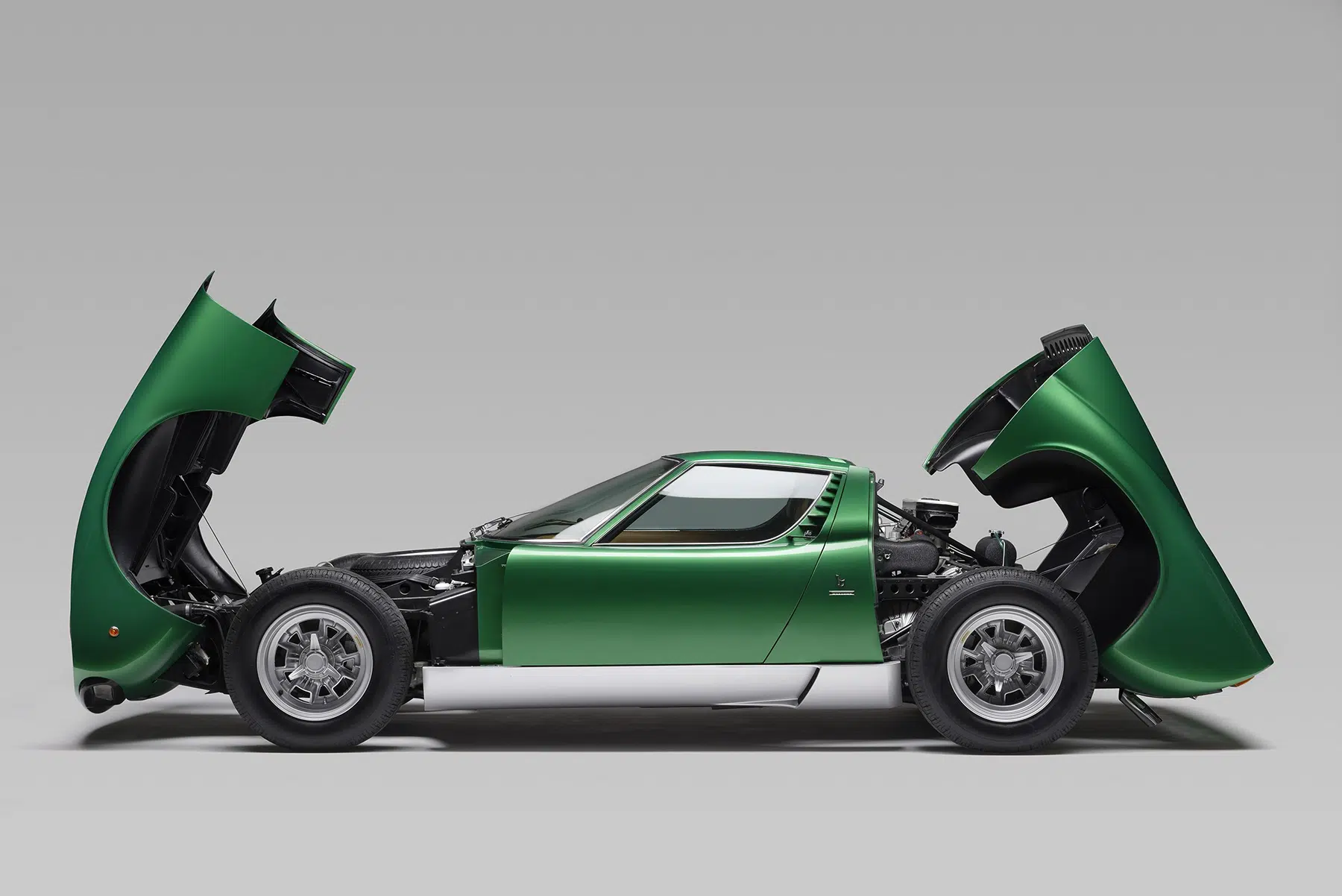
When Automobili Lamborghini unveiled the Lamborghini Miura at the 1966 Geneva Motor Show, the company did far more than introduce a striking new sports car. It rewrote the rulebook for high-performance road machines.
At a time when grand touring cars still followed the traditional front-engine formula, Lamborghini presented something radically different. The Miura positioned its V-12 engine transversely behind the driver, a configuration inspired by racing prototypes rather than road-going automobiles. Paired with dramatic styling from Carrozzeria Bertone, the result was a car so innovative that it effectively created an entirely new category: the modern supercar.
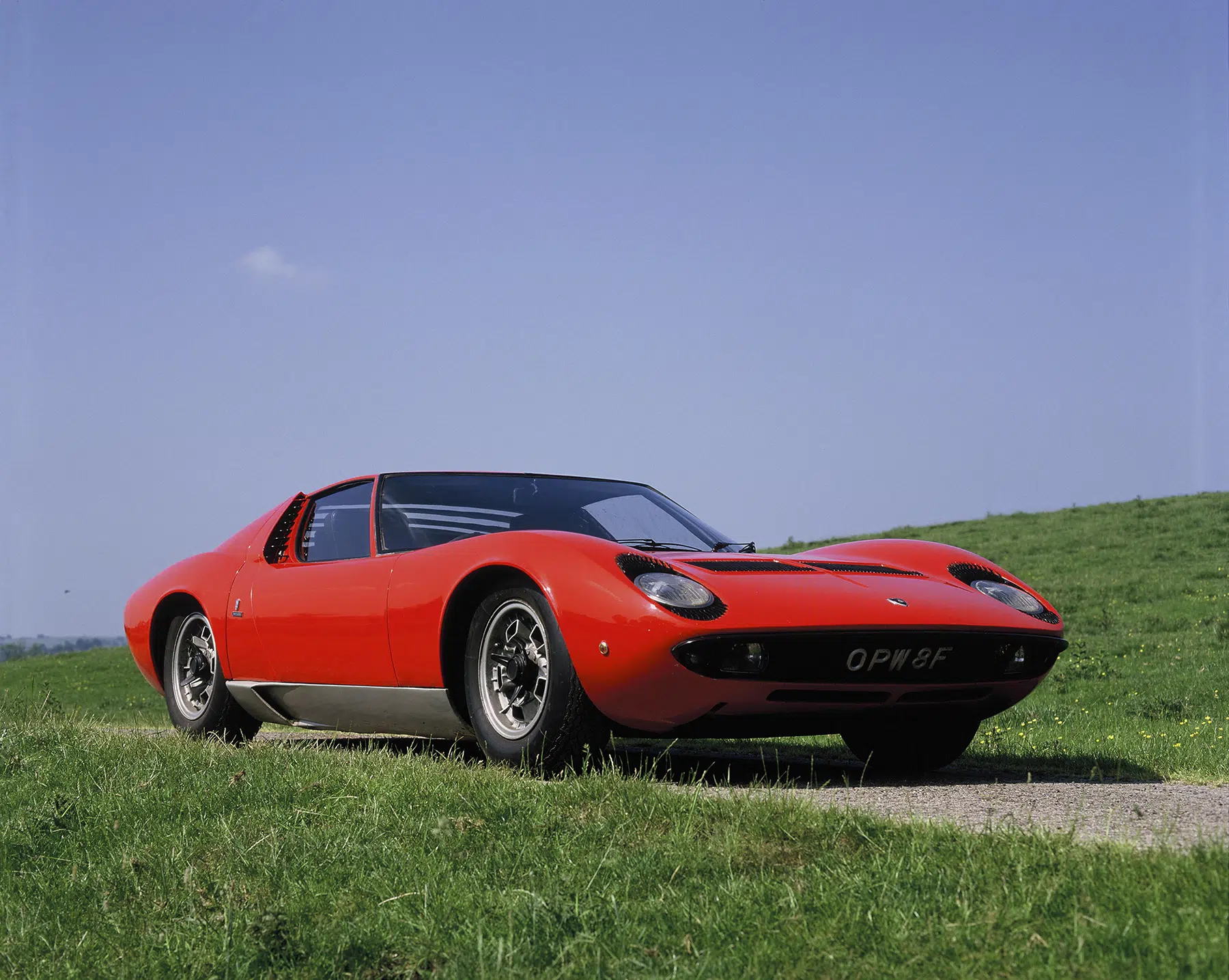
Six decades later, the Miura remains one of the most influential automobiles ever built, an icon whose blend of engineering daring and timeless design continues to define Lamborghini’s identity.
The Miura arrived at a formative moment for the company. Lamborghini itself had been founded only three years earlier by Ferruccio Lamborghini, who initially sought to build refined grand touring cars capable of rivaling Ferrari.
Within the company’s young engineering team, however, there was an appetite for something more ambitious.
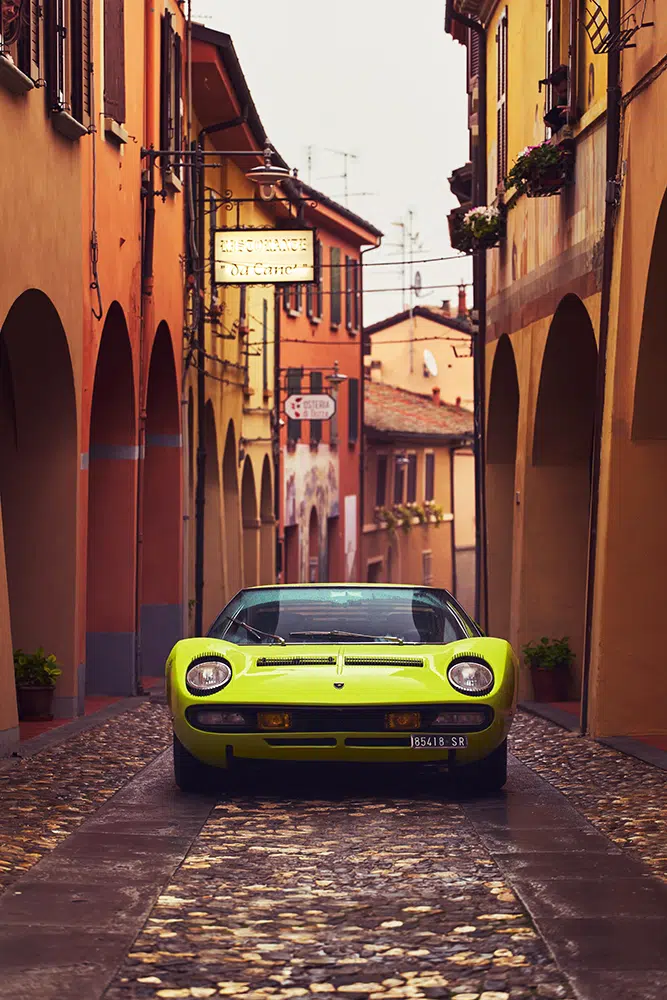
Engineers Gian Paolo Dallara and Paolo Stanzani, together with New Zealand test driver Bob Wallace, began developing a chassis inspired by racing machines. Their idea centered on placing a powerful 3.9-liter V-12 engine transversely behind the cockpit, dramatically improving weight distribution and performance potential.
When Ferruccio Lamborghini first saw the concept in 1965, he immediately approved the project. Later that year, at the Turin Motor Show, Lamborghini displayed the bare chassis finished in satin black. Visitors were captivated by the skeletal structure, its compact mid-engine layout, and gleaming exhaust pipes hinting at a radical new direction for the young automaker.
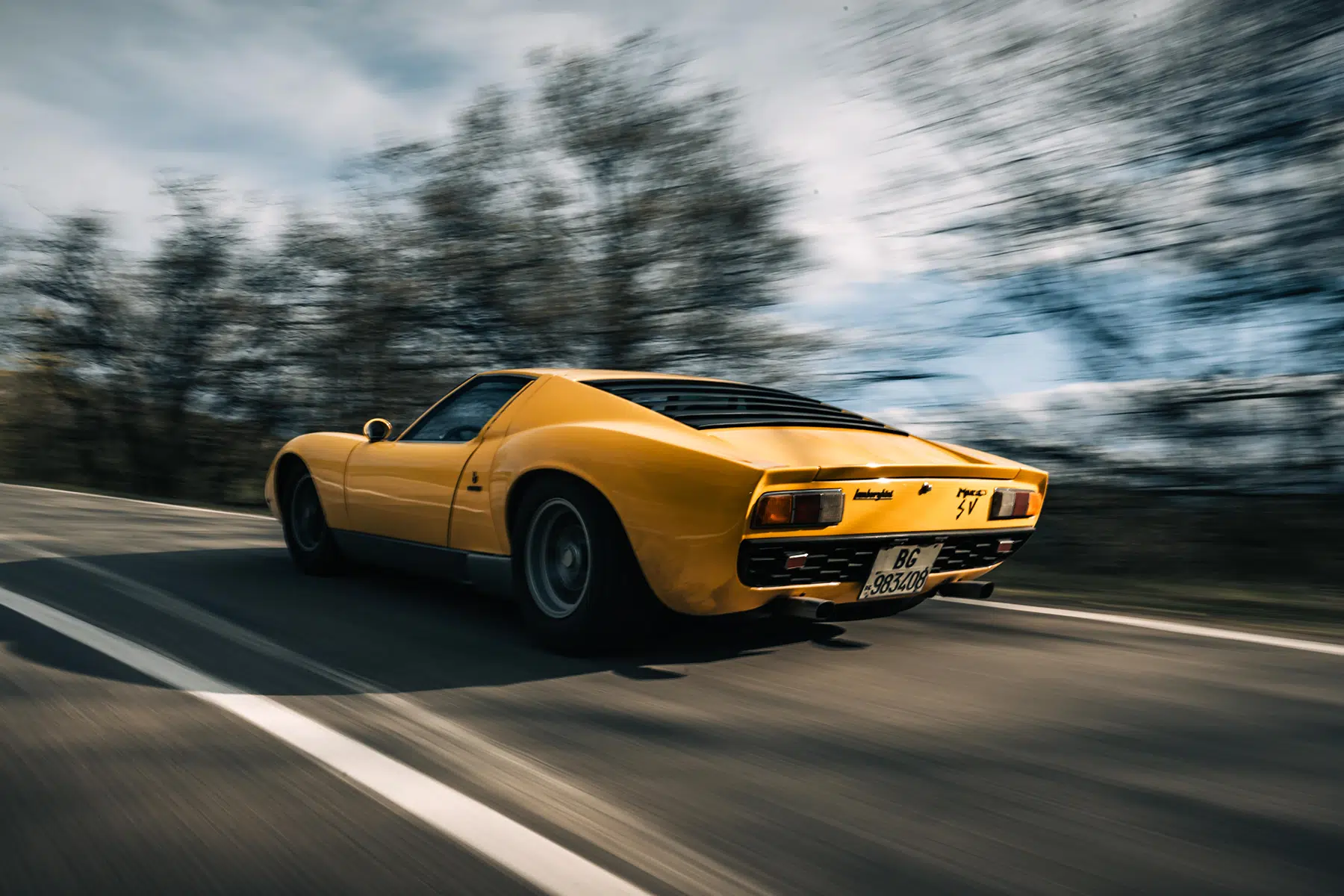
The groundbreaking chassis still required a body capable of matching its ambition. That responsibility fell to Bertone, where designer Marcello Gandini transformed the engineering concept into something visually unforgettable.
The resulting design was breathtaking. The Miura’s silhouette was impossibly low and wide, standing barely more than 41 inches tall. Sculpted air intakes, muscular rear haunches, and distinctive pop-up headlights framed by delicate “eyelashes” gave the car a personality unlike anything seen before on the road.
When the finished car appeared at the Geneva Motor Show in March 1966—painted in a vivid shade of orange—it immediately became the sensation of the exhibition.
Beneath the striking bodywork sat one of the most impressive engines of its era.
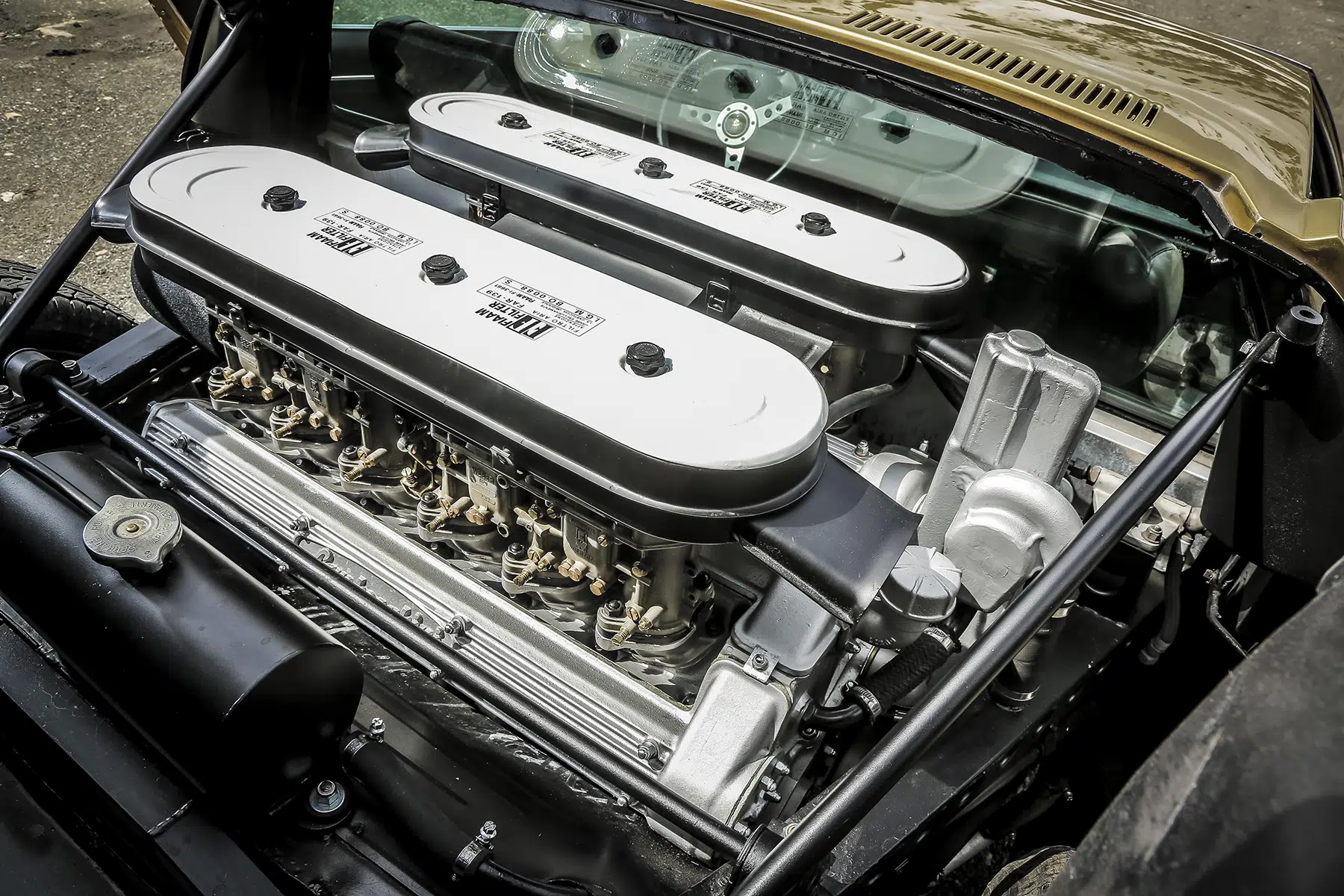
The Miura’s 3.9-liter V-12—originally conceived by engineer Giotto Bizzarrini—featured four camshafts and four Weber carburetors feeding twelve throttle valves. In its later form, the engine produced up to 385 horsepower, propelling the Miura to speeds approaching 290 km/h (174 mph).
In the late 1960s, those figures seemed almost surreal. For a time, the Miura was widely regarded as the fastest production car in the world.
Yet the Miura’s significance extended far beyond performance statistics. By pairing a mid-mounted engine with dramatic styling and race-inspired engineering, Lamborghini established the formula that would define supercars for generations.
The Miura also introduced another tradition that would become central to Lamborghini’s identity.
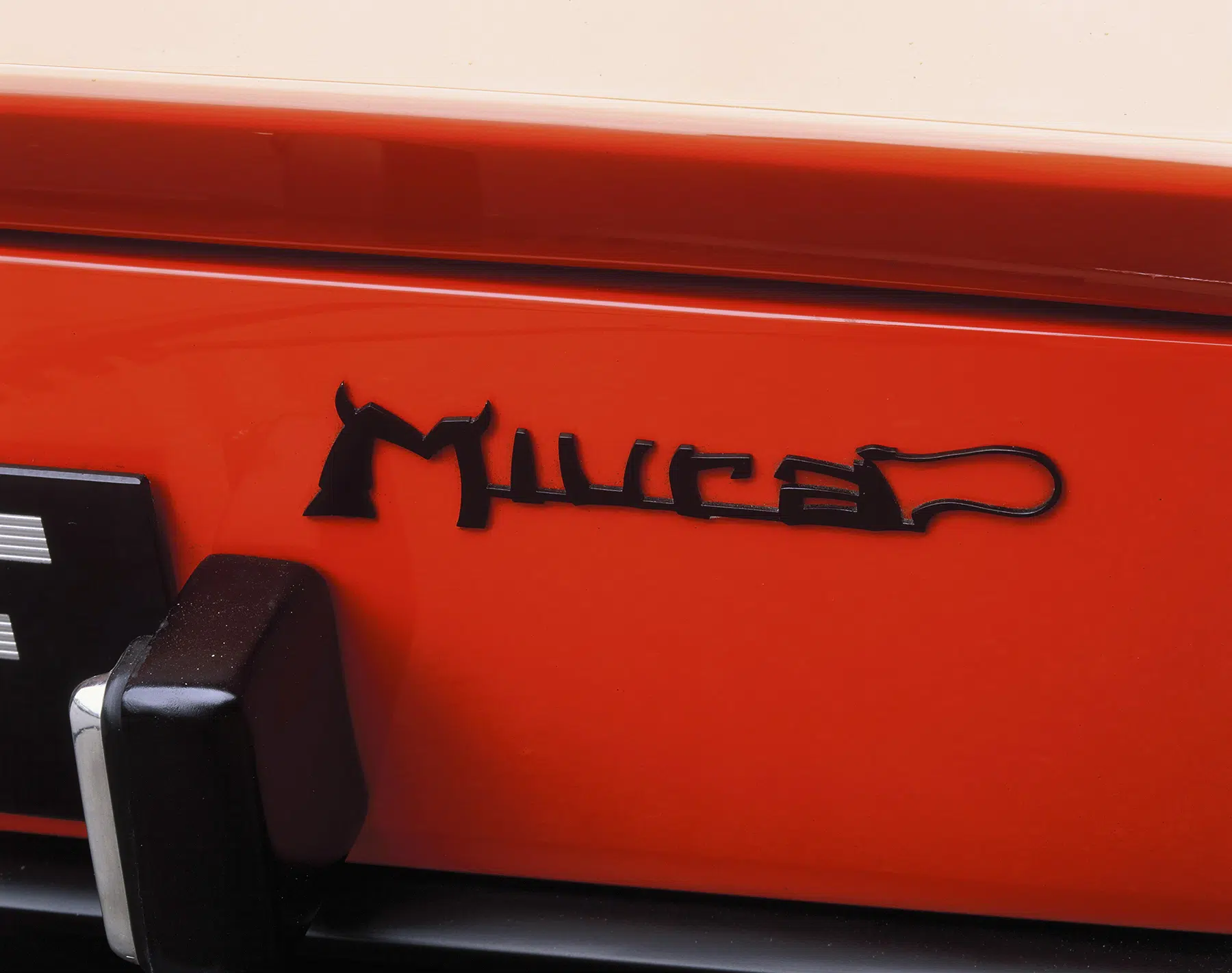
The name itself was inspired by the legendary Spanish fighting bulls bred by Don Eduardo Miura Fernández. The symbolism of strength and spectacle proved so fitting that Lamborghini continued drawing from bullfighting heritage for many later models, including the Lamborghini Diablo, Lamborghini Murciélago, and the modern Lamborghini Aventador.
Visually, the Miura was as revolutionary as its engineering. Measuring just 4.36 meters long and barely more than a meter tall, the car appeared impossibly compact and purposeful. Air intakes positioned behind the doors fed the V-12 engine, while distinctive slatted panels helped manage cooling while adding to the car’s dramatic aesthetic.
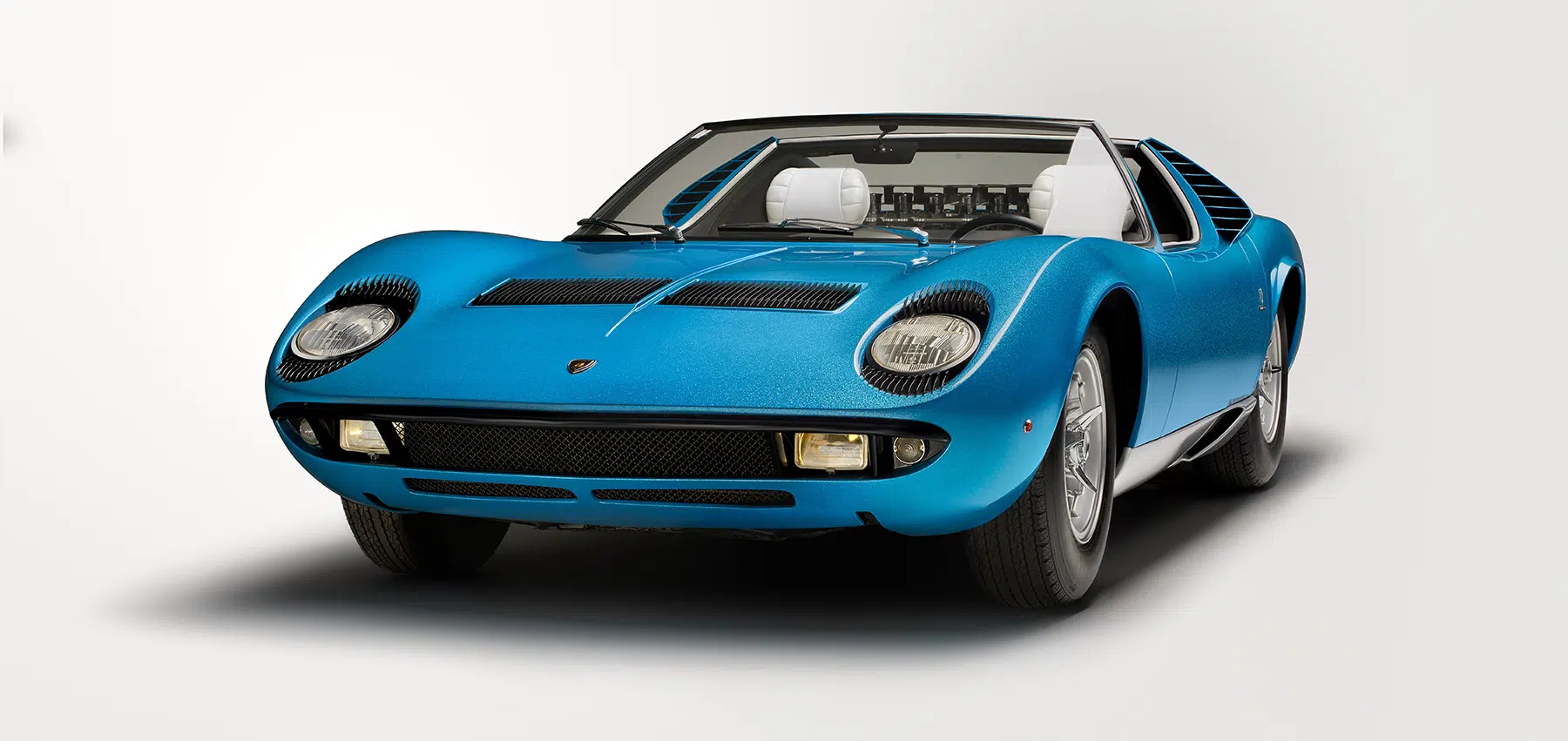
Unlike many sports cars of the era, the Miura also embraced bold color choices. Buyers could specify finishes ranging from Rosso Miura and Giallo Fly to metallic blues, greens, and silvers—an early sign of the personalization culture that would later become a cornerstone of Lamborghini’s identity.
Between 1966 and 1973, Lamborghini produced just 763 examples of the Miura at its factory in Sant’Agata Bolognese. During that period, the car evolved through three main versions: the original Miura P400, the refined P400 S, and the ultimate P400 SV, which delivered increased power and improved drivability.
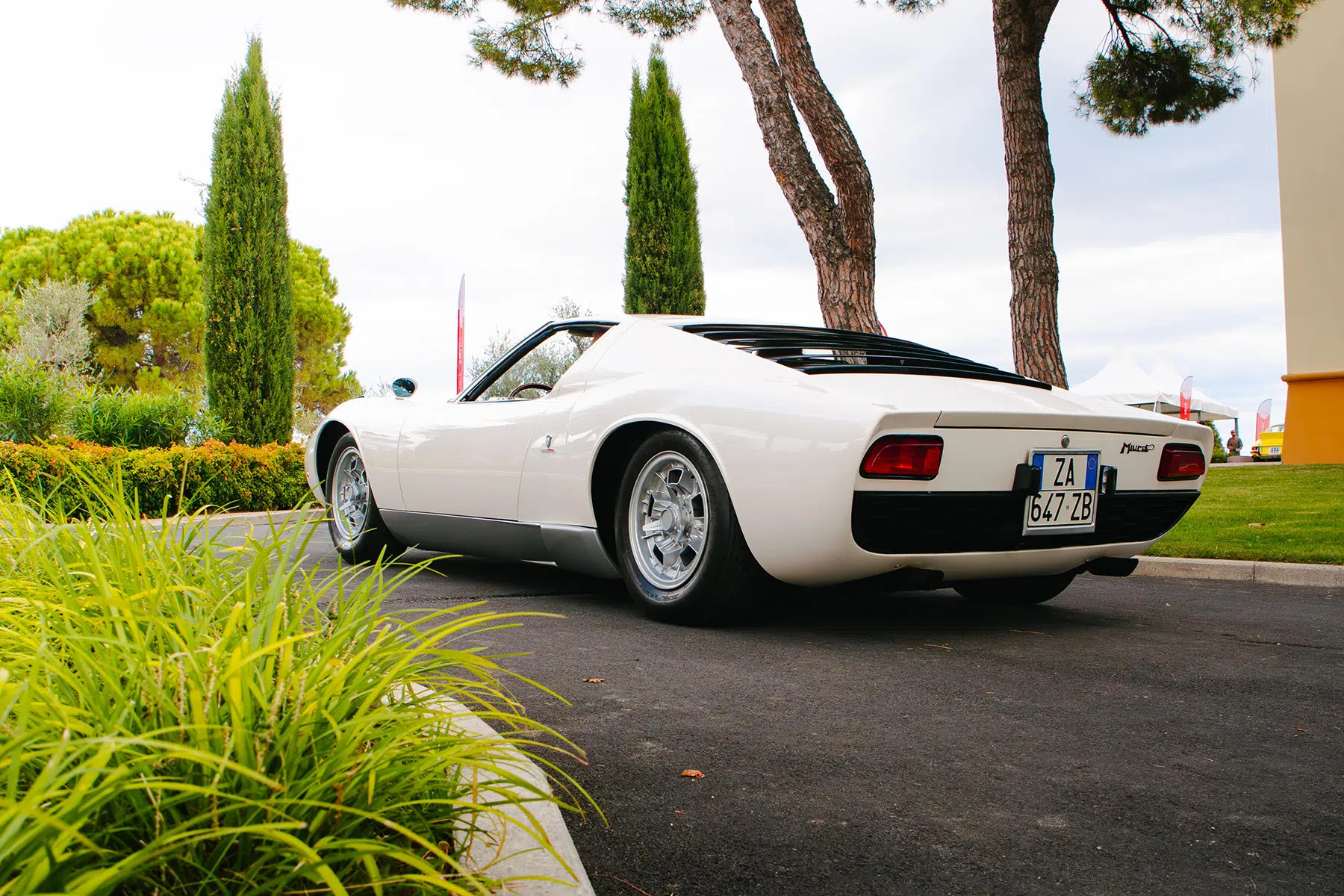
Beyond the automotive world, the Miura quickly became a cultural icon. It appeared in films, magazines, and countless editorial features, most famously in the unforgettable opening scene of the 1969 film The Italian Job, where the car glides through the Italian Alps in one of cinema’s most memorable driving sequences.
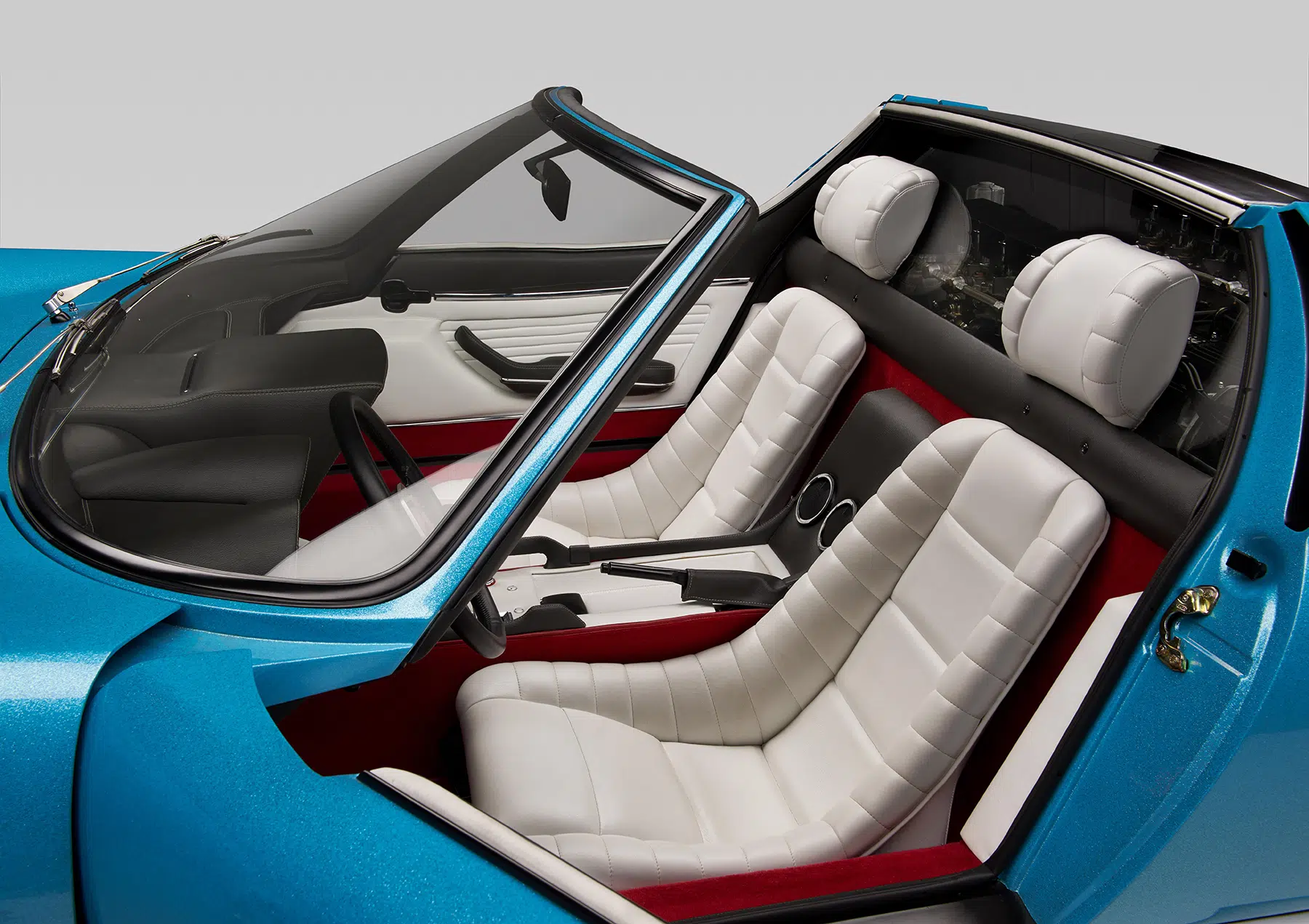
Today, the Miura is widely regarded as one of the most beautiful cars ever created. Its revolutionary architecture influenced later Lamborghini icons such as the Lamborghini Countach and continues to shape modern models, including the hybrid Lamborghini Revuelto.
To mark the Miura’s 60th anniversary, Lamborghini will host celebrations around the world throughout 2026, including a special Polo Storico tour across Northern Italy dedicated exclusively to Miura owners.
For Lamborghini CEO Stephan Winkelmann, the Miura remains the car that defined the brand’s future.
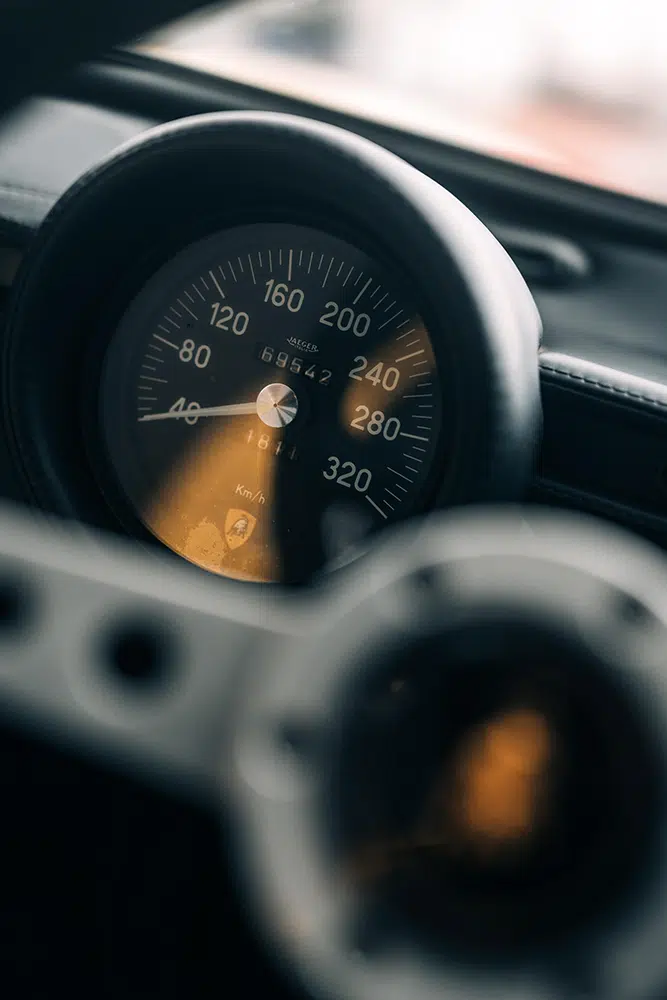
“The Miura did more than introduce a new car—it changed the course of automotive history,” he says. “With its revolutionary architecture and breathtaking design, it defined the very concept of the supercar.”
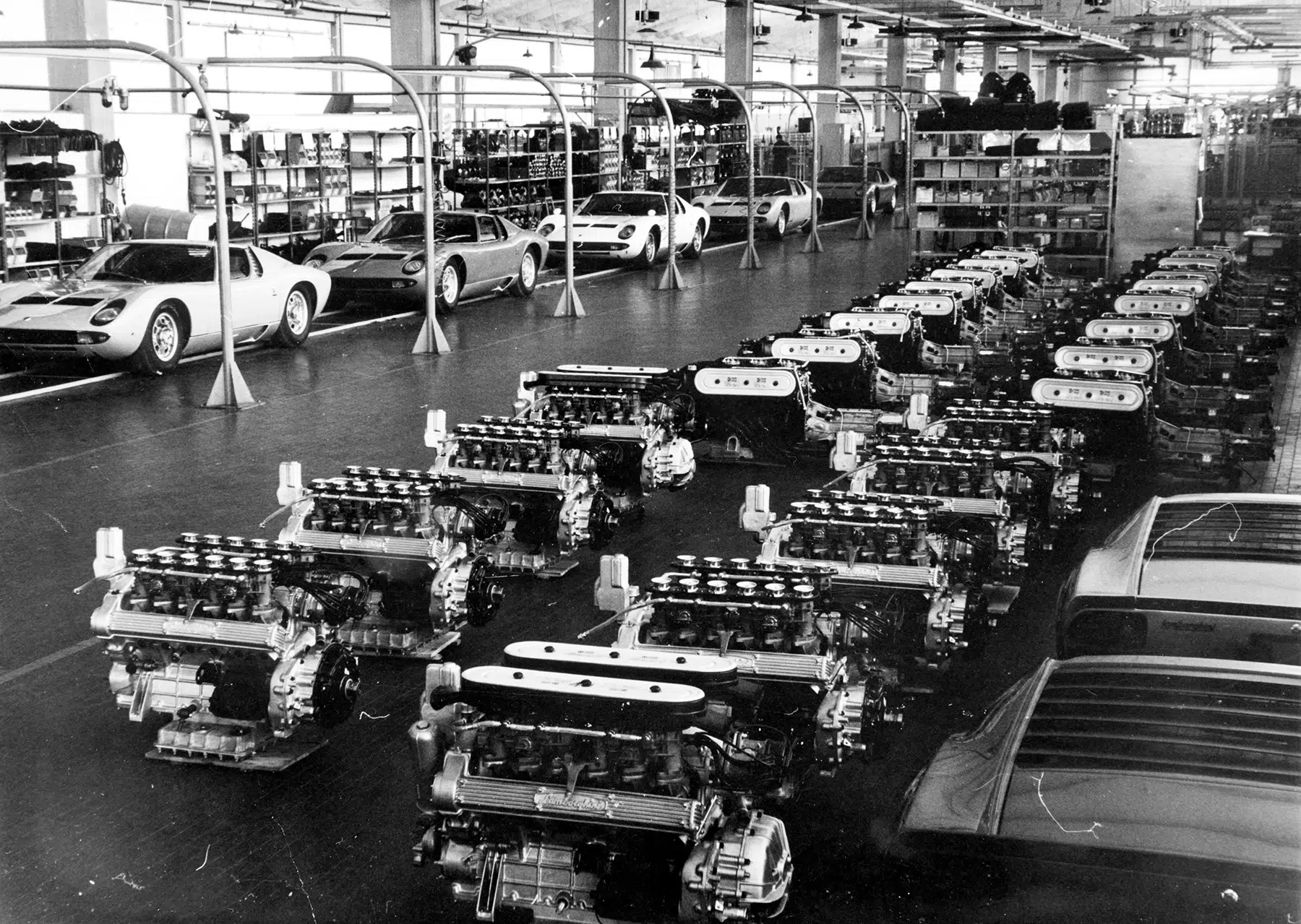
Six decades after its debut, the Miura still feels astonishingly modern. It does not simply represent Lamborghini’s past—it marks the moment when the future of performance cars first took shape.
Lamborghini Miura P400 SV Key Specifications
Engine: 3.9-liter naturally aspirated V12
Power: 385 horsepower
Top speed: approx. 290 km/h (180 mph)
0–100 km/h: approx. 5.5 seconds
Transmission: 5-speed manual
Production: 1966–1973
Total built: 763 examples