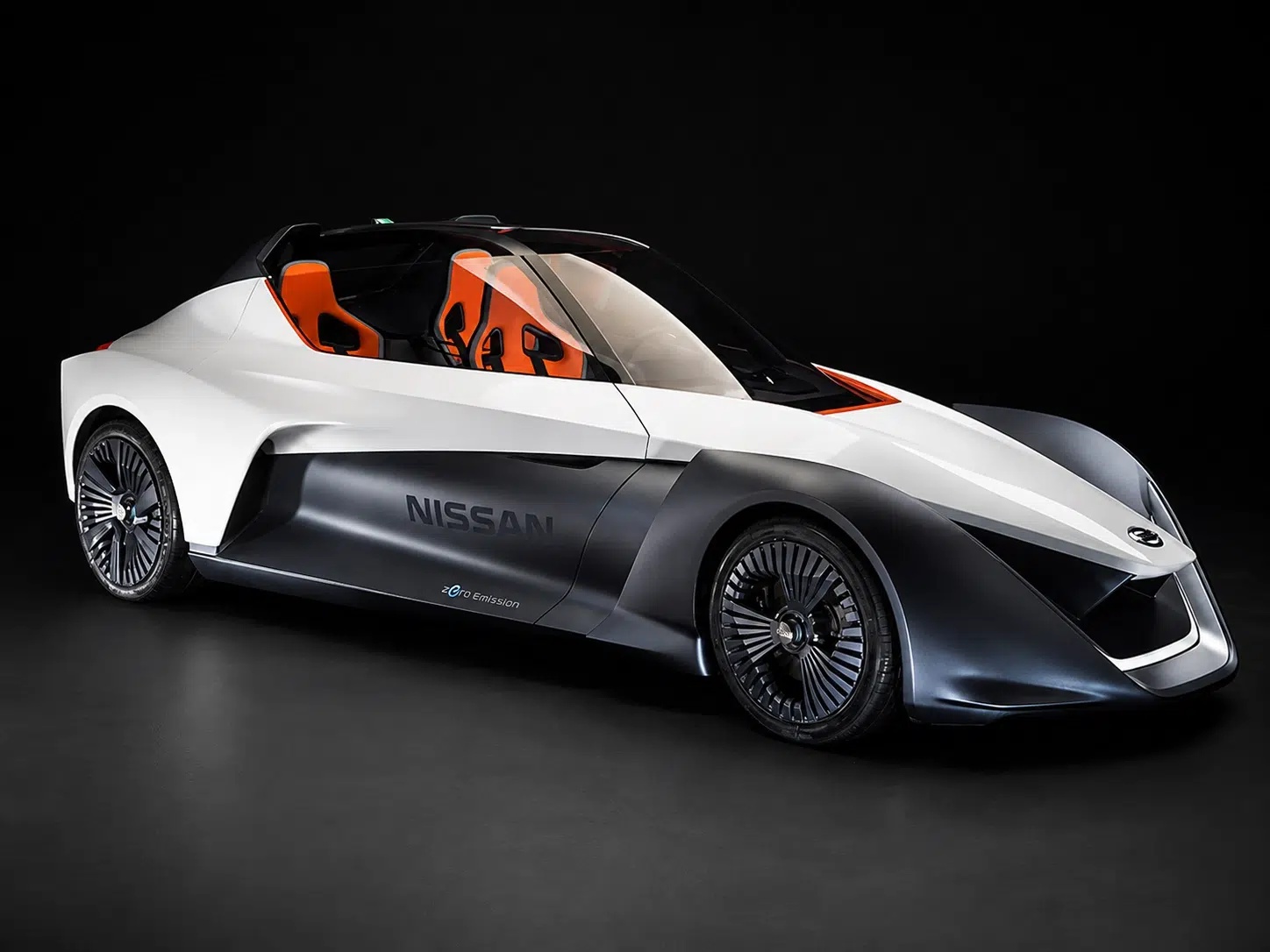
Long before electric performance became a luxury-industry talking point, Nissan was already experimenting with what an EV sports car might become when liberated from convention. The result was BladeGlider, a striking concept that rejected the familiar proportions of traditional performance cars in favor of something narrower, lighter-looking, and far more theatrical.
BladeGlider was conceived as a statement of intent rather than a simple show car. Nissan used it to explore how an electric sports car could deliver excitement without relying on the visual language or mechanical character of internal-combustion performance models. In doing so, the company created one of the most unusual EV concepts of its era.
Its shape was the first clue. Instead of a conventional wide-front sports-car stance, BladeGlider adopted an aircraft-inspired layout with a narrow nose that widened dramatically toward the rear. The silhouette gave it an almost glider-like quality, which is where the concept took its name. The form was not merely stylistic. Nissan positioned the design as an expression of aerodynamic efficiency, agility, and a different way of thinking about electric performance.
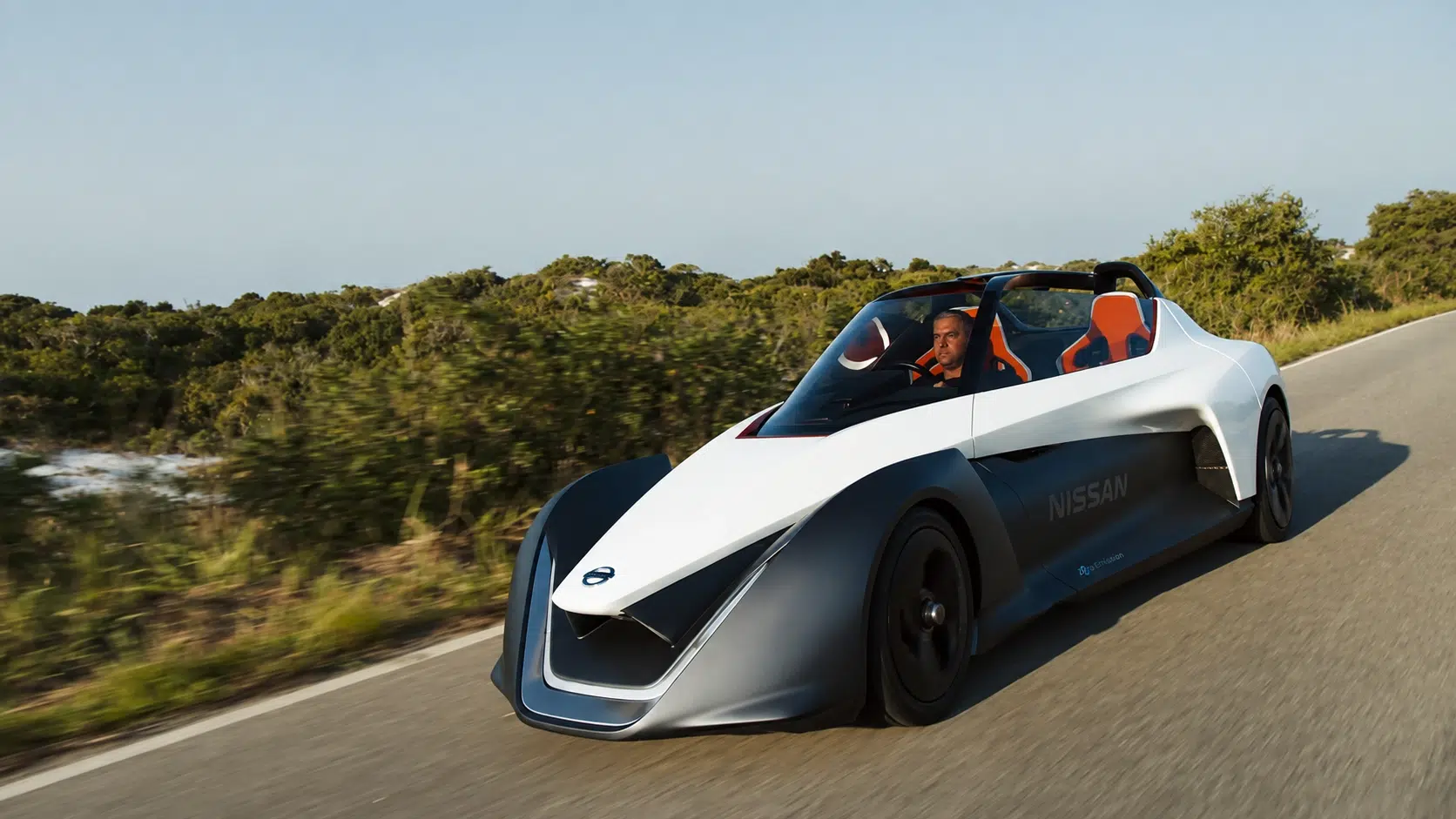
Inside, the layout was even more unconventional. BladeGlider was configured as a three-seater, with the driver seated centrally and two passengers positioned behind on either side. It was an arrangement more commonly associated with exotic low-volume supercars than with electric concept vehicles, and it gave the interior a dramatic sense of purpose. Rather than feeling like an electric commuter, BladeGlider suggested something closer to a lightweight performance machine reimagined for a new era.
Power came from an all-electric drivetrain designed to make the point that EVs could be thrilling as well as efficient. Nissan said the prototype could accelerate from 0 to 100 km/h in under five seconds and reach a top speed of more than 190 km/h, performance figures that gave the concept substance beyond its show-car styling. The focus, however, was not simply straight-line speed. BladeGlider was also presented as a demonstration of handling potential, torque delivery and the immediacy that electric propulsion could bring to a sports-car experience.
That idea was central to Nissan’s broader Intelligent Mobility vision at the time. The company was already a major force in the electric-vehicle market through the Leaf, and BladeGlider allowed it to stretch the conversation beyond practicality. Where the Leaf represented everyday electrification, BladeGlider explored emotional appeal. It asked a more seductive question: what if the electric future also looked playful, daring and genuinely entertaining?
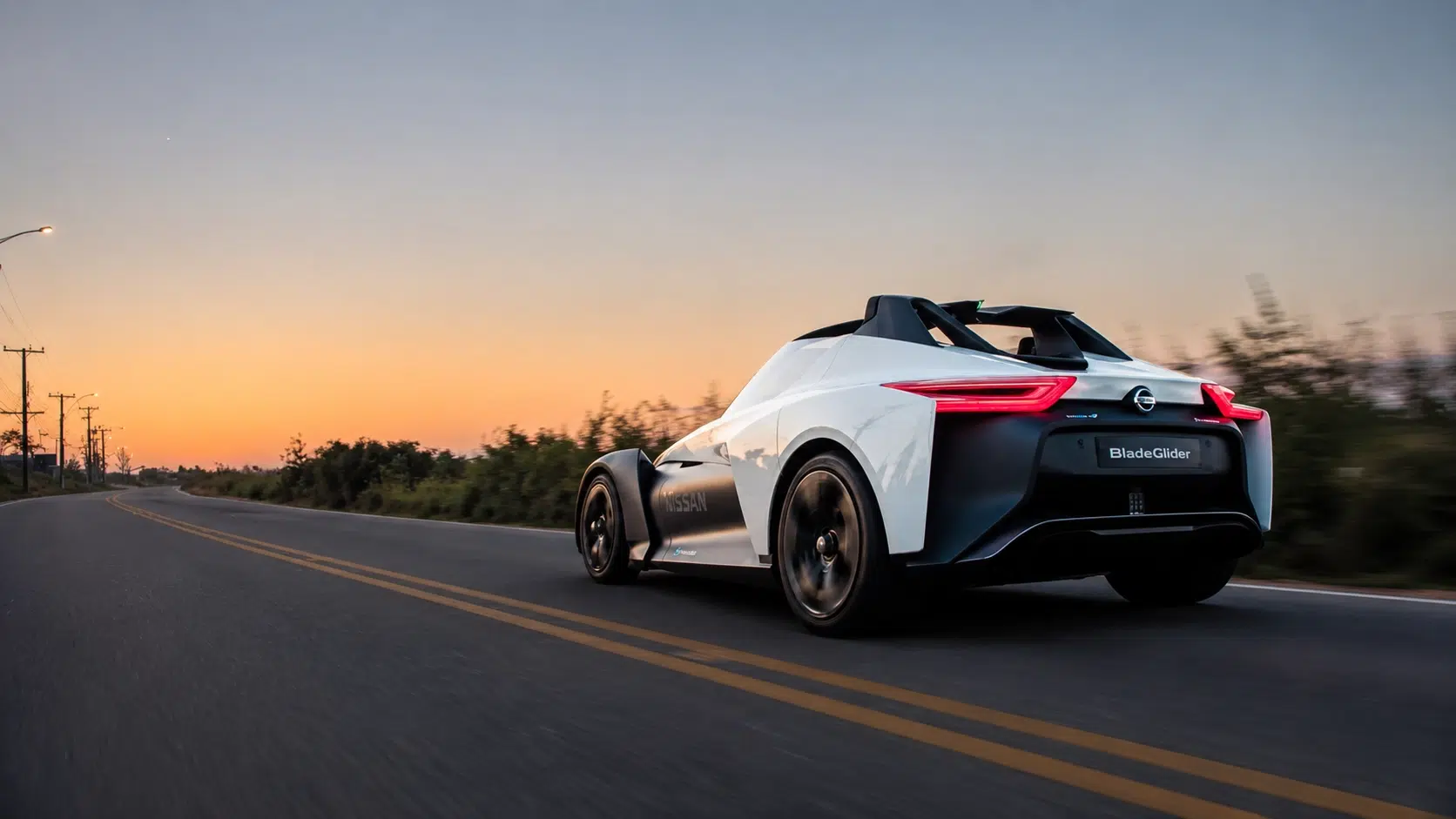
Nissan reinforced that message in 2017, when Margot Robbie was introduced as an ambassador for the brand’s electric-vehicle ambitions. To mark the moment, the actress was filmed driving the all-electric BladeGlider around the Monaco Grand Prix circuit, threading the futuristic prototype through one of the most glamorous backdrops in motorsport. It was a highly choreographed piece of brand theater, but it served its purpose. Rather than presenting EVs as worthy appliances, Nissan linked BladeGlider with celebrity, speed and spectacle.
The Monaco appearance also helped position BladeGlider within the world of luxury aspiration. It was not difficult to imagine the concept as part of a broader future in which electric cars would no longer need to justify themselves purely on environmental grounds. They could be objects of desire in their own right.
That remains one of BladeGlider’s most interesting qualities in retrospect. It did not preview a production model in the conventional sense, nor did it become a direct template for a showroom vehicle. Its value lay in its willingness to be provocative. At a time when much of the electric-car conversation still revolved around range, charging and efficiency, Nissan presented an EV concept centered on design drama and driving enjoyment.
Even today, the BladeGlider still looks surprisingly fresh. The central seating position, the tapering body, the dramatic surfacing and the unapologetically conceptual proportions continue to separate it from the increasingly familiar forms of contemporary electric crossovers and sedans. It remains a reminder that the early EV future contained far more design experimentation than the market ultimately embraced.
Seen now, BladeGlider feels less like a prediction of a specific car and more like a manifesto. It argued that electric vehicles could be emotional, visually radical, and playful to drive. That was an important idea in its moment, and it remains a compelling one today.
Not every concept is meant to reach the road unchanged. Some exist to widen the imagination of what the automobile could become. BladeGlider belongs firmly in that category.
It may never have entered production, but as a vision of electric performance filtered through Nissan’s sense of experimentation, it still holds its place as one of the brand’s most memorable concepts of the modern era.