In MobLand, power is rarely at its most convincing when it is loud. It moves through drawing rooms, country estates, private clubs, and London streets with the confidence of something that does not need to explain itself. That quality is central to Harry Da Souza, the Harrigan family’s formidable fixer, played with tightly controlled intensity by Tom Hardy. It also explains why the Aston Martin DBX feels so naturally at home in his world.
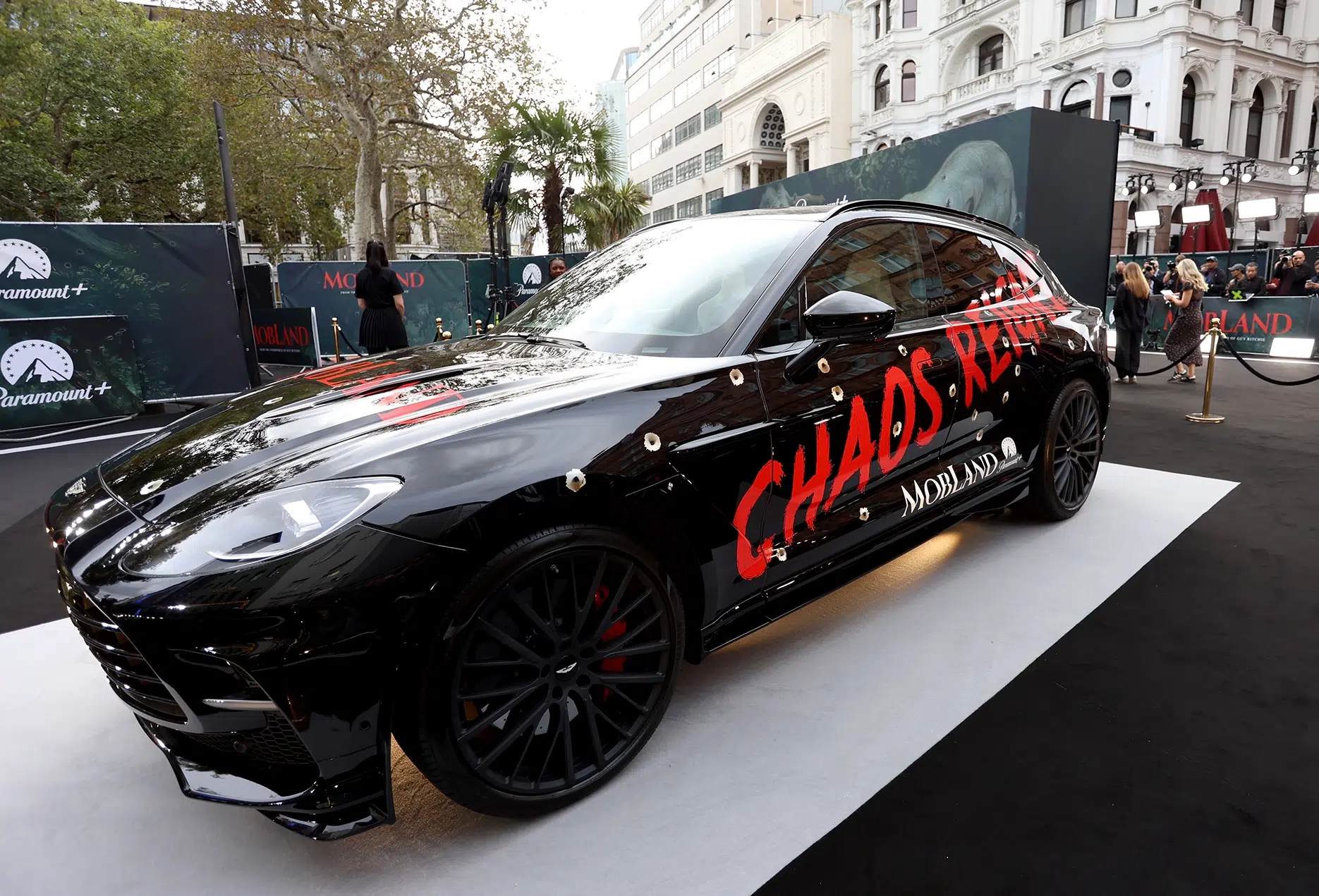
As MobLand returns for its second season on Paramount+, the DBX becomes Harry’s vehicle of choice, placing Aston Martin inside a drama built around fractured loyalties, shifting alliances, and the preservation of power. Season 2 finds the Harrigans struggling to maintain a united front as rivals threaten their criminal empire, while Harry once again occupies the dangerous territory between family obligation and self-preservation.
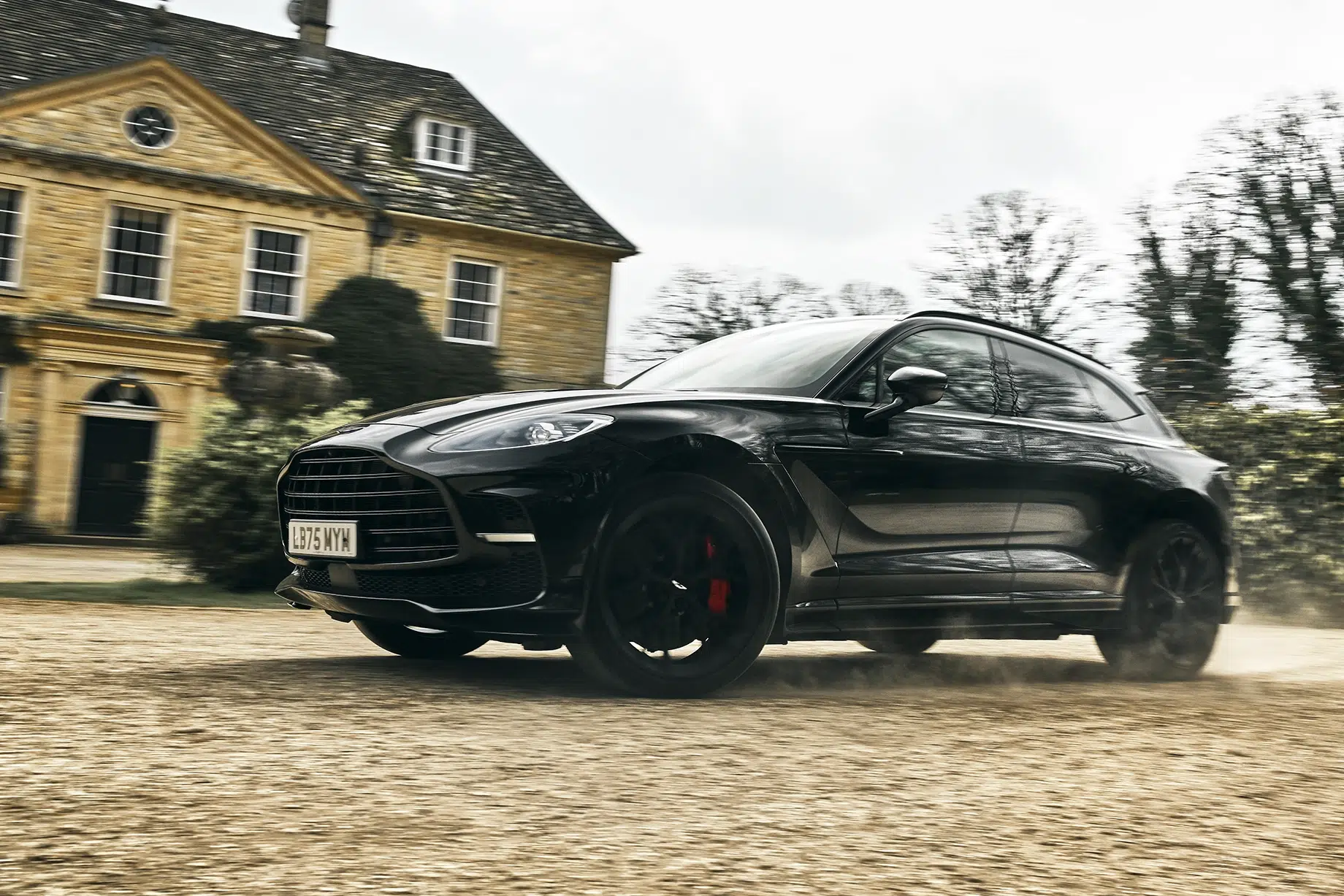
The pairing is more considered than a conventional screen placement might suggest. Aston Martin describes the DBX as an ultra-luxury performance SUV, and in MobLand its appeal lies not simply in speed, but in the combination of authority, discretion, and composure that defines the model at its best. The DBX carries the physical presence expected of a high-performance SUV without abandoning the sculptural elegance associated with Aston Martin’s grand tourers. In Harry’s hands, that balance becomes part of the character rather than an interruption to it.
Hardy’s Harry Da Souza is not a man given to theatrical displays. His effectiveness depends on remaining composed when everyone around him is not, reading a room before acting, and understanding that menace is often most persuasive when held in reserve. The DBX operates in much the same register. Its proportions are muscular without becoming excessive, its cabin is unapologetically luxurious, and its performance is substantial enough to make bravado unnecessary.
That distinction matters in a television landscape where automotive product placement can easily become decorative. The best screen cars do more than signal wealth; they reinforce character. A Rolls-Royce communicates one kind of power, a Ferrari another. An Aston Martin has long occupied a more nuanced position, combining British polish with the suggestion that considerable performance is waiting just beneath the surface.
That cultural shorthand has been shaped, of course, by decades of Aston Martin appearances on screen, most famously through the marque’s association with James Bond. MobLand belongs to an entirely different world, but it trades in some of the same visual language: tailored clothing, private rooms, coded conversations, elegant surroundings, and the constant possibility of violence. The DBX slots into that environment without requiring the audience to be told what it represents.
Its real-world credentials make the casting more convincing still. Aston Martin’s current DBX range sits firmly in the upper reaches of the performance-SUV market, while the DBX S takes the formula further with an uprated powertrain and additional performance-focused engineering. Aston Martin positions the DBX S as the most powerful SUV powered solely by an internal-combustion engine, reinforcing the idea that the DBX remains a performance car first, even when wrapped in the practicality and stature of an SUV.
That versatility is perhaps its most relevant quality for Harry. A fixer cannot afford a car that only makes sense in one setting. The DBX can move from an elegant London address to a remote estate or a fast stretch of open road without seeming misplaced in any of them. It offers the visual authority required by Harry’s position while retaining enough restraint to avoid becoming a caricature.
The aesthetic connection becomes even clearer when viewed against MobLand’s larger world. The series is built on contrasts: extreme wealth and private violence, family loyalty and calculated betrayal, traditional hierarchies and rapidly shifting power. Conrad and Maeve Harrigan, played by Pierce Brosnan and Helen Mirren, preside over an empire in which appearances remain important even as the structure beneath them begins to fracture. Harry operates between those surfaces, maintaining order where possible and containing disaster when it is not. Paramount+ describes him as walking a dangerous tightrope as tensions within the Harrigan family intensify, a description that captures the character’s essential tension.
Aston Martin’s involvement therefore feels less like an insertion than an extension of the production design. David Glasser, CEO of 101 Studios, noted that the vehicles chosen for the series form part of its high-stakes atmosphere, and that attention to detail is particularly important when deciding what characters such as Harry drive. That is an unusually apt way to understand the DBX’s presence: not simply as a recognizable luxury object, but as another piece of visual characterization.
There is also something fitting about placing an Aston Martin SUV, rather than one of the marque’s traditional sports cars, at the center of Harry’s story. The job requires adaptability. The DBX offers space, composure, all-weather usability, and the ability to cover considerable ground, but without surrendering the sense of occasion that has always distinguished the winged badge. It is less romantic than a classic grand tourer and arguably more relevant to the way contemporary power actually moves.
That may be why the car works so well within MobLand. Harry Da Souza is not defined by spectacle; he is defined by capability. His authority comes from being the person who can enter a volatile situation, absorb its complexities, and leave with the balance of power altered. The DBX projects much the same idea in automotive form: refined enough for the front entrance, formidable enough for what might happen after.
For Aston Martin, the appearance also continues a long tradition of allowing its cars to acquire meaning through the characters who drive them. The most successful screen partnerships are never really about horsepower or badge recognition. They are about association, and about the moment a car begins to feel inevitable for the person behind the wheel.
In MobLand, the DBX achieves exactly that. Against a backdrop of old loyalties, new enemies, tailored menace, and carefully controlled chaos, Aston Martin has placed its performance SUV with a man whose greatest asset is his ability to remain composed when everyone else is losing theirs. For Harry Da Souza, that may make the DBX less a status symbol than a professional tool—albeit one upholstered, engineered, and executed with unmistakably British flair.