
Each summer, as American and Middle Eastern families relocate to Europe, the Mediterranean becomes less a destination than a circuit. Mornings begin in Cap d’Antibes, evenings end in Sardinia, and weekends pivot unexpectedly to London or Geneva. The choreography is elegant. The logistics, less so.
From its base in Monaco, X-1 Jets is introducing a program designed to streamline that seasonal migration: a Hybrid Jet & Yacht Card that allows prepaid flight hours to be used interchangeably for private aviation and Mediterranean yacht charters.
Jet cards are hardly new. Nor are yacht charter retainers. What distinguishes this model is the consolidation. Rather than dividing capital between separate aviation contracts and maritime agreements, clients select a 50-hour or 100-hour jet card across the company’s aircraft portfolio—ranging from turboprops such as the Pilatus PC-12 to long-range business jets and Airbus ACJ configurations—and may deploy those hours either in the air or at sea.
There is no fixed allocation between the two. A transatlantic crossing into Nice, several intra-European flights, and a week cruising the Tyrrhenian coast can all be accounted for within a single prepaid structure. The program’s appeal lies less in novelty than in administrative precision: one contract, one point of contact, and advance confirmation of yacht availability during peak season.
The timing is deliberate. The Côte d’Azur, Ibiza, Mykonos, and the Amalfi Coast remain magnets for globally mobile households who now spend extended stretches abroad rather than brief holidays. Movement between residences, regattas, art fairs, and sporting events has become constant. In that environment, coordination carries its own cost.
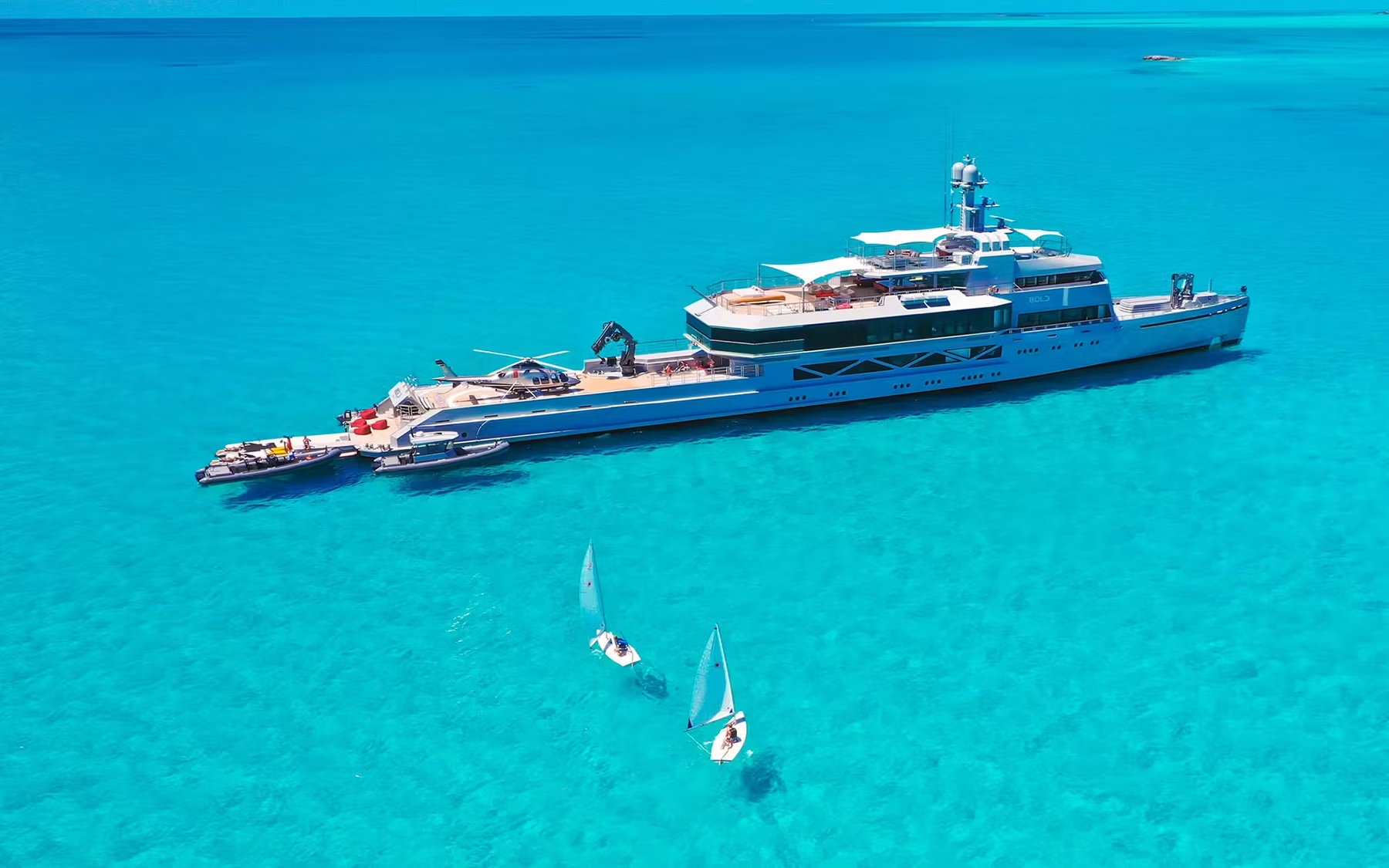
The Hybrid model reframes mobility as a continuum rather than a sequence of transactions. A departure from Manhattan to the South of France may lead directly onto a yacht in Cap d’Antibes. A Sardinian cruise can pivot midweek into a flight to London for Wimbledon. The distinction between runway and marina becomes operational rather than structural.
Private aviation providers have long emphasized time as their principal currency. Increasingly, however, the greater luxury may be simplification. By reducing intermediaries and consolidating agreements, the program speaks to a broader shift in ultra-high-net-worth travel: fewer moving parts, more discretion, and flexibility calibrated to lifestyle rather than fleet type.
For the 2026 European season, the proposition is straightforward. The Mediterranean remains the stage. The difference lies in how seamlessly one moves across it—by air, by sea, and now, under a single ledger of hours.