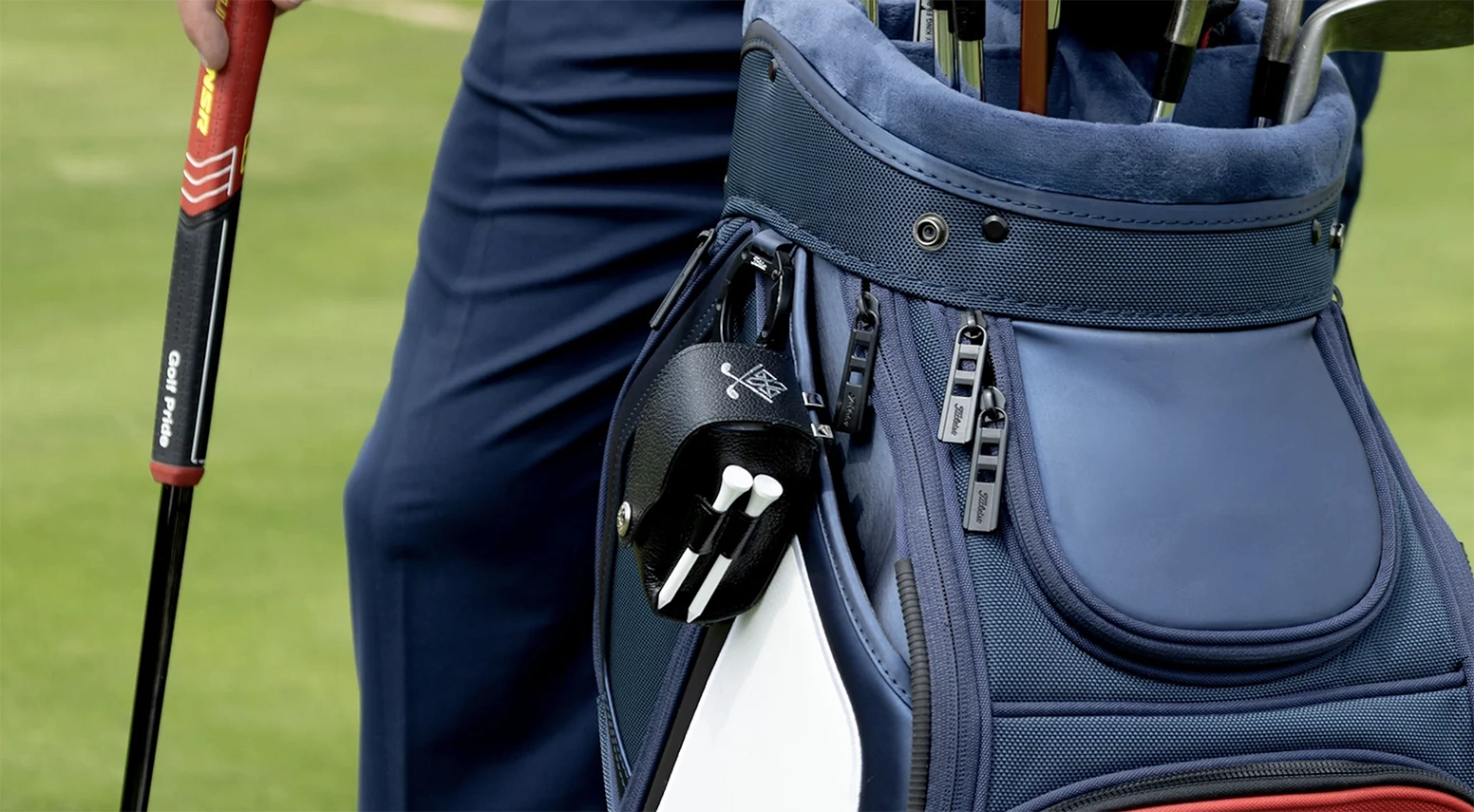
The historic English leather house brings more than 90 years of craftsmanship to golf with a collection of scorecard holders, pouches, and course essentials made for the game’s quieter rituals.
Golf has always had a fondness for ritual.
The scorecard tucked into a back pocket. The marker placed carefully on the green. The watch removed before a round. The small collection of tees, balls and personal belongings that somehow accumulates between the clubhouse and the first hole. Ettinger’s latest collection is designed around precisely those details.
For a company that has spent more than 90 years refining wallets, cases, bags and travel accessories, golf is not an obvious departure so much as a natural extension of the same philosophy: useful objects, made well, designed to improve with time.
Ettinger’s story began in London in 1934, when Gerry Ettinger founded the company after arriving in the capital the previous year. Initially operating from Regent Street as a representative for European leather manufacturers, he later established the house’s own production after purchasing a factory in London’s historic leather district in 1950.
The company quickly found itself making objects of considerable significance. Among its early commissions was the presentation box created for Queen Elizabeth II’s Coronation Bell in 1953, an indication of the workmanship the young business had already come to represent.
That reputation would later earn Ettinger a Royal Warrant from the then Prince of Wales in 1996. In 2024, the house received a second Royal Warrant from King Charles III, reinforcing a relationship with British craftsmanship and tradition that has remained central to the company’s identity.
Today, Ettinger is led by Gerry’s eldest son, Robert Ettinger, who joined the business in 1980. It remains family-owned and is one of the relatively few British leather houses still manufacturing in the United Kingdom.
Production moved from London to Walsall in 1999, placing the company within a town whose own history is deeply entwined with leatherworking. From there, Ettinger continues to produce wallets, bags and accessories for an international clientele, with its pieces now sold in more than 50 countries.
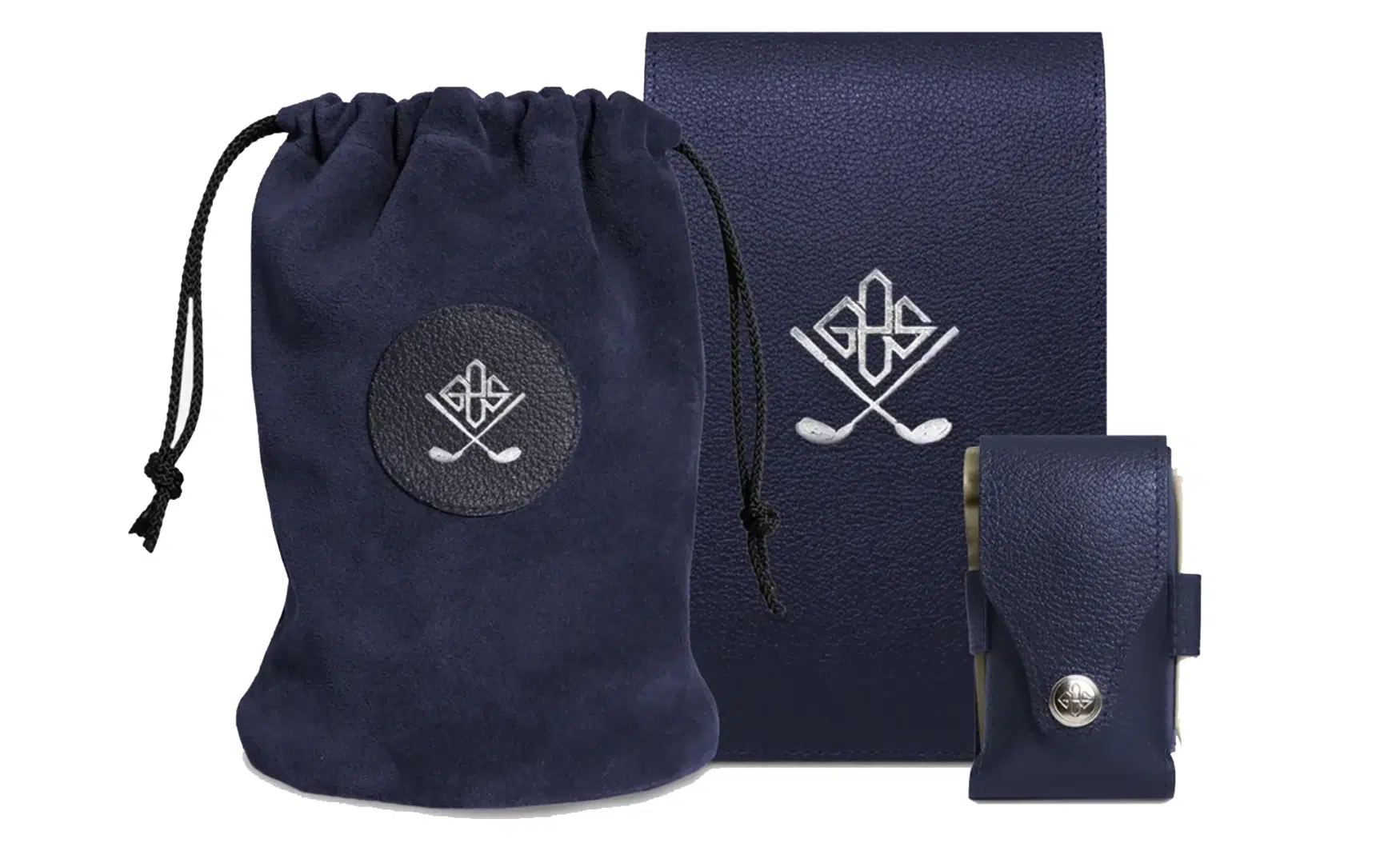
The new golf collection brings that heritage onto the course with an assortment of compact, purpose-driven accessories made largely from grained goat leather. Selected for its durability and natural resistance to water, the material lends itself particularly well to objects designed to spend long afternoons outdoors.
The palette remains appropriately understated. Black, Forest Green and Marine Blue give the collection a traditional sporting character, while selected pieces can be personalized with initials, adding the discreet note of ownership that has long suited Ettinger’s approach to leather goods.
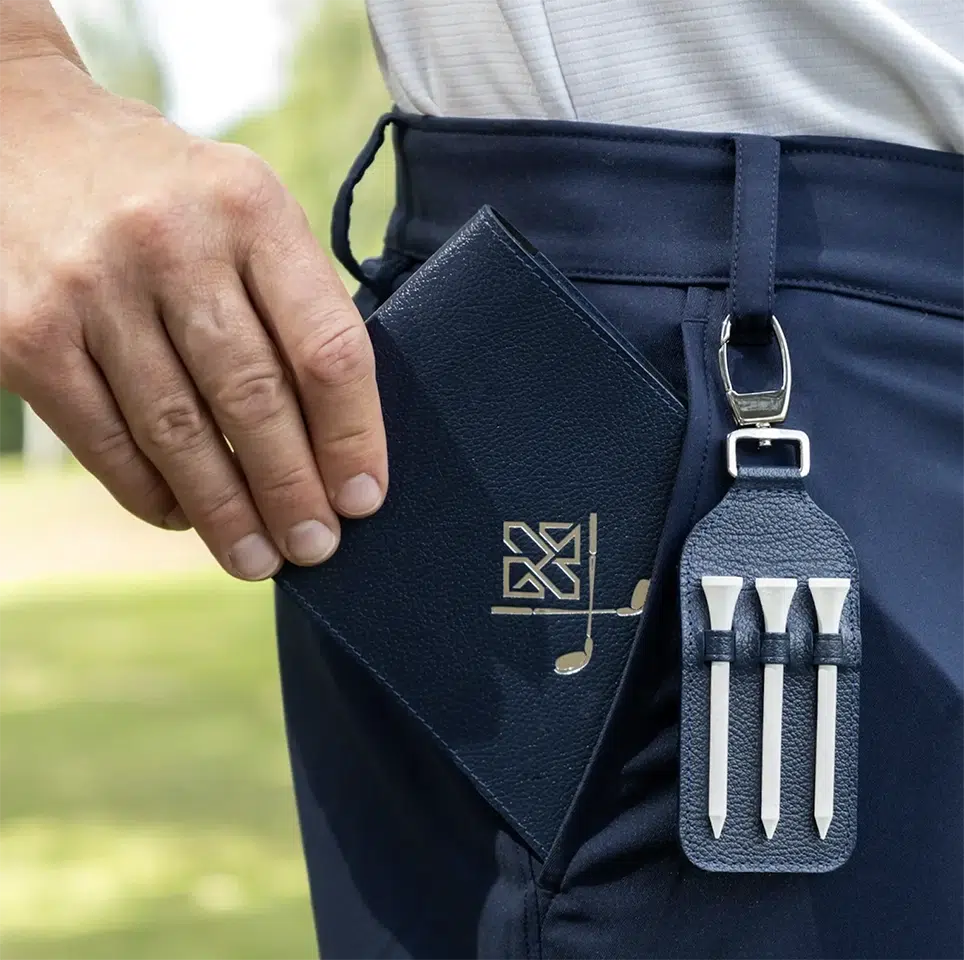
The Capra Golf Scorecard Holder is perhaps the most quintessentially British of the pieces: functional, beautifully finished and almost deliberately modest. Sized to slip into a back pocket, it uses two leather slips and retaining straps to accommodate different scorecard formats and arrives with an 18-hole card and miniature pencil.
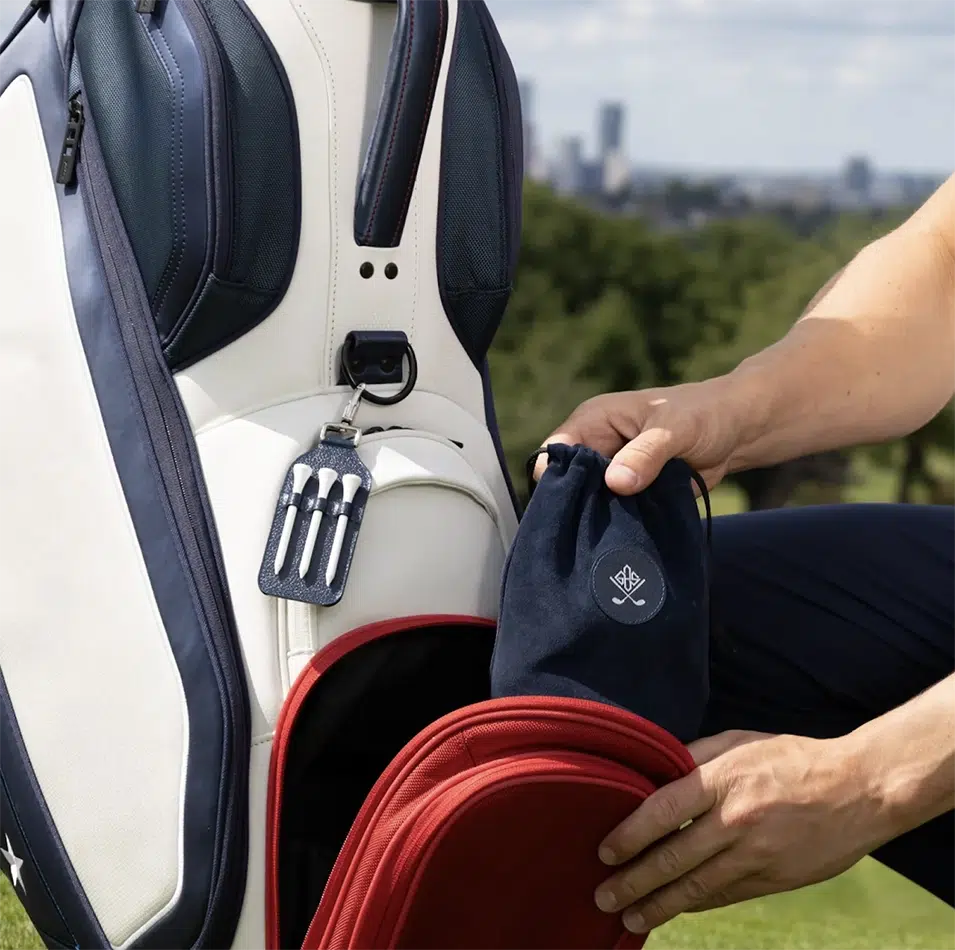
The Capra Golf Tidy takes a more utilitarian approach. Designed to clip onto a belt, it organizes two golf balls, two tees, a metal pitch repairer and an Ettinger ball marker in one compact piece. A smaller Golf Accessory Caddy attaches to either a belt loop or golf bag by means of a metal swivel clasp and carries three tees, a repairer and a marker.
For the objects golfers are often more concerned about damaging than losing, the Capra Golf Pouch offers a softer solution. Watches, keys and other small valuables sit within washable pig suede, while a goat-leather base adds structure. The pouch closes with a drawstring and includes an internal jacquard pocket for additional separation.
A slim leather card holder rounds out the individual pieces, while Ettinger has also assembled the collection into three coordinated sets: Golf Essentials, On The Green and Clubhouse.
None of these objects is intended to transform a golfer’s game. That is precisely the point.
They belong instead to the quieter side of the sport: the preparation before the first tee, the careful organization of small essentials, the pleasure of using something made with attention to material and proportion.
Ettinger has approached golf in much the same way it has approached travel, business, and everyday carry for generations. The focus remains on objects that are useful first, refined second, and designed to endure beyond a single season.
A leather scorecard holder will not straighten a drive, and a handmade pouch will do little for a difficult lie in the rough. But golf has never been only about performance.
Sometimes, the pleasure is in everything that surrounds the game.