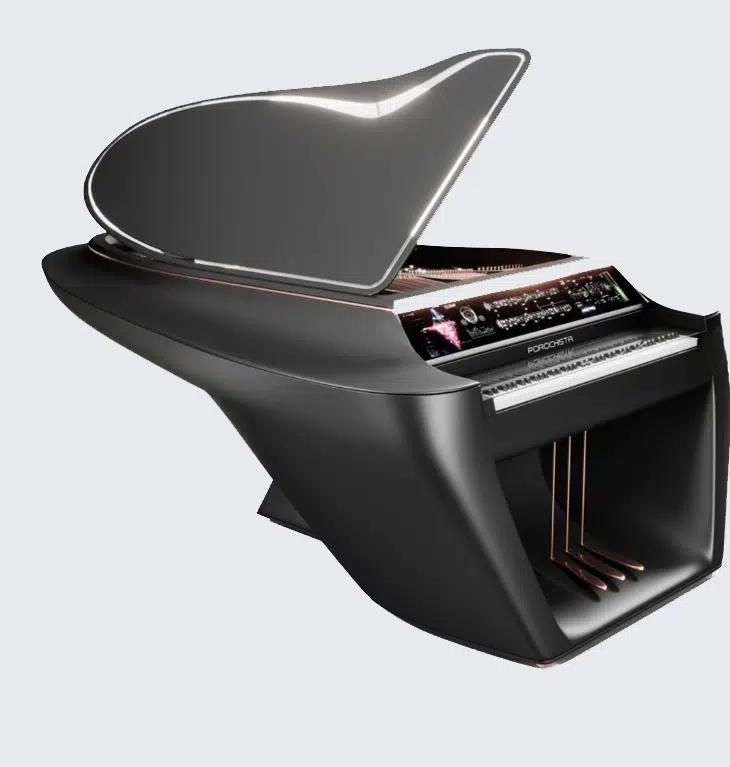
There are moments when an object abandons its category and enters a new realm altogether. The Porochista Piano is one of those moments, less an instrument in the traditional sense and more a declaration about where luxury design, technology, and music may be headed.
Conceived by designer Mohammad Limucci, the Porochista Piano reimagines the grand piano through the visual language of high-performance automotive design. Gone are the rigid geometries that have defined pianos since the 18th century. In their place: sweeping curves, aerodynamic tension, and a silhouette that feels closer to a contemporary supercar than a concert hall relic.
The piano’s form is unapologetically modern. A matte black body anchors the piece, while glass and metal elements introduce lightness and contrast. From certain angles, the rear appears to float, an illusion borrowed directly from automotive rear-end design, where weightlessness and motion are implied even at rest. Hidden compartments respond to touch, eliminating visible hardware and preserving the instrument’s sculptural purity.
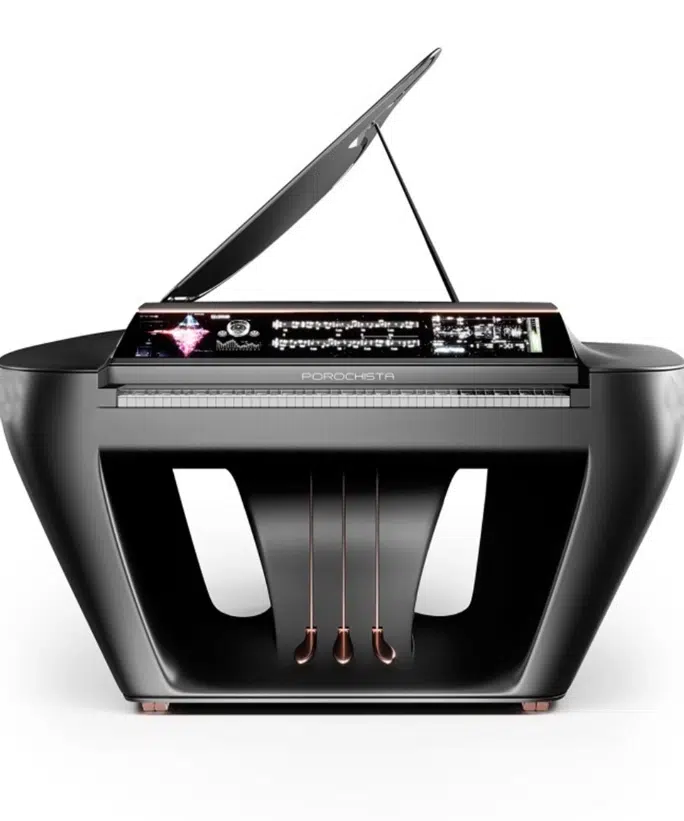
Yet the Porochista Piano is not merely an exercise in aesthetics. Integrated seamlessly into its design is a large touchscreen interface, allowing for recording, playback, and animated notation—features engineered for today’s professional musician and composer. Technology here does not interrupt the form; it is embedded within it, much like the digital intelligence behind modern performance vehicles.
What makes the Porochista particularly compelling is its restraint. Despite its futuristic ambition, it does not attempt to replace the emotional gravitas of a traditional piano. Instead, it proposes an evolution, one where classical acoustics coexist with digital intelligence, and where an instrument can be both a tool for performance and a statement of contemporary design philosophy.
For a look at another piano that marries exceptional craftsmanship with refined design, see our feature on the Steinway & Sons Spirio, an instrument celebrated for its revolutionary approach to traditional form.
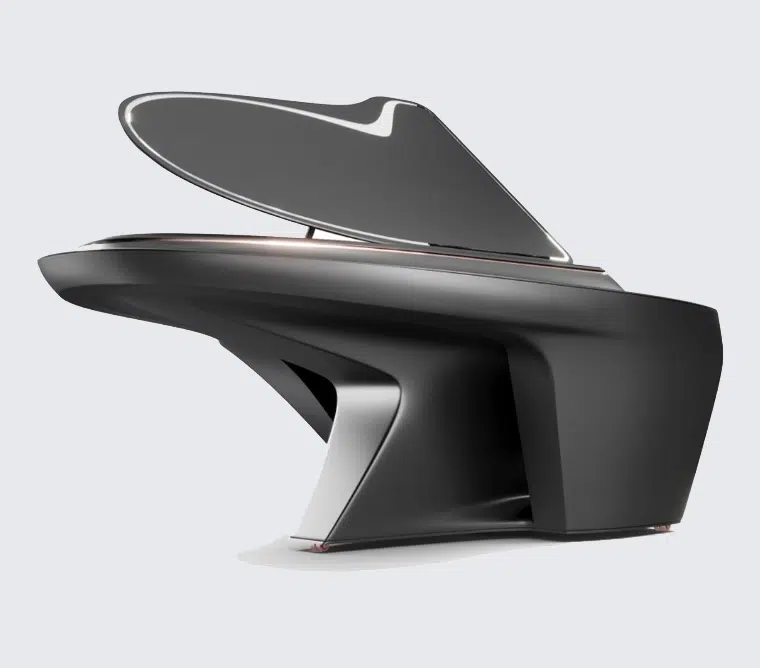
Awarded a Silver A’ Design Award, the Porochista Piano currently exists only as a concept. It is not available for retail purchase, nor is it positioned as a near-term production model. That, perhaps, is part of its appeal. Like the most provocative concept cars, it is less about immediate availability and more about possibility.
The Porochista Piano asks a quiet but provocative question: if we allow ourselves to rethink even the most sacred objects, what might the future of luxury craftsmanship look and sound like?
For now, it remains a vision. But it is one that lingers long after the final note fades.
Photo: Mohammad Limucci