In Japan, where the earth has a habit of reminding residents who is in charge, the most sophisticated responses to danger are rarely the loudest. Instead of towering reinforcements or visibly armored structures, some of the country’s most advanced residential solutions operate almost invisibly—quietly, precisely, and only when needed.
One such innovation comes from Air Danshin Systems, whose seismic technology allows a house to gently lift itself from the ground during an earthquake. Not dramatically, not theatrically—but just enough to make a difference.
When the Ground Moves, the House Responds
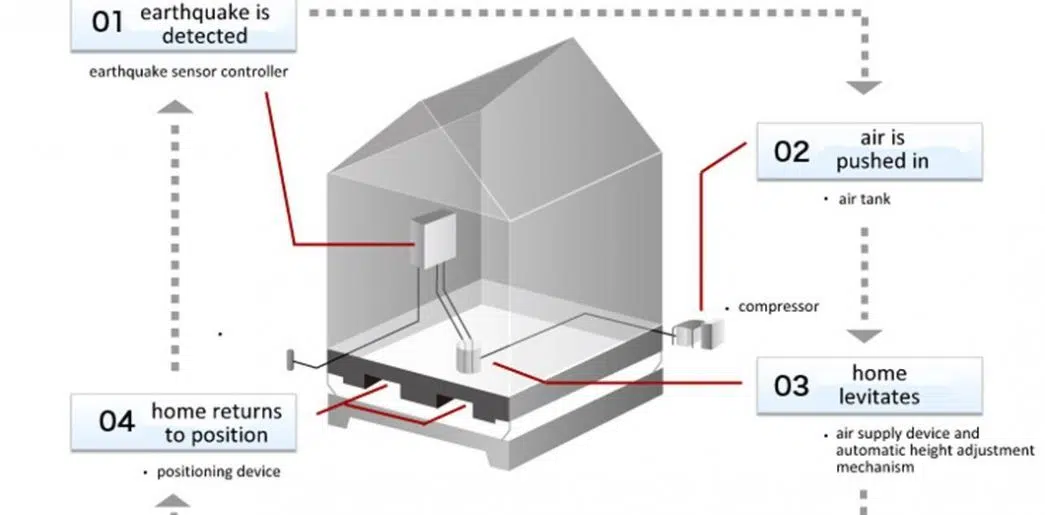
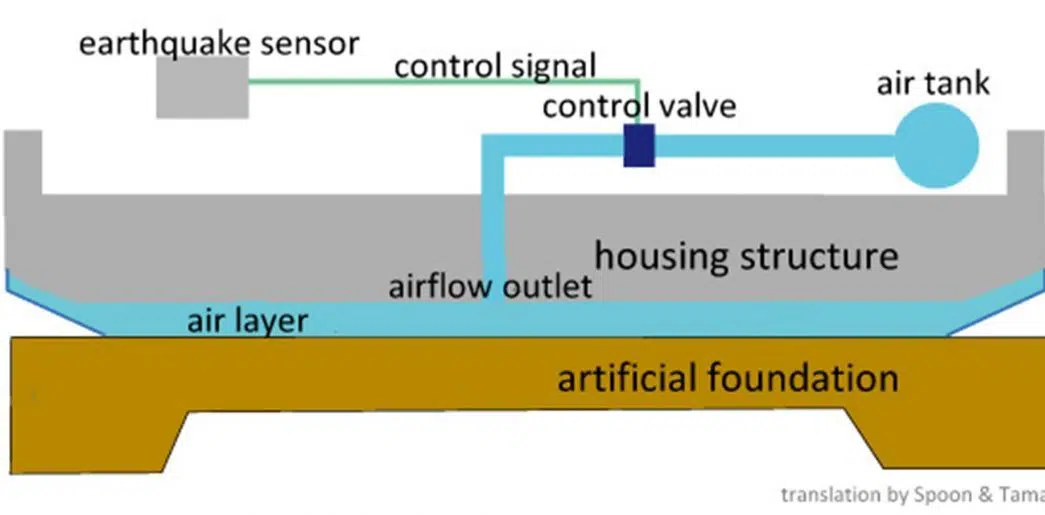
The concept is deceptively simple. When highly sensitive sensors detect seismic activity, compressed-air cushions installed beneath the home inflate in a matter of seconds. The structure rises a few centimeters—barely noticeable to those inside—temporarily separating the house from the violent horizontal motion of the ground below.
Once the tremors pass, the air is slowly released, and the home settles back into place, often without occupants ever realizing the system has engaged. There is no spectacle, no disruption—only quiet protection, engineered with restraint.
Engineering That Refuses to Announce Itself
What sets floating foundation homes apart is not just how they work, but how discreetly they exist. The system is entirely hidden beneath the structure, allowing the architecture above to remain uncompromised. Light-filled interiors, refined materials, and clean lines remain exactly as intended.
In a country where design and function are expected to coexist seamlessly, the appeal is obvious. This is resilience that does not intrude on daily life—technology that serves without demanding attention.
Tested by Reality, Not Renderings
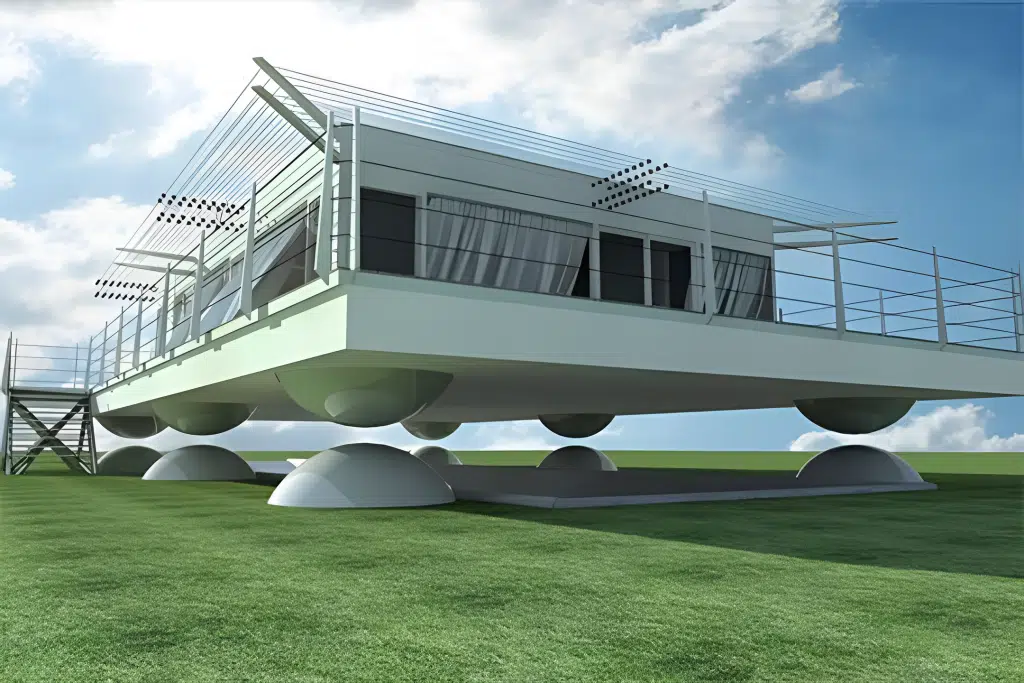
Despite exaggerated images circulating online, these homes do not hover above the landscape. The lift is modest, measured in centimeters, and carefully calibrated. The goal is isolation, not elevation.
The technology has already proven effective in smaller earthquakes, significantly reducing structural stress and interior damage. Engineers continue to refine the system for stronger seismic events, focusing not on novelty, but on reliability—an approach that mirrors Japan’s broader philosophy toward innovation.
A New Language of Residential Safety
Floating foundations represent a shift in how architects and engineers think about resilience. Rather than resisting seismic forces outright, these homes momentarily step away from them—absorbing and diffusing energy before it can cause harm.
For design-conscious homeowners, developers, and architects, the implications are compelling. Safety no longer needs to dictate aesthetics. Protection can be built in, not bolted on.
The Luxury of Peace of Mind
In many ways, Japan’s floating foundation homes embody a modern definition of luxury—one rooted not in excess, but in intelligence. They offer reassurance without intrusion, security without visual compromise.
It is a reminder that the most advanced homes of the future may not look different at all. They will simply behave differently—responding thoughtfully to their environment, rising when necessary, and returning quietly to stillness once the danger has passed.
In a world increasingly defined by instability, that kind of calm may be the most refined luxury of all.