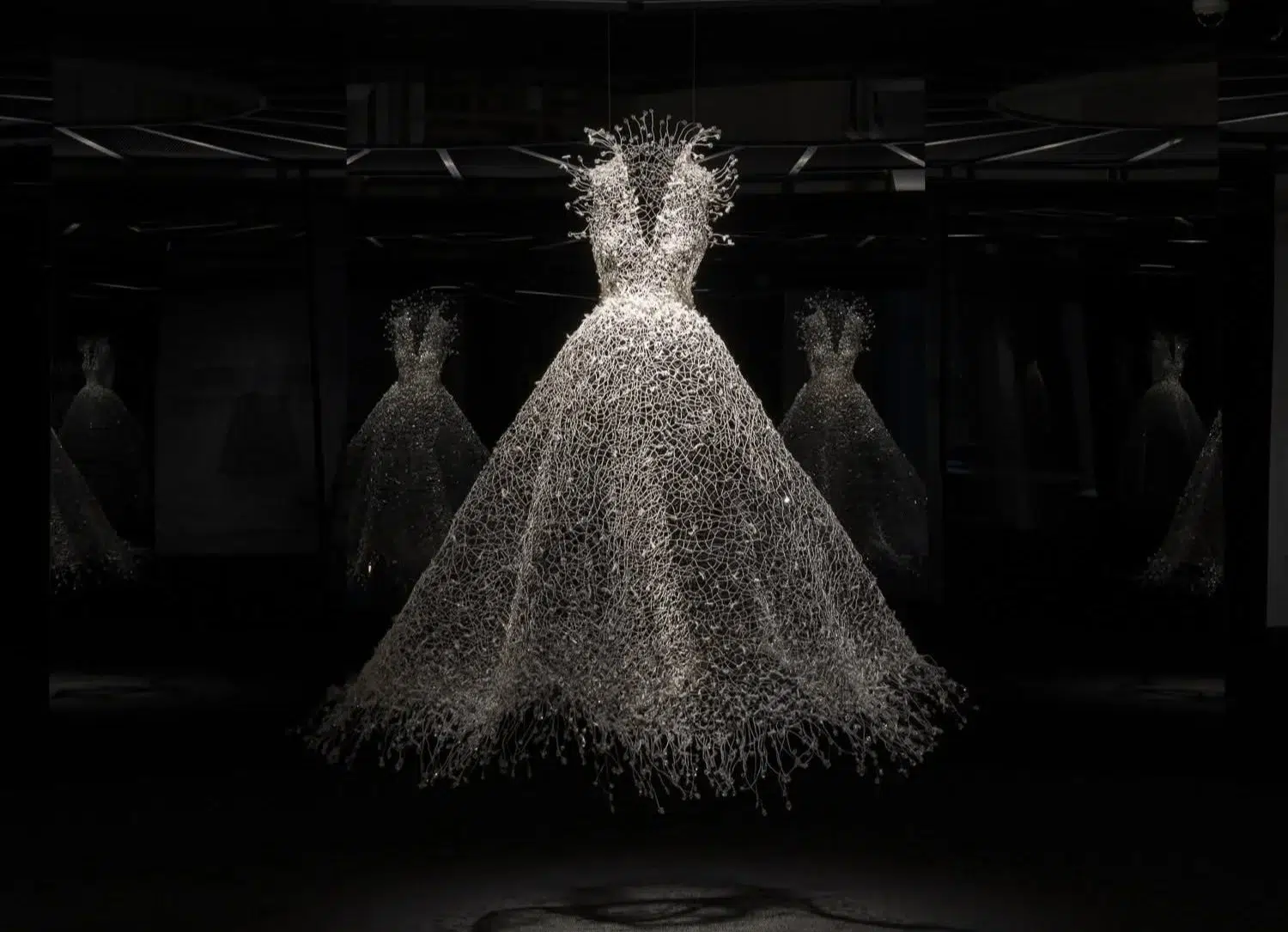
At the Seoul Museum of Craft Art, the delicate universe of Keysook Geum unfolds with a rare sense of quiet authority. This exhibition is not simply a retrospective, but a meditation on fashion as an art form—one that exists as much in air and light as it does in fabric and structure.
Geum’s creations have long resisted easy classification. Trained in fashion yet instinctively drawn toward sculpture, her work occupies a liminal space where garments shed their obligation to the body and become autonomous forms. The exhibition traces this evolution with restraint and clarity, presenting more than five decades of practice as a continuous, thoughtful inquiry rather than a chronological display, an approach that aligns with how hotels with extraordinary art collections increasingly treat art as an integral part of the experience rather than an accessory.
Perhaps the most arresting presence is the Snow Fairy dress, internationally recognized after its appearance at the PyeongChang Winter Olympics. Removed from performance and suspended in space, it reveals its true nature: not costume, but apparition. Layers seem to hover rather than drape, capturing movement without the need for motion. It is emblematic of Geum’s enduring fascination with weightlessness—an aesthetic that feels less designed than discovered.
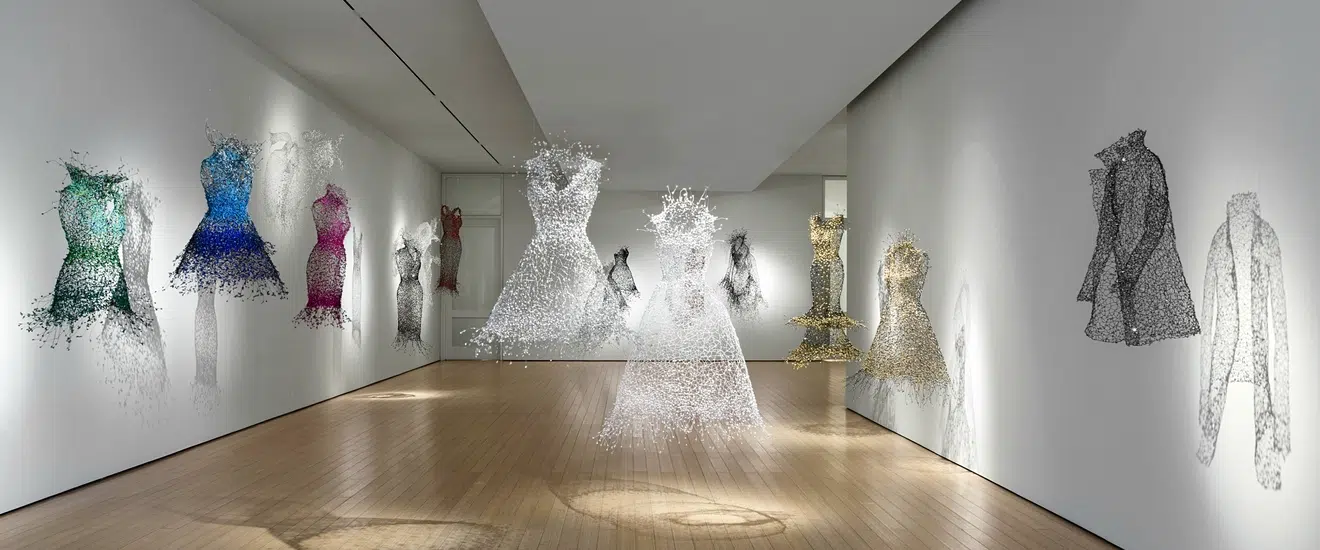
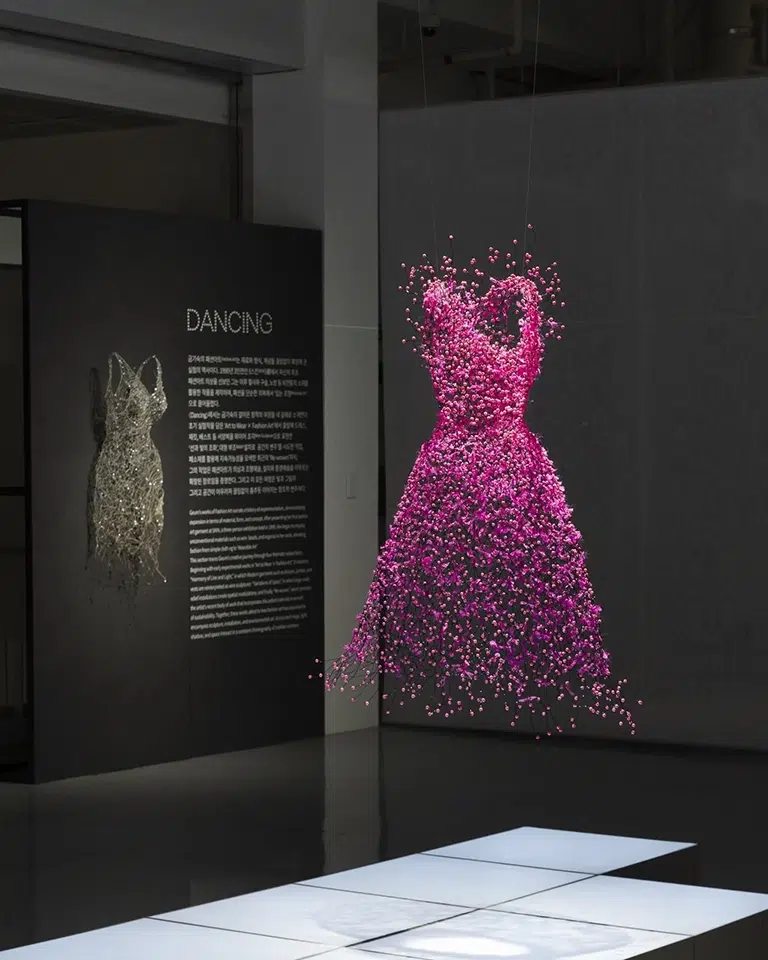
Throughout the galleries, wire dresses and beaded constructions appear almost as drawings lifted from paper and rendered in three dimensions. Lines curve gently, defining silhouettes that suggest the body without enclosing it. Shadows become part of the composition, shifting as the viewer moves, reinforcing the sense that these works are alive, responsive, and never entirely fixed.
Geum’s dialogue with Korean tradition is subtle and deeply considered. Elements of the hanbok—its volumes, arcs, and proportions—are abstracted and reassembled, stripped of ornament yet rich in cultural memory, now presented within the context of the Seoul Museum of Craft Art. Rather than nostalgia, these pieces offer continuity, positioning heritage as a living language capable of endless reinterpretation.
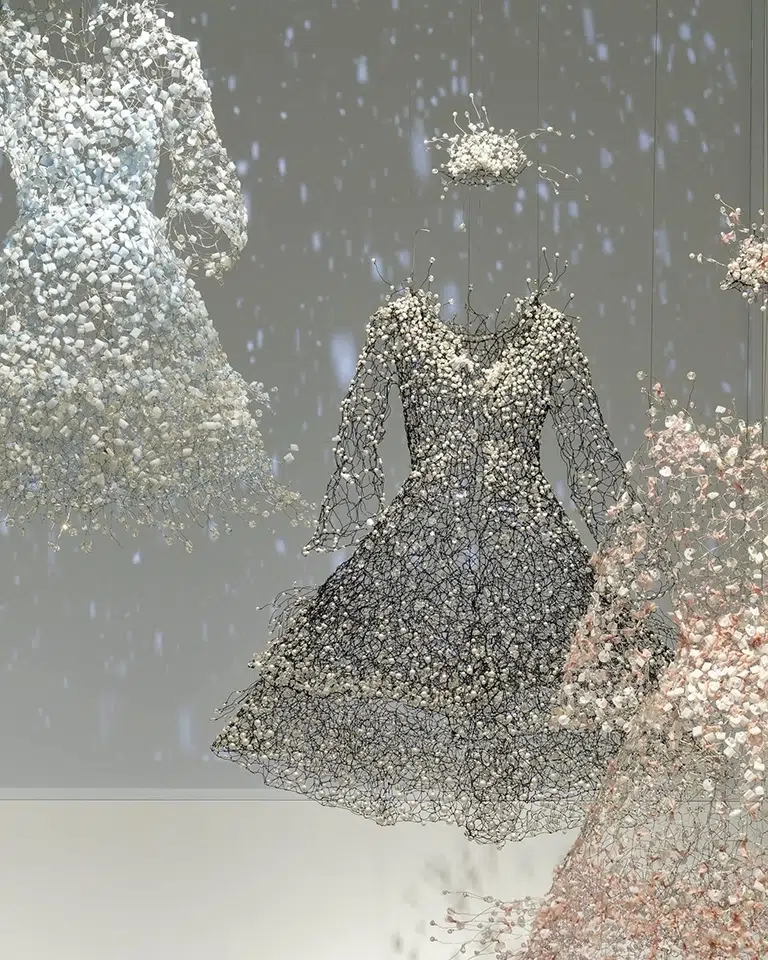
What distinguishes this exhibition is its restraint. There is no spectacle, no insistence on statement. Instead, the work asks for patience and attentiveness. Materials such as wire, beads, silk, and thread—handled with extraordinary precision—become vehicles for stillness and contemplation. Fashion here is not about trend or identity, but about presence.
In a moment when fashion is often consumed at speed, the work of Keysook Geum offers something rarer: an invitation to slow down, to observe, and to experience beauty as something quiet, deliberate, and profoundly enduring.