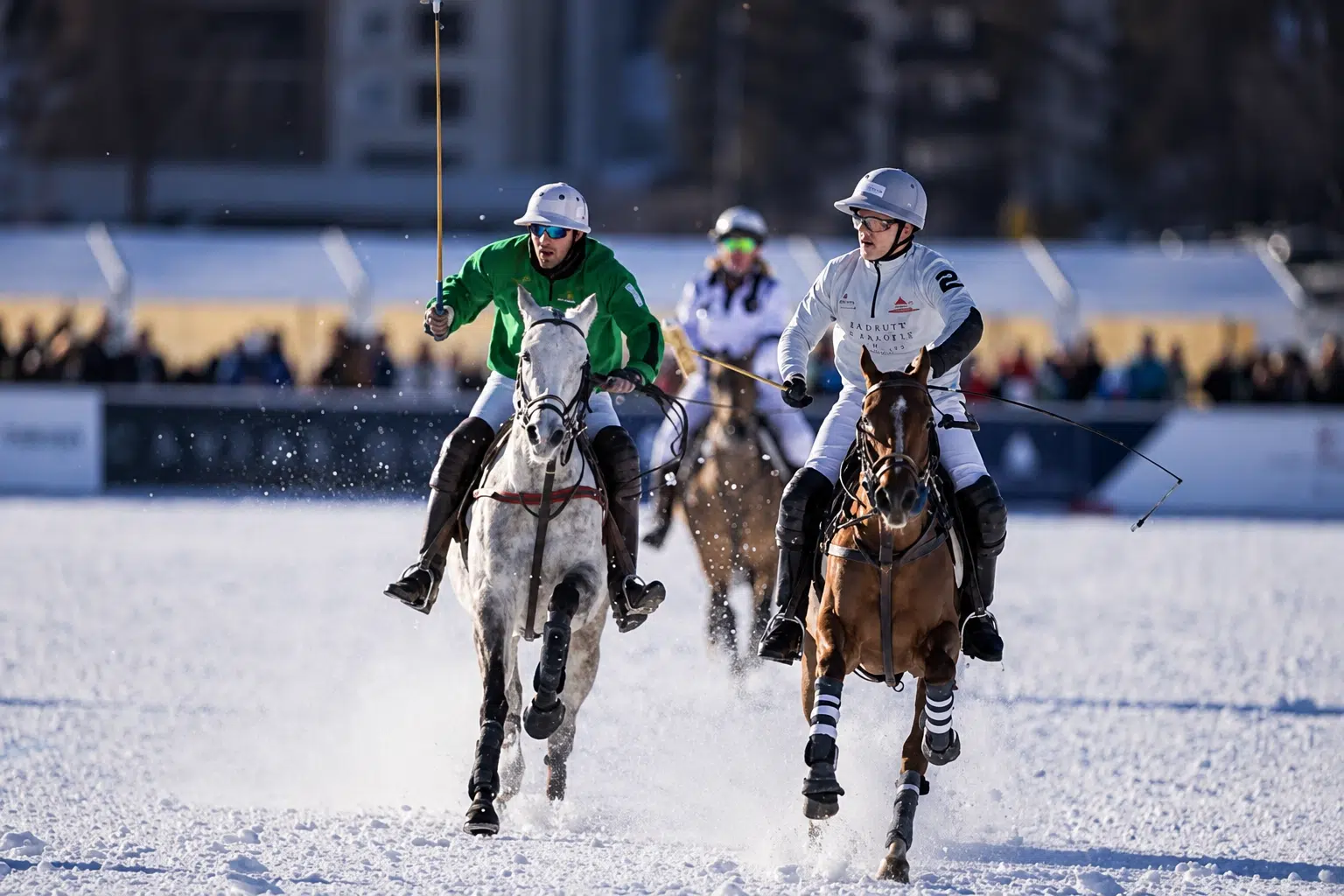
There are few sporting arenas quite as theatrical as a frozen Alpine lake. In St. Moritz, where grand hotels rise above the Engadine Valley, and winter has long been elevated into a form of high society, polo takes on an entirely different character. Horses thunder across packed snow rather than grass, mallets swing beneath snow-covered peaks, and spectators gather in one of Switzerland’s most storied resorts for a weekend that combines elite sport with unmistakable glamour.
The 36th Snow Polo World Cup St. Moritz, staged from January 24 to 26, 2020, once again transformed frozen Lake St. Moritz into one of the world’s most unusual sporting venues. Four teams, St. Moritz, Azerbaijan Land of Fire, Badrutt’s Palace Hotel and Maserati, competed across three days, bringing together international players, luxury sponsors and thousands of spectators against the dramatic backdrop of the Engadine Alps.
The tournament traces its roots to 1985, when founder Reto Gaudenzi introduced polo to the frozen lake during a snowstorm. What began as a daring Alpine experiment evolved into the world’s pre-eminent high-goal polo tournament on snow, establishing St. Moritz as a destination where sport, hospitality and luxury culture converge every winter.
The 2020 edition nearly faced a challenge from nature itself. Lake St. Moritz froze later than usual that season, forcing organizers and local experts to monitor the quality and thickness of the ice carefully before construction of the tournament infrastructure could proceed. By January, however, conditions had improved sufficiently for the event to go ahead as planned, ultimately delivering three days of excellent snow and weather conditions.
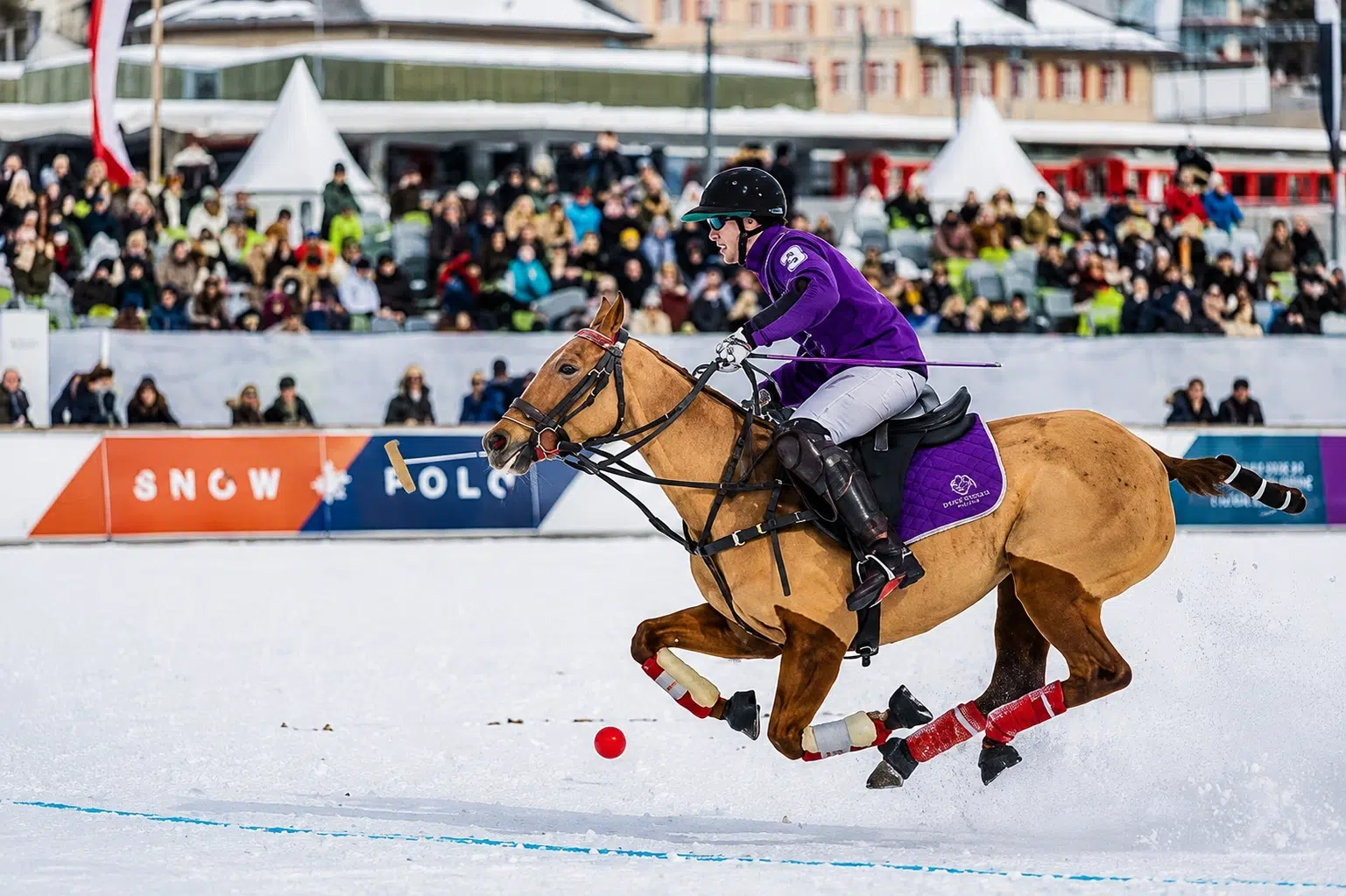
Once play began, the competition quickly justified the preparations.
Azerbaijan Land of Fire opened the tournament emphatically with an 8–4 victory over defending champion Badrutt’s Palace Hotel. Team St. Moritz answered with an equally convincing performance against Maserati, setting up a weekend in which the home team steadily emerged as the one to beat.
The championship reached its defining moment on Sunday, January 26. Team St. Moritz, captained by Valery Mishchenko and joined by Robert Strom, Max Charlton and Nacho Gonzalez, faced Azerbaijan Land of Fire in the final. In front of a vast crowd gathered along the frozen lake, St. Moritz controlled the match and secured a 4–1.5 victory.
It was a landmark result. For the first time in the tournament’s history, Team St. Moritz claimed the Snow Polo World Cup trophy.
The victory also capped a particularly strong weekend for British player Max Charlton, who was named Most Valuable Player. Nacho Gonzalez’s pony Casanova earned Best Playing Pony honors, while Maserati’s Fabio Meier was recognized as Best Playing Patron.
Elsewhere in the tournament, Maserati defeated Badrutt’s Palace Hotel 7.5–5 in the La Martina Cup, securing third place. Badrutt’s Palace entered the event as defending champion after Melissa Ganzi had made history the previous year as the first woman to captain a winning team at St. Moritz.
Yet the appeal of Snow Polo St. Moritz has never rested solely on the scoreboard.
The event occupies an unusual position in the luxury calendar, combining competitive polo with an atmosphere more often associated with an international winter social season. Guests move between the frozen lake and St. Moritz’s grand hotels, while hospitality tents, Champagne, caviar and carefully orchestrated events turn the tournament weekend into something approaching an Alpine festival.
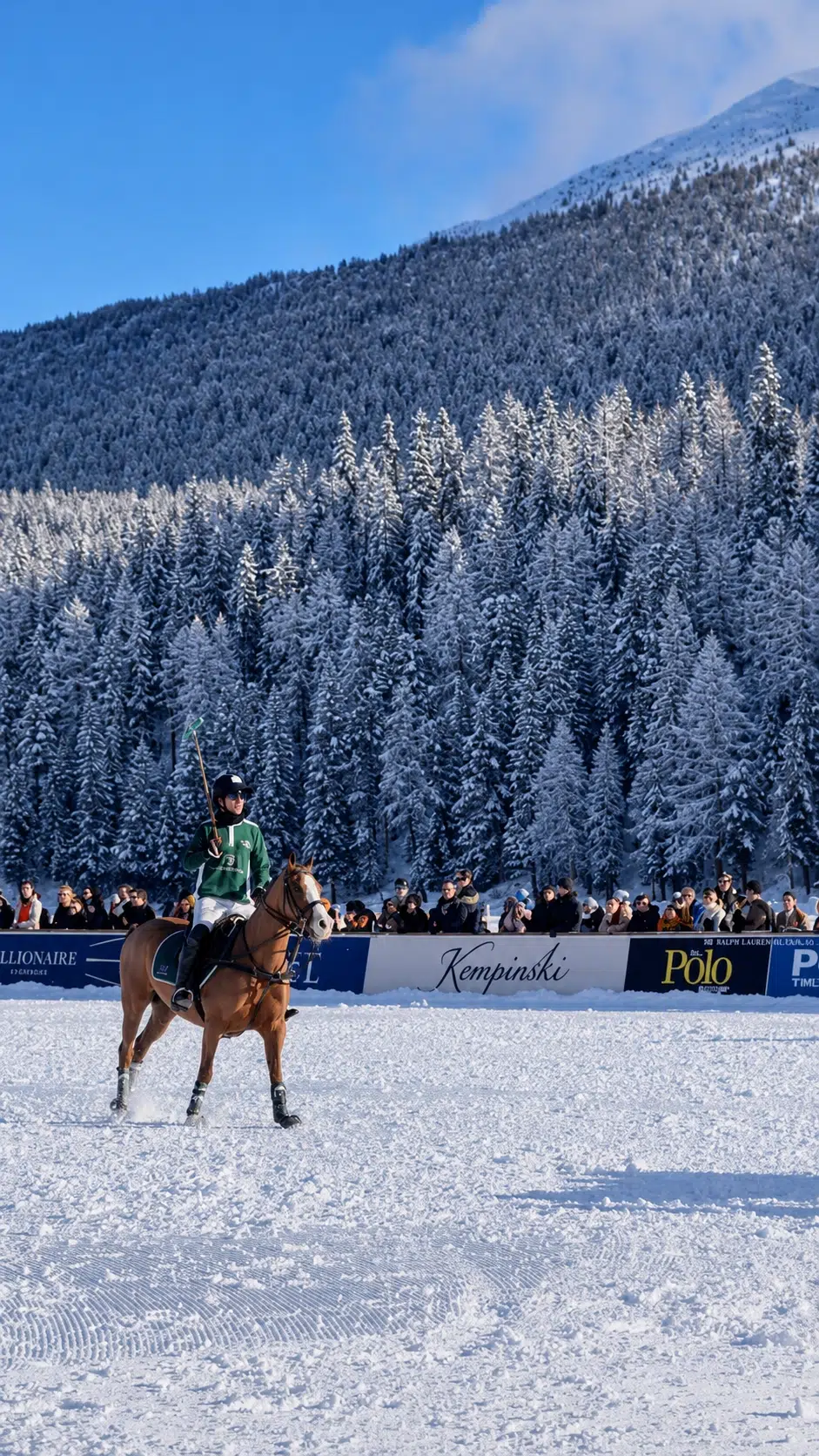
Badrutt’s Palace Hotel has long been closely associated with the event, joined over the years by an international roster of luxury, financial, aviation, fashion and automotive partners. The setting itself supplies much of the spectacle: horses moving at speed across white terrain while the Engadine mountains rise beyond the field is an image unlike almost anything else in professional sport.
The scale of the 2020 edition reflected that enduring appeal. More than 18,000 spectators attended over the course of the three-day tournament, according to organizers, reinforcing Snow Polo St. Moritz’s position as one of the most distinctive fixtures on the winter sporting calendar.
That popularity is all the more remarkable considering the logistical complexity behind the event. Unlike a conventional polo ground, Lake St. Moritz must first become a safe playing surface. Ice conditions are monitored continuously, while the infrastructure required for teams, horses, hospitality and spectators has to be constructed directly on the frozen lake.
It is precisely this combination of improbability and tradition that gives St. Moritz its particular allure. Polo has always carried associations with elegance and international society, but here it acquires an elemental quality. Snow, ice, horses and mountains strip the sport back to something more visceral, even as the surrounding hospitality remains resolutely refined.
The 36th edition ultimately belonged to Team St. Moritz, but its significance extended well beyond a single result. It represented another chapter in a tournament that has spent decades turning one of Switzerland‘s most beautiful winter landscapes into a temporary sporting arena.
For a few days each winter, the frozen lake becomes a place where athleticism and spectacle meet at altitude, and where St. Moritz once again proves that few destinations understand the theater of winter quite so well.