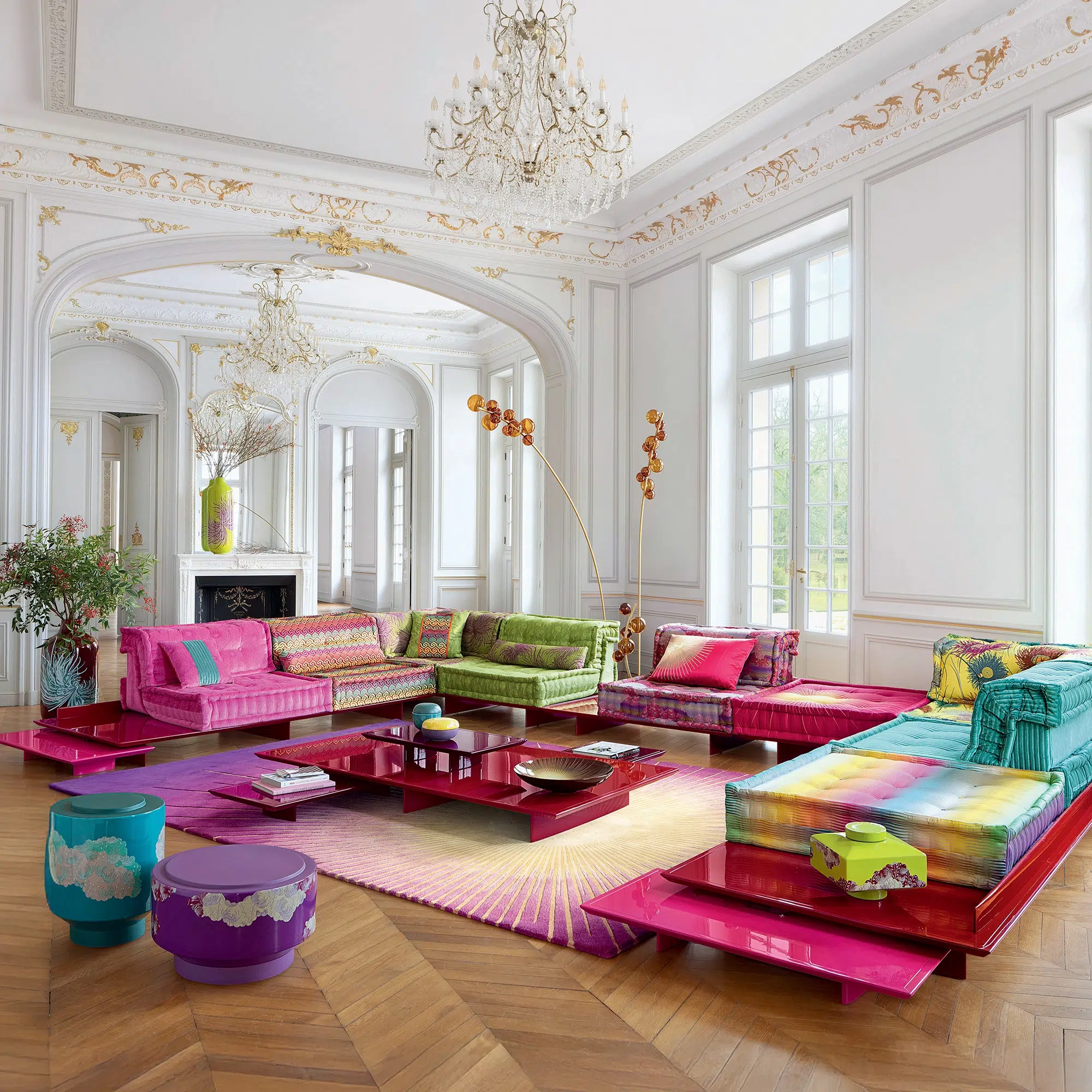
Designed by Hans Hopfer in 1971, the Mah Jong brings a couturier’s wardrobe and a wonderfully informal spirit to the living room.
A sofa does more than furnish a room. It determines where people gather, how they sit, and whether an evening feels like a formal visit or an invitation to stay. The Mah Jong takes that responsibility lightly, at least in appearance. With its generous cushions and relaxed, low-slung profile, it suggests a living room where shoes come off, conversations wander, and the furniture can accommodate a change of plans.
Designed by Hans Hopfer for Roche Bobois in 1971, the Mah Jong began with a proposition that remains compelling: seating should leave room for its owner’s imagination. Hopfer, whose practice encompassed painting, sculpture, and design, developed a system of cushions that could be arranged into different configurations. More than five decades later, that freedom remains central to its appeal.
The original concept starts with three basic elements, combined or stacked to create arrangements ranging from an individual seat to an expansive sofa or a place to recline. Its ingenuity lies in allowing the composition to remain open. A conventional sofa arrives with its silhouette decided; the Mah Jong invites its owner to take part in shaping it.
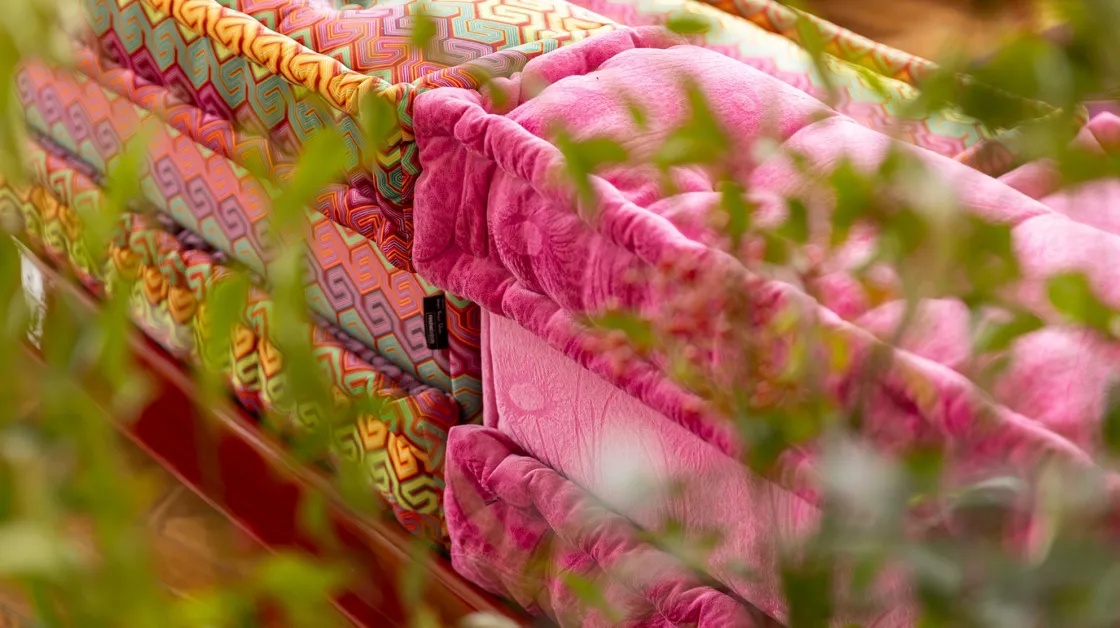
That invitation changes how one might approach a room. Imagine a generous arrangement made for friends to gather, then consider the same space organized around a quieter afternoon with a book. The pleasure is in being able to think beyond a single fixed layout. Choosing the furniture becomes the beginning of the design process, with opportunities to reconsider how the room works as life unfolds.
Its proportions reinforce that informality. Low seating brings attention toward the floor, making the relationship between upholstery, rugs, and nearby tables particularly important. In a room with tall windows or substantial artwork, the effect can be especially appealing: the sofa establishes a place to settle without competing with everything above it. For an owner drawn to relaxed entertaining, that visual openness is part of the attraction.
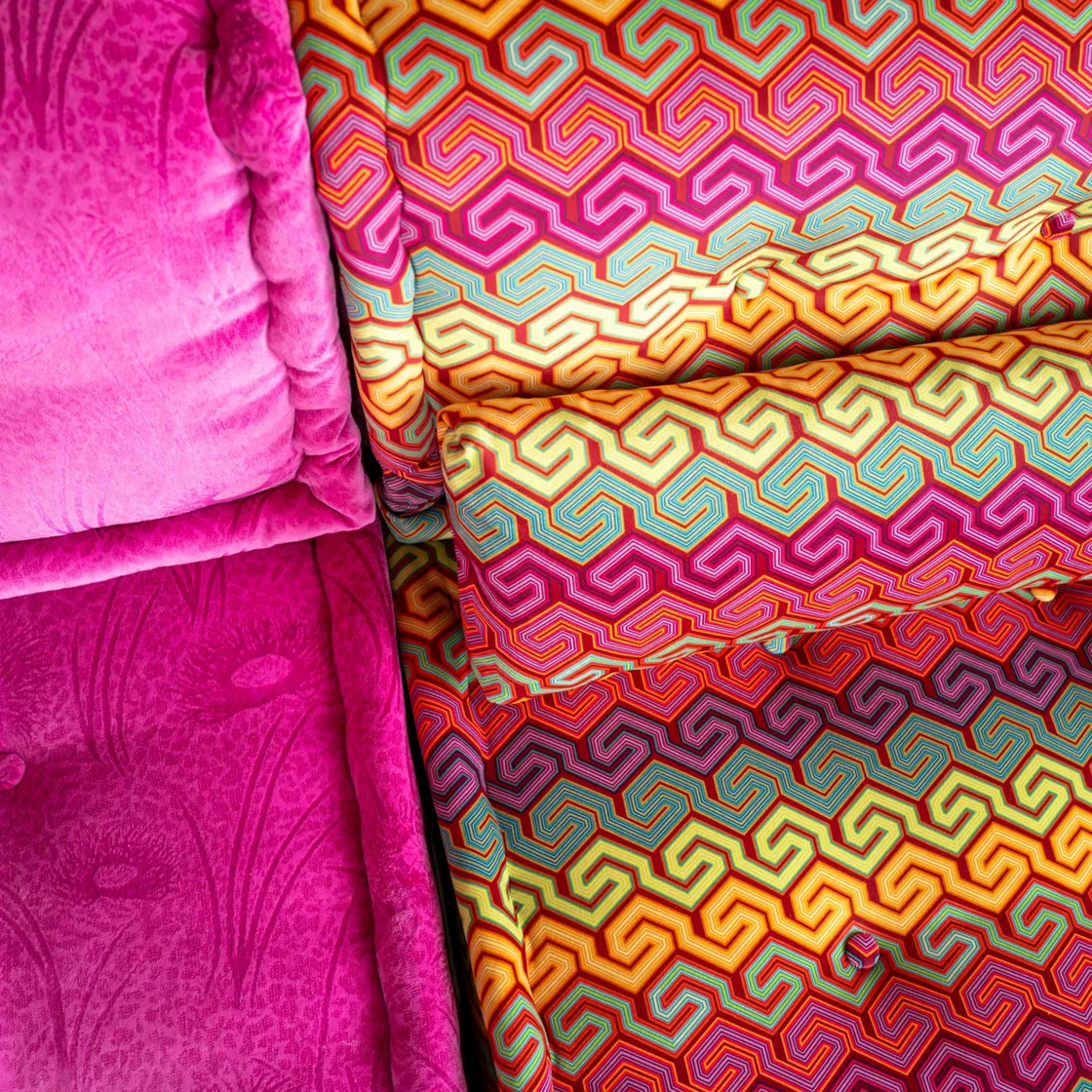
Yet the Mah Jong’s casual appearance rests on considered construction. Roche Bobois specifies that its elements are padded and stitched by hand, with a system that includes seat cushions, straight and corner backs, and lounge-chair units. The cushions have substance and structure beneath their inviting surfaces; their apparent ease comes from the work of making each component function within the larger arrangement.
The handwork also gives the design a satisfying intimacy. Upholstery is experienced at close range: along a seam, beneath a hand, or in the way a cushion holds its shape. On the Mah Jong, these details carry much of the visual interest. With the upholstered elements so prominent, fabric and finish become essential to its character.
That makes the sofa an unusually expressive canvas for fashion. Over the years, Roche Bobois has offered Mah Jong fabrics designed by Missoni, Kenzo Takada, and Jean Paul Gaultier. Missoni’s zigzags and graphic patterns bring rhythm to the individual cushions, while Takada’s textile collections explore nuanced combinations of color and motif. Gaultier’s interpretations add another distinctive fashion vocabulary to Hopfer’s adaptable form.
The relationship works because the cushions give each textile a clearly defined place within the composition. A pattern can stand on its own, repeat across several elements, or sit beside something quieter. Viewed together, the fabrics create a larger picture, with the owner deciding how exuberant that picture should be. The process has something in common with assembling a wardrobe: individual choices matter, but their relationships create the personality.
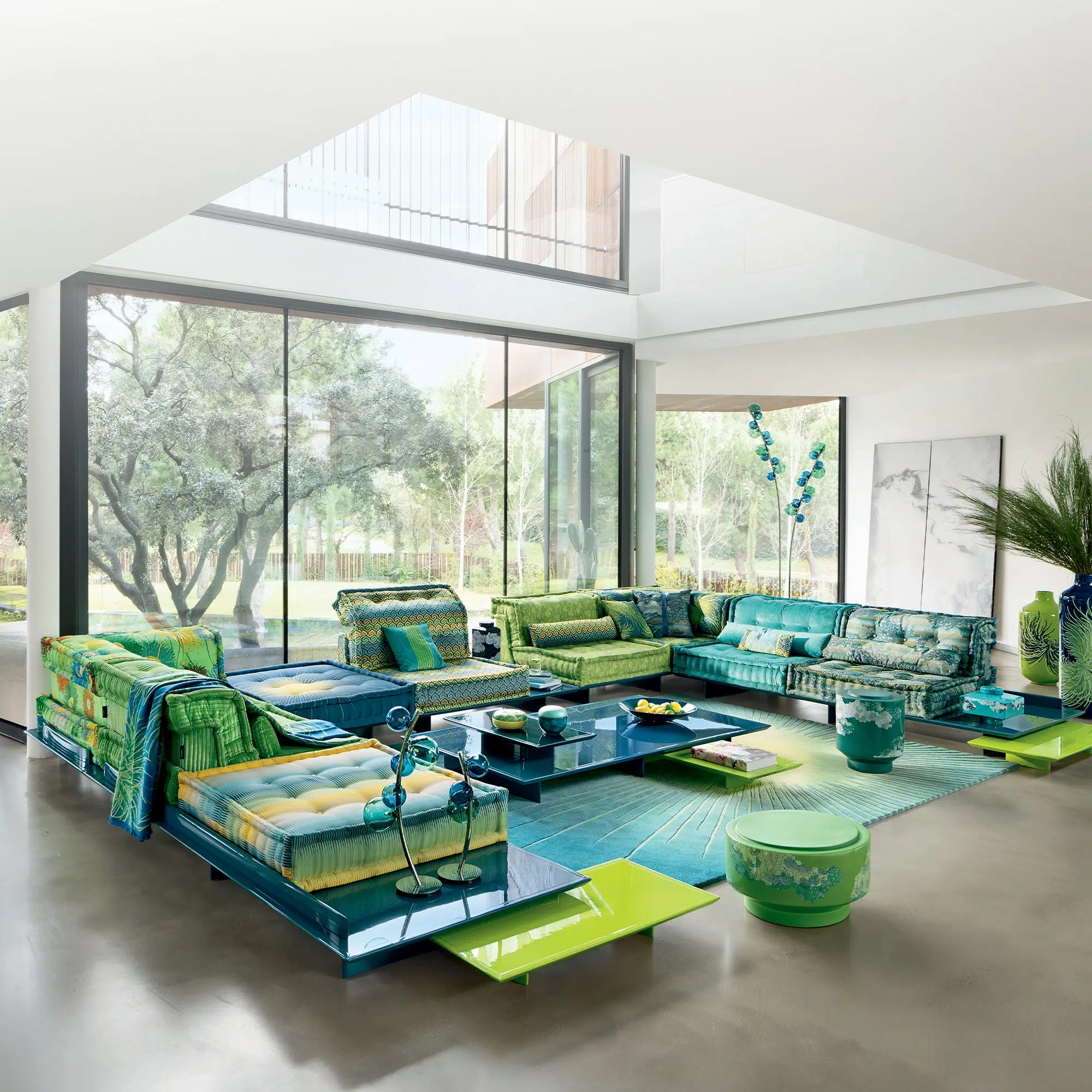
For a richly patterned Mah Jong, I would give the surrounding room a measure of restraint. A generous rug, a beautifully proportioned table, and lighting chosen for warmth could provide enough structure without making the interior feel overworked. Repeating one upholstery color elsewhere would help connect the sofa to the room, while allowing the remaining patterns to retain their independence.
A more restrained composition offers another possibility. Closely related tones can bring attention to the stacked cushions and the geometry of the arrangement, letting form take precedence over contrast. The design has enough presence to reward either approach. What matters is choosing fabrics as a complete composition, considering how they will look together across the entire sofa.
The Mah Jong has also evolved beyond its original floor-level expression. Roche Bobois offers versions supported on platforms, introducing a raised base while retaining the recognizable cushion arrangement. This provides another way to interpret the design, particularly for an interior that calls for a more defined relationship between the seating and the floor.
For anyone considering a Mah Jong, the most useful starting point is the way they actually want to sit. Spend time with the proposed configuration, consider the height and depth, and map its footprint within the room. Modularity creates possibilities, but the successful arrangement is the one that leaves comfortable circulation and makes everyday use feel natural. Fabric samples deserve the same attention, ideally seen together in the light of the intended space.
The Mah Jong’s enduring attraction lies in that combination of a recognizable design and a personal outcome. Its history gives it authority, its craftsmanship rewards close attention, and its configurations leave room for individual taste. Hopfer supplied the elements of a living room in 1971. The pleasure, even now, is deciding what to make of them.