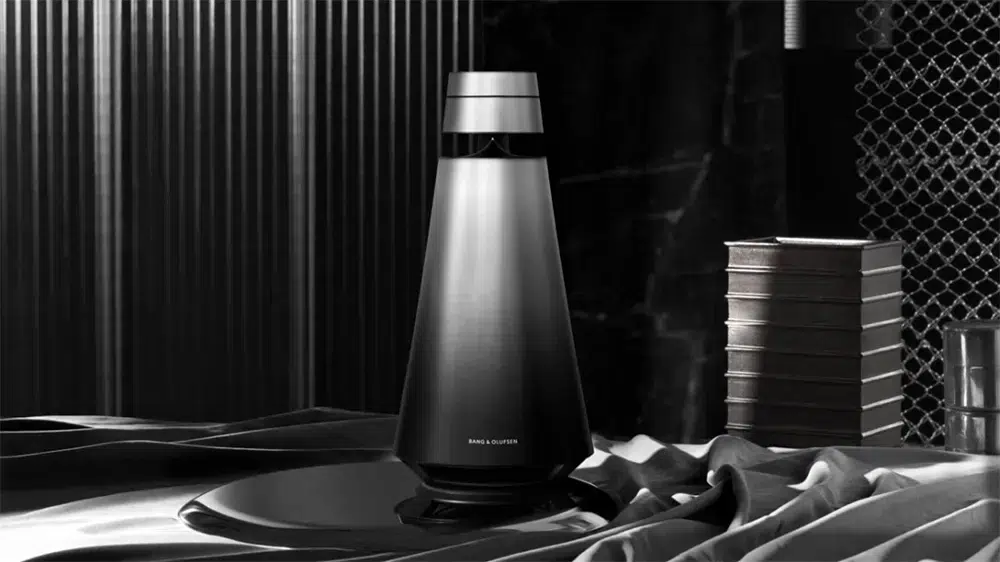
Few audio brands understand the theater of restraint quite like Bang & Olufsen. The Danish company has spent decades turning speakers into sculptural objects, and the Beosound 1 New York Edition remains one of its more elegant exercises in translating place into product.
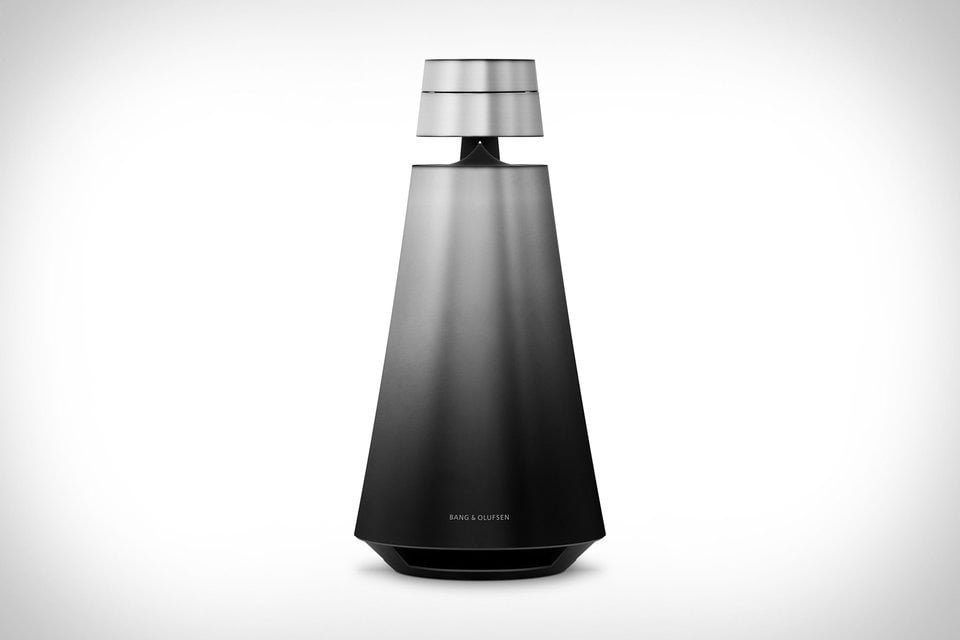
Inspired by the Manhattan skyline, the limited-edition speaker was conceived as a study in ascent. Its aluminum body shifts gradually from piano black at the base to natural aluminum at the top, a finish intended to evoke the transition from the dark density of the city streets to the light reflected from the upper reaches of its towers. The effect is subtle rather than literal, with no skyline silhouettes or obvious architectural motifs. Instead, Bang & Olufsen relied on material, proportion and finish to capture the energy of New York in a way that feels distinctly Scandinavian.
The Beosound 1 itself was already a striking object. Compact, conical and designed to be appreciated from every angle, it was conceived as a portable wireless speaker capable of delivering 360-degree sound. The New York Edition elevated that familiar form through an unusually demanding surface treatment, turning a technologically sophisticated speaker into something that also reads as a collectible design object.
Creating the gradient required a labor-intensive process in which the aluminum was milled, polished, anodized, and mechanically finished before Bang & Olufsen’s surface specialists completed the transition by hand. The complexity of that process was one reason production was limited to just 1,200 examples worldwide. It is an approach that feels particularly true to Bang & Olufsen, a company for which aluminum has long been both engineering material and aesthetic signature.
The speaker’s acoustic architecture was equally considered. Acoustic Lens Technology was designed to distribute sound almost spherically, allowing the Beosound 1 to fill a room without requiring the listener to remain fixed in a narrow sweet spot. Bang & Olufsen positioned the model as a portable Wi-Fi and Bluetooth speaker with 360-degree sound, reinforcing the idea that placement should remain flexible rather than prescriptive.
That flexibility extended to the rest of the product. The rechargeable battery offered up to 12 hours of wireless playtime, while support for technologies including AirPlay 2, Chromecast and Bluetooth allowed the speaker to move easily between rooms and listening environments. It could also be incorporated into Bang & Olufsen’s multiroom ecosystem, giving the object a level of everyday usability that matched its design ambitions.
The New York Edition added another layer to that functionality: collectibility. Only 1,200 were produced, and unlike many limited editions that rely primarily on color, this one demanded a genuinely specialized manufacturing process. That distinction transformed the speaker from a variant into something closer to a crafted object, particularly for collectors who value industrial design as much as performance.
At launch, the New York Edition was positioned as a premium interpretation of Beosound 1, with pricing around the $2,000 mark depending on market and configuration. Over time, pricing and availability naturally evolved, but the significance of the model lies less in its original retail figure than in the way it fused acoustics, craftsmanship and city-inspired design into one highly limited release.
What endures is the design itself. The New York Edition works because it does not attempt to imitate New York so much as interpret it, using a rising gradient, metallic finish and vertical form to suggest skyscrapers without becoming decorative. Its compact footprint keeps the object firmly within Bang & Olufsen’s minimalist vocabulary, while the finish gives it enough visual drama to stand apart from the standard model.
For a luxury object, that is often the more interesting approach. The best design-led editions do not simply add novelty; they find a way to make material, function and story feel inseparable. The Beosound 1 New York Edition succeeds on precisely those terms, remaining a reminder that, in the hands of the right maker, even a wireless speaker can become a piece of urban design.