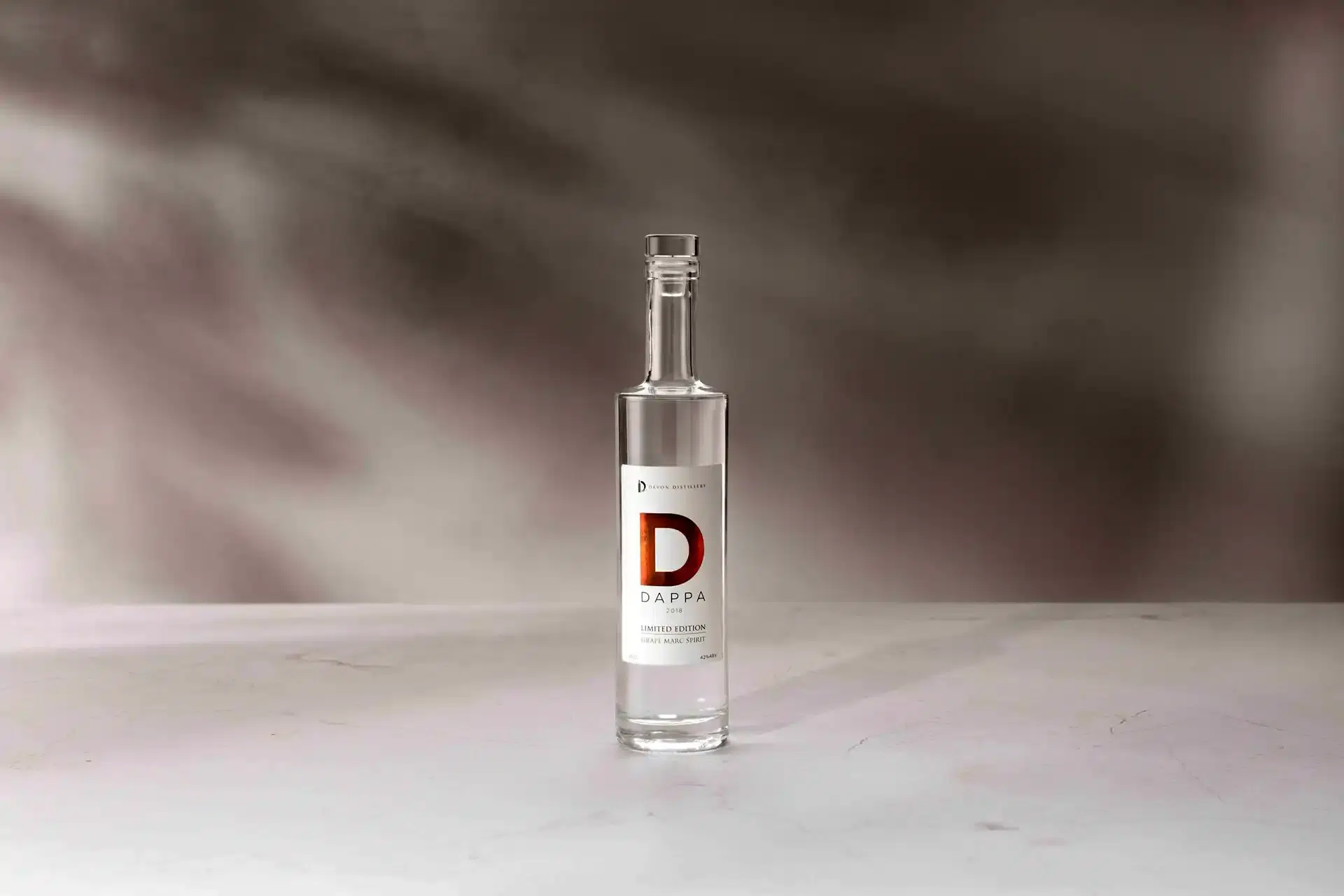
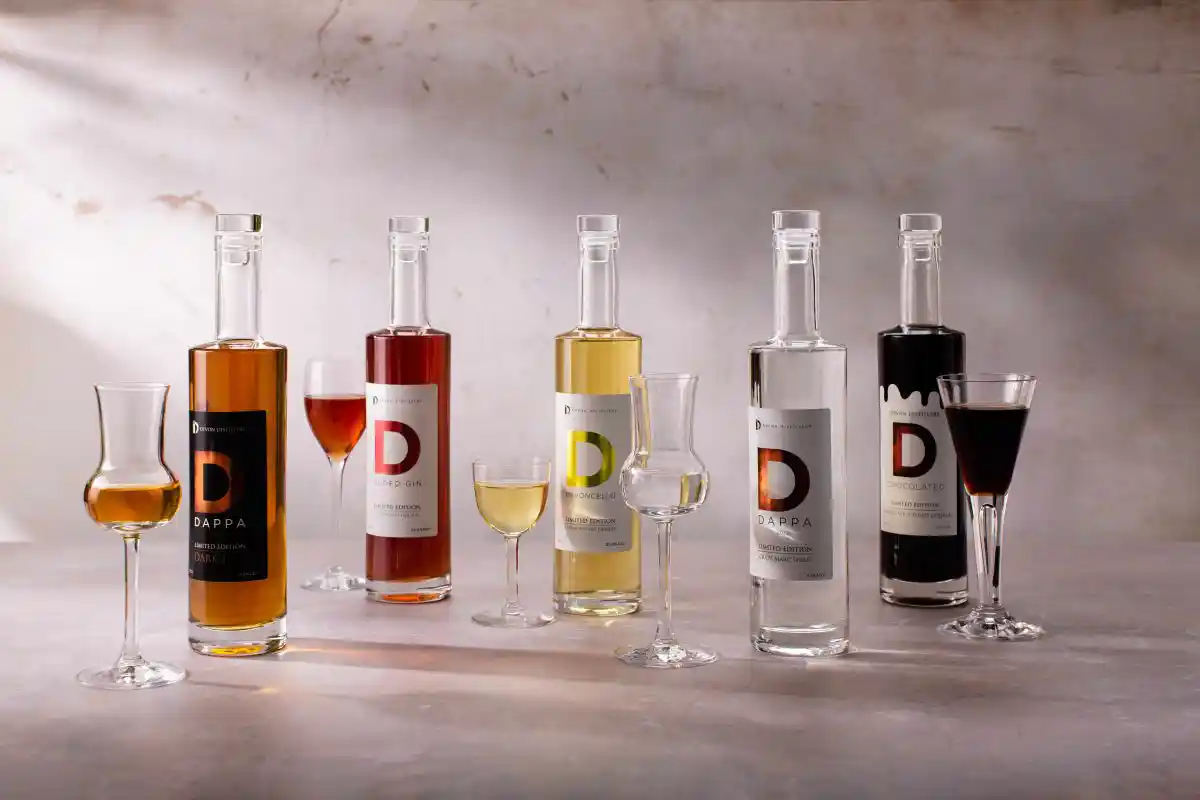
In the rolling hills of Devon, far from the vineyards of northern Italy, a quiet reinterpretation of one of Europe’s most storied spirits is taking shape. It isn’t grappa, at least not by name. Instead, it is Dappa, an English marc spirit crafted with the same reverence for tradition but born from a distinctly British sense of place.
The distinction is more than semantic. Grappa, protected under Product of Designated Origin rules, must be produced in Italy according to strict regulations, much like Champagne in France. Though Devon Distillery follows the same centuries-old process, distilling the pomace left behind after winemaking, its location beyond Italy’s borders places it outside the historic designation. What emerges instead is something both familiar and entirely new: a spirit that honors Italian heritage while embracing a quieter evolution.
At the center of this story is Cosmo Caddy, a former film producer whose journey from international broadcasting to rural distillation reflects a deep personal connection to wine culture. Raised around vineyards and influenced by generations of grape growers, Caddy returned to Devon with an ambition that felt both nostalgic and forward-thinking. Working with grape skins sourced from English vineyards, including Sharpham, Bolney, Three Choirs, and Biddenden, he began crafting a marc spirit shaped as much by local character as by Italian technique.
The process itself remains rooted in tradition. Copper stills sourced from Italy transform pomace into a delicate distillate, later blended with Sharpham spring water before being cold filtered and bottled. The result is a spirit that feels precise yet expressive, less about imitation and more about interpretation. Even the name “Dappa,” approved by regulators across the U.K. and Europe, reflects a deliberate nod to heritage while asserting its own identity.
While Italy remains the spiritual home of grappa, its legacy stretches across centuries of craftsmanship. Museums in Bassano del Grappa preserve thousands of miniature bottles and rare manuscripts that trace the evolution of pomace distillation, while historic producers such as Poli, Nonino, Nardini, and Marzadro continue to shape the category through innovation and tradition. Their influence lingers in every marc spirit made today, yet Dappa offers a perspective shaped by the softer rhythms of the English countryside.
What sets the Devon expression apart is its sense of restraint. Rather than leaning into rustic intensity, Dappa leans toward clarity, a refined profile that reflects cooler climates and a different approach to aging and blending. It speaks to a broader shift within luxury spirits, where provenance and storytelling matter as much as heritage labels. Much like the rise of English sparkling wine, Dappa represents a growing confidence among British producers willing to reinterpret European traditions through a local lens.
Historically, pomace spirits were born from necessity. Winemakers sought to preserve every ounce of value from the grape, transforming what remained after pressing into something enduring. Over time, these practical beginnings evolved into ritual. Grappa became an after-dinner digestivo, a companion to espresso, or a quiet moment of reflection shared among friends. In Italy, the tradition of the “ammazzacaffè,” a sip of grappa following coffee, remains a gesture of hospitality and closure.
Today, that ritual extends beyond national borders. In Totnes, an Italian café overlooking the Atlantic began serving Dappa alongside espresso, introducing guests to a spirit that feels at once familiar and unexpected. Subtle details, including a label inspired by the green tones of the Devon flag, reinforce the sense that this is not a copy of Italian grappa but a conversation with it.
As global tastes continue to evolve, spirits like Dappa hint at a future where geography becomes less of a limitation and more of a starting point for creative interpretation. They remind us that tradition is not static; it travels, adapts, and finds new voices in unexpected places. For those willing to look beyond established names, the story unfolding in Devon suggests that even the most historic categories still have room for reinvention.
Dappa may never carry the name grappa, but perhaps that is precisely what gives it its character, a spirit shaped by heritage yet free to define itself on its own terms.