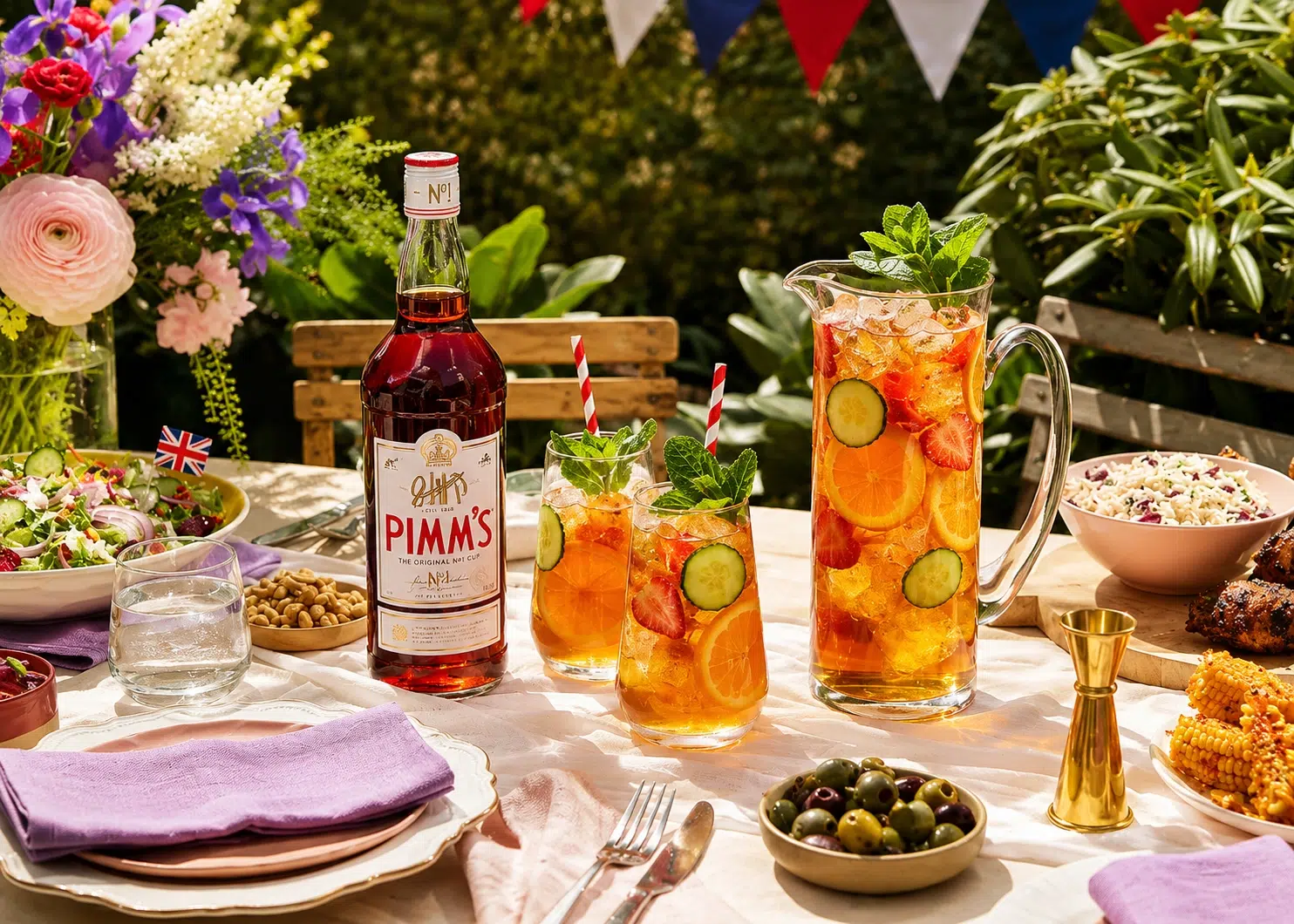
For generations, the arrival of the British summer has been measured in familiar rituals: strawberries at Wimbledon, linen on the lawn, boats gathering at Henley and pitchers of Pimm’s appearing almost ceremonially at garden parties.
Yet tastes evolve, even when traditions appear immovable. This summer, a new generation of English aperitifs and fruit cups is competing for a place beside the country’s most established seasonal drink. Among the most intriguing is Wild Spritz, a bittersweet aperitivo from Cotswolds Distillery that brings the Italian custom of the spritz into distinctly English territory.
Crafted in the Cotswolds with lavender, hops, lemon balm and distilled fresh orange peel, Wild Spritz is designed to be dry, botanical and quietly complex. Orange zest and fresh lemon balm arrive first, followed by calendula, aromatic lavender and the earthy bitterness of gentian. Liquorice root gives the finish additional depth without overwhelming its freshness. The result is less conspicuously sweet than many familiar orange aperitifs and more evocative of the English countryside than a crowded Venetian piazza.
The recommended serve is uncomplicated: 50 milliliters of Wild Spritz, 75 milliliters of chilled sparkling wine and 25 milliliters of soda water, poured over ice and finished with orange peel. It is precisely the sort of drink that seems intended for the suspended hour between late afternoon and dinner, when the light softens, the table is set outside, and no one is particularly interested in hurrying.
Cotswolds Distillery was founded by Daniel Szor, a former New York finance executive who left the city for rural England. The producer is best known for its English whisky and gin, but Wild Spritz signals a broader ambition: to create an aperitivo culture informed by local botanicals and the landscape surrounding the distillery.
Whether it can challenge Pimm’s is another matter.
James Pimm created his original No. 1 Cup in 19th-century London as a gin-based blend of herbs and liqueurs intended to accompany oysters. From those modest beginnings, it became inseparable from the mythology of the English summer. Pimm’s remains the drink of tennis afternoons, regattas, village fêtes and crowded lawns, a long, fruit-filled glass that is almost as much social shorthand as cocktail.
Its dominance, however, no longer means it drinks alone. The modern summer cup has become a category rather than a single brand, allowing smaller producers to revisit the formula with real fruit, local ingredients and more individual character.
One of the most eccentric contenders comes with a clerical backstory.
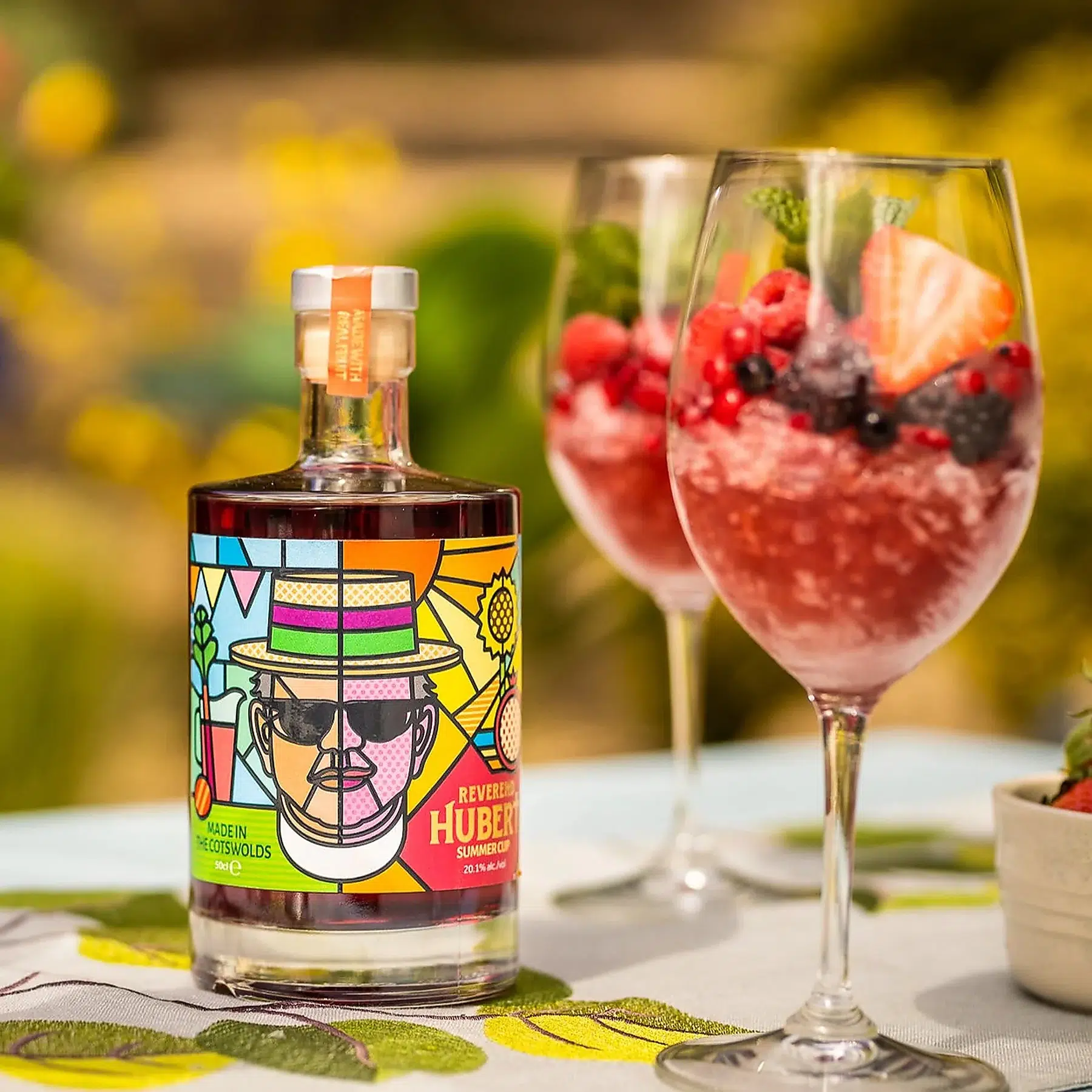
Reverend Hubert Summer Cup is inspired by Hubert Bell Lester, an English clergyman who began making fruit-infused gin drinks in the early 20th century. According to the family history, the Reverend concealed his still named Gertrude in woodland around Yorkshire and was briefly imprisoned after his illicit distilling was discovered. His recipes were later revived by his great-grandson, Thomas Lester.
Today’s Summer Cup is handcrafted in the Cotswolds using local gin and a quartet of fruits: plums, pomegranate, rhubarb and cranberries. At 20.1 percent alcohol by volume, it balances ripe sweetness with tartness and can be served simply with tonic or soda, or transformed into an English spritz with sparkling wine.
The story has all the ingredients of a particularly English drinks legend: a rebellious vicar, a hidden still, fruit gathered from the garden and a family recipe returned to life a century later. More importantly, the liquid has a flavor profile distinctive enough to stand apart from its famous predecessor.
For a sharper drink, the Reverend Hubert Summer Sour combines 50 milliliters of Summer Cup with egg white, lemon juice and sugar syrup. Shaken vigorously and strained over ice, it replaces the languor of a traditional fruit cup with the silkier structure of a classic sour.
There is also the Royal Summer Cup, created by Lewis Johnson of The Fox and Pheasant in Chelsea. It combines Reverend Hubert Summer Cup with grapefruit juice, elderflower cordial and fresh lime juice, producing a brighter, more citrus-driven cocktail suited to long lunches and celebrations.

The Wild Spritz
Ingredients
50 ml Cotswolds Wild Spritz
75 ml chilled sparkling wine
25 ml soda water
Orange peel or an orange wedge
Method
Fill a large wine glass with ice. Add the Wild Spritz and sparkling wine, followed by a splash of soda water. Stir gently and garnish with orange.
Reverend Hubert Summer Sour
Ingredients
50 ml Reverend Hubert Summer Cup
25 ml egg white
30 ml fresh lemon juice
15 ml sugar syrup
Lemon slice and maraschino cherry
Method
Add all the ingredients to a cocktail shaker and shake vigorously. Double-strain into a rocks glass over fresh ice, then garnish with lemon and a maraschino cherry.
Pimm’s is unlikely to disappear from English lawns anytime soon. Its history is too deeply woven into the season, and its pitchers remain instantly recognizable wherever summer is being performed with sufficient enthusiasm.
But the arrival of drinks such as Wild Spritz and Reverend Hubert Summer Cup suggests that the ritual is becoming more interesting. Britain’s new aperitifs are not rejecting tradition; they are loosening its collar. They offer drier profiles, more pronounced botanicals, genuine local character and stories that extend beyond the garnish.
The drink of the summer may no longer be a foregone conclusion. And with National Spritz Day arriving on August 1, there is ample reason to put the sparkling wine on ice and begin the conversation.