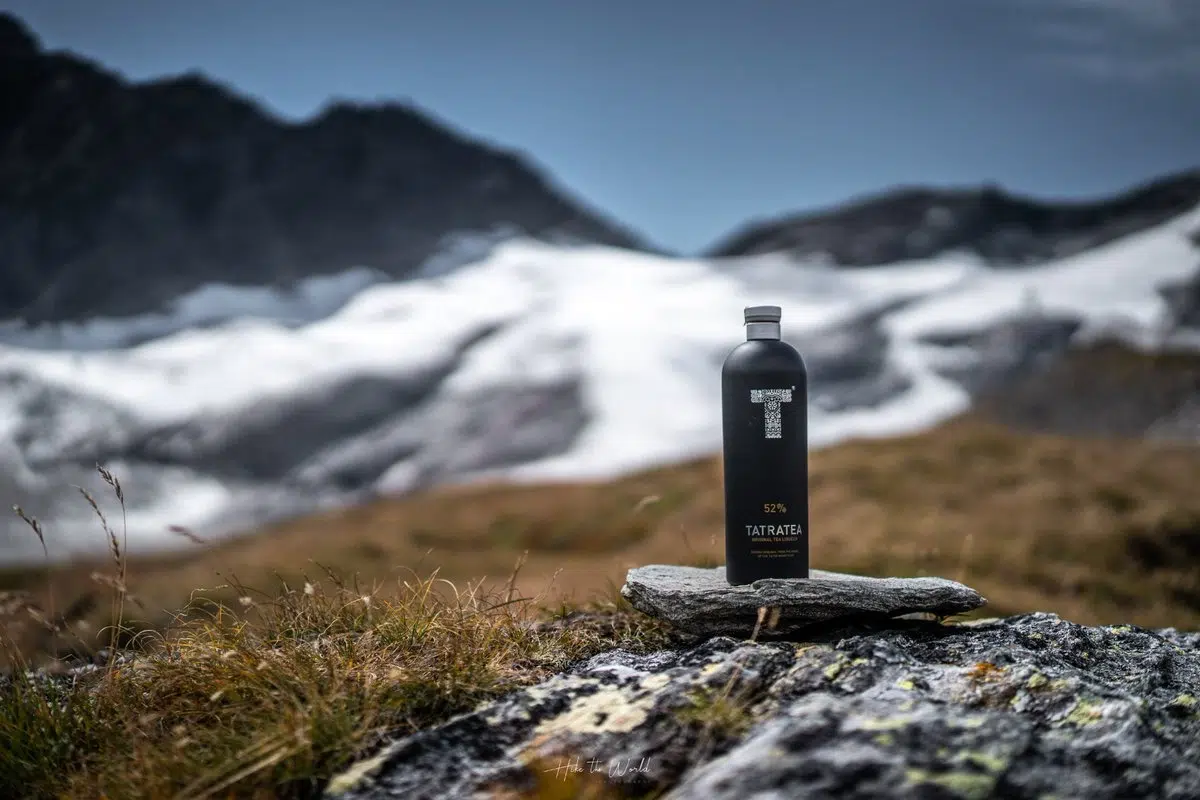
In the High Tatras, hospitality has long carried a certain practicality. Cold weather, steep terrain, and isolated mountain cottages created their own rituals, and one of the most enduring was the simple act of fortifying hot tea with herbal spirits before offering it to a guest. That tradition eventually found a modern expression in Tatratea, a tea-based Slovak liqueur that has grown from a regional curiosity into one of the country’s most recognizable spirits.
Produced by KARLOFF in Kežmarok, at the foot of the High Tatras, Tatratea is built around tea rather than grapes, grain or botanicals alone. Its signature profile combines black and white teas with alpine herbs, fruit extracts, spices and grain alcohol, creating a category that sits somewhere between herbal liqueur, digestif and mountain tonic. Depending on the expression, strength ranges from a relatively gentle 17 percent ABV to a formidable 72 percent.
The core of the range is Tatratea 52% Original, introduced in 2004 and still the bottle that most clearly defines the house style. Assam tea leaves provide the foundation, cold-macerated in alcohol to draw out their malty character and aromatic freshness. Around them sits a broader palette of ingredients that can include lemon balm, St. John’s wort, cinnamon, cloves and berries, with approximately 27 components contributing to the final blend.
Jan Semanak, whose family owns KARLOFF, describes Assam tea as the essential starting point. The spirit is allowed time to integrate before bottling, with the various components maturing together for roughly eight weeks in oak. Even the packaging reinforces the mountain association: Tatratea bottles are shaped with the clean, cylindrical profile of a thermos flask, an unmistakable nod to the alpine world from which the spirit draws its identity.
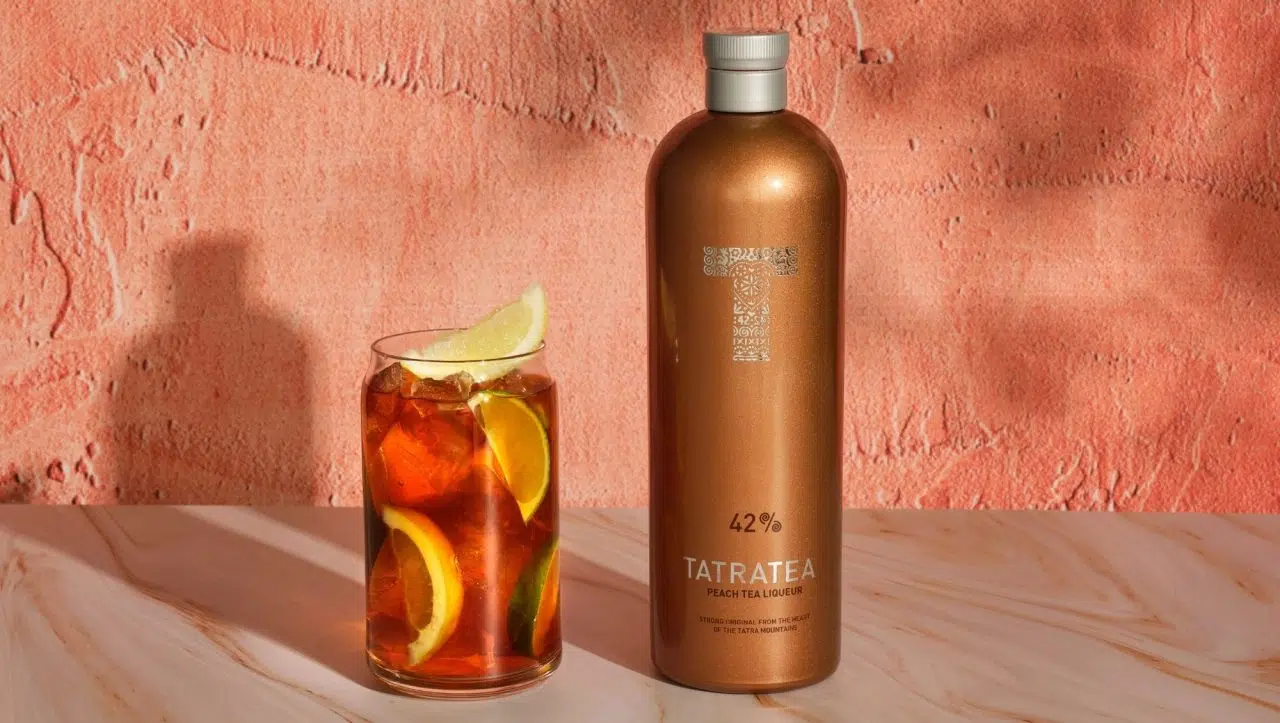
What makes Tatratea compelling, however, is the breadth of its range. Fourteen expressions now extend the original idea in very different directions. Tatratea 22% introduces natural coconut extract, while the 32% version combines citrus with black tea. Tatratea 42% turns to white tea and peach, the 62% expression moves toward darker black-tea and wild-berry notes, and Tatratea 72% Outlaw pushes the format into far more intense territory with a higher proof and quinine-inflected bitterness.
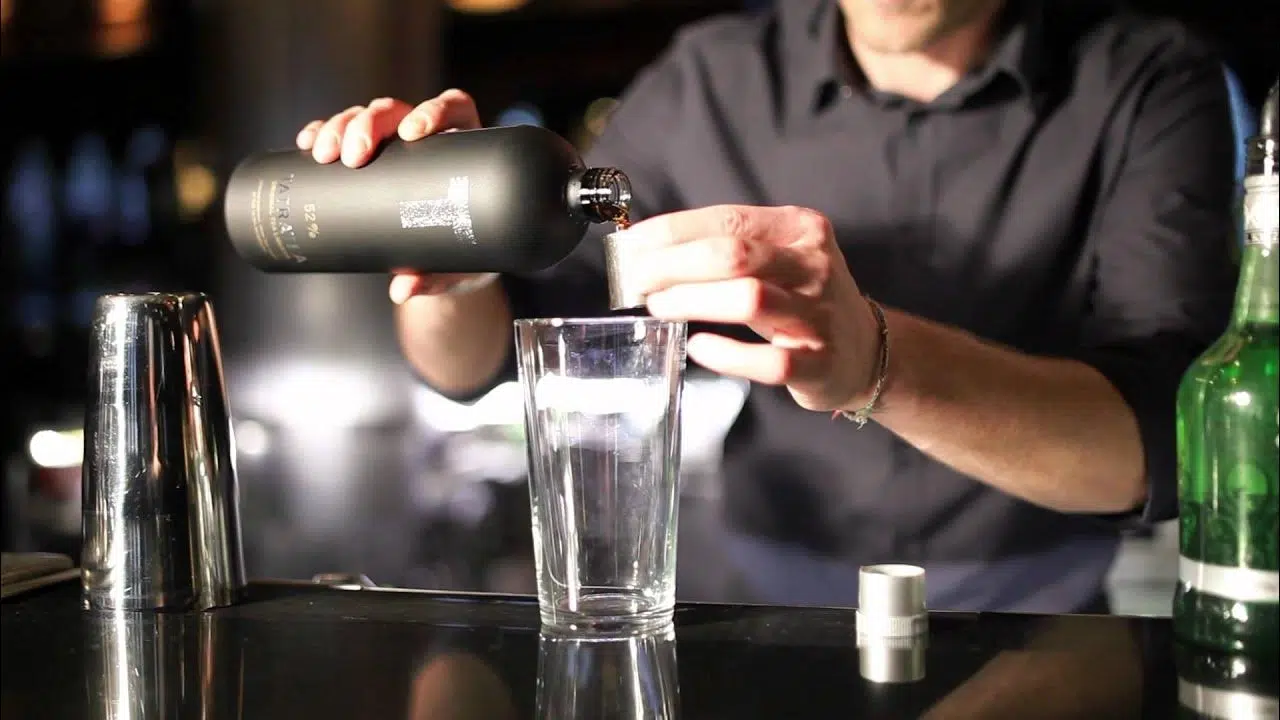
There are also releases built around more overtly flavored styles, including Forest Fruit and other limited or folkloric editions. Taken together, the range gives Tatratea an unusual versatility. It can be treated as a digestif, warmed into a mountain drink, mixed into a highball, paired with sparkling wine, or used as a base for cocktails that lean into its tea-driven structure.
The simplest expression remains one of the most persuasive. A classic Tatra Tea combines Tatratea 52% Original with hot black tea, served in an Irish coffee-style glass. There is very little theater to it, yet the drink captures the brand’s origin story better than any elaborate cocktail could: warmth, tea, alcohol and hospitality condensed into a single mug.
Other serves reveal how easily the spirit moves between rustic and polished. The Jubilee pairs Tatratea 42% Peach with brut Champagne and a dash of Angostura bitters, transforming the liqueur into something brighter and more aperitif-like. Bear’s Milk, by contrast, returns to the mountains with a richer combination of Tatratea Original, Tatratea Coconut, hot foamed milk and gingerbread syrup, finished with cinnamon and roasted marshmallows.
Mountain High takes a fresher route, blending Tatratea 32% Citrus with warm herbal tea, lemon and a touch of sweetness, while the Bohemian Brûlée pushes the liqueur toward dessert territory with Tatratea 62%, vanilla whisky, cream, cinnamon and lavender. The range works because the underlying tea character remains recognizable even when the surrounding ingredients change substantially.
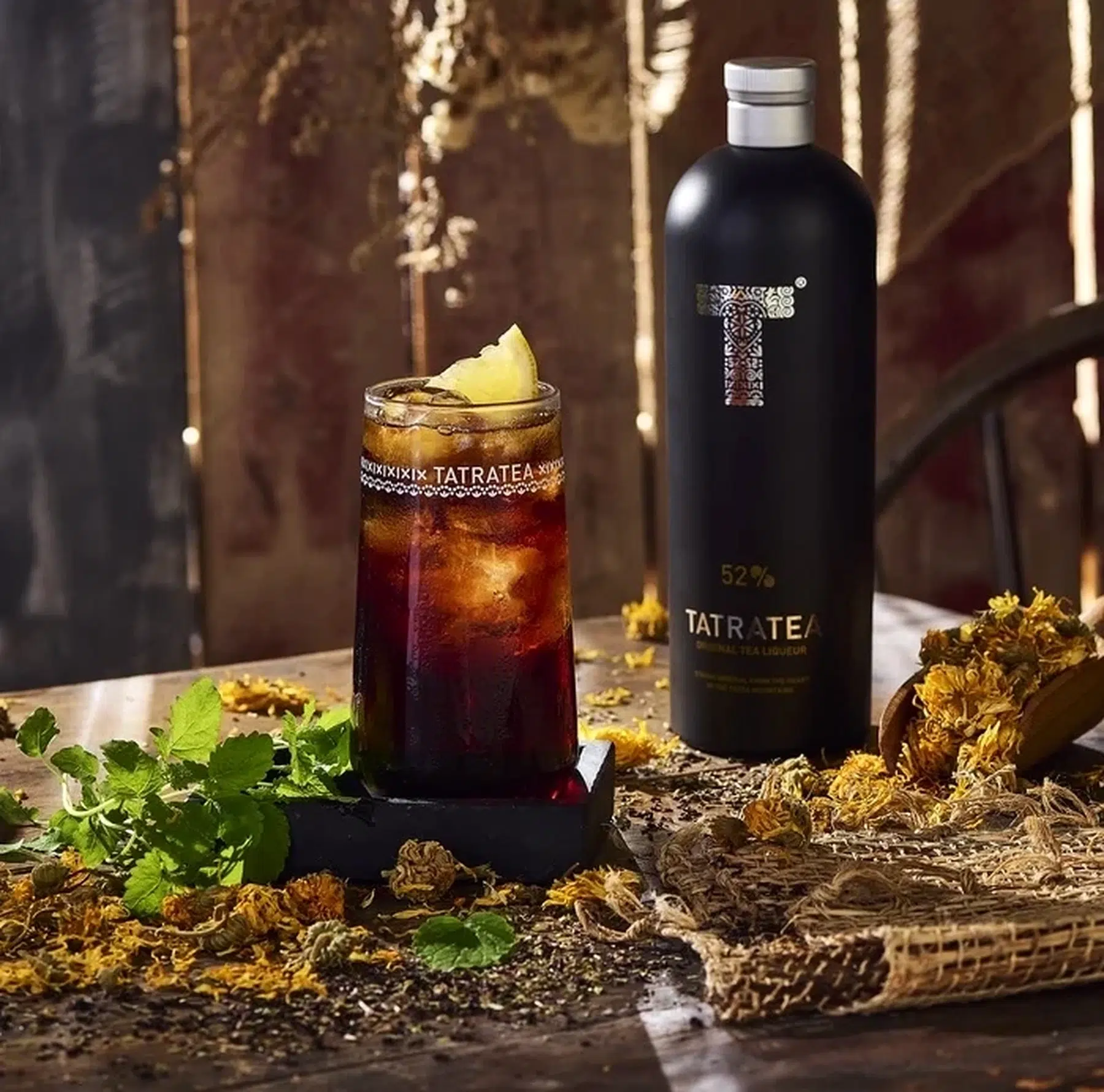
That adaptability is part of Tatratea’s appeal beyond Slovakia. Tea already carries its own language of aroma, tannin, warmth and ritual, making it particularly receptive to the vocabulary of cocktails. Unlike many herbal liqueurs, which can dominate a drink with bitterness or sweetness, Tatratea’s most successful expressions tend to retain a tea-like backbone that keeps the spirit connected to its alpine origins.
The brand’s folklore adds another layer. Traditional mountain storytelling around the spirit includes fire, darkness, and protective rituals intended to intensify the experience and ward off bad luck. Those customs are best understood as part of the theatrical mythology surrounding Tatra hospitality rather than as instructions for modern service, but they help explain why Tatratea has remained culturally resonant instead of becoming just another flavored liqueur.
KARLOFF’s setting reinforces that sense of authenticity. The company was founded in 2002 and operates from an old weaving mill in Kežmarok, a town closely tied to the High Tatras. The production story therefore feels unusually coherent: mountain recipe, regional ingredients, local ownership and a spirit that looks and drinks unlike most of what sits beside it on a back bar.
For collectors and curious drinkers alike, Tatratea’s real charm lies in that originality. It does not imitate Scotch, Cognac, amaro or rum, and it does not need to. Its identity is rooted in tea, altitude and Slovak hospitality, with enough variation across the range to move from easy-drinking coconut and peach expressions to the muscular 72% Outlaw.
At a time when premium spirits increasingly compete through elaborate cask finishes, celebrity endorsements and limited-edition packaging, Tatratea offers something more difficult to manufacture: a sense that the liquid belongs precisely where it came from. It is a mountain tradition refined for the modern bar, but still carrying the warmth of a drink once poured for travelers arriving from the cold.