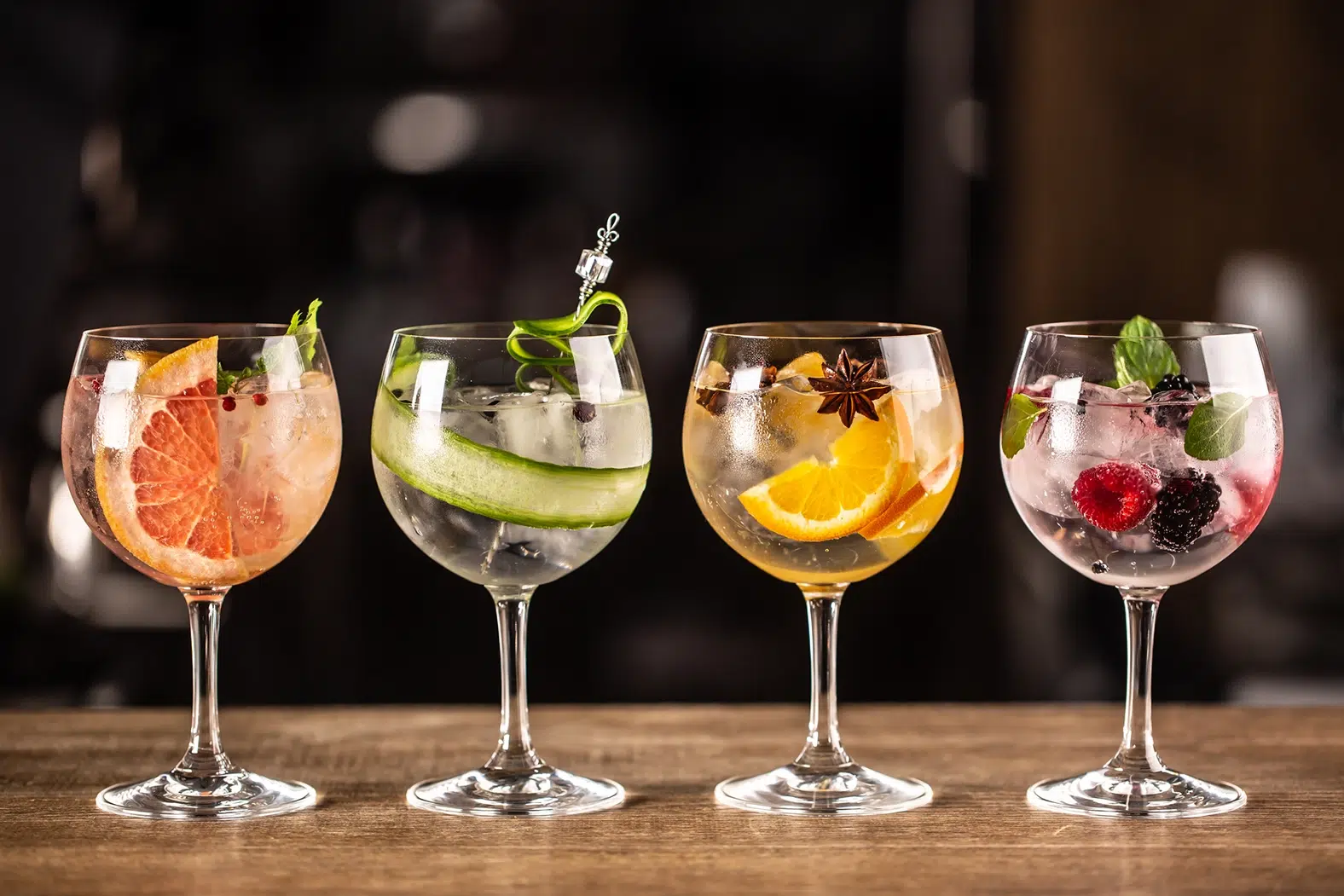
Italy’s devotion to craft has always extended far beyond its cellars. In recent years, the peninsula—better known for Amarone, Barolo, and grappa—has quietly become one of Europe’s most expressive gin producers. From alpine junipers and Ligurian citrus to Etna’s volcanic botanicals, Italian distillers have turned geography into flavor, reviving lost recipes and shaping entirely new spirits with unmistakable terroir.
A Country Defined by Botanicals
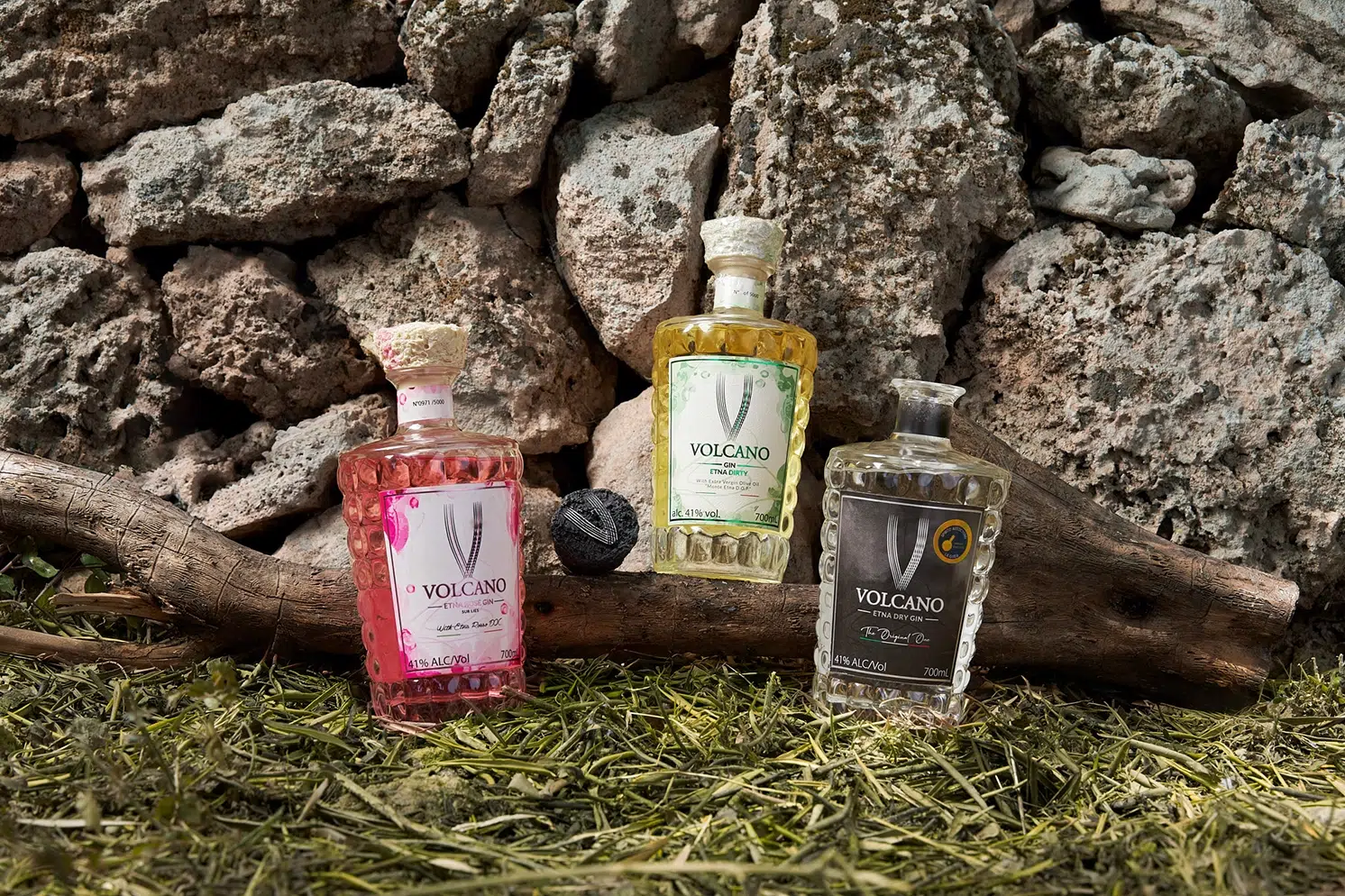
The story often begins in Sicily, where the bittersweet broom flower emerges defiantly from lava fields after each eruption. It’s the signature note in Volcano Gin, a spirit that channels Mount Etna’s wildness through Sicilian lemons, bergamot, Umbrian juniper, and the minerality of ancient lava beds. Even its bottle cap is crafted from volcanic sand—an Edna keepsake designed to travel the world.
Further north, Italy’s citrus belt continues the narrative. Liguria contributes Pernambucco sweet oranges; Veneto lends fragrant grapes for Ginato’s Pinot Grigio and pomelo expressions; while the salterns of Cervia infuse their saline character into the refined Primo Gin.
Gins Born From Craft, Curiosity & Friends with Taste
Some of Italy’s most compelling spirits come from unexpected beginnings. On the shores of Lake Como, four friends—Davide Frigerio, Roberto Riva, Sabino Civera, and Vittorio Somaschini—sipped G&Ts and imagined something better. Their answer became Goccia, a gin built around roasted red apples from the Valtellina valley. Frigerio, a chef, even drizzles it on oysters or uses it to cure fish, proving its versatility far beyond the glass.

In Piedmont, the Langhe’s obsession with gastronomy inspired Wolfrest Alba, distilled with one of Italy’s most prized luxuries: Alba white truffles. Seven kilos once went into a single 500-liter batch — a meeting point of decadence and craftsmanship few gins can claim.
Florence adds its own flourish through Gin David, which incorporates fragments of Carrara marble—the same prized stone Michelangelo preferred. The result is a spirit that marries classic botanicals with artistic heritage.
Heritage Reborn: Italy’s Forgotten Gins
Italy’s gin lineage stretches deeper than many realize. Vintage labels such as Trieste’s Stock, Bologna’s Buton, and the once-iconic “Bosford” bottle—adorned with a squirrel—were household names long before modern craft gin caught on. Mussolini even banned the word “gin,” forcing producers to label early spirits as Ginepro Secco delle Alpi.
Today, distillers are reviving these forgotten styles.
-
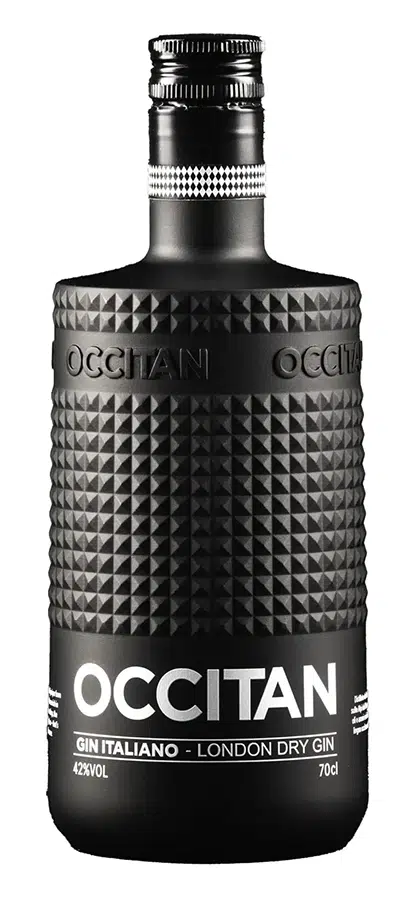
Occitan Gin in Cuneo follows an original 19th-century Pietro Bordiga recipe.
-
Kapriol, resurrected from a post-war formula, embraces botanicals like oregano and Alpine herbs, producing an Old Tom, a sloe gin, and vibrant citrus editions.
-
Luxardo, famous for its maraschino legacy, now creates a lush sweet cherry gin from Veneto’s Euganean Hills.
 courtesy of Silvio Carta Gin

Sardinia’s Wild Heart
Among Italy’s most storied producers is Sardinia’s Silvio Carta, founded in the 1950s and still overseen daily by its 91-year-old patriarch. Their coastal botanicals—myrtle, lentisk, sage, and elicriso—shape the island’s iconic Giniu Gin, presented in a serigraphed bottle without labels. The line extends to Boigin, Pigskin Pink, and the chestnut-aged Pigskin Gin, all infused with the island’s rugged spirit.
Riviera Elegance & Alpine Purity
Italy’s coastal enclaves have crafted gins as stylish as their shorelines.
-
Portofino Gin, from the Pudel family, captures the Riviera’s breezy charm.
-
O’ndina, billed as “The Spirit of the Riviera,” pairs basil and Mediterranean citrus with Ligurian flair.
-
Milan distills Giass, while the Susa Valley offers Kingfisher Alto.
Meanwhile, Collesi draws its character from Apennine mountain junipers, and Peter in Florence distills the delicate iris—the emblem of the Renaissance city.
The Apothecary Revival
One of Italy’s most intriguing producers is Del Professore Gin, born from the founders of Rome’s Jerry Thomas Speakeasy. Determined to resurrect pre-Prohibition techniques, they partnered with Antica Distilleria Quaglia in Piedmont to celebrate Italy’s herbal traditions. Their “Crocodile” gin blends elderflower, vanilla, and Jamaican pepper with unfermented grape juice—an homage to the medicinal elixirs once perfected in Turin, the historic heart of Italian liqueur making.

Friuli brings its own scholar of botanicals: Federico Cremasco, founder of Fred Jerbis. After uncovering a 1946 liqueur manuscript, he created Gin 43, a spirit built around precisely 43 botanicals. Limited releases, including a rare golden chamomile gin from a 1951 recipe, have already become cult favorites.
Italy’s gin renaissance is not merely a trend—it is a celebration of land, lineage, and a country that has always known how to elevate simple pleasures into artistry. And as new distillers continue to push boundaries, one thing is certain: the world will be tasting more of Italy in every pour, from lava-stone expressions to alpine elixirs, and everything fragrant in between.