Why Italian Rosé Deserves a Second Look
Italian rosé has long suffered from a paradox of perception. Too pale to command the authority of red, too delicate to rival the structure of white, it has often been dismissed as ornamental, something admired but rarely taken seriously. That judgment, however, is increasingly out of step with reality.
Across Italy, a quiet recalibration is underway. From Puglia to Lake Garda and into Abruzzo and Calabria, producers are redefining rosato not as a byproduct, but as a deliberate and technically demanding category. The result is a style of wine that is both precise and versatile, capable of moving effortlessly from aperitivo to table.
A More Intentional Rosato
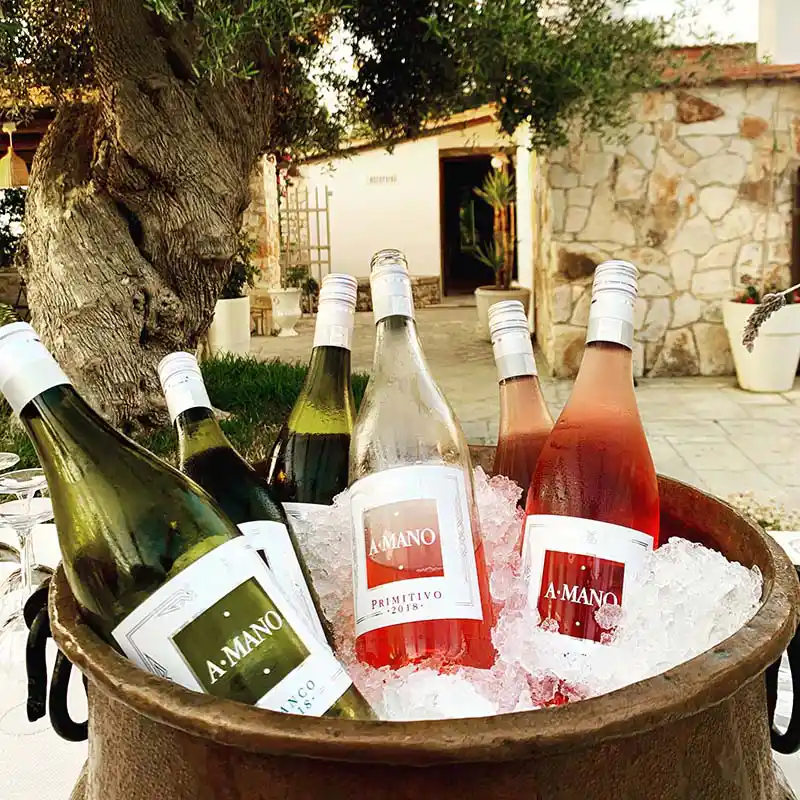
Few producers embody this shift more clearly than A Mano Wines, founded by Californian winemaker Mark Shannon. Trained at UC Davis and experienced in building wineries across the United States and Europe, Shannon arrived in southern Italy by chance and stayed by conviction.
What he encountered in Puglia was not an obvious opportunity, but a challenge. The region’s sun-drenched vineyards naturally produce grapes rich in sugar and color, the very qualities that complicate the production of refined rosé. To create balance under those conditions requires restraint at every stage, from vineyard management to vinification.
At A Mano, rosato is treated not as an afterthought, but as a primary expression. Grapes are cultivated for freshness rather than power, harvested with precision, and handled with minimal intervention. The result is a wine that carries both clarity and character, blackberry depth from Primitivo, lifted by the aromatic brightness of Aleatico.
Rosato, in its most refined form, is not a compromise; it is a decision.
A Legacy, Often Overlooked
Italy’s rosé heritage runs deeper than its reputation suggests. One of its earliest and most influential expressions emerged from Leone de Castris, whose “Five Roses” is widely regarded as the country’s first bottled rosé. Introduced during the Second World War and embraced by American troops stationed in Puglia, it marked a turning point, demonstrating that rosé could travel, endure, and resonate beyond its place of origin.
Yet despite this history, domestic appreciation has lagged. While rosé accounts for a significant share of consumption in France, it represents only a small fraction of wine consumed within Italy itself. Much of what is produced is exported, leaving international audiences to recognize a category that Italians have been slower to embrace.
A Country of Many Expressions
What distinguishes Italian rosé is not a singular style, but a multiplicity of expressions shaped by geography.
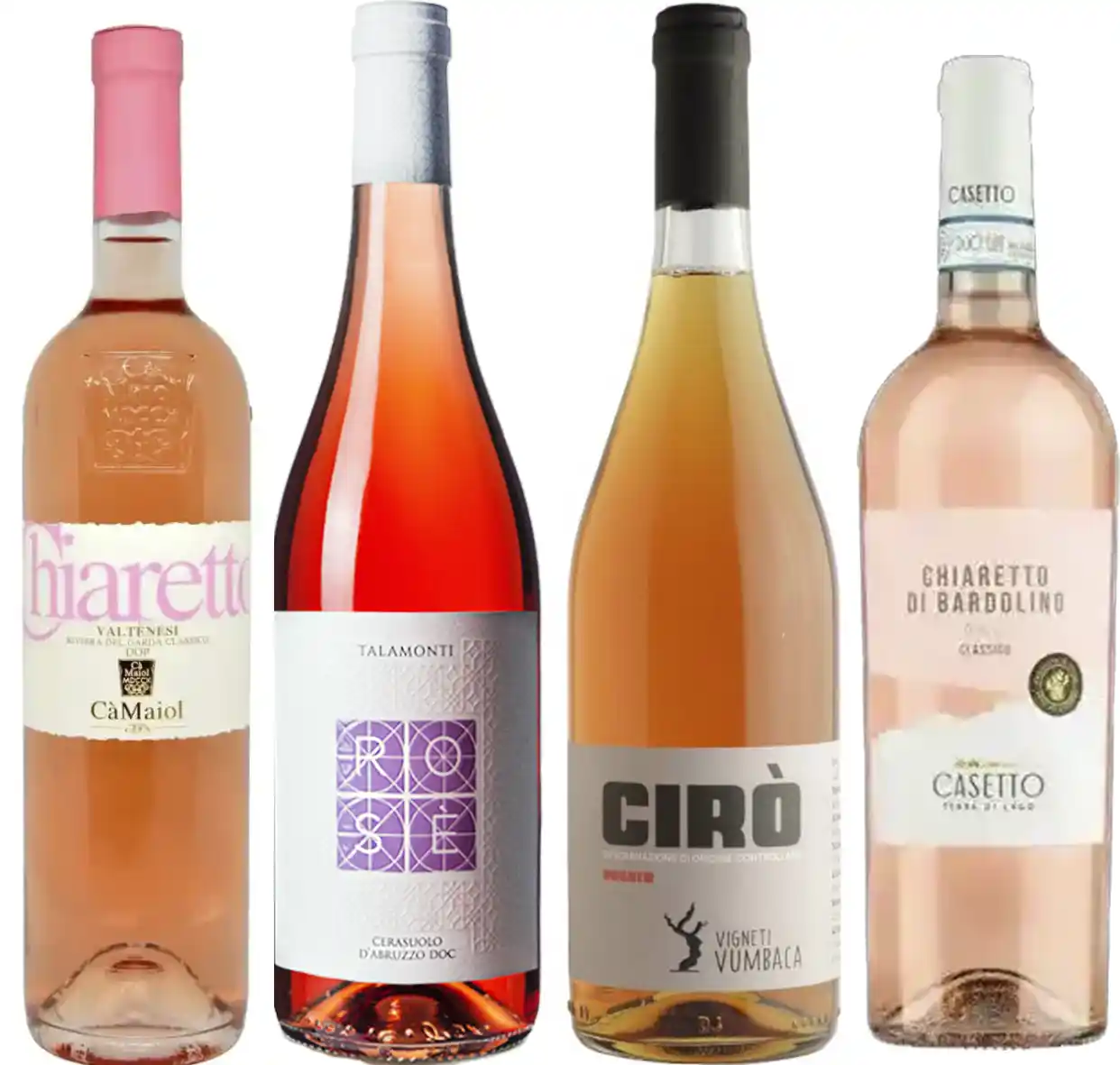
Along the shores of Lake Garda, Chiaretto wines offer a more restrained profile—light in color, floral in character, and defined by a delicate mineral tension. In regions such as Valtènesi and Bardolino, indigenous grapes yield wines that prioritize balance over intensity.
Further south, in Abruzzo, Cerasuolo d’Abruzzo introduces a deeper hue and greater structure, while Calabria’s Cirò Rosato, made from Gaglioppo, carries aromatic traces of the Mediterranean landscape itself.
Across these regions, a shared philosophy is beginning to take hold, supported by initiatives such as the Rosaautoctono Movement. Their aim is simple: to preserve rosato as a distinct category, defined by intention rather than convenience.
Beyond the Glass
For decades, rosé has been constrained by perception, too often reduced to a seasonal indulgence or a casual pour. In Italy, that perception has been further complicated by an enduring emphasis on visual cues, where color is mistaken for substance.
Yet the wines themselves tell a different story. When approached with precision, Rosato demands as much discipline as any red or white. It requires exact timing, careful extraction, and a sensitivity to balance that leaves little room for error.
Because the question is no longer whether Italian rosé deserves recognition.
It is why it has taken so long.