Along the windswept coastline of the Upper Florida Keys, where rising seas and shifting weather patterns are no longer distant concerns but daily realities, a new architectural language is quietly taking shape. The Van der Vlugt Residence, designed by Miami-based STRANG, offers a compelling vision of how modern luxury living can evolve in response to climate and context—without compromising elegance or restraint.
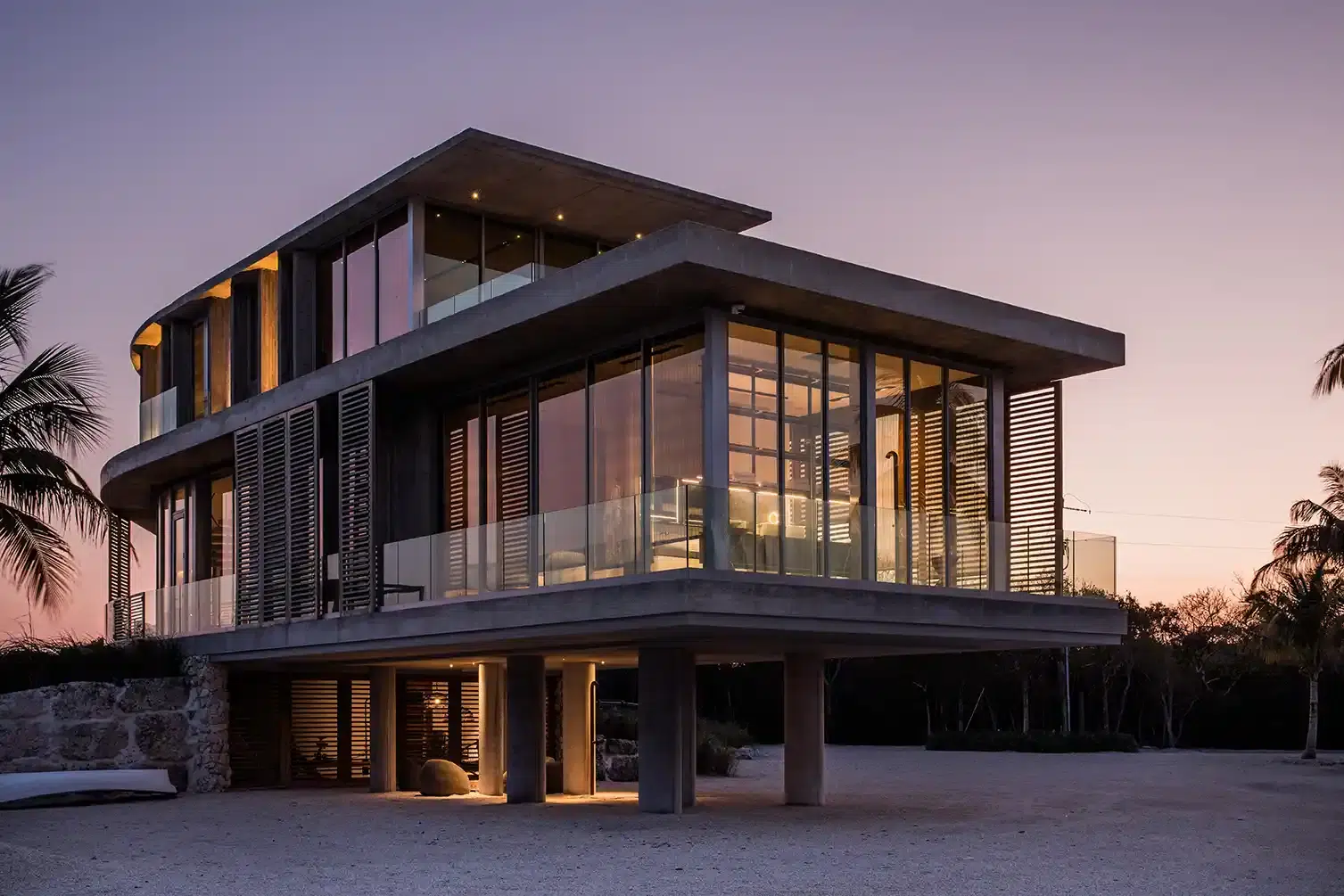
The project has already attracted significant global attention, earning the AIA Florida Award of Excellence for New Work, the AIA Miami Award of Excellence in Residential Architecture, and a finalist position at the World Architecture Festival. More recently, the residence was selected as the subject of the pilot episode of Sarasota School: A Living Legacy, a documentary series from Architecture Sarasota that explores the enduring influence of the region’s modernist heritage.
For founder Max Strang, the recognition reflects a growing urgency within the design world. “Design today must address both beauty and resilience,” he says. “Architecture should not only respond to its environment but anticipate it.”
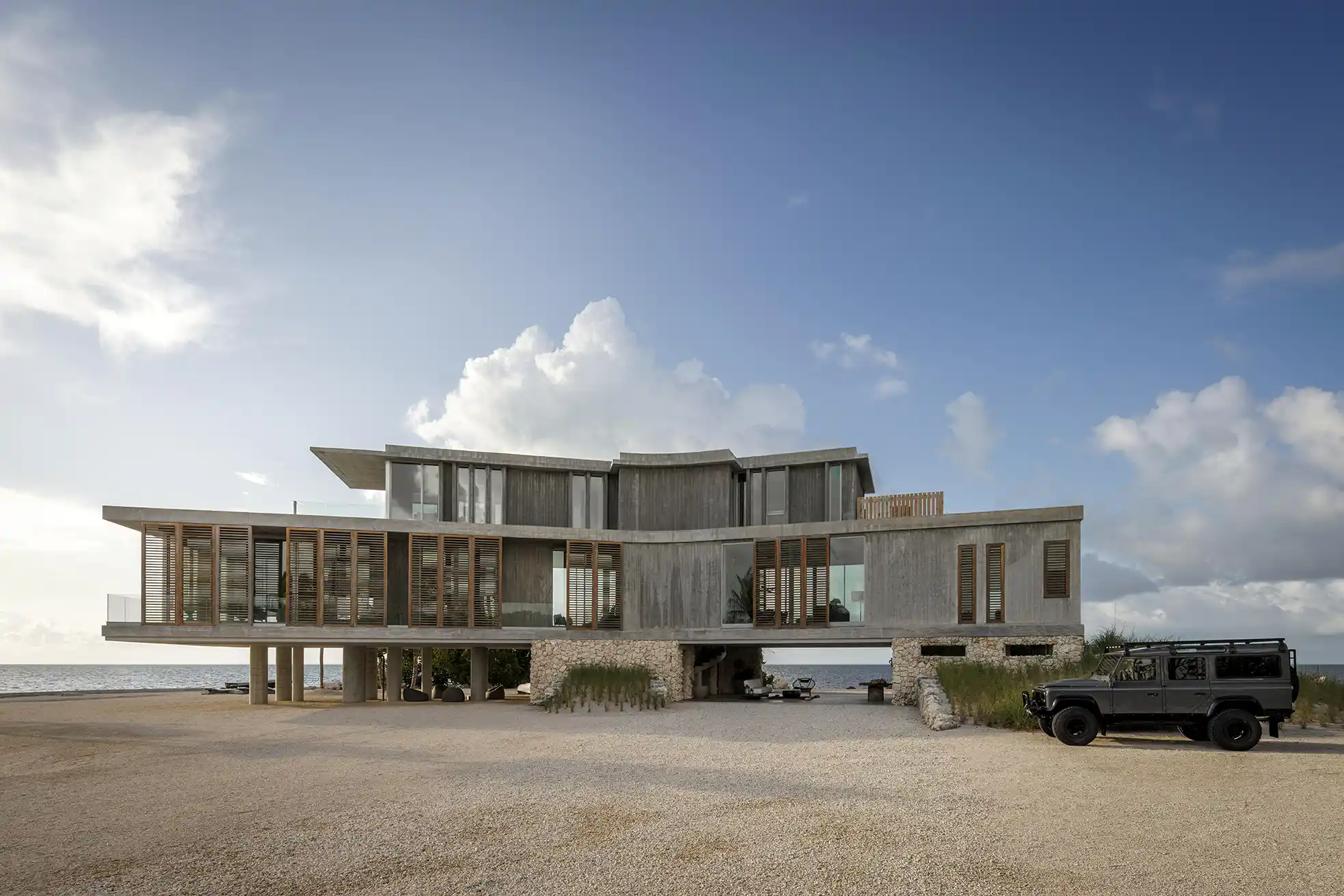
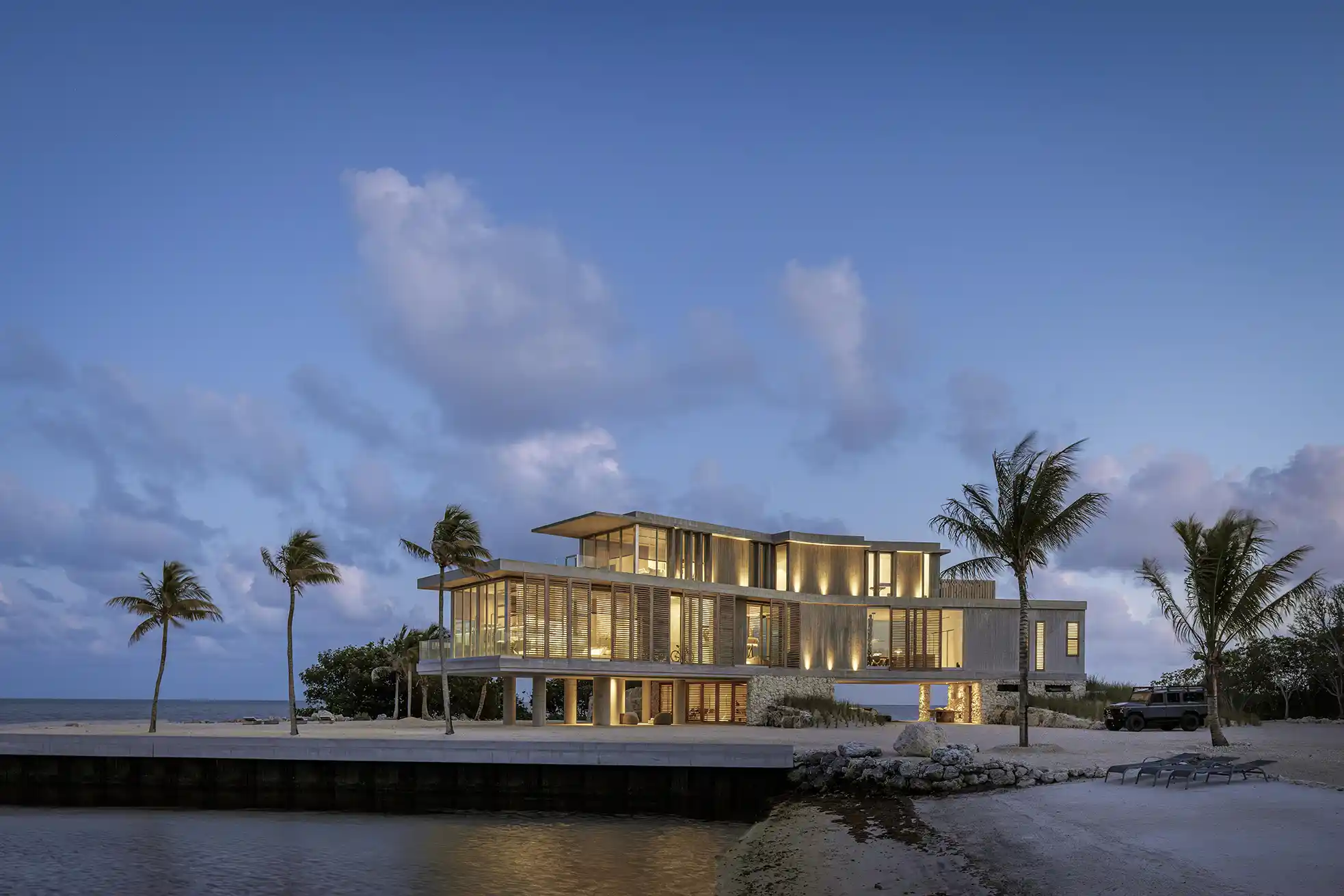
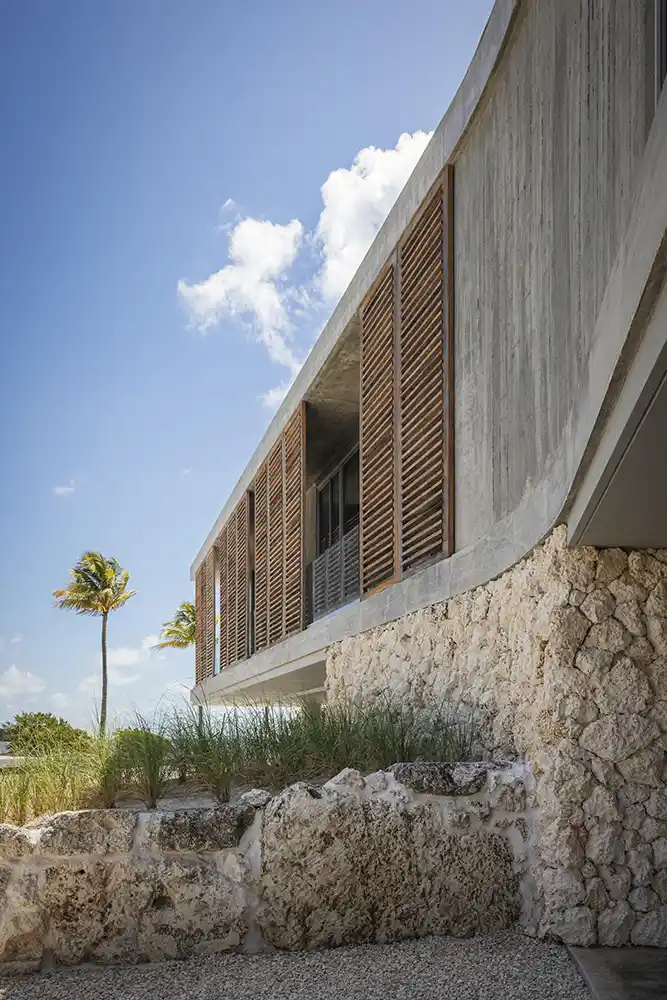
Elevated ten feet above grade to address sea-level rise and storm surge, the residence appears to float above the landscape. A series of sculptural louvers filters the intense Florida sunlight, casting rhythmic shadows across the façade while reducing solar gain. The effect is both poetic and pragmatic—a modernist expression shaped by climate realities.
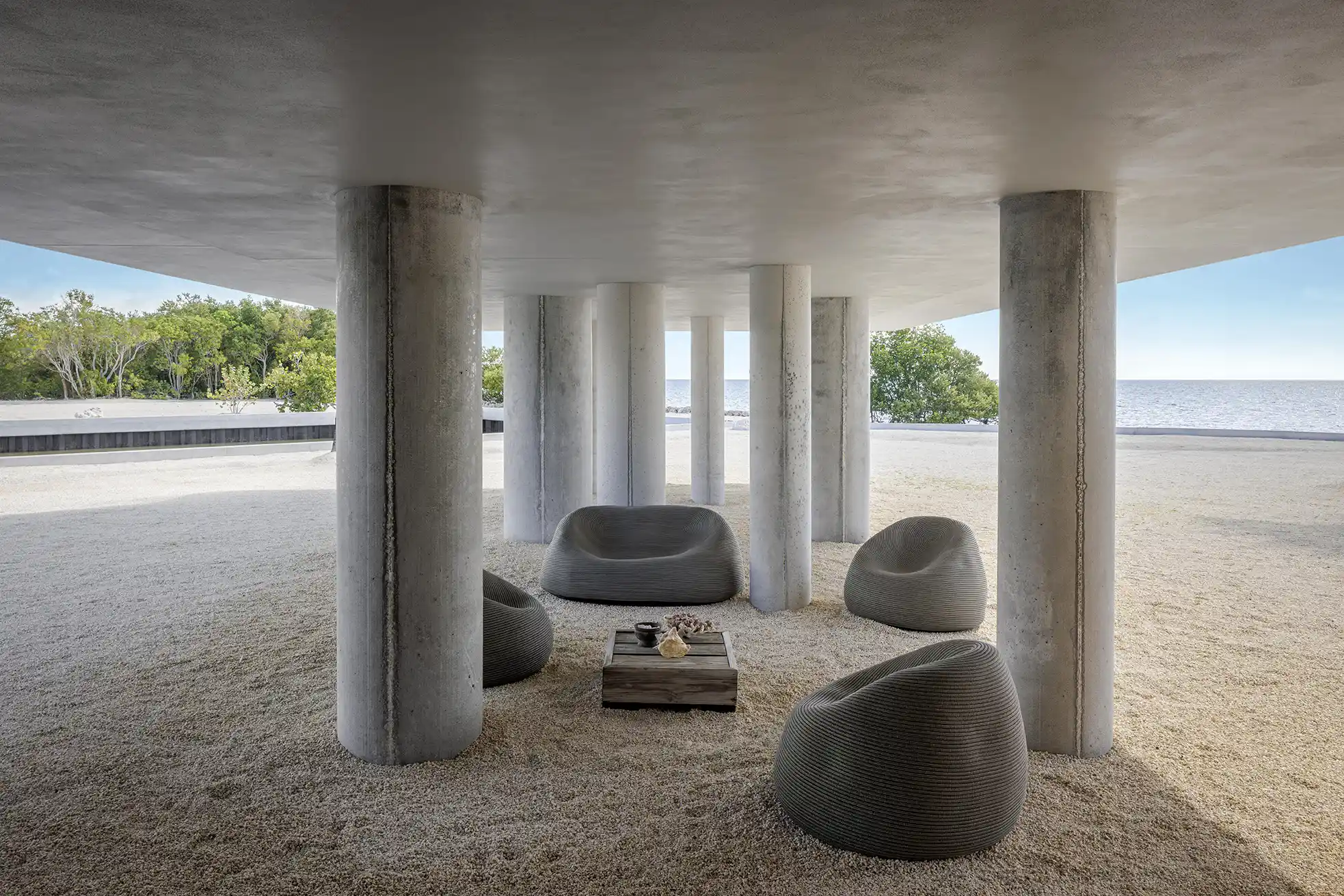
The structural system anchors the home on concrete columns, allowing the ground plane to remain open and adaptable. A dramatic 50-foot cantilever extends outward, engaging a pre-existing berm and framing uninterrupted views of the surrounding water. The gesture underscores a central theme: architecture that respects the landscape rather than dominating it.
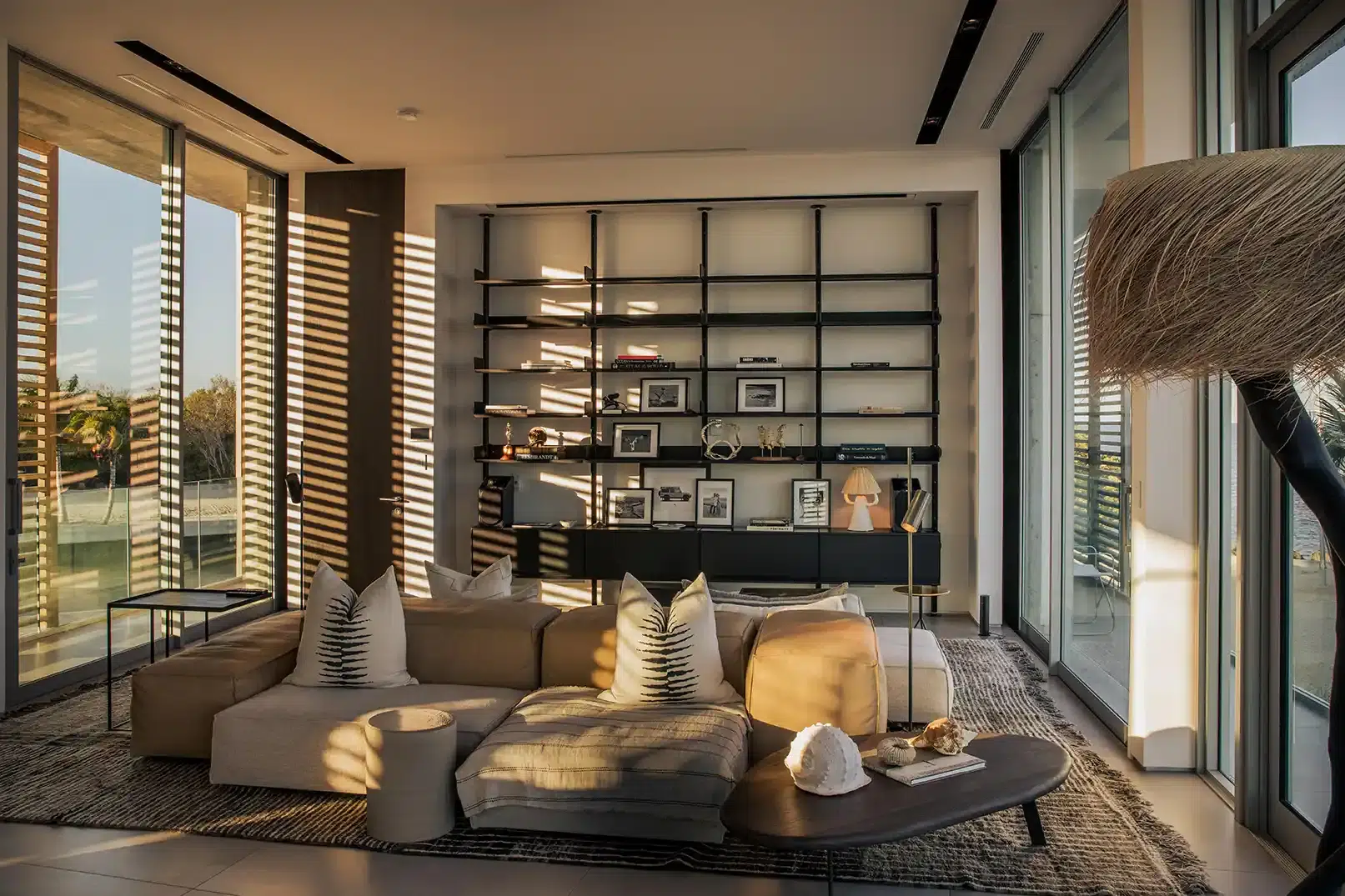
Inside, the material palette continues the dialogue between strength and refinement. Board-formed concrete flows seamlessly from exterior to interior, creating tactile continuity. In the library, its rugged texture contrasts with a curved white bookshelf, while metallic imprints of the concrete pattern appear in the owner’s suite, transforming structure into ornament.
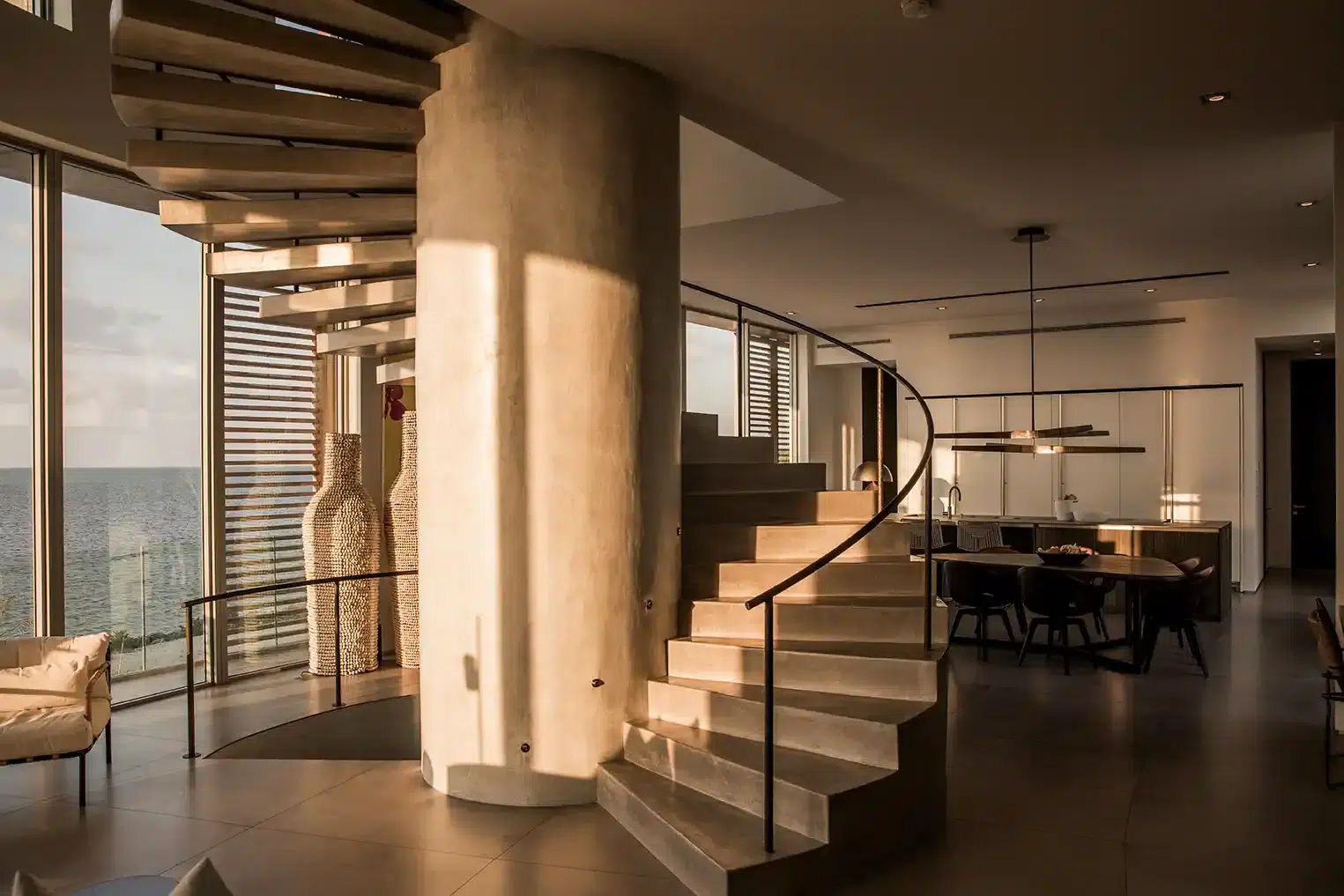
The arrival sequence is equally choreographed. A sculptural spiral staircase wrapped in cool gray microcement forms the spatial hinge of the home, aligning its geometry with the site’s waterfront boundary. The movement from exterior to interior feels deliberate and immersive, revealing views and volumes in carefully paced succession.
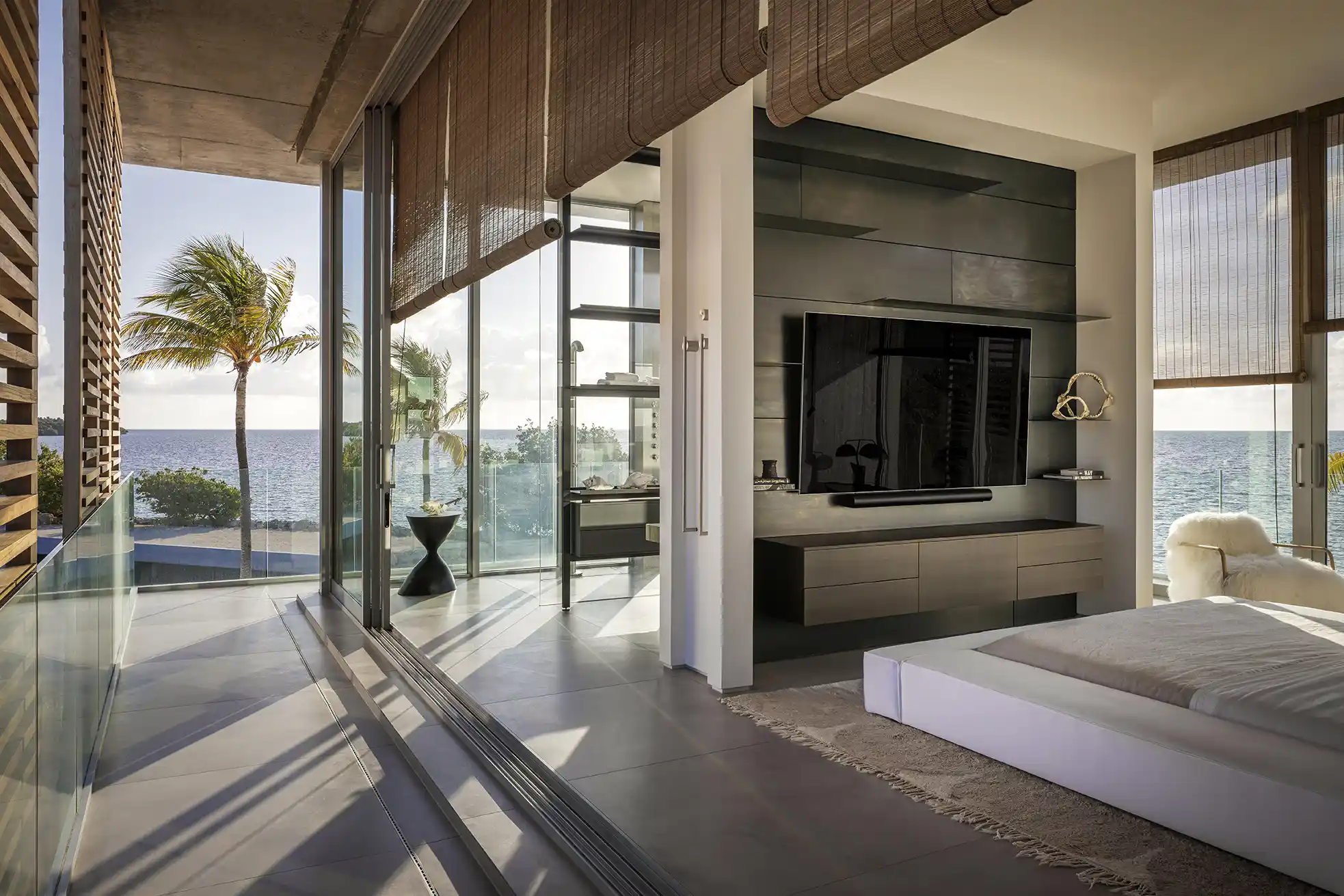
Passive environmental strategies remain central to the design. Floor-to-ceiling glazing invites natural light, while strategically positioned louvers enable cross-ventilation and shade. The home’s photovoltaic system underscores its environmental ambitions, achieving extended periods of net-zero performance and demonstrating how luxury and sustainability can coexist.
This forward-thinking approach is rooted in the principles of the Sarasota School of Architecture, a movement defined by environmental responsiveness, material experimentation, and modernist clarity. Rather than referencing history directly, the residence interprets these ideas for a new era—one shaped by climate resilience and technological innovation.
The documentary series that will debut during Open House Miami positions the Van der Vlugt Residence as a case study in this evolution. The project highlights how contemporary architects are adapting modernist foundations to address today’s challenges, ensuring the movement remains dynamic and relevant.
As coastal regions around the world confront rising seas and increasing environmental complexity, the Van der Vlugt Residence offers a powerful proposition: that resilience need not sacrifice beauty. Instead, it can inspire a new form of luxury—one defined not by excess, but by intelligence, foresight, and enduring connection to place.
For discerning homeowners, investors, and designers, this project signals a shift in priorities. The future of coastal architecture will be measured not only by aesthetics, but by adaptability. In this emerging landscape, STRANG’s vision stands as both benchmark and blueprint.