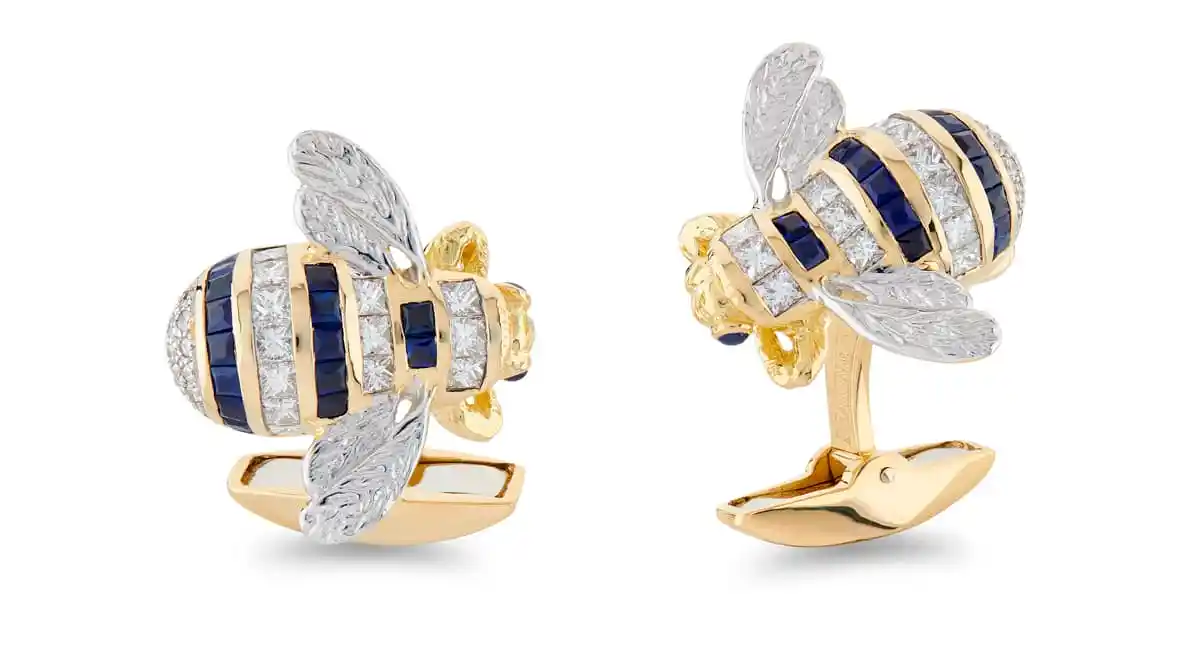
Would you pay £12,300 for a pair of bees?
£6,200 for two gold pigs?
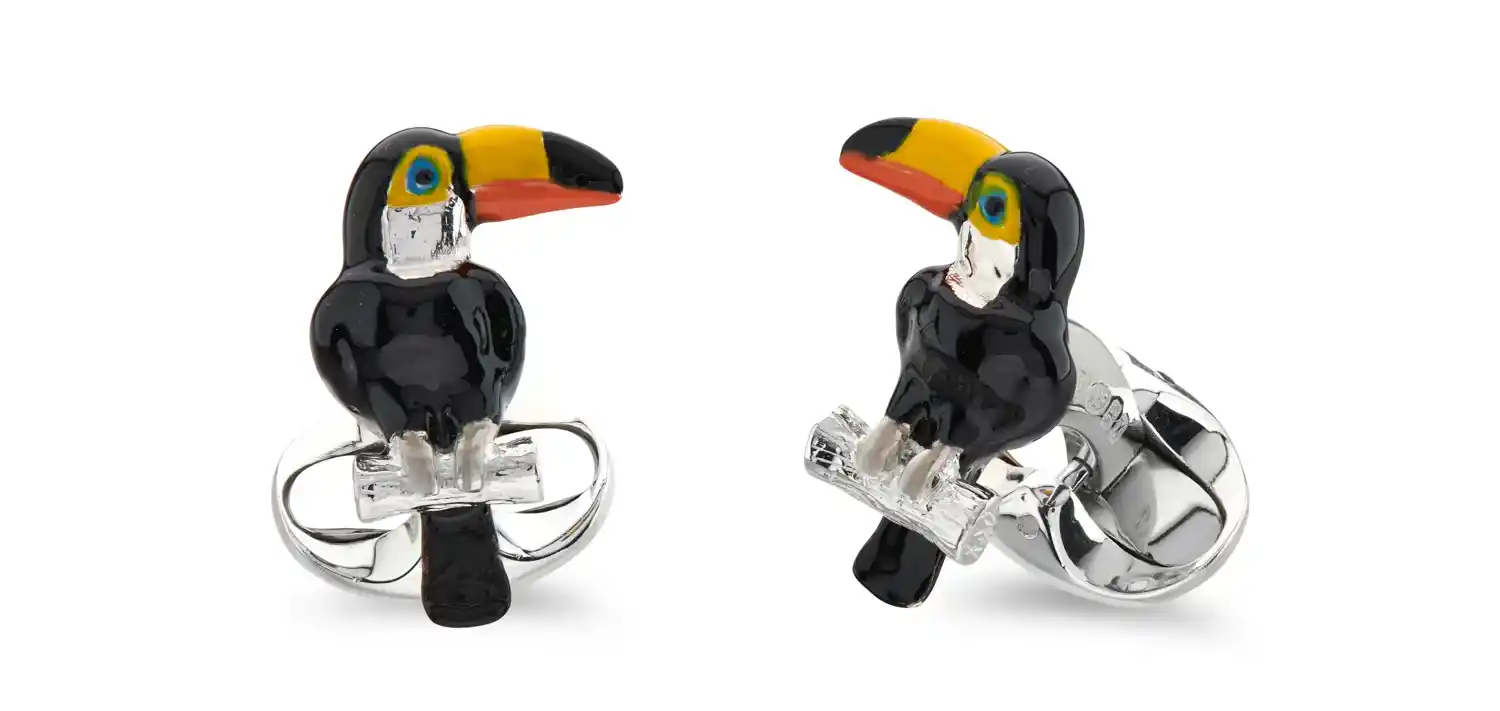
£600 for oxidized buffalo, toucans, or tree frogs?
The answer, it seems, depends entirely on whether you are a discerning gentleman—or happen to know one.
Cufflinks, long a discreet marker of refinement, have entered a new era. They are no longer merely formal accessories. They are sculptural, playful, occasionally irreverent—and increasingly bespoke. Today’s collectors can commission cufflinks shaped like oysters, ducks, Dalmatians, gorillas, tortoises, pelicans, sheep, bison, tractors, Jaguars, yachts, moose, basketballs, American football helmets, and even martini glasses.
And now, two of London’s most storied five-star hotels have joined forces with England’s oldest family-run jeweller to create exclusive designs that elevate the category further.
Founded in 1786 and now in its seventh generation, Deakin & Francis remains one of Britain’s most quietly influential luxury houses. Under the stewardship of qualified gemmologist Henry Deakin, the Birmingham-based atelier continues to blend traditional craftsmanship with a modern, whimsical sensibility. Its flagship boutique sits discreetly in London’s Piccadilly Arcade, a fitting address for a house that has spent more than two centuries dressing gentlemen’s cuffs.
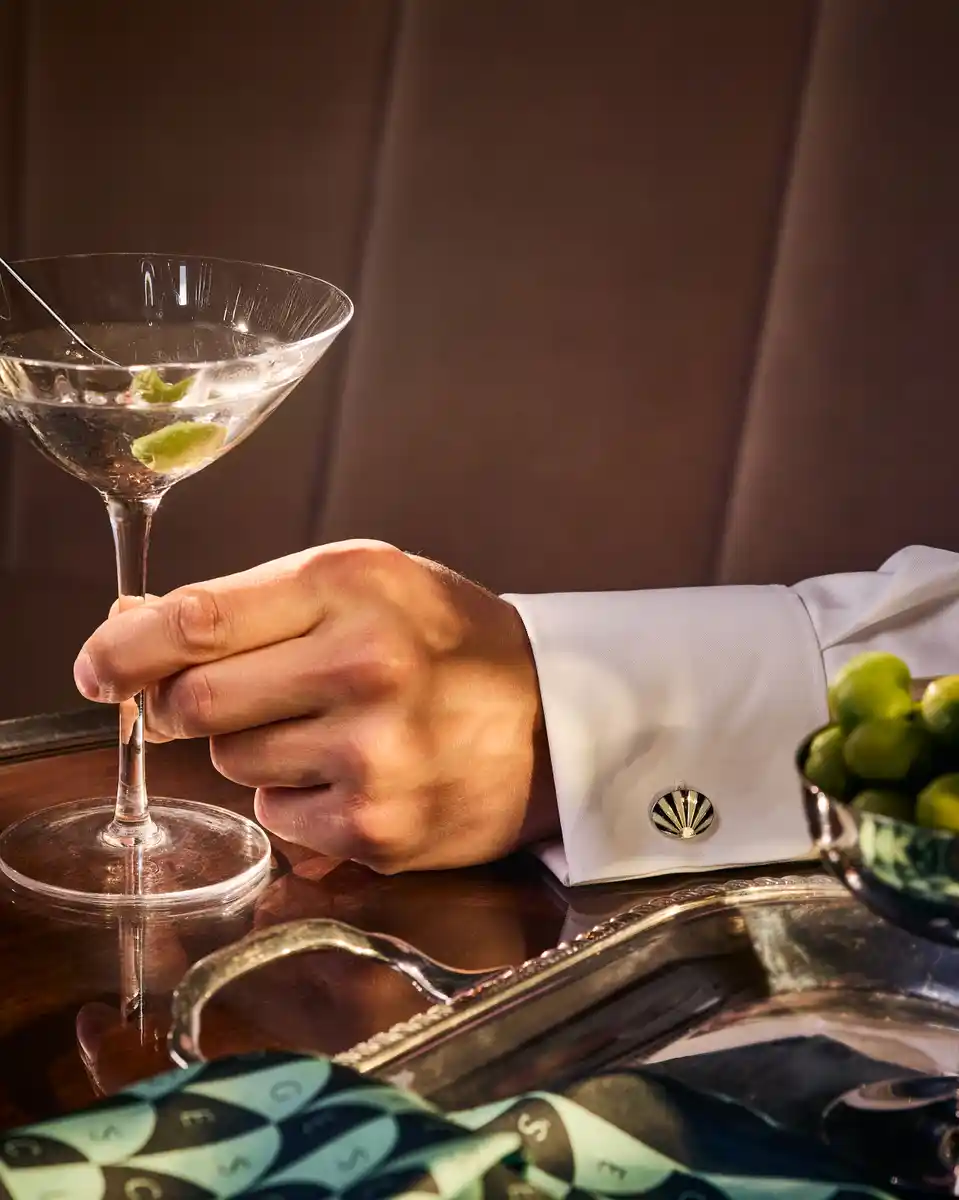
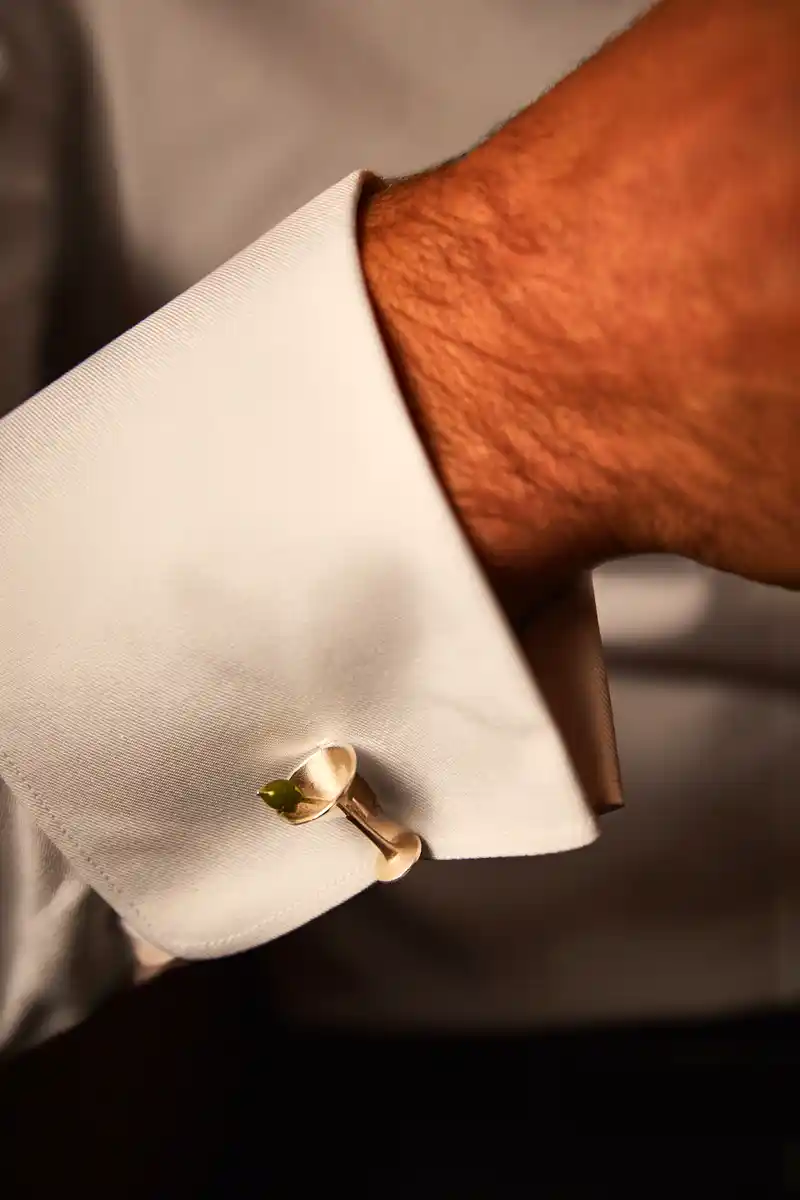
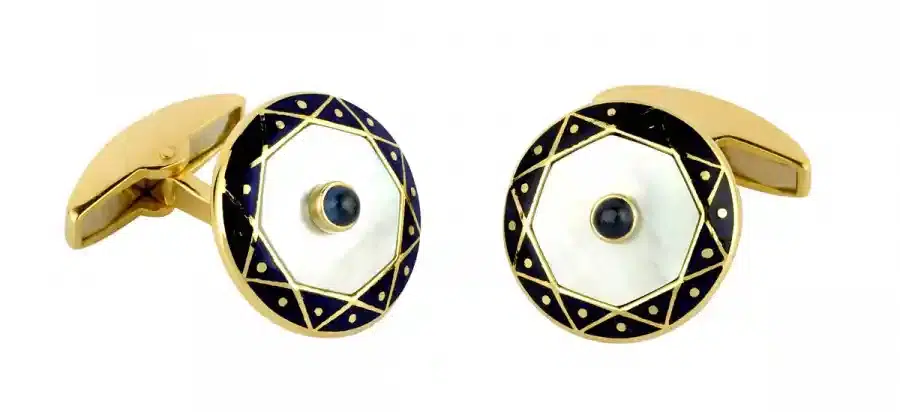
For The Connaught, Deakin & Francis has created hound-dog and martini-glass cufflinks—an affectionate nod to the hotel’s storied bar culture and refined wit. For Claridge’s, the jewellers produced enamel and sterling silver Art Deco Sunburst cufflinks, echoing the hotel’s architectural glamour and Jazz Age heritage.
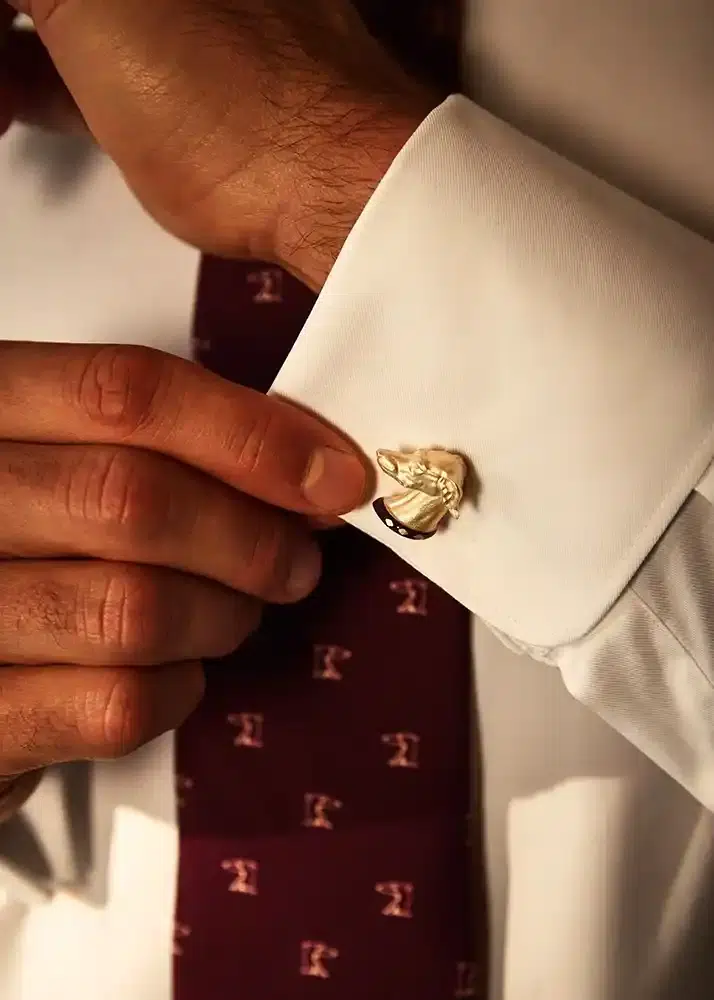
Both hotels belong to the Maybourne Hotel Group. The Connaught, at the corner of Carlos Place and Mount Street in Mayfair, opened in 1815 as the Prince of Saxe-Coburg Hotel, originally formed from two Georgian houses. Claridge’s, on Brook Street and Davies Street, traces its origins to 1812’s Mivart’s Hotel and likewise began life as a converted terrace. Their collaboration with Deakin & Francis feels less like a novelty and more like a natural extension of shared London heritage.
The house’s Art Deco credentials run deep. Deakin & Francis was at the forefront of cutting-edge design in the 1920s, producing sculptural pieces that remain highly collectible today. The Claridge’s cufflinks, in particular, draw directly from that lineage.
Cufflinks themselves have a far older story. They first emerged in the late 17th century during the reign of Louis XIV, when shirts were still considered undergarments and visible cuffs were frowned upon. Sleeves were fastened with ribbons or strings until fashionable gentlemen began using pairs of decorative buttons joined by a small chain—often painted with miniature portraits.
By the 18th century, cufflinks had become fixtures of European high society. The Count of Monte Cristo—at least in Alexander Dumas’s 1844 novel—is often cited as one of literature’s earliest cufflink influencers. With the Industrial Revolution came electroplating and mass production, allowing the growing professional class to accessorize their dark day suits and evening tailcoats.
By the 1840s, cufflinks had assumed their recognizable form: gold, silver, or pearl buttons joined by a brass chain. Women wore them too, when shirts with sewn-on buttons were scarce. Despite shifts in fashion—sport shirts, soft cuffs, wartime austerity—cufflinks endured, their demand steady even through the Great Depression and World War II.
Today, whether crafted from single-origin 8-, 9-, or 18-karat gold, cut diamonds, lapis lazuli, sapphires, or painted rock crystal, cufflinks remain—alongside the signet ring—the most iconic expression of male luxury jewelry.
They have also come a long way from string fastenings and glass sleeve buttons.
Luxury jewellers continue to produce cufflinks for men who favor tailored shirts and expressive detail. A fine pair is still among the most popular gifts for groomsmen, marking both ceremony and personal style.
As a spokesperson for Deakin & Francis says of the Maybourne collaborations:
“Each piece reflects the hotels’ unique character and combines timeless craftsmanship with playful, elegant details. These collections allow our clients to carry a piece of London’s luxury heritage with them wherever they go.”
In an age when men’s jewelry has become increasingly expressive, Deakin & Francis has transformed cufflinks from formal necessity into miniature works of wearable sculpture—proof that even the smallest accessories can carry history, humor, and heritage on a gentleman’s cuff.