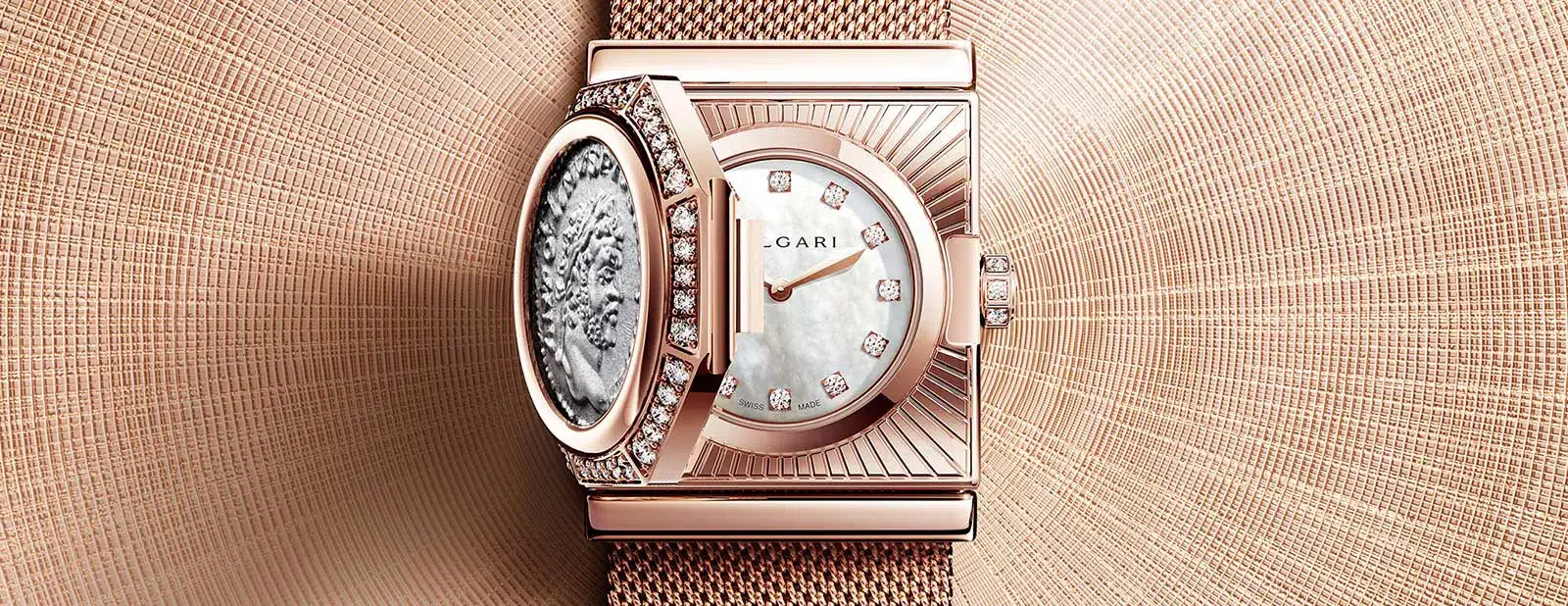
There are moments in watchmaking when innovation demands attention—and others when it commands it without asking. At LVMH Watch Week 2026, Bvlgari chose the latter. In a landscape still preoccupied with technical escalation and material experimentation, the Roman maison delivered something far more enduring: clarity.
Not a correction. A direction.
What emerged was not simply a collection, but a point of view—one that is already beginning to define the visual and cultural language of 2026 luxury watchmaking.
Gold has always been central to high horology, yet in recent years it was often overshadowed by titanium, ceramic, and the rhetoric of lightness. Bvlgari reframes that conversation entirely. Here, gold is not a return—it is a declaration.
In 2026, gold is no longer a material choice—it is a statement of intent.
The maison approaches it with unmistakable Roman confidence: sculptural, deliberate, and unapologetically expressive. Surfaces are not merely polished; they are shaped to catch and release light with architectural precision. The result is a presence that feels less like ornament and more like permanence.
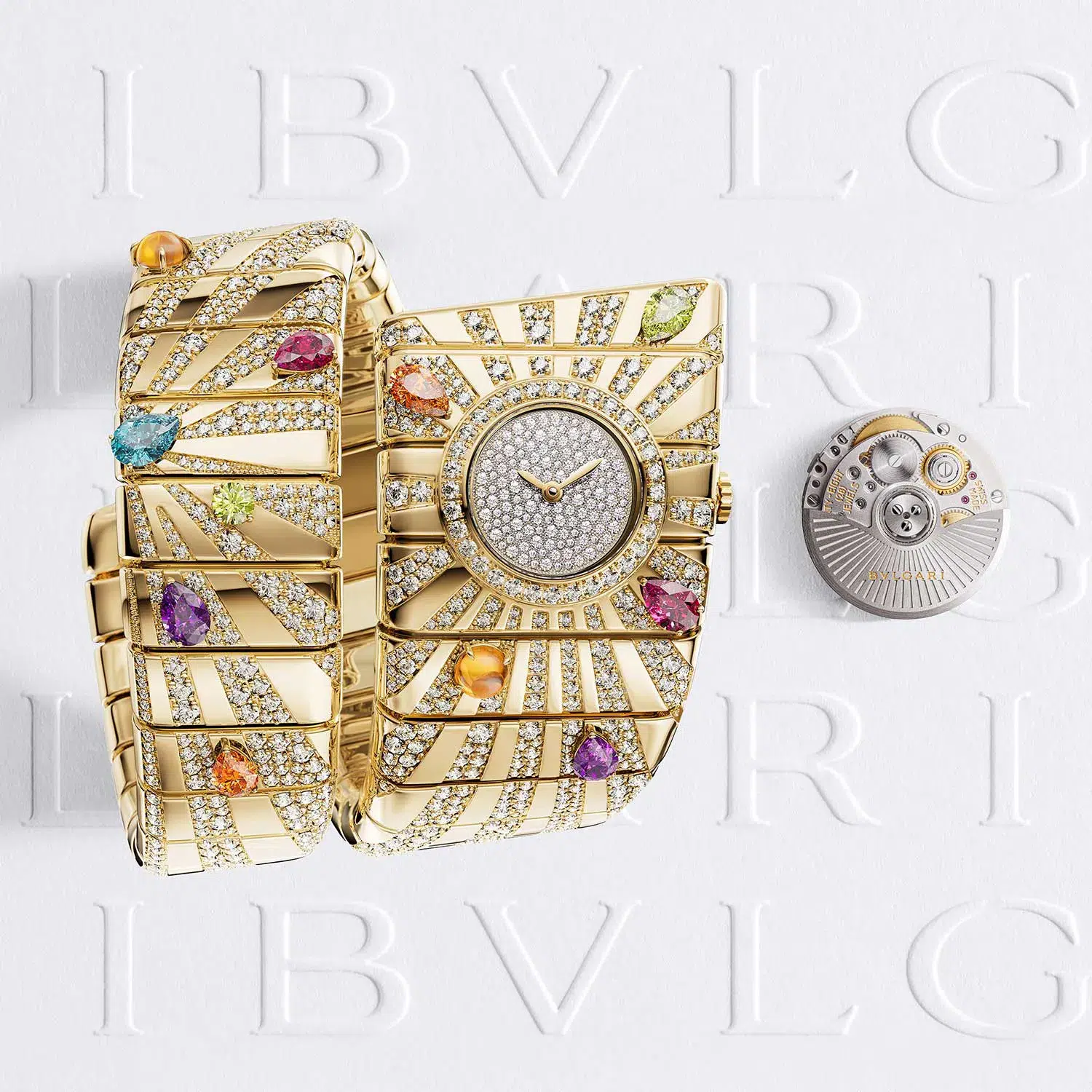
Serpenti continues to dissolve the boundary between jewelry and watchmaking. Its Tubogas construction coils with a sense of controlled fluidity, transforming gold into movement. It does not sit on the wrist; it inhabits it. Each curve feels intentional, each reflection considered. This design language has extended far beyond horology into broader cultural collaborations, as seen in reinterpretations of the icon, such as Alexander Wang’s modern take on Bvlgari’s Serpenti.
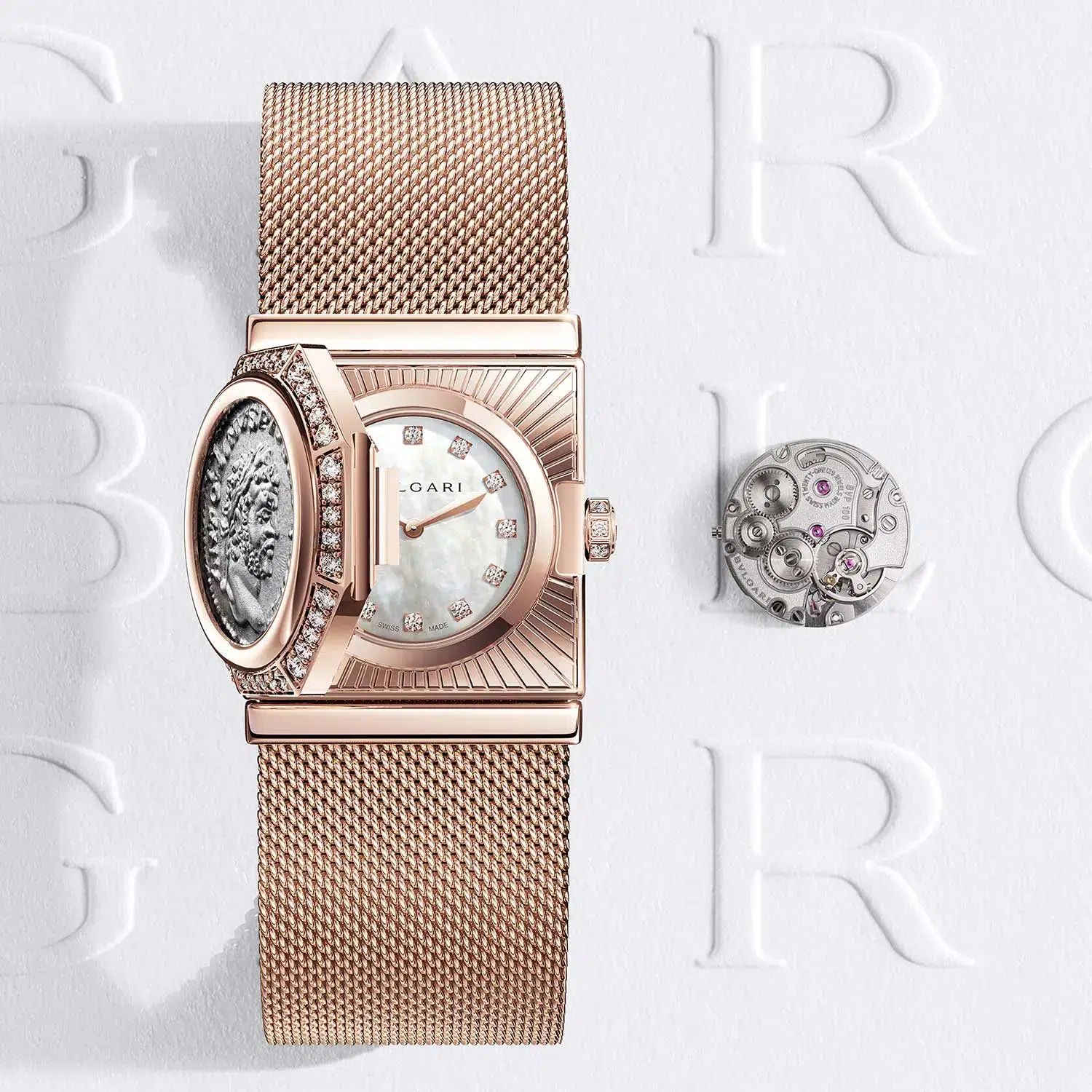
Monete, by contrast, speaks in a quieter but deeper register. Ancient coins—each carrying the imprint of another era—are framed within gold cases that do not compete, but elevate. The effect is not decorative. It is intellectual. These are objects that connect timekeeping to time itself, collapsing centuries into a single gesture. That same narrative instinct has long defined the maison’s high jewelry creations, from its horological expressions to cinematic collections such as Cinemagia, where storytelling and craftsmanship converge.”
Together, they articulate a truth often overlooked in contemporary watchmaking: that meaning, not complexity, is the ultimate luxury.
Where many houses default to quartz in pursuit of delicacy, Bvlgari insists on mechanical integrity, even at a microscopic scale. It is a quiet defiance of compromise. Engineering, here, does not announce itself. It disappears—making space for form, proportion, and emotion to lead.

This is where Bvlgari’s position becomes singular. While traditional Swiss maisons often begin with mechanics and arrive at design, Bvlgari reverses the equation. It begins with beauty—and integrates time into it with precision.
The distinction is subtle. Its impact is not.
Collectors are increasingly drawn to pieces that transcend category—objects that exist as both adornment and artifact, as both statement and instrument. Bvlgari meets that expectation with a confidence that feels less reactive than instinctive.
What defines its influence this year is not excess, but restraint. There is no need for spectacle when the message is this clear. No attempt to overwhelm, only to refine.
And that is precisely why it resonates.
“Across the industry, the signals are already emerging, with several maisons already reflecting what can only be described as a broader shift in direction among the leading luxury watch houses shaping 2026.
In a year that will reward clarity over complication, Bvlgari has already defined the conversation.
The rest of the industry is simply catching up.