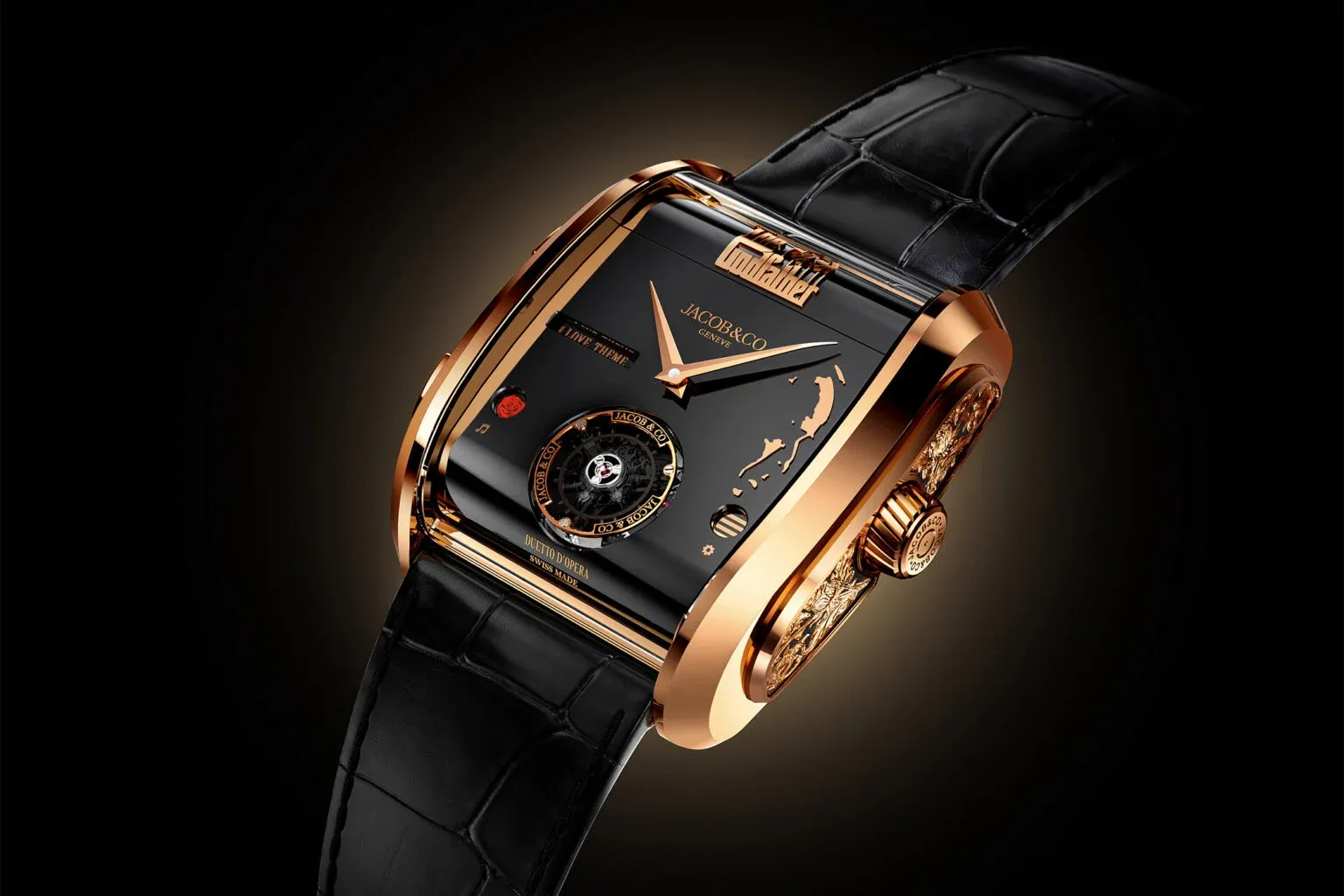
At Jacob & Co., complication has never been an end in itself. It is a language, one used to translate ideas that extend beyond timekeeping into something more expressive.
With The Godfather II, that language becomes cinematic.
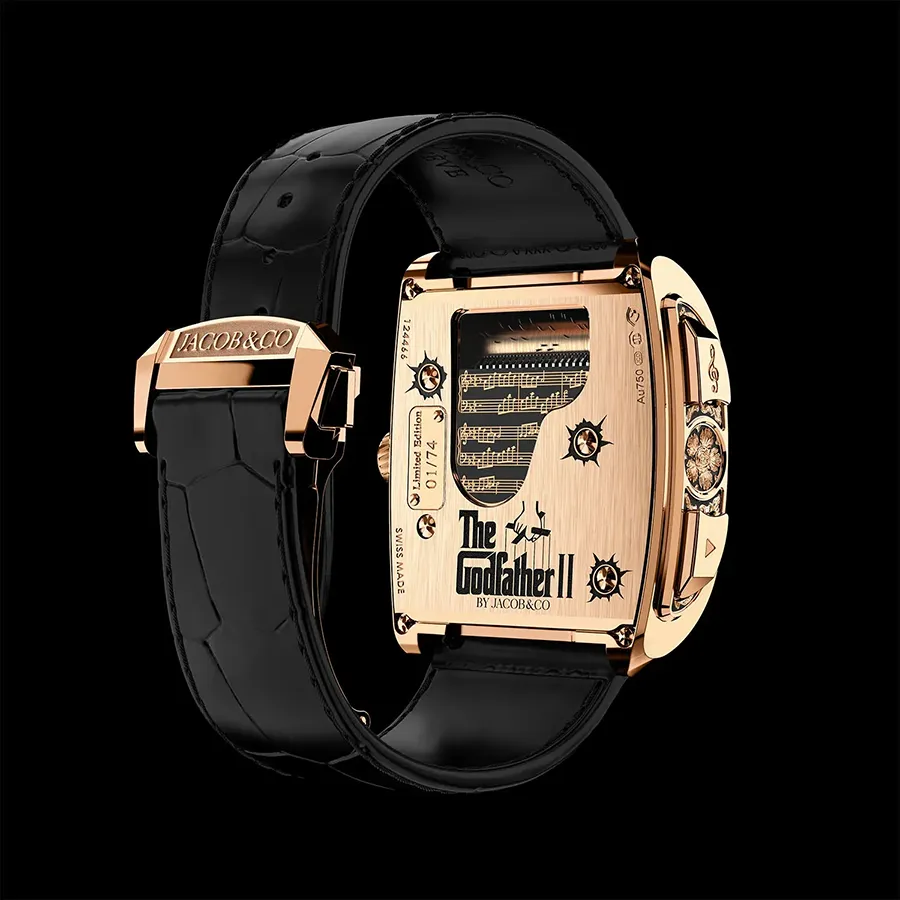
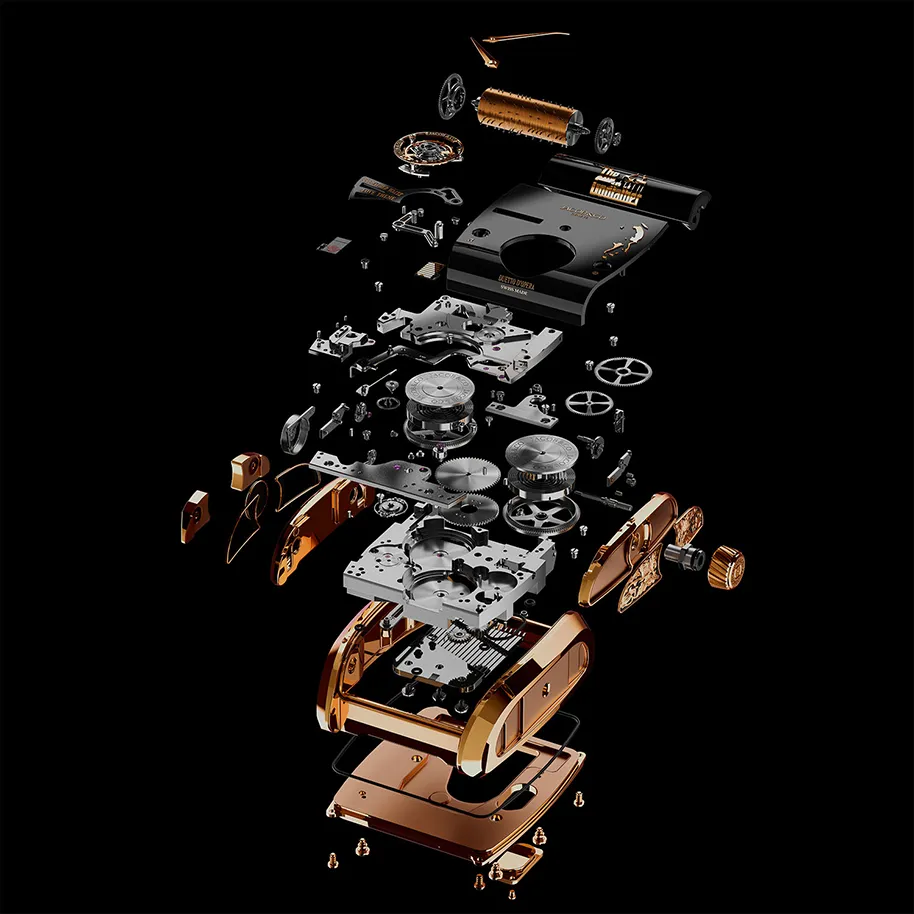
At the heart of this mechanism lies a rotating cylinder, studded with microscopic pins that engage an 18-note comb. As the cylinder turns, each pin strikes a specific tooth, producing a sequence of notes with surprising clarity. A lateral selector allows the wearer to shift between melodies, effectively reconfiguring the composition with a movement measured in fractions of a millimeter.
 |
 |
The effect is both mechanical and emotional. Unlike traditional minute repeaters, which translate time into sound, the Godfather II introduces narrative music not as a function, but as a memory.
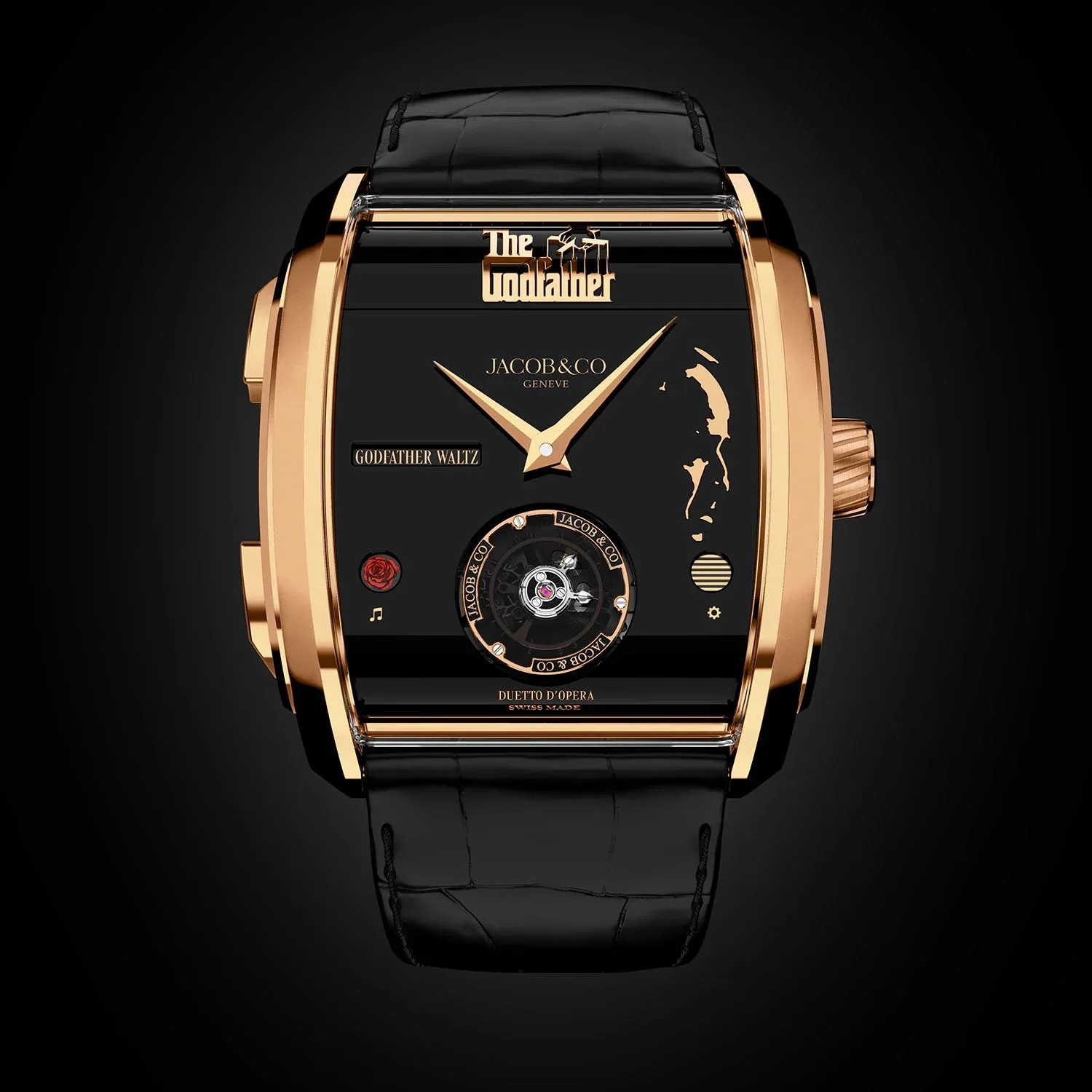
Supporting this acoustic architecture is an equally complex movement. The in-house calibre integrates more than 500 components, combining a flying tourbillon with a dual power reserve system. One barrel is dedicated to timekeeping, ensuring stability and precision, while a second is reserved exclusively for the musical complication, preserving the integrity of both functions.
This separation is not incidental. It reflects a broader philosophy within high horology: that complexity must be controlled, not merely accumulated.
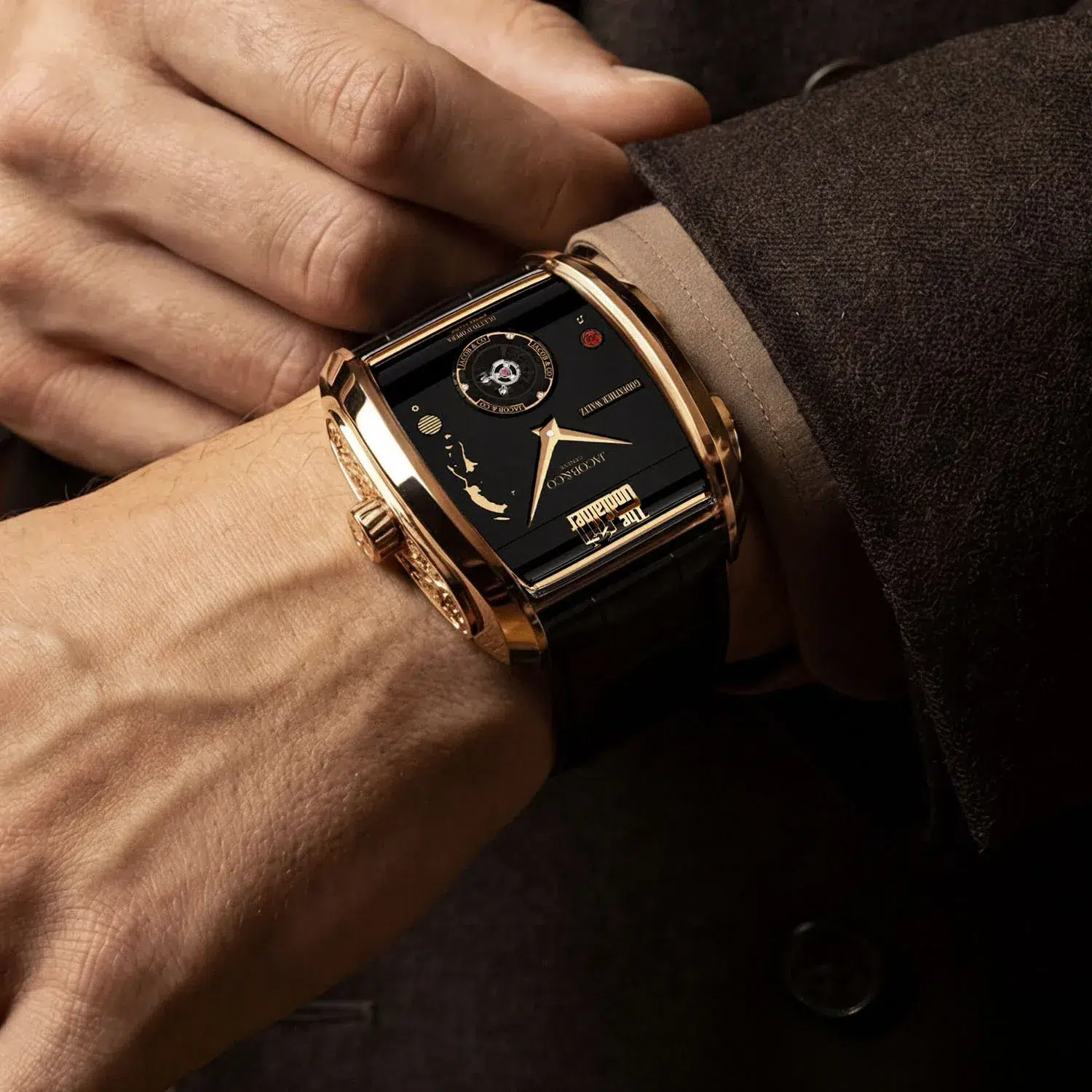
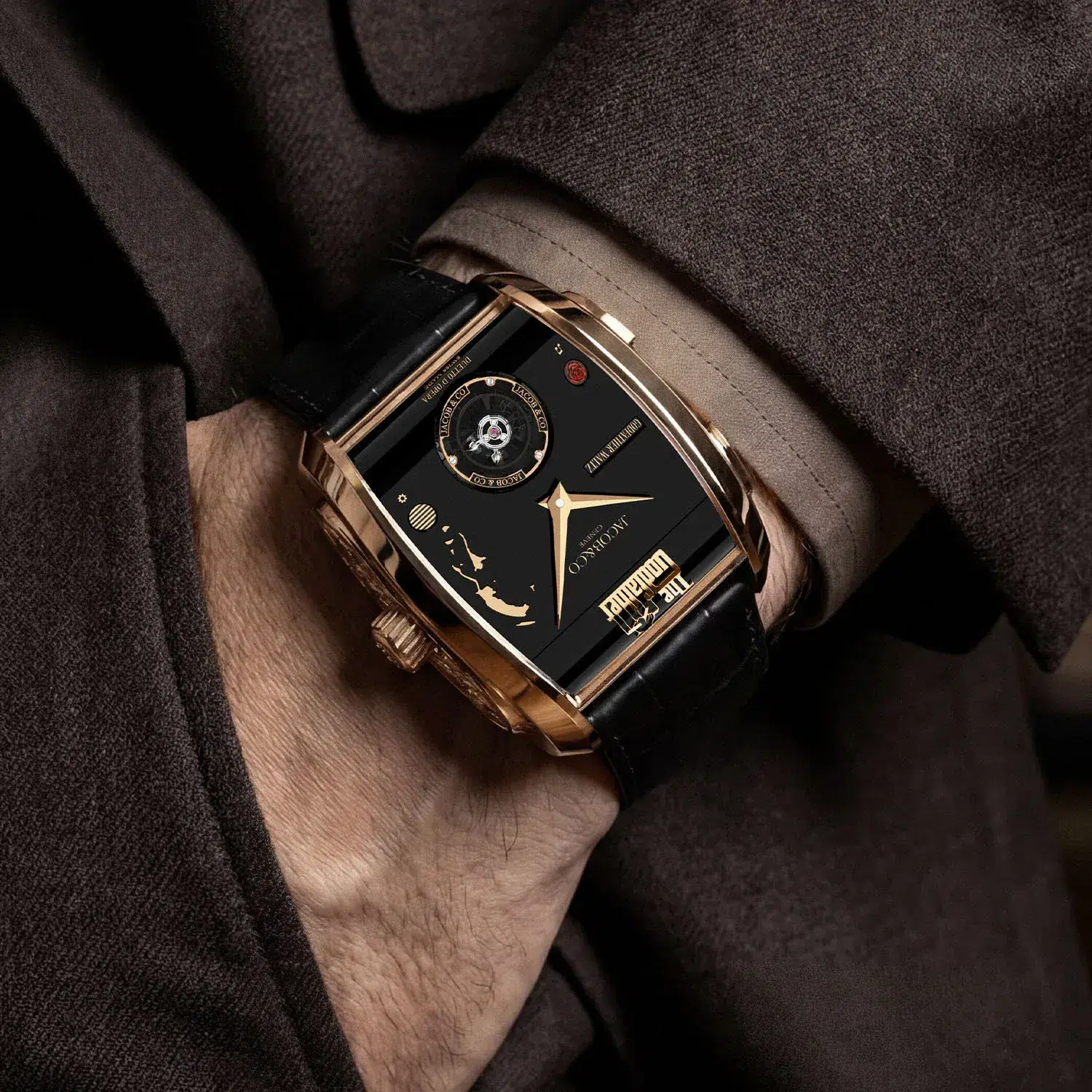
The case design reinforces that control. Executed in rose gold, the watch adopts a curved, rectangular form that feels architectural rather than ornamental. Its proportions, substantial yet balanced, give it a presence that aligns more closely with design objects than traditional wristwatches.
 |
 |
The dial, finished in black lacquer, introduces cinematic references with restraint. A portrait of Don Vito Corleone is integrated into the composition, not as decoration, but as atmosphere. Subtle engravings, including puppet strings and textural detailing, echo the visual language of The Godfather Part II without overwhelming the watch’s overall clarity.
Interaction becomes part of the experience. A pusher activates the musical function, revealing the mechanism beneath as the dial-side cover lifts. The moment feels choreographed, less a mechanical operation than a performance unfolding in real time.
Limited to 74 pieces, the Godfather II positions itself as both a collector’s object and a cultural artifact. Its scarcity references the 1974 release of The Godfather Part II, while its execution reflects a broader convergence of storytelling and engineering within contemporary watchmaking.
This convergence is not accidental. In recent years, high horology has increasingly moved toward narrative-driven design, pieces that communicate identity as much as innovation. Jacob & Co., long associated with spectacle, refines that approach here. The emphasis shifts from visual excess to conceptual clarity.
What emerges is a watch that operates on multiple levels. It is technically ambitious, integrating complex mechanics with acoustic precision. It is visually composed, balancing cinematic reference with architectural restraint. And it is emotionally resonant, translating a cultural icon into a wearable form.
In that sense, The Godfather II does not simply revisit a familiar theme.
It reinterprets it through the language of watchmaking.
And in doing so, it suggests that the future of high horology may lie not in greater complexity, but in greater intention.
Because at this level, time is no longer just measured.
It is composed.