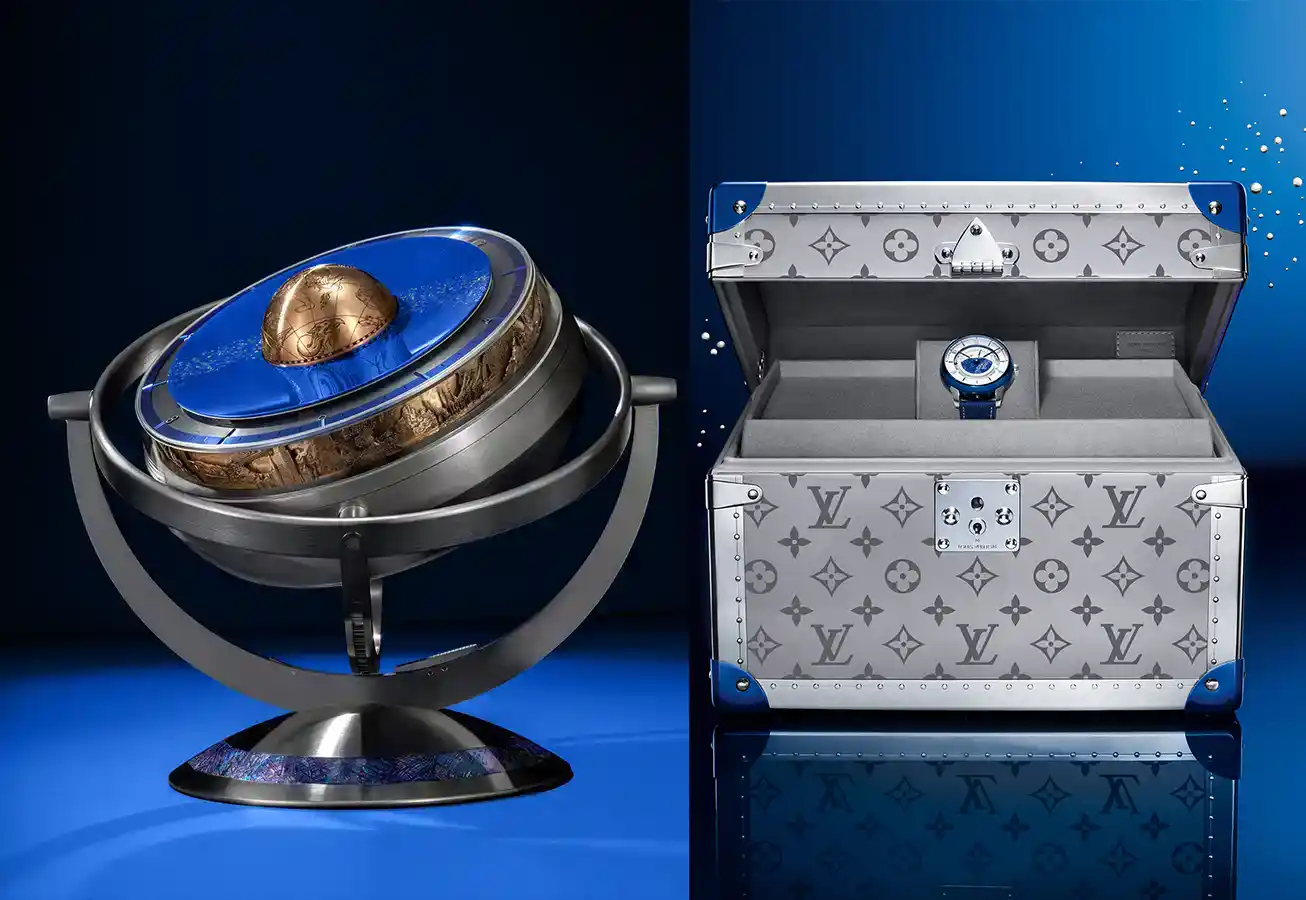
When Louis Vuitton collaborates, it rarely does so for spectacle. The House’s most compelling partnerships are grounded instead in dialogue, shared philosophy, mutual respect, and a quiet commitment to craft. Its latest creation with De Bethune, the LVDB-03 Louis Varius, feels less like a product than a proposition: a reconsideration of how time might be experienced.
At its center is master watchmaker Denis Flageollet, a figure whose work has long been defined by precision and discretion. Opportunities to collaborate with him are rare, reserved for moments when vision and intent align. What has emerged here is not simply a partnership, but a conversation, one that moves fluidly between centuries.
The project draws its conceptual foundation from the Sympathique clock, an 18th-century invention designed to wind and regulate a portable watch through a master timepiece. It was, even then, an idea ahead of its time, part engineering, part poetry. Rather than reproduce it, Louis Vuitton and De Bethune reinterpret the concept for a contemporary context, pairing a GMT wristwatch with a sculptural clock capable of synchronizing it with remarkable precision.
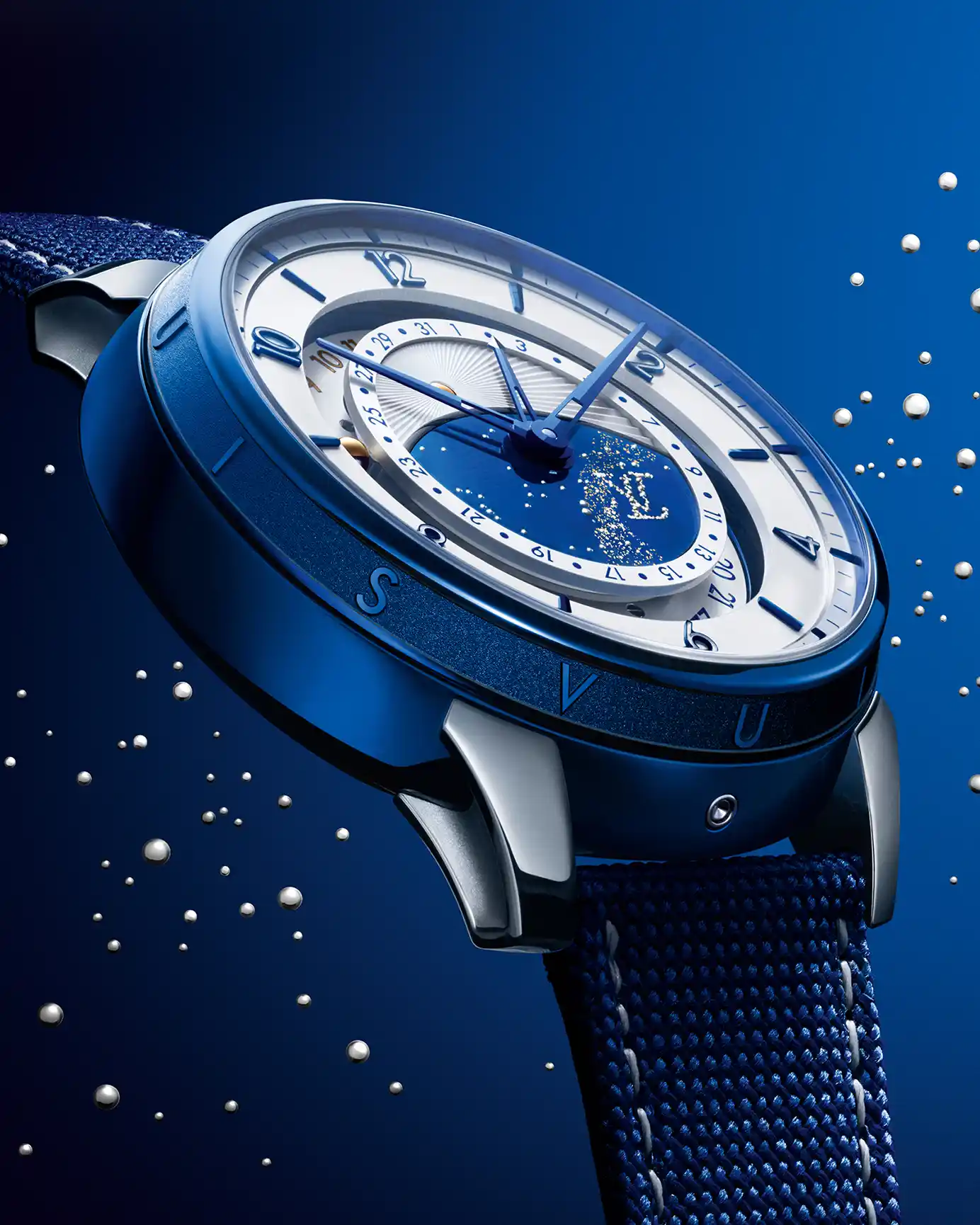
Encased in Louis Vuitton’s Tambour silhouette, the LVDB-03 GMT Louis Varius is rendered in blued titanium, a signature De Bethune treatment achieved through thermal oxidation. The surface shifts subtly with the light, moving between deep cobalt and near-black, reinforcing the watch’s quiet dynamism.
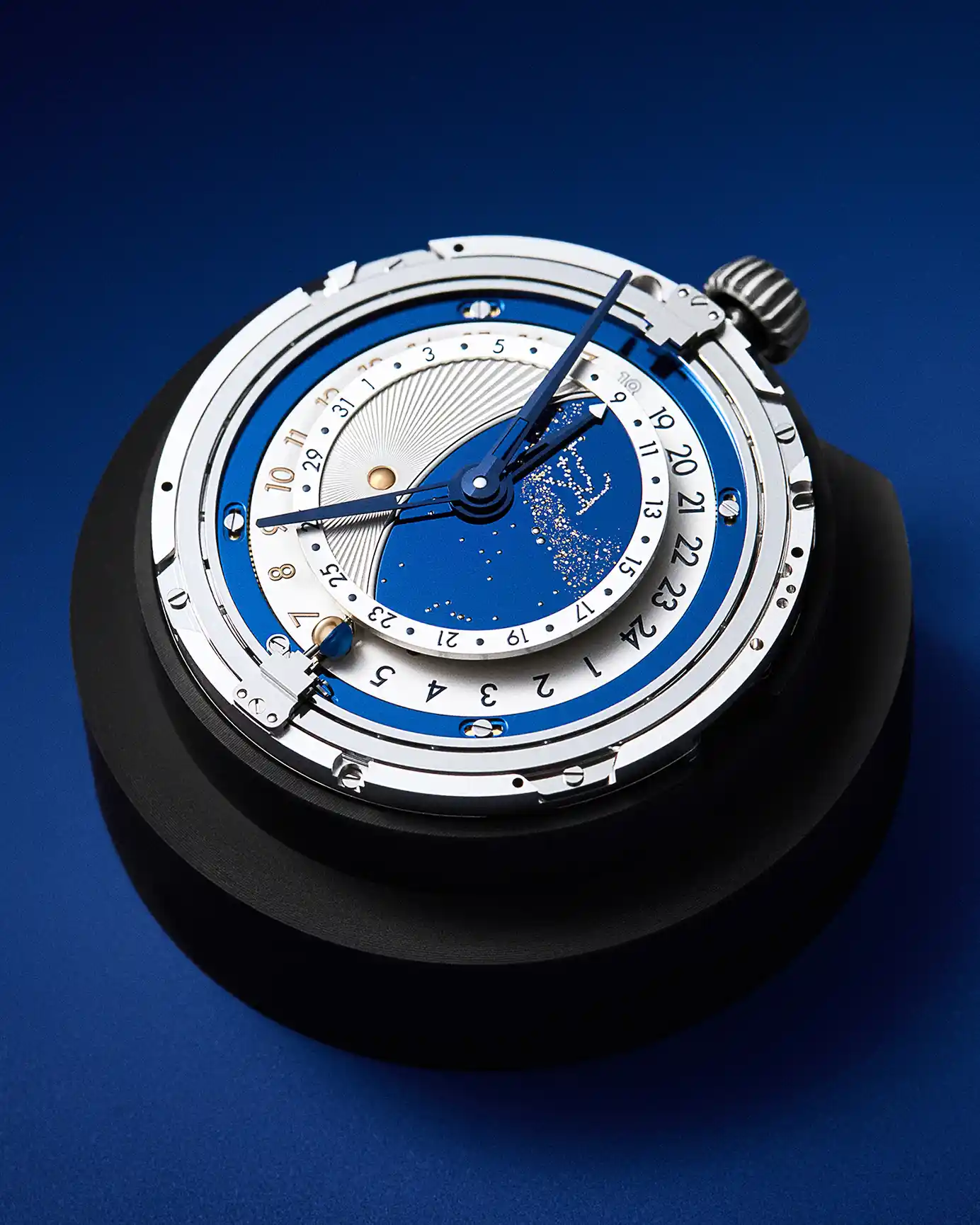
Inside, the manually wound calibre DB2507LV offers a five-day power reserve and is calibrated for modern travel. A second time zone, day-night indication, and jumping date speak to function, but the execution remains measured rather than overt. A blued-titanium balance wheel, proprietary shock-absorption system, and carefully considered architecture ensure both stability and precision.
 |
 |
The dial introduces another layer of complexity. A constellation, formed from individually set white-gold pins, emerges across a deep blue titanium surface, subtly revealing the initials “LV” within its composition. Gold leaf is applied by hand, creating a quiet luminosity that shifts almost imperceptibly as the watch moves. A spherical day-night indicator rotates continuously, offering a sculptural reading of time that feels as intuitive as it is precise.
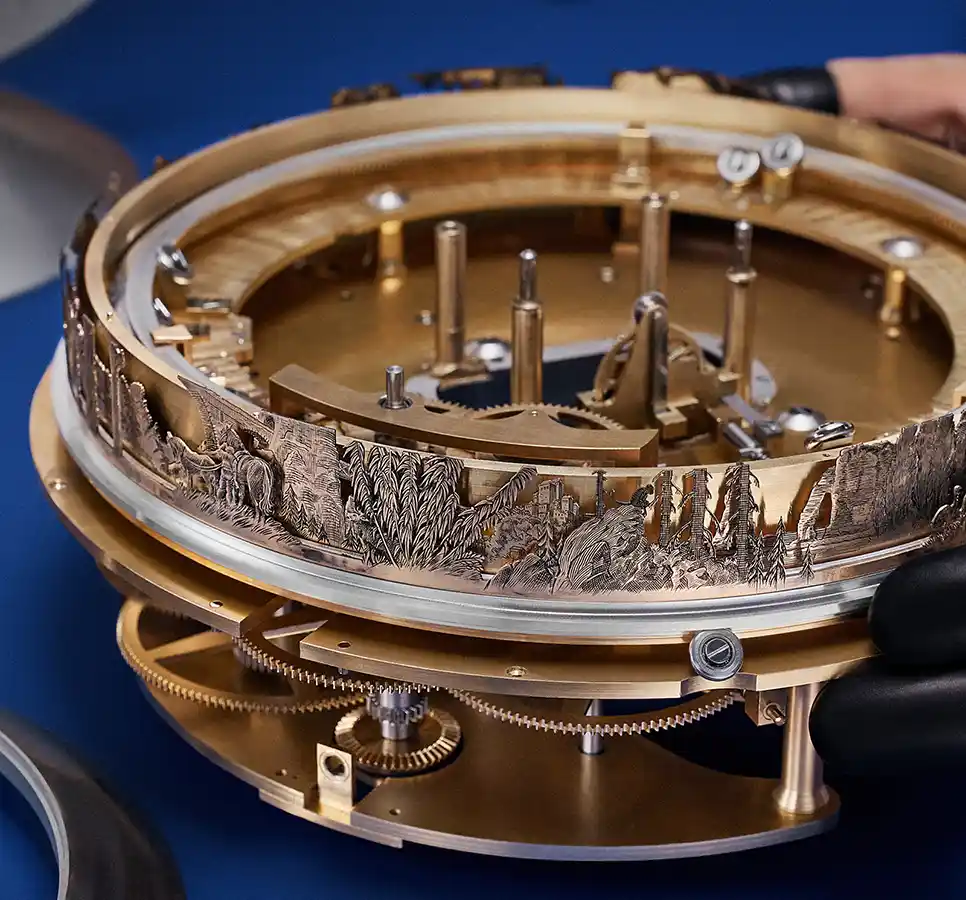
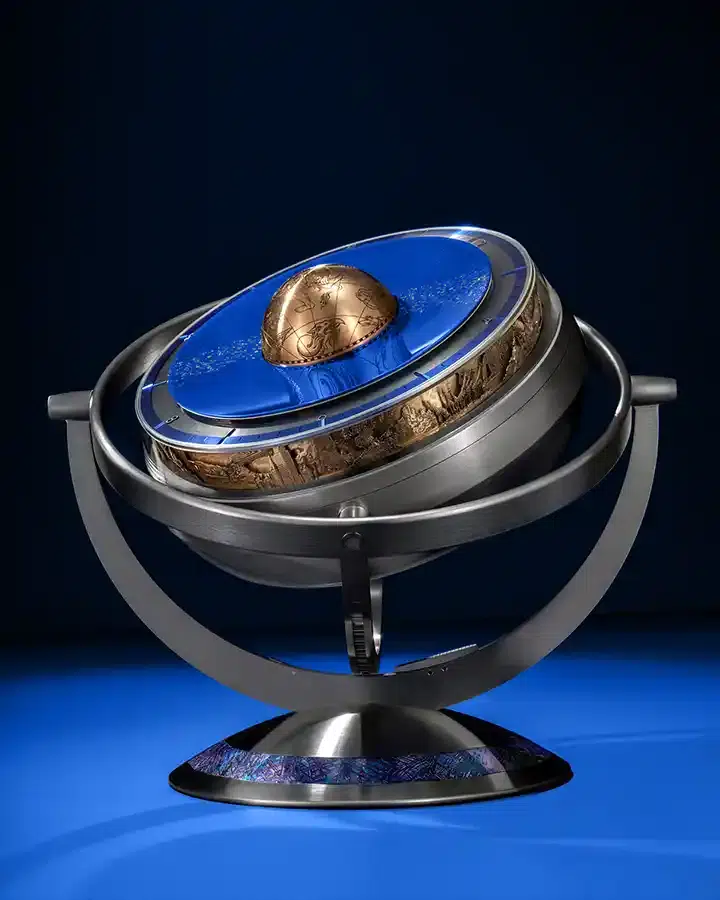
If the wristwatch reflects movement, the accompanying Sympathique clock suggests permanence. Comprising more than 700 components and offering an 11-day power reserve, it functions as both instrument and companion. When the watch is placed within its cradle, it is automatically wound and reset, a process that unfolds gradually, almost ceremonially. Here, historical complexity is distilled into something unexpectedly intuitive.
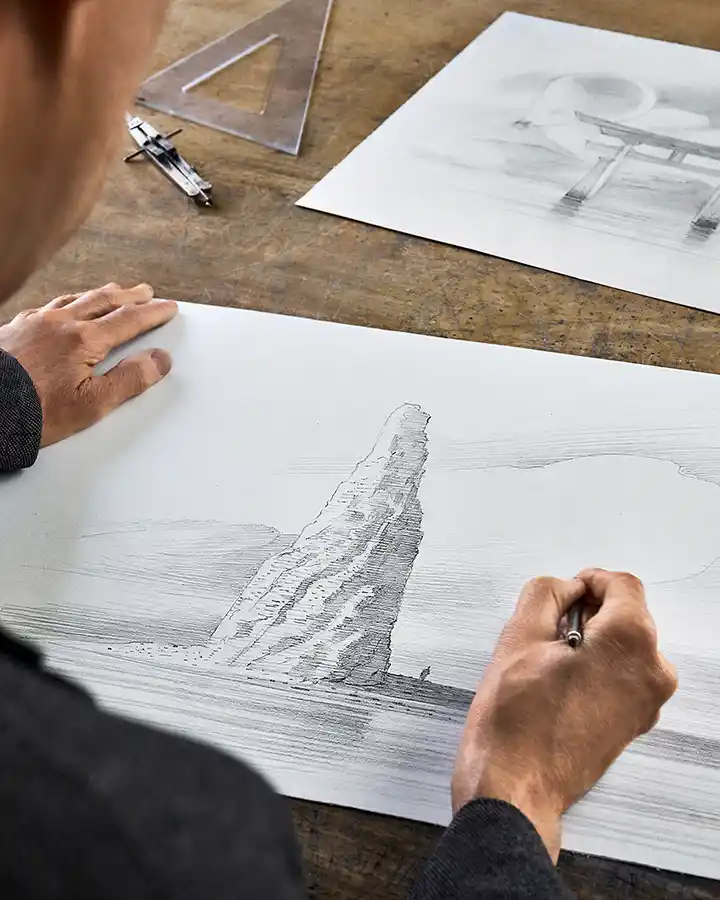
At its base, a marquetry of blued meteorite anchors the clock, introducing a material connection between earth and sky that mirrors the celestial language of the dial. Around the mechanism, engraved dioramas by François Schuiten unfold in slow rotation, scenes of travel rendered in miniature, suggesting that time is less linear than cyclical, less measured than experienced.
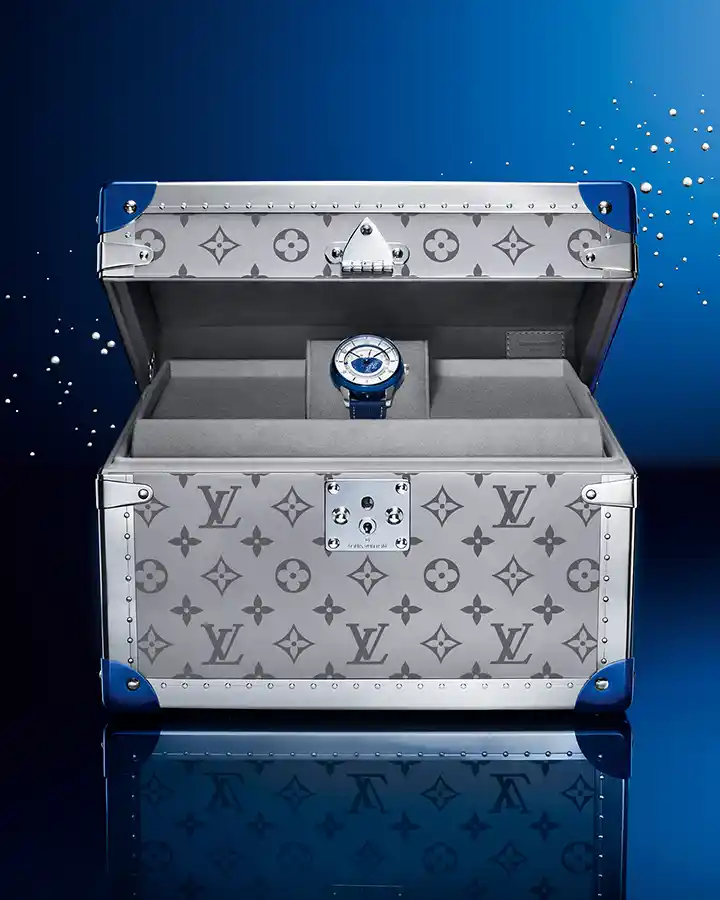
Production is deliberately limited. Just two complete sets pair clock and watch, accompanied by a small number of additional wristwatches. Each is housed within a bespoke titanium trunk crafted at Louis Vuitton’s Asnières ateliers, extending the narrative of travel into something physical, architectural, and enduring.
What distinguishes the LVDB-03 is not its complexity, though that is considerable, nor its rarity, though that is undeniable. It is the clarity of its intent. This is watchmaking approached not as a demonstration, but as a discipline where past and present are allowed to coexist without tension.
In an era defined by acceleration, Louis Vuitton and De Bethune have chosen a different approach.
They have slowed time down—and, in doing so, given it new meaning.