For more than half a century, the Monaco has occupied a rare place in watchmaking. Instantly recognizable by its square case and forever linked to motorsport through Steve McQueen’s legendary appearance in Le Mans, the watch has become one of the industry’s most enduring icons.
Which is precisely why TAG Heuer’s latest move is so surprising.
Unveiled during Formula 1’s Grand Prix de Monaco weekend, the new Monaco Speed 12 doesn’t simply reinterpret the collection—it challenges the very identity that has defined it for decades.
Collectors have long associated the Monaco with chronographs. From its groundbreaking debut in 1969 as one of the world’s first automatic chronographs to countless racing-inspired editions that followed, timing laps has been central to the model’s DNA. Yet the Monaco Speed 12 abandons the chronograph entirely in favor of something far more unconventional.
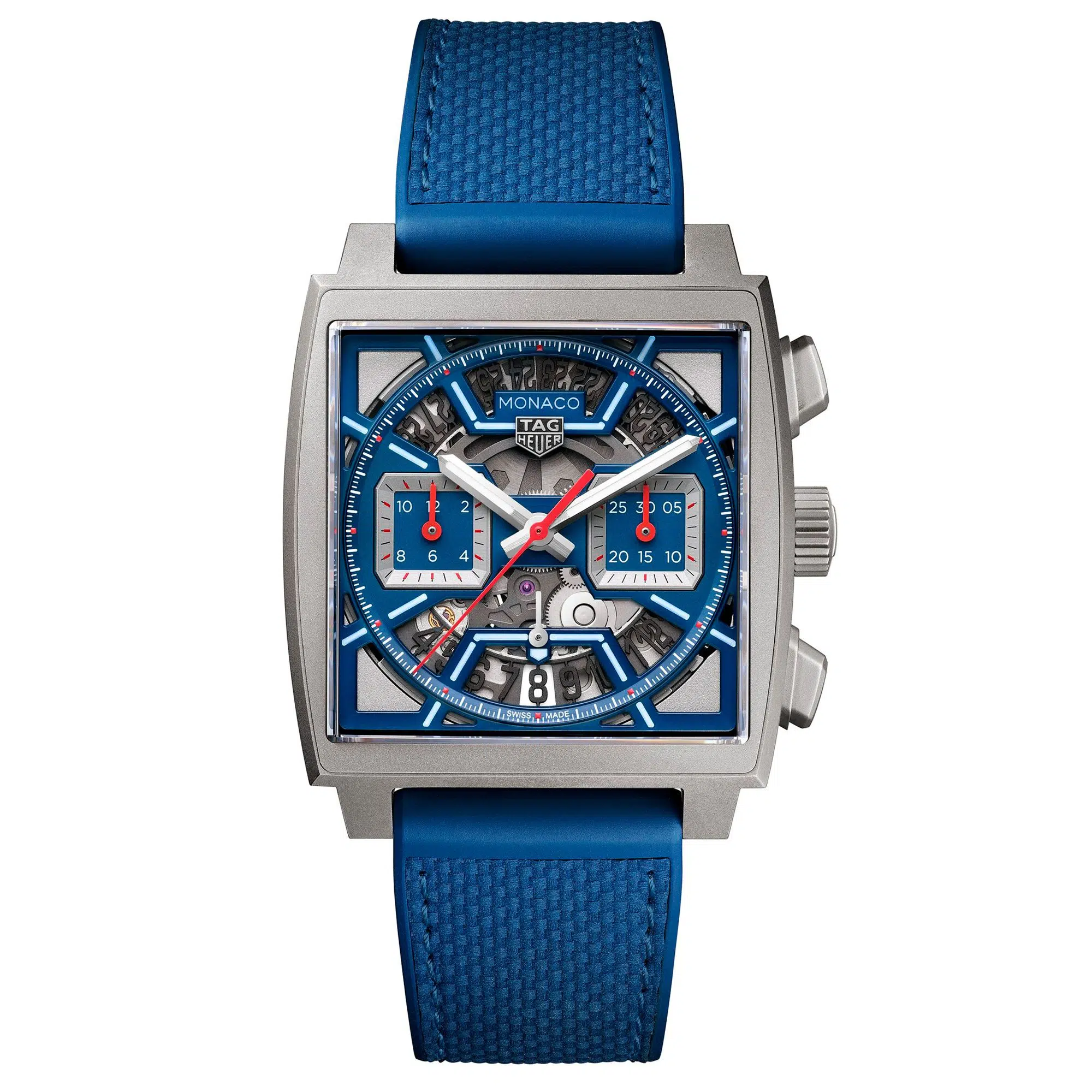
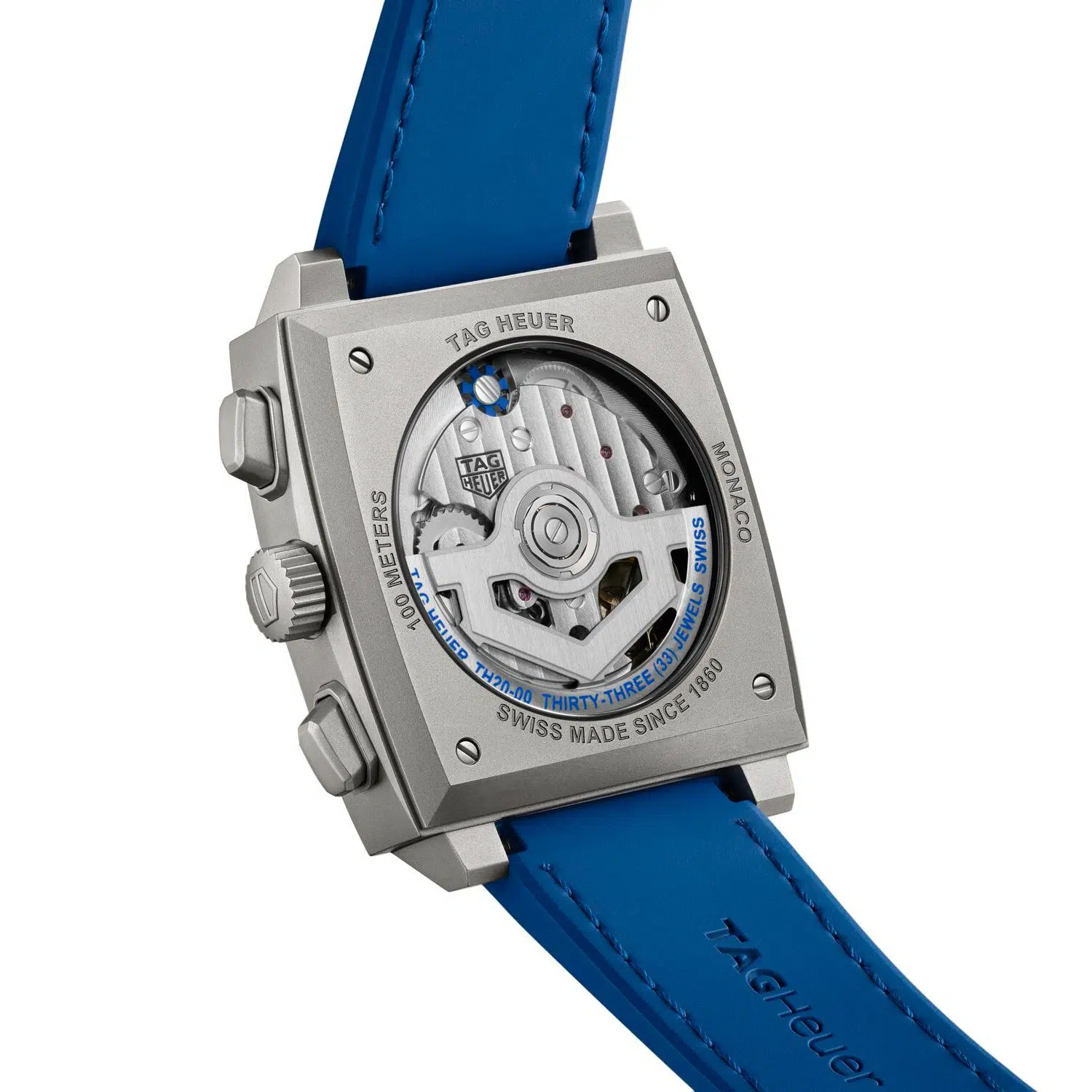
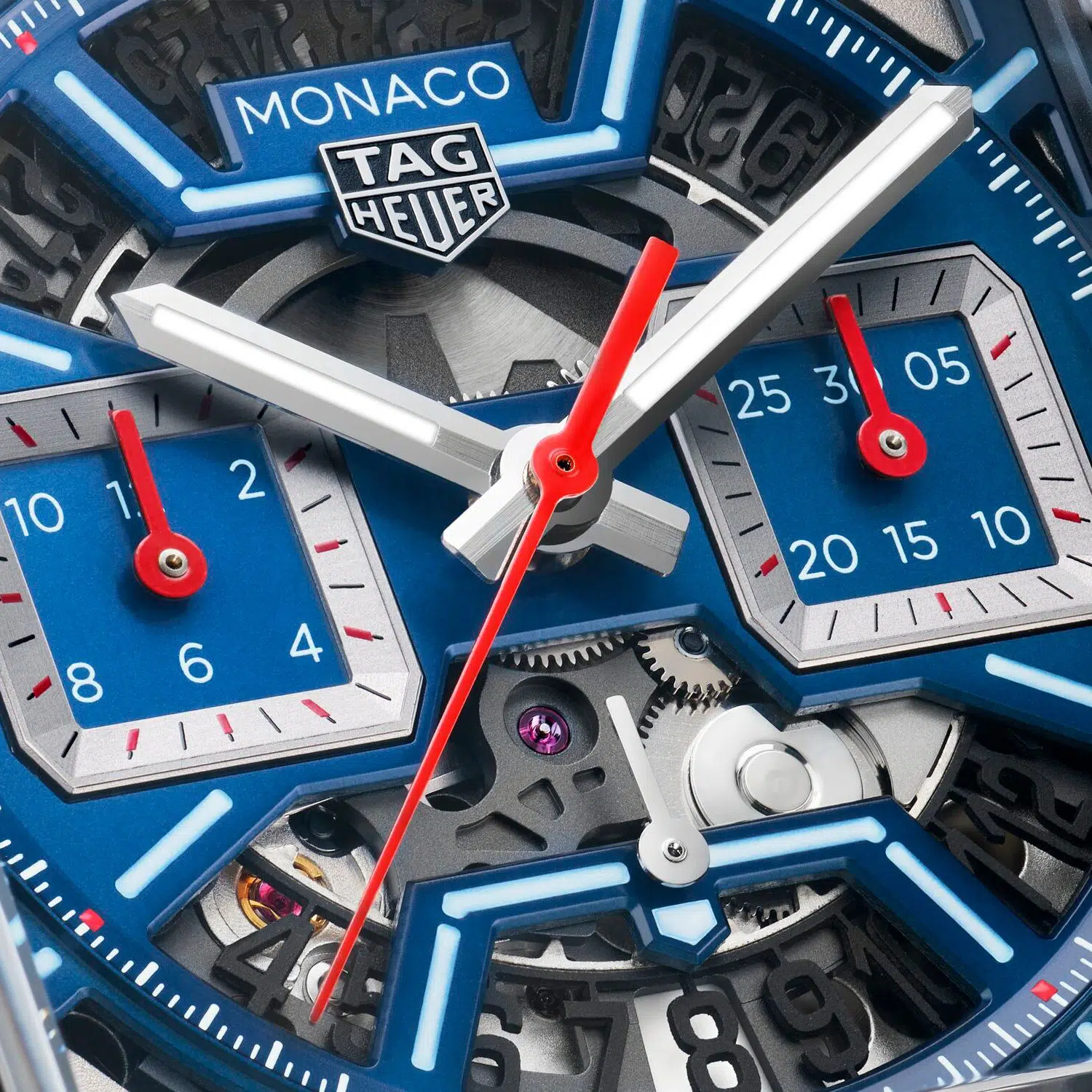
Instead of subdials and elapsed-time counters, the watch is powered by a highly specialized Spin Time movement developed by the master watchmakers at La Fabrique du Temps, the Geneva-based horological atelier within the LVMH universe. The mechanism replaces a traditional hour hand with twelve rotating piston-shaped cubes that jump instantaneously to indicate the current hour.
 |
 |
The result is a display that feels less like a conventional wristwatch and more like a miniature mechanical engine.
The automotive inspiration is intentional. Each jumping-hour indicator resembles a racing piston, transforming every hour change into a kinetic performance that celebrates the engineering spirit of motorsport. For collectors accustomed to seeing racing themes expressed through colors and logos, the Monaco Speed 12 takes a far more sophisticated approach by embedding the inspiration directly into the movement itself.
Equally compelling is the architecture surrounding it.
The 40mm case is crafted from Grade 5 titanium and extensively skeletonized, exposing the movement’s intricate mechanics from nearly every angle. The open-worked construction allows light to move through the watch while emphasizing the rotating-hour complication at its center. The effect is dramatic without feeling excessive—a balance that many contemporary skeleton watches struggle to achieve.
More importantly, the Monaco Speed 12 arrives at a moment when collectors are increasingly gravitating toward originality. In a market saturated with heritage reissues and incremental updates, genuinely unexpected mechanical concepts have become increasingly rare. The most sought-after pieces today are often those willing to challenge convention rather than simply celebrate it.
That is what makes this release significant.
TAG Heuer could have easily introduced another limited-edition Monaco chronograph wrapped in racing colors and sold every example. Instead, the brand chose to experiment with one of its most recognizable designs, reimagining a motorsport icon through an entirely different lens.

With production limited to just 50 pieces worldwide and deliveries beginning in December, exclusivity is guaranteed. Yet scarcity alone is not what will attract serious collectors.
The Monaco Speed 12’s appeal lies in its willingness to take risks. It honors the collection’s racing heritage while refusing to be constrained by it, demonstrating that even one of watchmaking’s most celebrated icons can still surprise.
In an era when many luxury brands look to the past for inspiration, TAG Heuer has created a Monaco that feels unapologetically focused on the future. For collectors, that may be its most compelling feature of all.