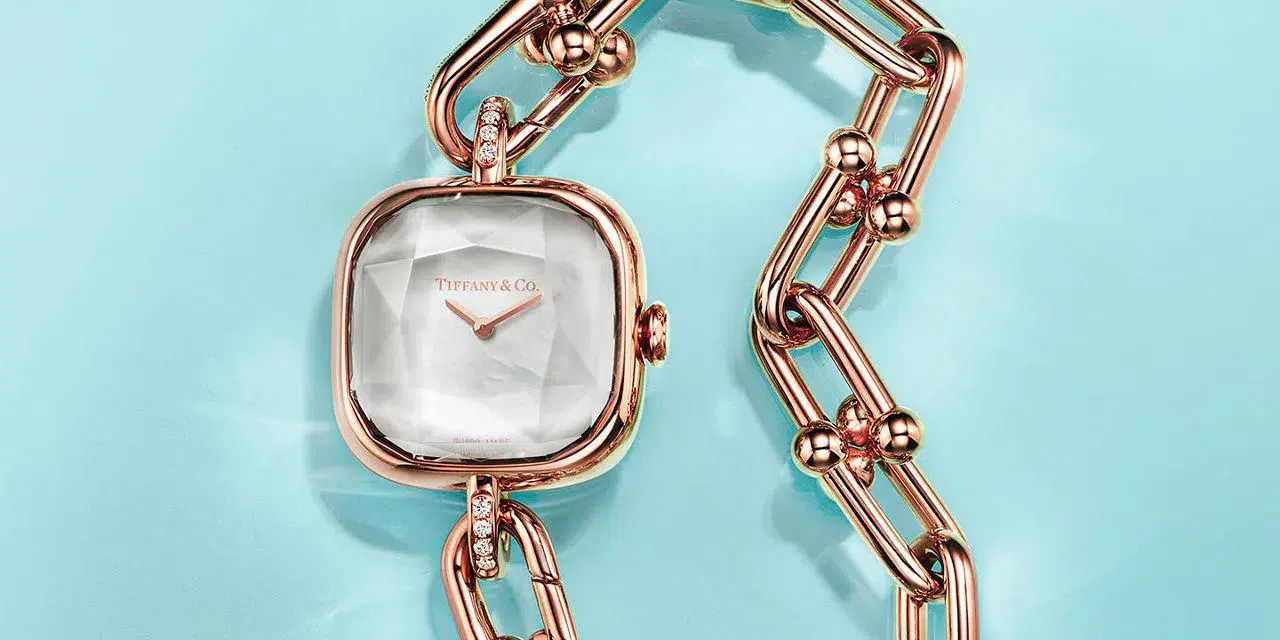
There are moments when a house extends its language, and others when it refines it. With the HardWear watch, Tiffany & Co. does not introduce something new so much as translate something already resolved, its sculptural identity, into the dimension of time.
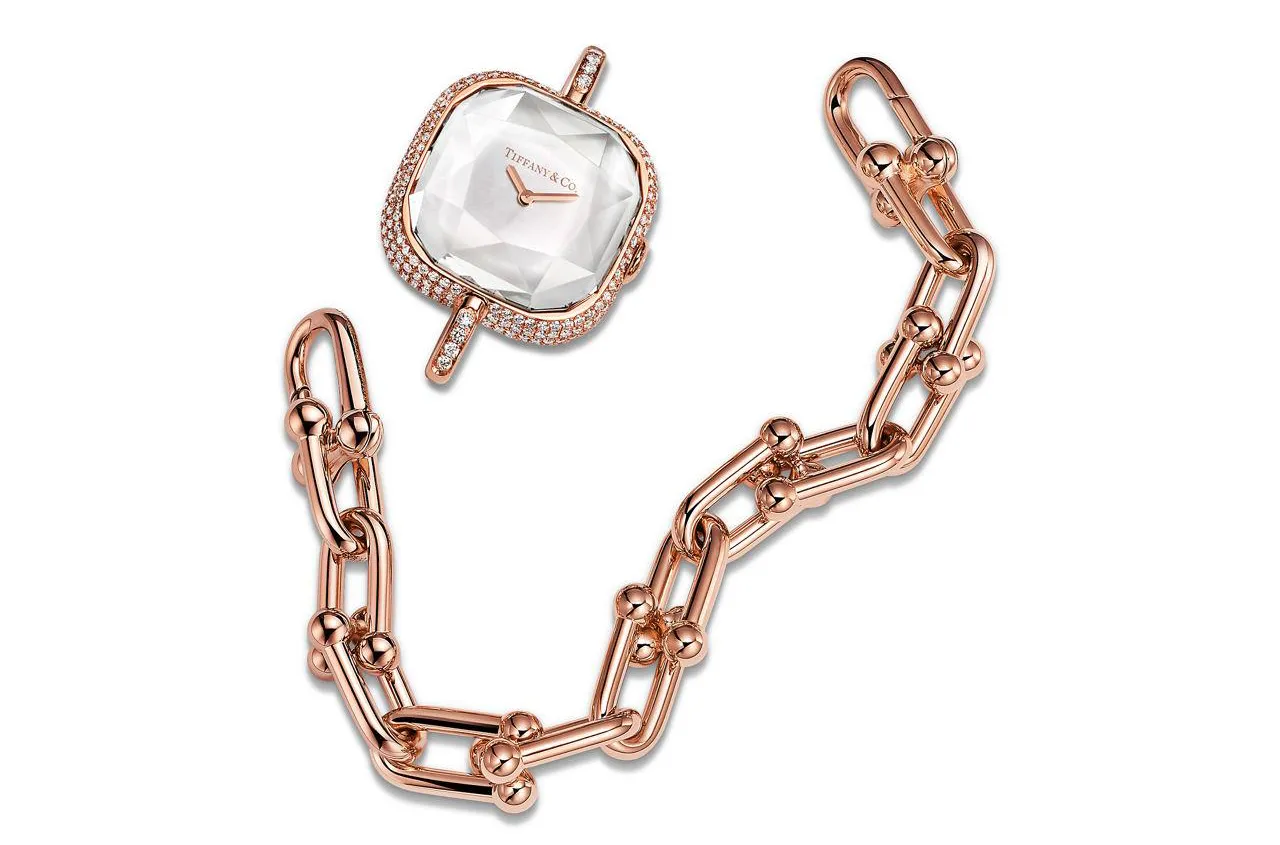
The HardWear collection has long been defined by structure. Its chain links carry weight and intention, each form articulated with a clarity that feels closer to architecture than ornament. In watch form, that language does not soften. It sharpens. The bracelet becomes both frame and foundation, holding the piece together with a discipline that resists excess.
 |
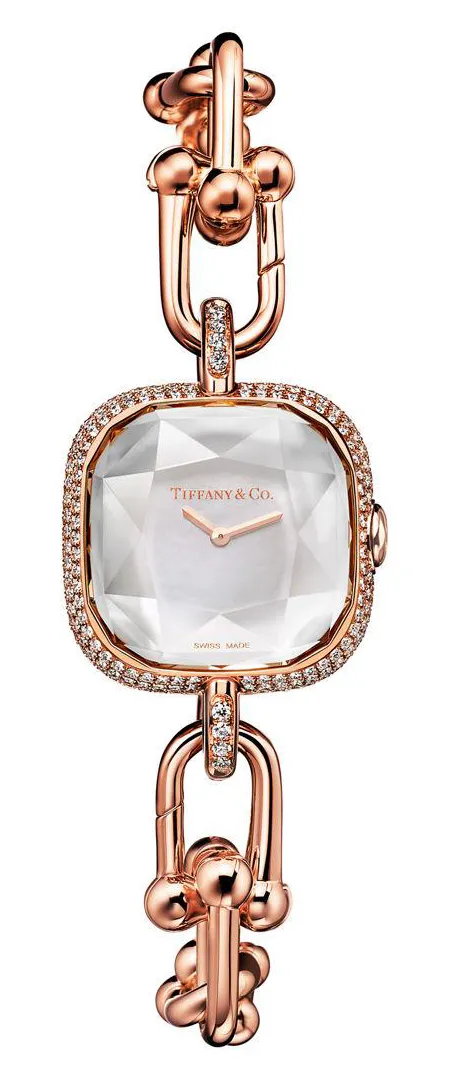 |
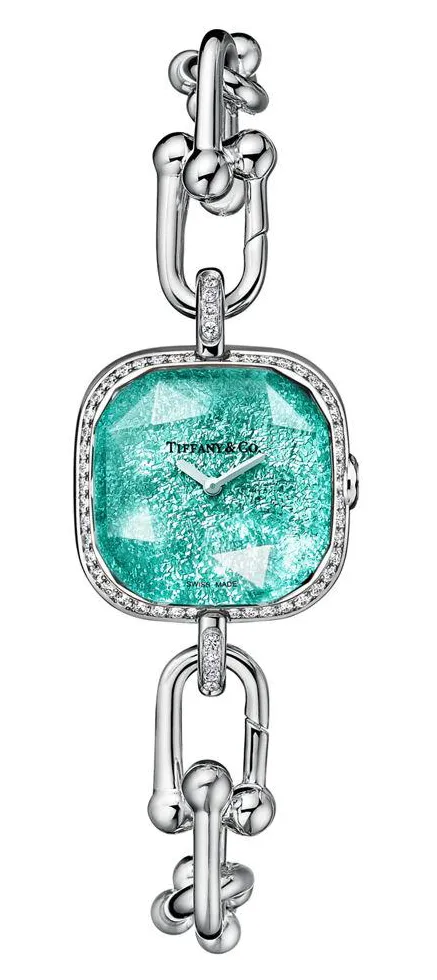
What distinguishes this transition is not the addition of function, but the preservation of intent. The dial, rendered in luminous mother-of-pearl and encircled by round brilliant diamonds, does not attempt to command attention. It remains composed within the object, allowing the watch to exist as a unified whole. Time is present, but it is not the focal point.
That restraint is deliberate. Increasingly, within houses rooted in jewelry, the watch is no longer approached as a purely horological instrument. It is treated as an extension of identity, an object that must carry the same design language across categories without dilution. In this context, the HardWear watch does not compete with traditional watchmaking. It bypasses the comparison entirely.
Its value lies elsewhere.
The bracelet settles against the wrist with a quiet, deliberate weight, reinforcing its origin not as a timepiece, but as jewelry that happens to measure time. Gold, diamonds, and mother-of-pearl are not introduced as statements, but as materials resolved within a larger composition. Surfaces remain controlled, transitions precise, and nothing exists without purpose.
This reflects a broader shift within luxury, where refinement is no longer defined by addition, but by resolution. The most compelling objects are not those that do more, but those that remain coherent while doing it. They hold their identity intact, even as they evolve.
In that sense, the HardWear watch is not an expansion.
It is a continuation, one where time is absorbed into form, rather than layered onto it.
And in that absorption, something subtle changes. The object no longer marks time as an external measure. It carries it internally, as part of its structure.
What remains is not simply a watch, but a composition, one that exists with the same clarity whether it is read or simply worn.