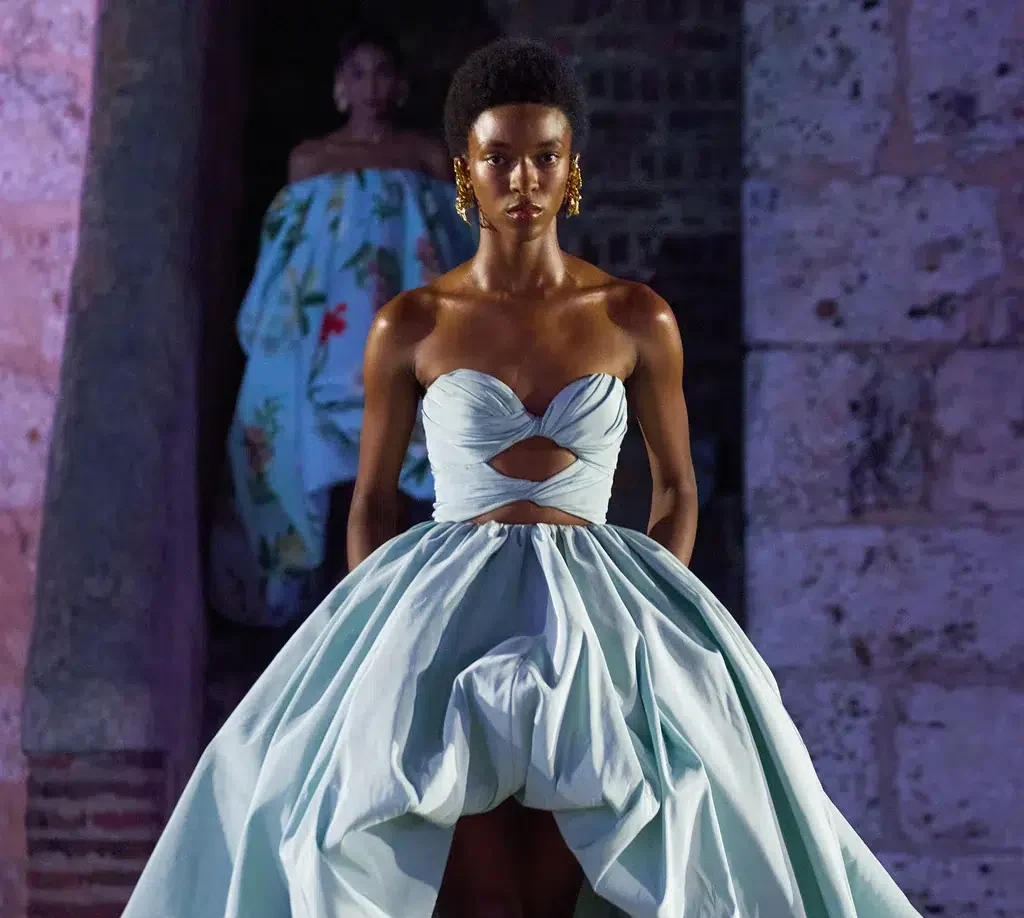
In a fashion season dominated by spectacle and accelerated novelty, Oscar de la Renta’s Pre-Fall 2026 collection unfolded as something far rarer: a moment of cultural clarity. Staged within the ancient stone walls of Fortaleza Ozama in Santo Domingo’s Colonial City, the show marked the House’s 60th anniversary not with theatrical excess, but with quiet, deliberate significance. It was a return to origin and a reaffirmation of what enduring luxury truly represents.
For a brand whose identity has long been shaped by refinement, diplomacy, and craft, the choice of setting was neither nostalgic nor symbolic window dressing. It was architectural storytelling. Fortaleza Ozama, the oldest European fortress in the Americas, served as a historical counterpoint to a collection rooted in lineage rather than trend, continuity rather than reinvention.
 |
 |
 |
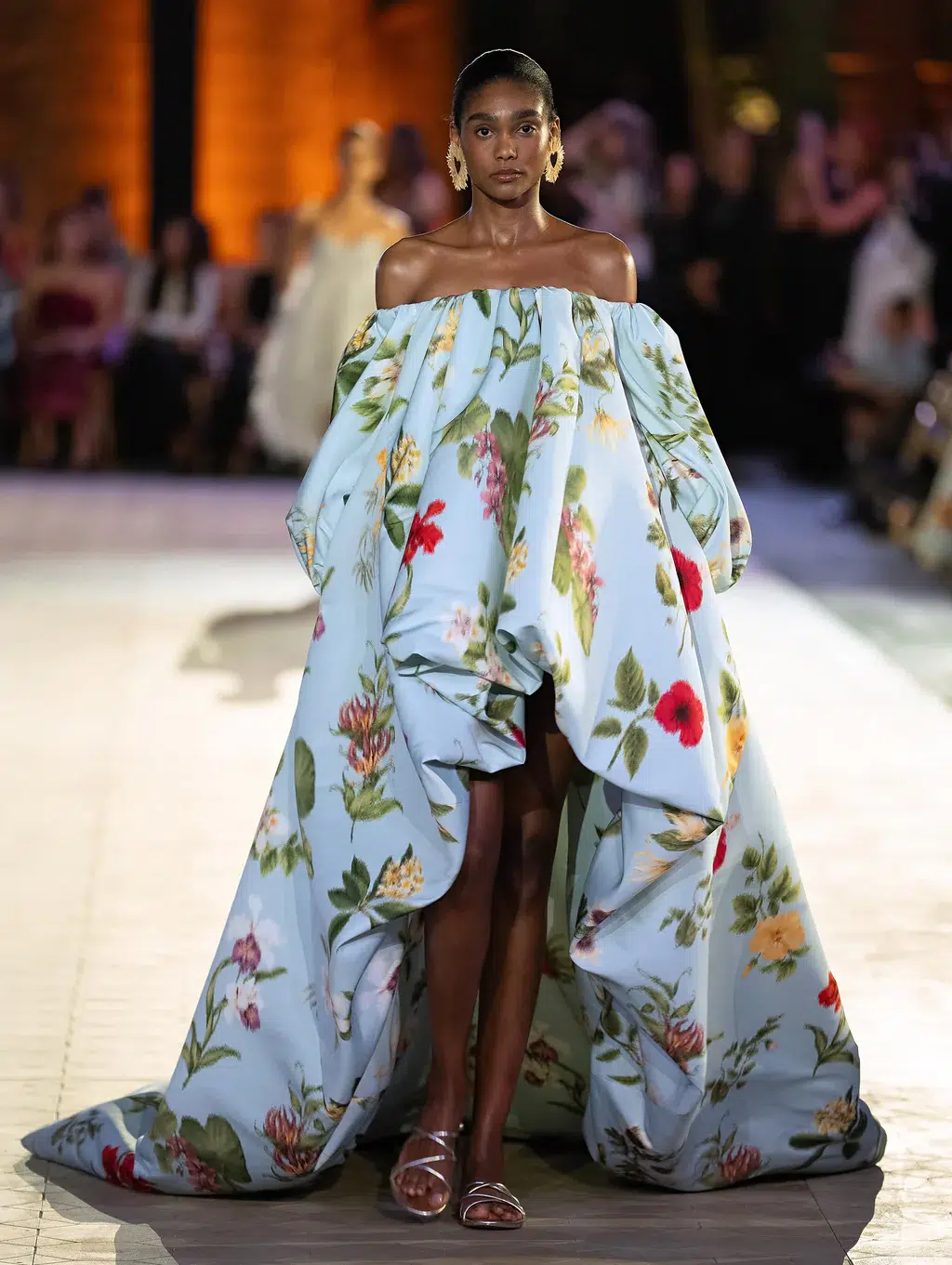
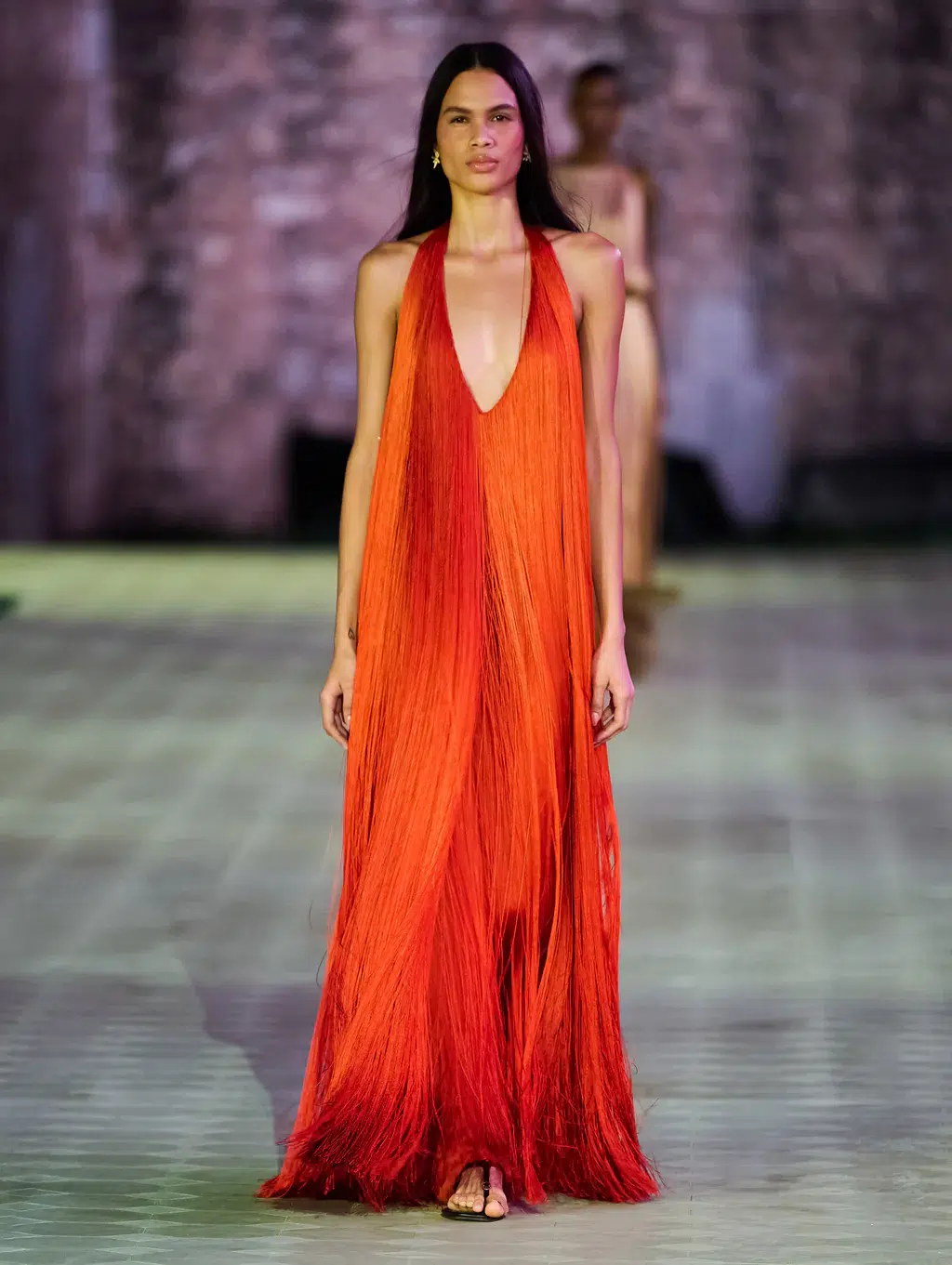
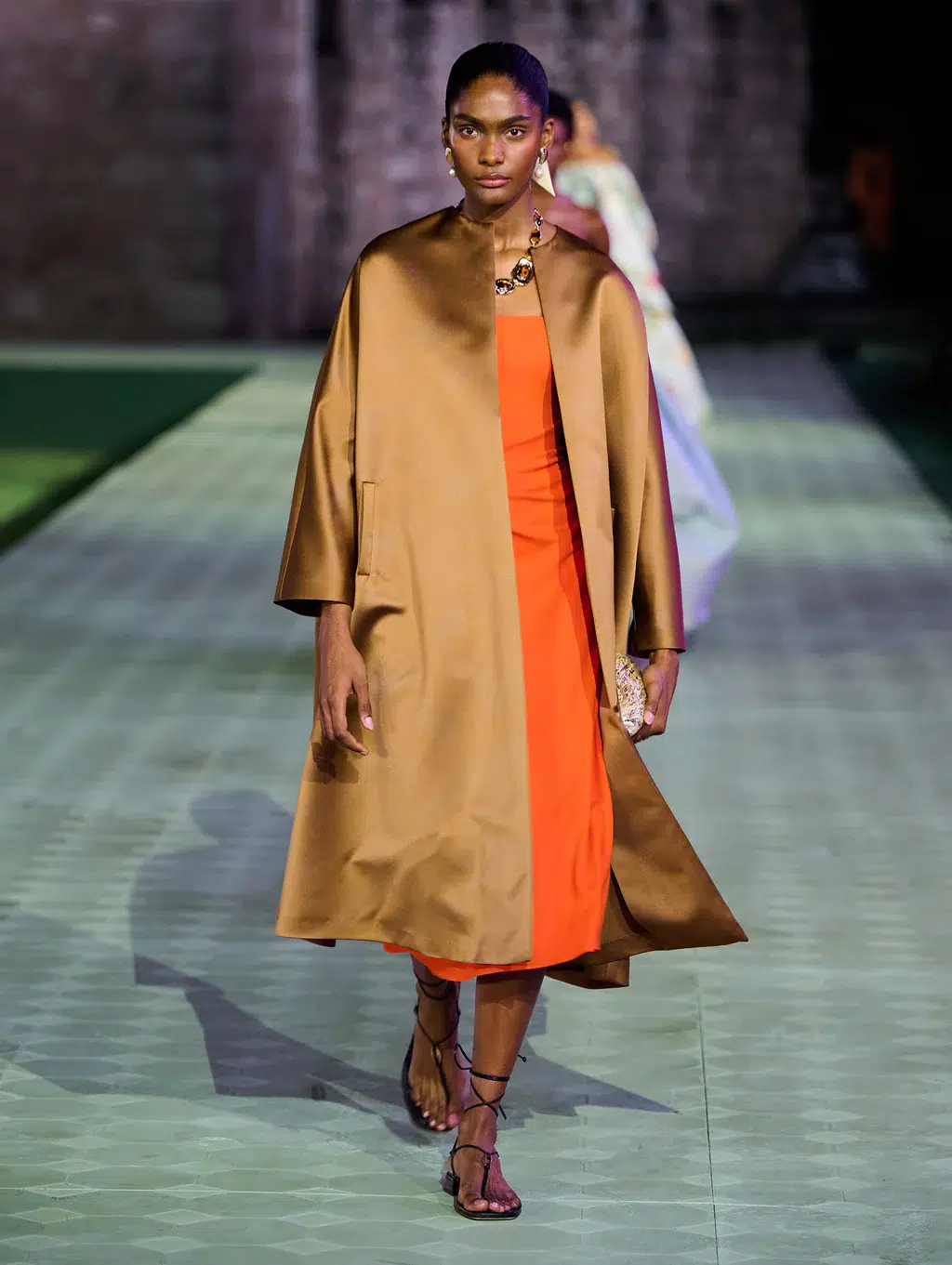
Under the direction of Laura Kim and Fernando Garcia, the collection drew directly from Oscar de la Renta’s Dominican heritage without resorting to folkloric shorthand. Instead, the designers rendered memory into material: hand-painted scenes of the fortress and of the late couturier’s Punta Cana residence appeared across cotton poplin, satin, and fine jersey.
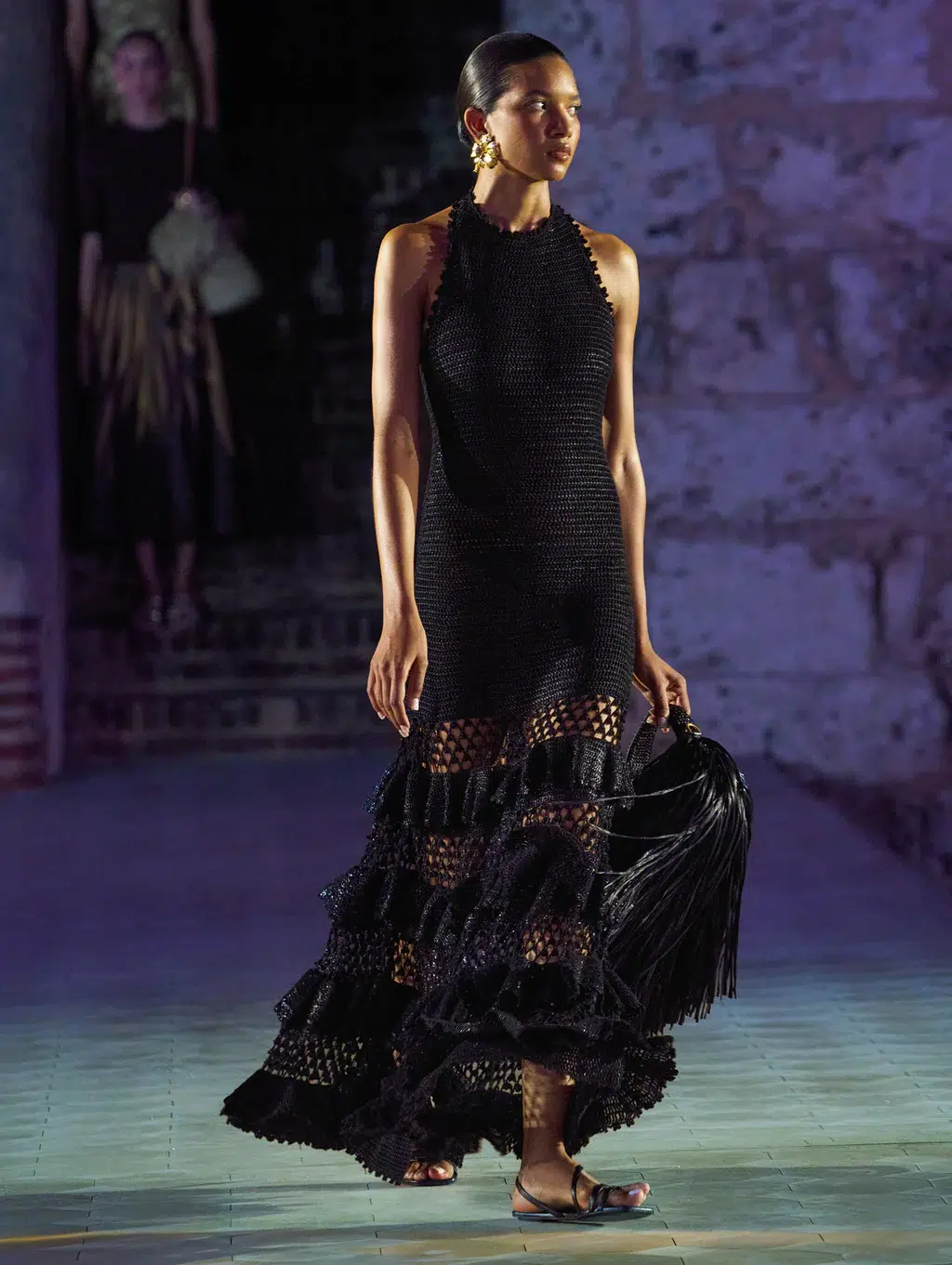
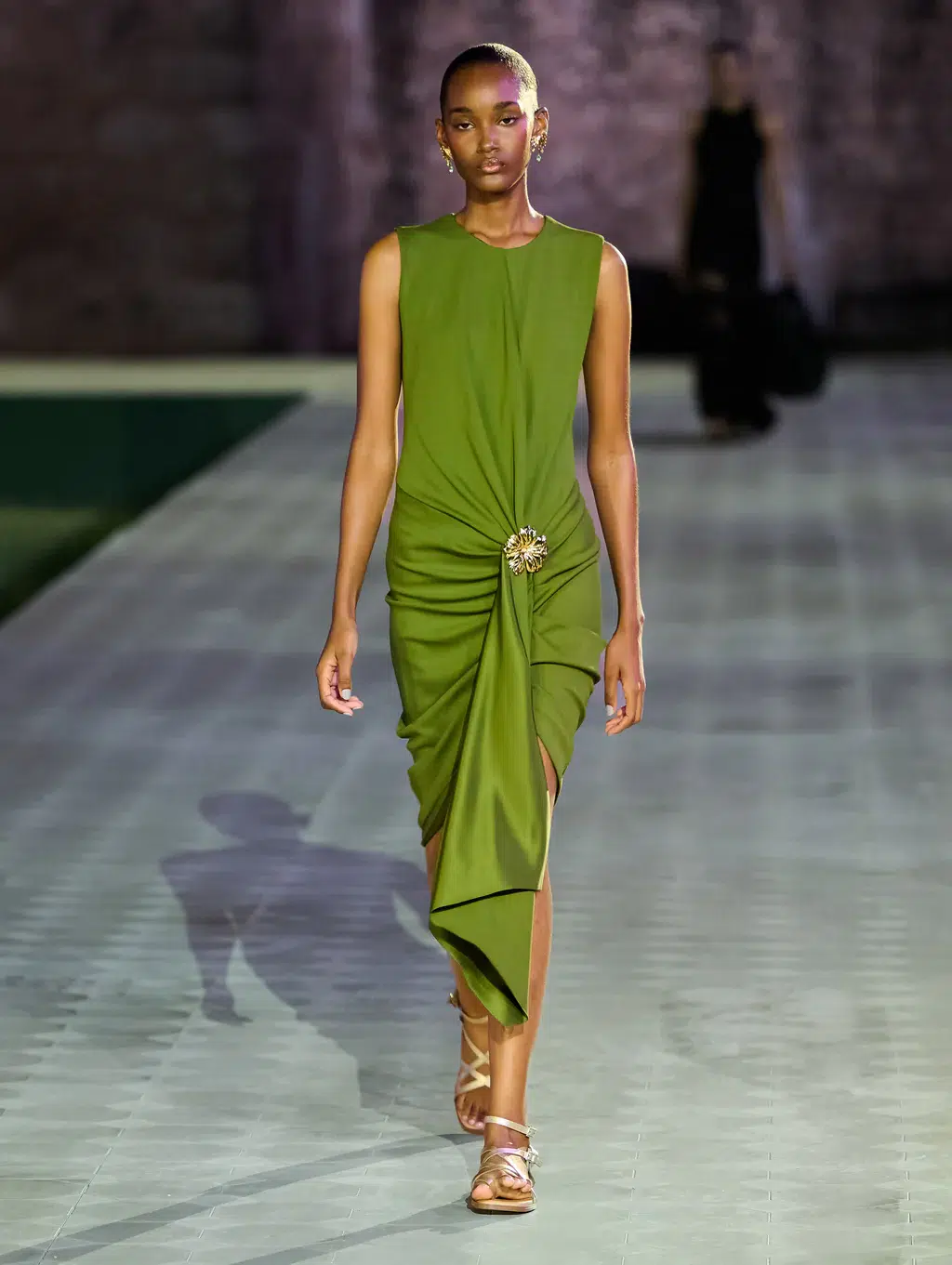
The palette was restrained and grounded, tamarind, saltwater blue, khaki, soft ivory, allowing form and surface to carry the narrative. Florals and palm-leaf motifs appeared not as decorative flourish, but as structural elements: chinoiserie-inspired prints, raffia and bugle-bead intarsia, and embroidered fringing that recalled artisanal processes more than seasonal styling.
 |
 |
 |
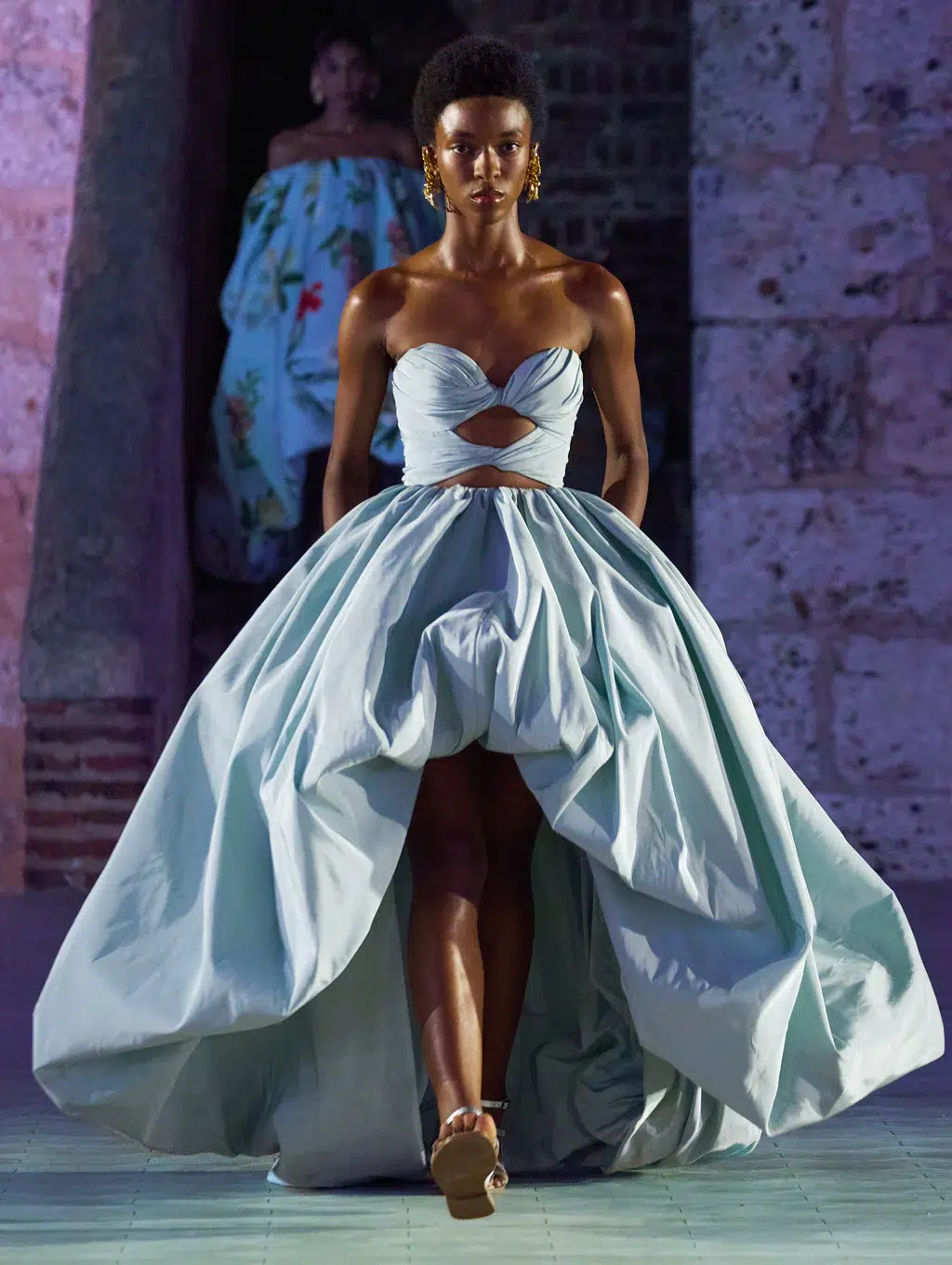
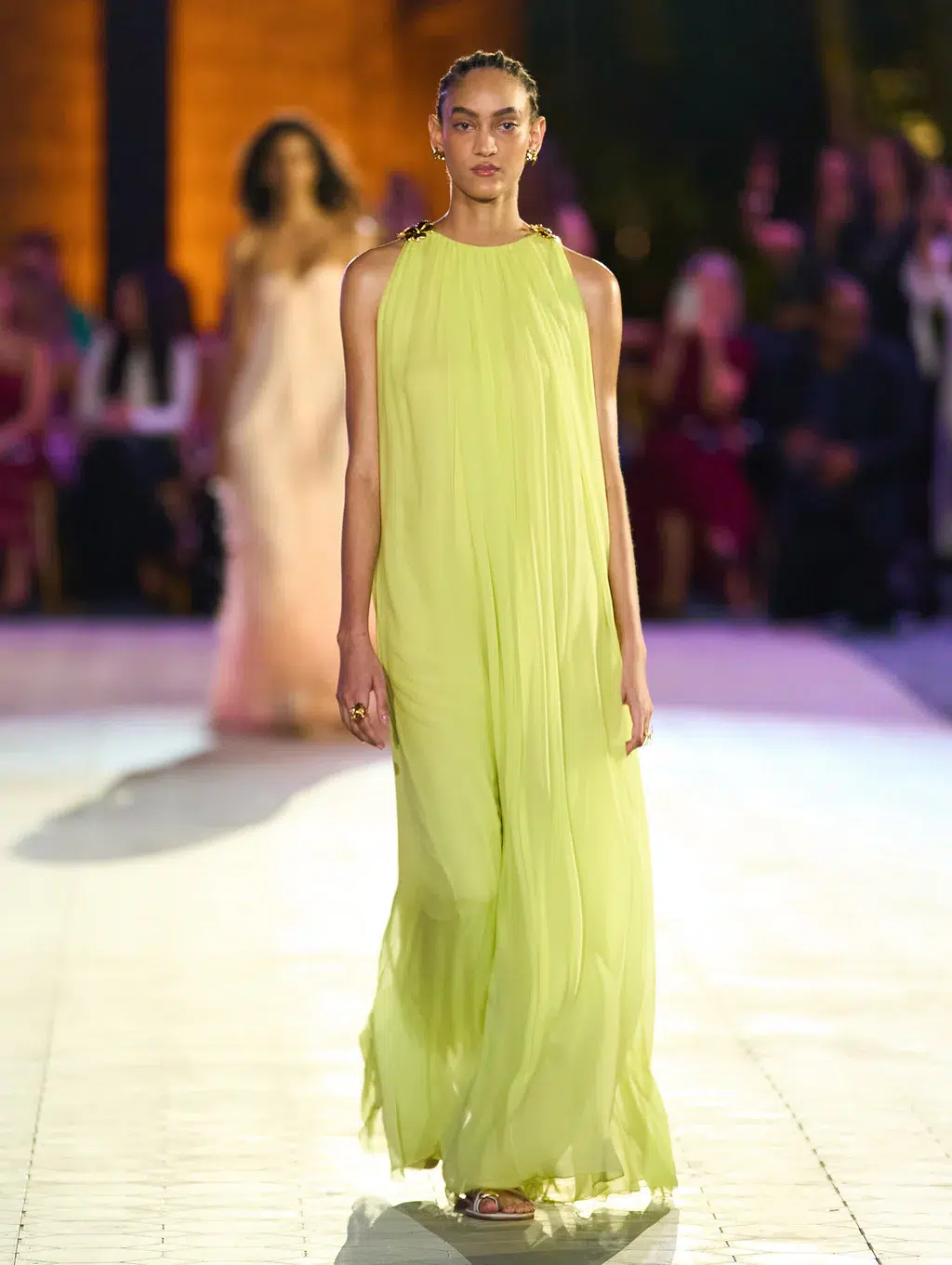
Silhouettes moved between architectural tailoring and fluid ease. Daywear retained composure; eveningwear carried controlled drama. The result was a collection that felt neither nostalgic nor overtly modern, but deliberately timeless, positioned outside the velocity of the trend cycle.
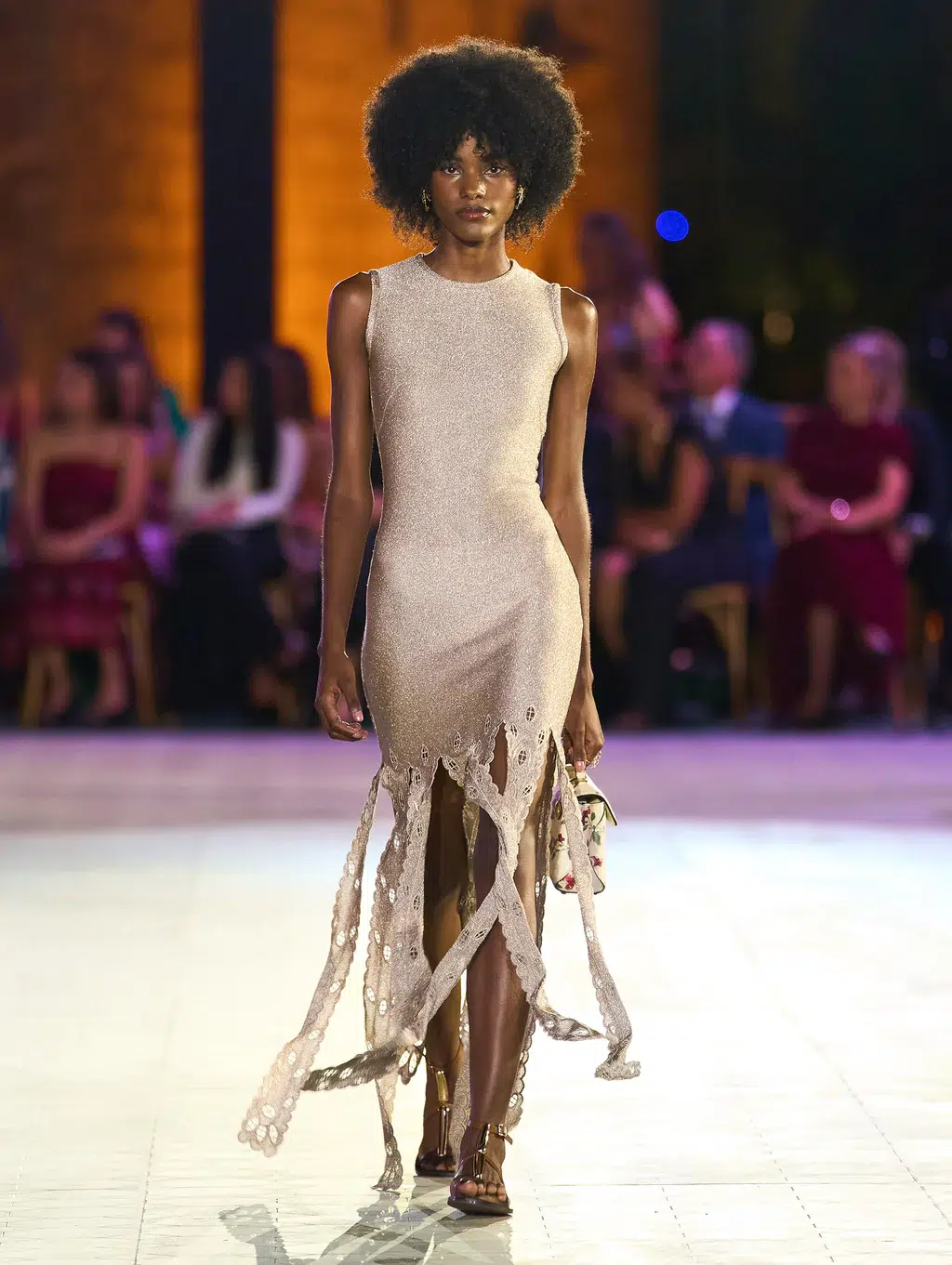
For the first time in the brand’s six-decade history, the runway featured an entirely Dominican cast. Fifty-one models, selected from local auditions, brought an authenticity that could not have been manufactured. Internationally renowned Dominican model Lineisy Montero opened the show; Hiandra Martínez closed it, framing the collection with a sense of generational continuity and national pride. The casting did more than reinforce the narrative; it completed it. The show was not merely presented in the Dominican Republic. It belonged to it.
 |
 |
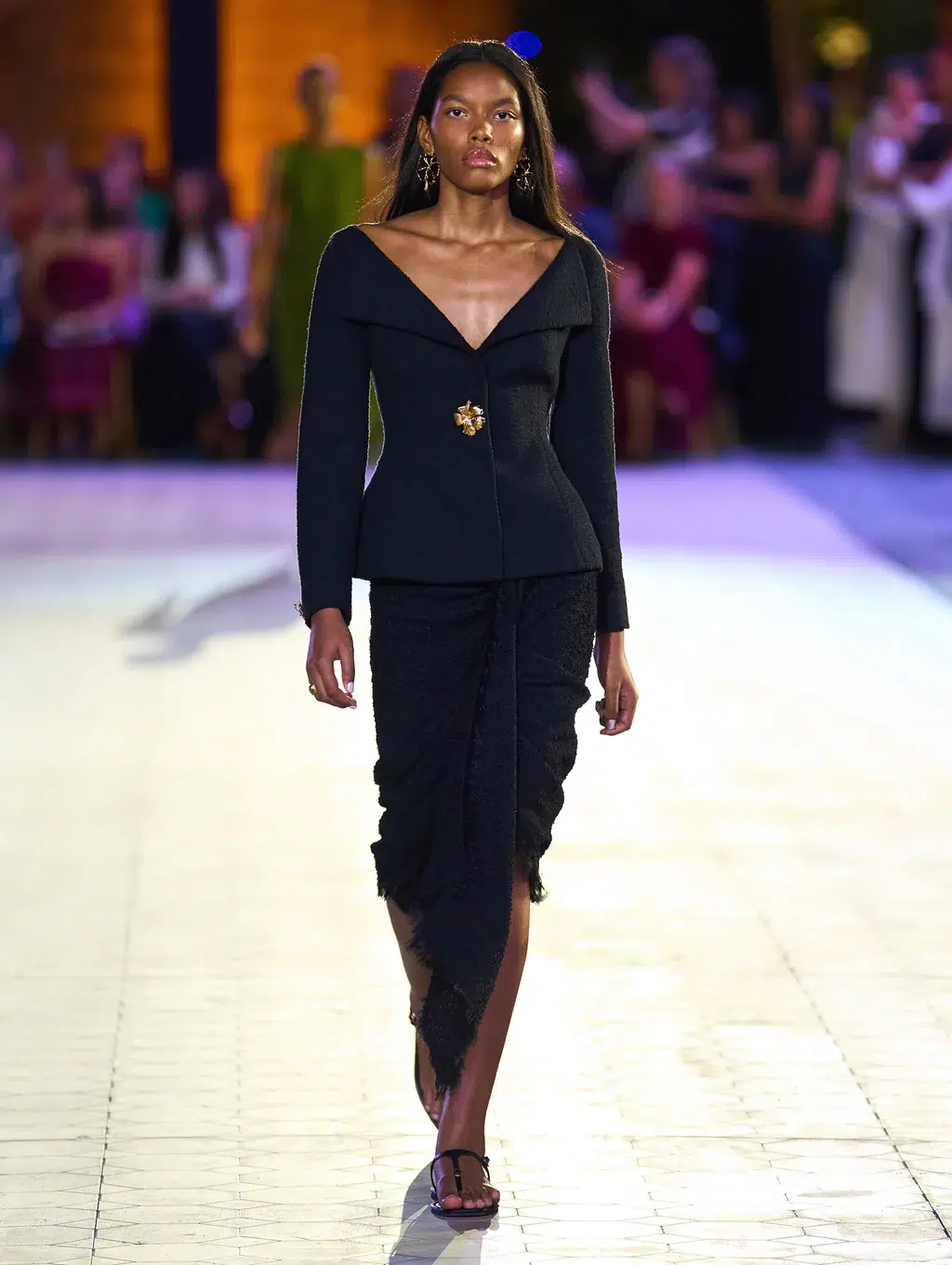 |
What distinguished Pre-Fall 2026 was not only its cultural grounding but its reaffirmation of craftsmanship as a form of strategic luxury capital. Hero motifs, particularly the palm leaf, were deployed across textiles and embroidery with technical precision. Raffia work, beadwork, and thread embroidery were executed at a level that positioned the collection closer to couture methodology than commercial pre-season dressing.
The finale gown, adorned with intricate thread-worked florals, distilled the collection’s intent into a single image: haute craftsmanship rendered with discipline rather than excess.
In its global resonance, the show joined a lineage of fashion moments that repositioned luxury as cultural stewardship, alongside Dior’s Mumbai Métiers d’Art, Chanel’s Dakar presentation, and Louis Vuitton’s Kyoto Cruise. Like those landmark shows, Oscar de la Renta’s Pre-Fall 2026 demonstrated how fashion, at its highest level, functions as soft power: shaping perception, honoring heritage, and exporting identity with elegance.
 |
 |
 |
This was not a runway spectacle designed for virality. It was a strategic act of brand authorship.
Pre-Fall 2026 will be remembered not for silhouettes alone, but for what it represented: a house reclaiming its narrative center. At a time when luxury increasingly chases immediacy, Oscar de la Renta chose permanence. Where others pursue disruption, it chooses lineage. Where many houses manufacture cultural relevance, it returns to cultural truth.
In doing so, the House delivered a reminder that the most persuasive form of luxury today is not novelty, visibility, or scale, but continuity, authorship, and context.
True luxury, once again, revealed itself not in spectacle, but in restraint.
| All photos courtesy of Oscar de la Renta