In Cartagena, where history is not preserved but lived, Four Seasons Hotels and Resorts has chosen not to build anew, but to restore, reinterpret, and ultimately redefine. The opening of Four Seasons Hotel and Residences Cartagena marks a rare kind of arrival: one that feels embedded rather than imposed.
Set within the animated district of Getsemaní, steps from the UNESCO-listed Walled City, the property unfolds across a series of historic buildings brought back to life through a years-long transformation. The effect is not singular, but layered, an architectural composition where colonial legacy and contemporary clarity exist in deliberate balance.
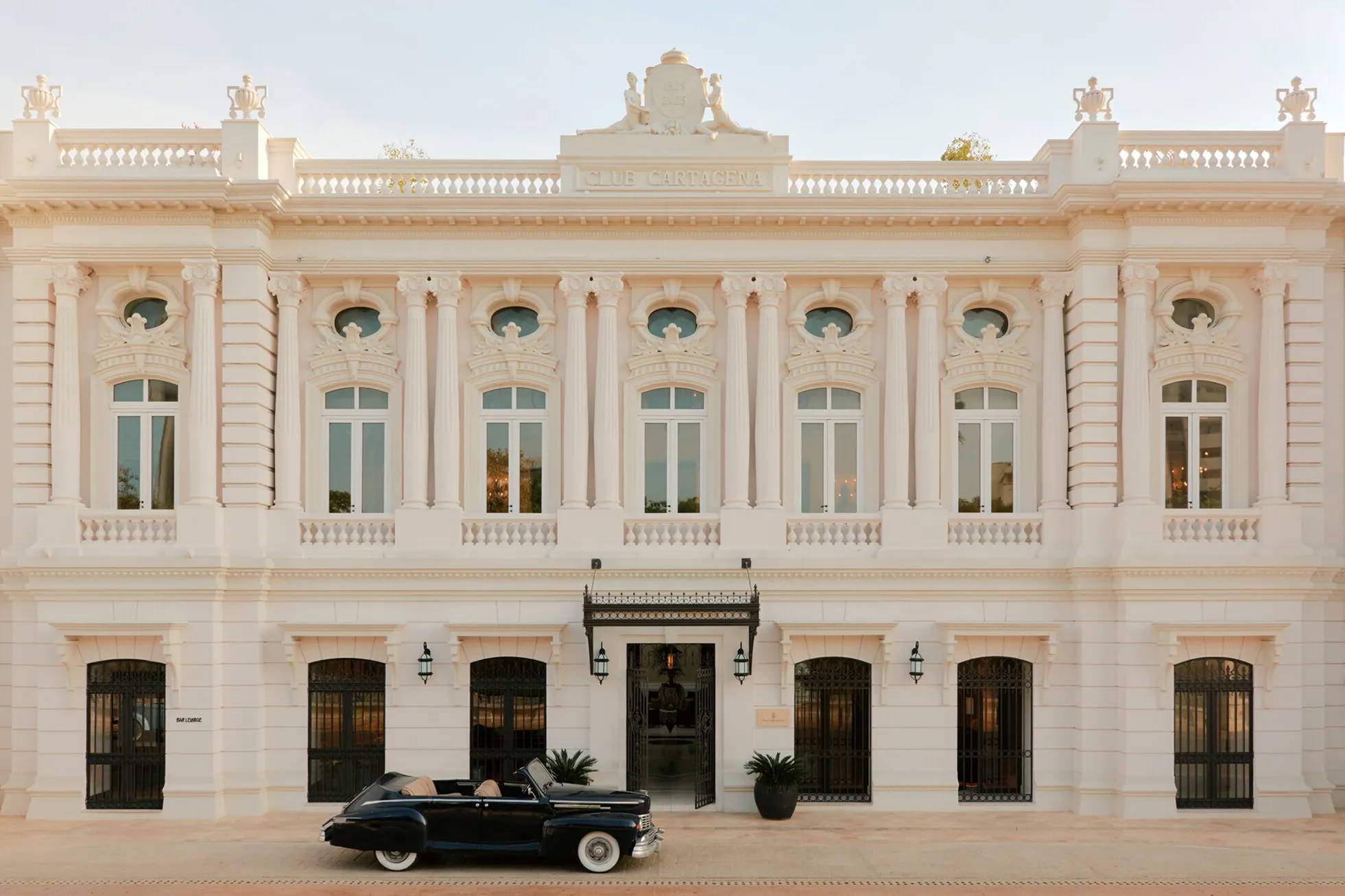
At the center of this vision is the late François Catroux, whose restrained yet deeply atmospheric approach defines the interiors. His work here, among his final contributions to hospitality, does not seek contrast with Cartagena’s past, but continuity. The reimagined Club Cartagena, a 1920s landmark, anchors the project with a sense of permanence that feels both historical and resolved.
Surrounding this foundation is a quietly formidable creative collective, including WATG, Wimberly Interiors, AvroKO, and SBM Interior Design, alongside Colombian artists whose work grounds the property in its cultural context. Sculptural plaster, bespoke furnishings, and site-specific artworks are not decorative gestures, but structural elements of the experience.
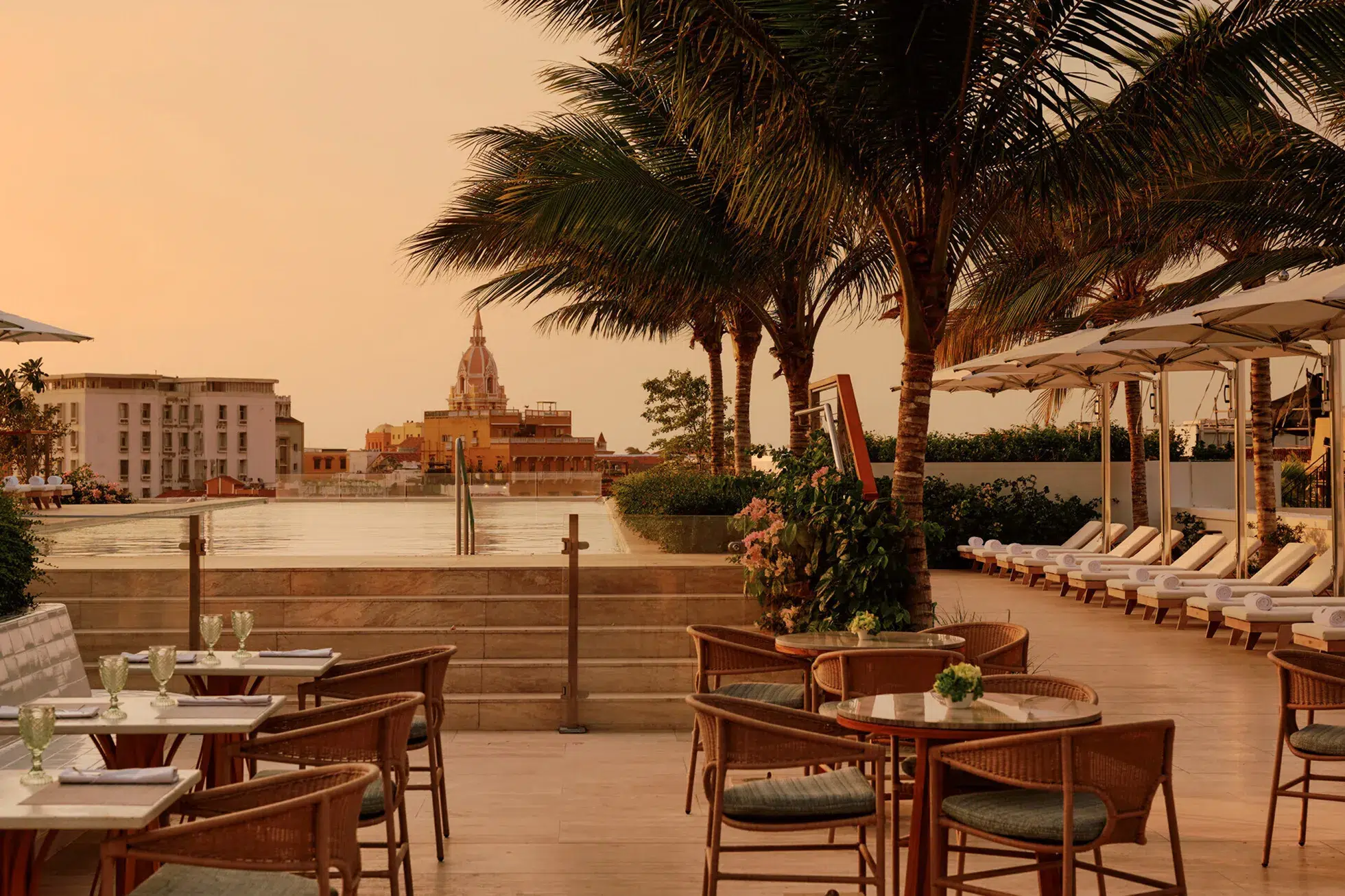
The accommodations reflect this same discipline. Across 131 rooms and suites, 27 within heritage buildings, original architectural details frame interiors that balance texture, light, and proportion with precision. The Catroux Suite distills the narrative: two bedrooms, private elevator access, and a terrace centered around a Moorish-inspired fountain, where craftsmanship becomes atmosphere.
Elsewhere, contemporary rooms introduce a quieter language, pared-back palettes, filtered daylight, and curated works that reflect a Cartagena still in motion.
A limited collection of private residences extends the offering, aligning with a broader shift in luxury hospitality toward permanence and integration. Here, ownership and experience converge within a fully serviced environment, without disrupting the integrity of the hotel itself.
What distinguishes Four Seasons Cartagena is not scale, nor even craftsmanship; both are expected. It is the clarity of intent. The property does not attempt to redefine Cartagena, but to reveal it more precisely.
In a city defined by layers, this may be its most refined expression yet.